

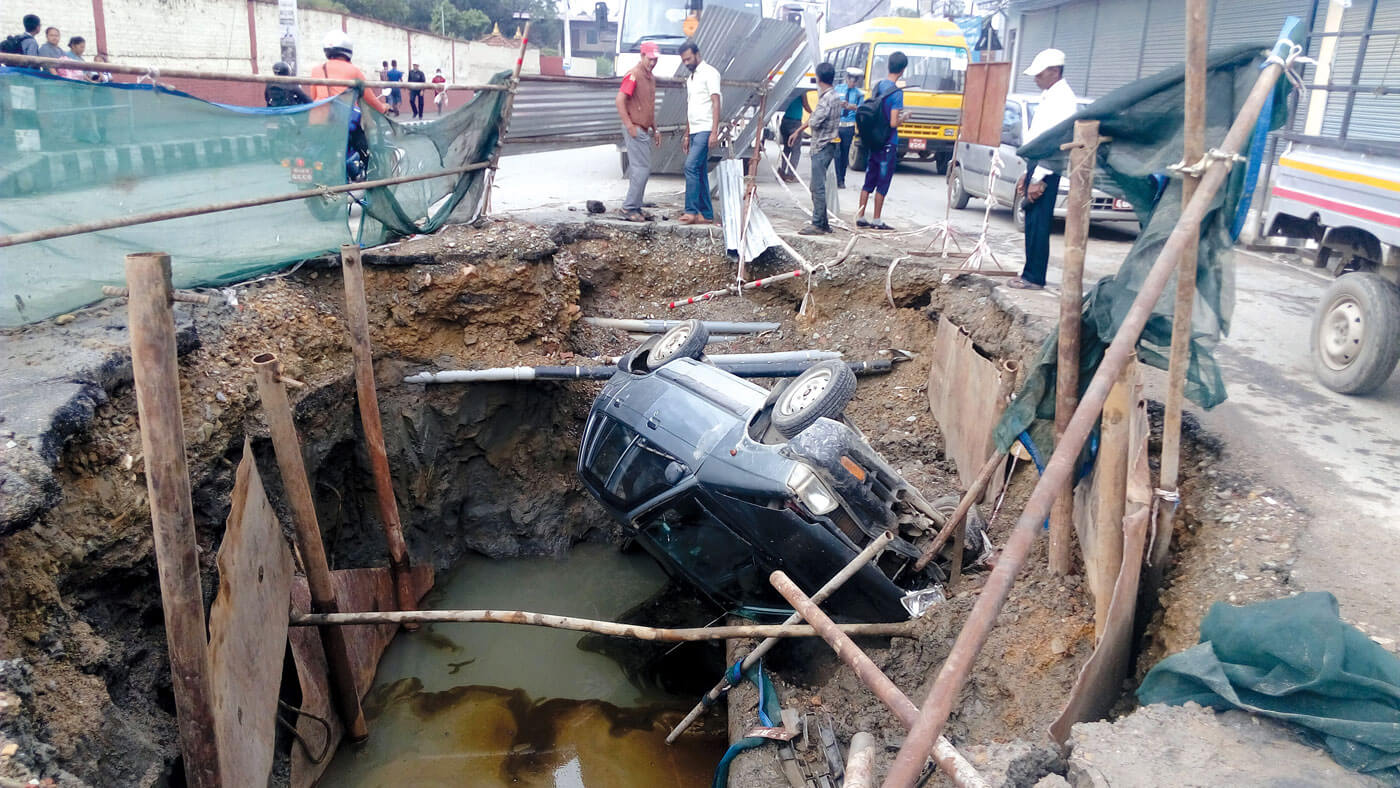
The road in front of the house I live in Sanepa, and one next to the school my six-year-old son goes to, was dug up for expansion two months ago. It has not been repaired yet.
In Kathmandu, it has become the new normal to turn a busy road into a dusty construction site for months, causing traffic snarls and sandstorms. It is dusty in the dry season and muddy after rains.
It will not come as a surprise if authorities say they have run out of budget midway, and the dug up road remains left open for more than a year. It would be too much to expect for only a 50m stretch of the road to be expanded a day, and that another section would be dug up only after the previous stretch is repaired. We do not have a culture of keeping people at the centre of planning.
The new Constitution, promulgated two years ago after decades of conflict, redefined the state-people relationship: from centralisation to decentralisation. But that has not changed anything in how authorities treat people. They still behave like rulers, not as service providers.
Federalism was supposed to shake up this status quo, but it did so only on paper. In reality, the bureaucracy is too obsessed with preserving its power, and is fighting hard to not let go of it.
As is clear, having a constitution promulgated by an elected assembly of the people is not enough to sort out the issues of governance. The near future is going to be a steep learning curve for politicians, bureaucracy and people alike. The course Nepal takes from here on will be defined by how the governments, people, the media and the party systems conduct themselves.
During the three tiers of elections last year, the main pitch of the NC against the Left Alliance was scaremongering. The spectre of autocratic communist rule was their only political agenda. People did not subscribe to the NC’s election propaganda, and it failed miserably. But the current state of politics gives us a lot of reasons to worry.