
Eight-year-old Buchana Tamang was in her Grade 3 class at Nilkantha Secondary School in Rasuwa. School had just started that morning, when there was a gigantic roar and a pressure blast of cold air preceding a wall of brown water, mud and debris that came crashing down the Bhote Kosi.
Being at school saved her life. But the flood swept away her parents, Pasang and Daisy, along with their home which was below the school. Orphaned, Buchana has nowhere to go, and she is now under her school’s care.
Sanjay Magar was at his Mahendra Secondary School in Nuwakot, where he stayed for two days before being airlifted by rescuers to a holding centre in nearby Bidur.
“The flood swept away our house, farm, the bridge to our school,” says the 12-year-old. “I have no idea where I will go to school now.”
Seventeen-year-old Sabina Tamang now finds herself the sole guardian to two siblings Rabin and Govinda after the flood took away their parents Nima and Rikchi. Father and mother are gone, their school was swept away, so the responsibility of their uncertain future falls on Sabina’s shoulders.
Mukesh Tamang, 11, had lost both his parents three years ago, and this time his two older siblings, Muskan and Roshni, were taken away by the debris flow. Now, he has neither home nor family.
Ambika Majhi from Bhaise village is sheltering at a nearby school with her three sons. Across the Trisuli, the children’s school was damaged and the flood took away her home and livelihood.
“How will I send my sons to school now? How will I put a roof over their heads?” she asks.
LOSS AND HEARTBREAK
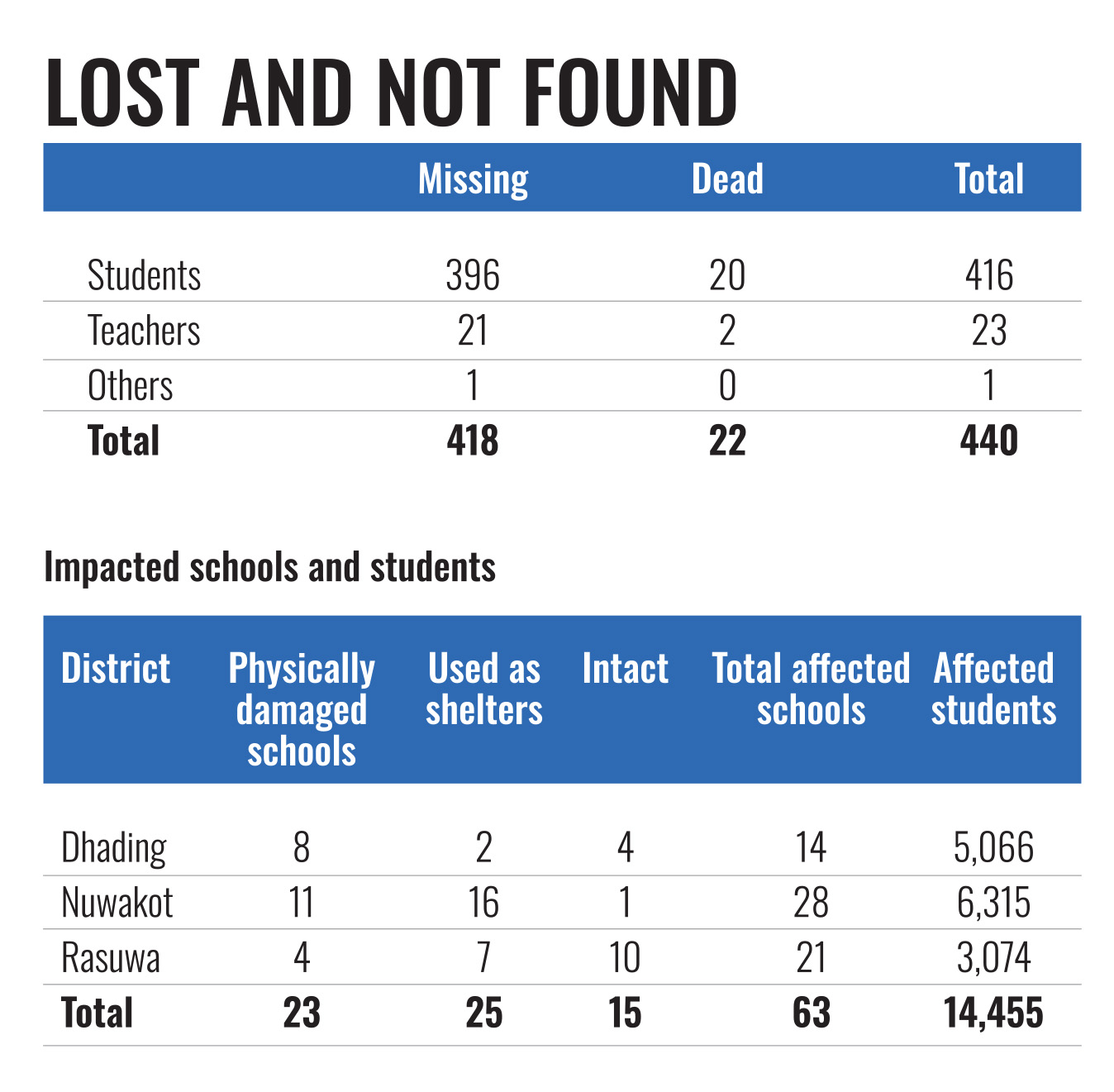
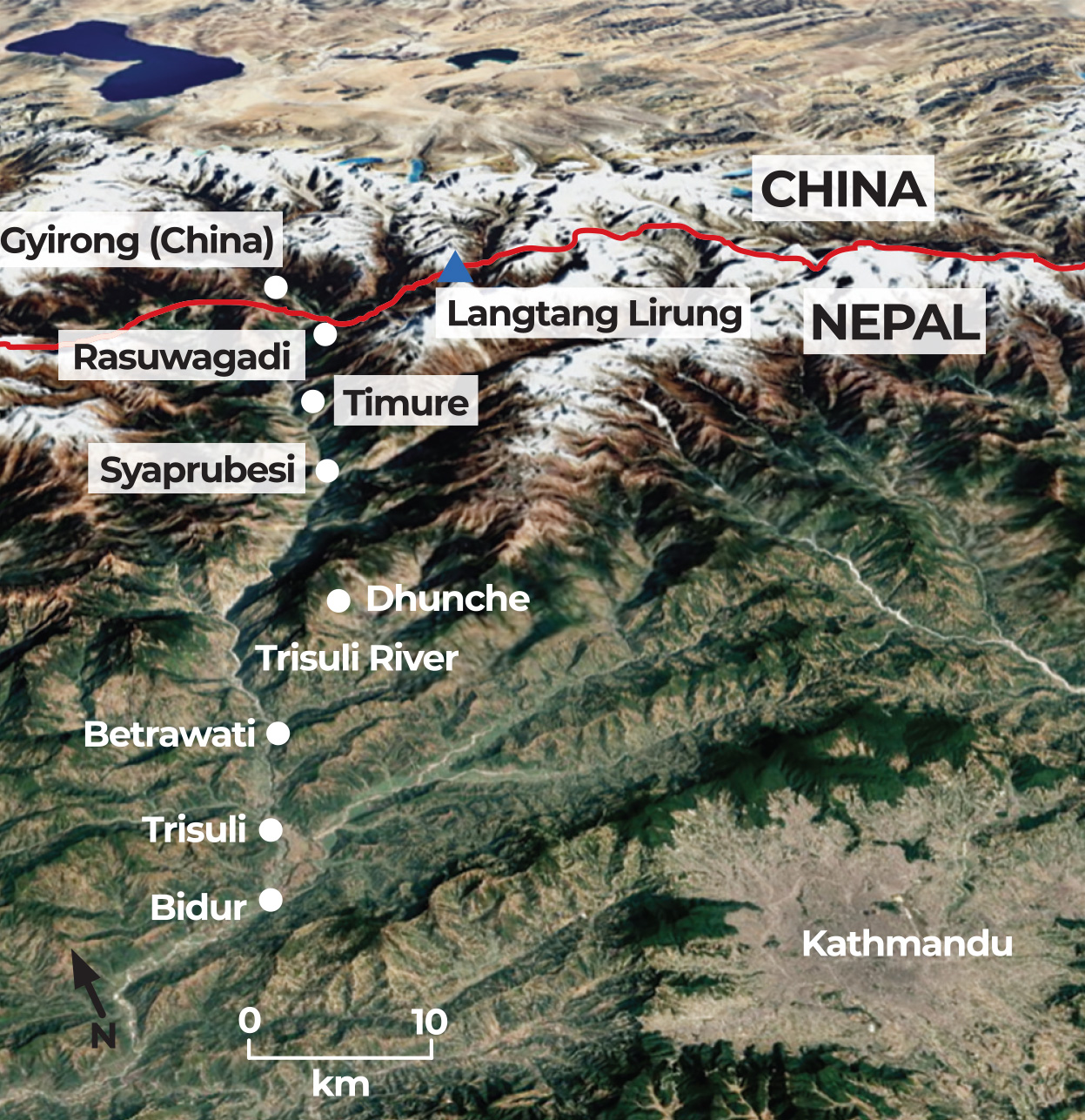
Up and down 80km stretch of the Trisuli from the China border right down to Bidur, there are stories of loss and heartbreak behind every one of the 7,000 killed or unaccounted for. The flood has put the care and education of over 14,000 children at risk. A government survey showed that at least 102 children lost both parents, many more lost one, and hundreds are still separated from families.
Many schools across Nuwakot and Rasuwa, the hardest-hit districts, have now been swept away or buried under the debris-strewn riverbed. In other schools that remain physically intact, many students and staff are still missing, presumed dead. Many others have been permanently displaced.
Timure in Rasuwa, 7km from the China border, was almost completely obliterated by the flood. Among the schools swept away is Rastriya Adharbhut School. Of the school’s 35 students, 25 are missing and six of the teachers are also missing (box, below).
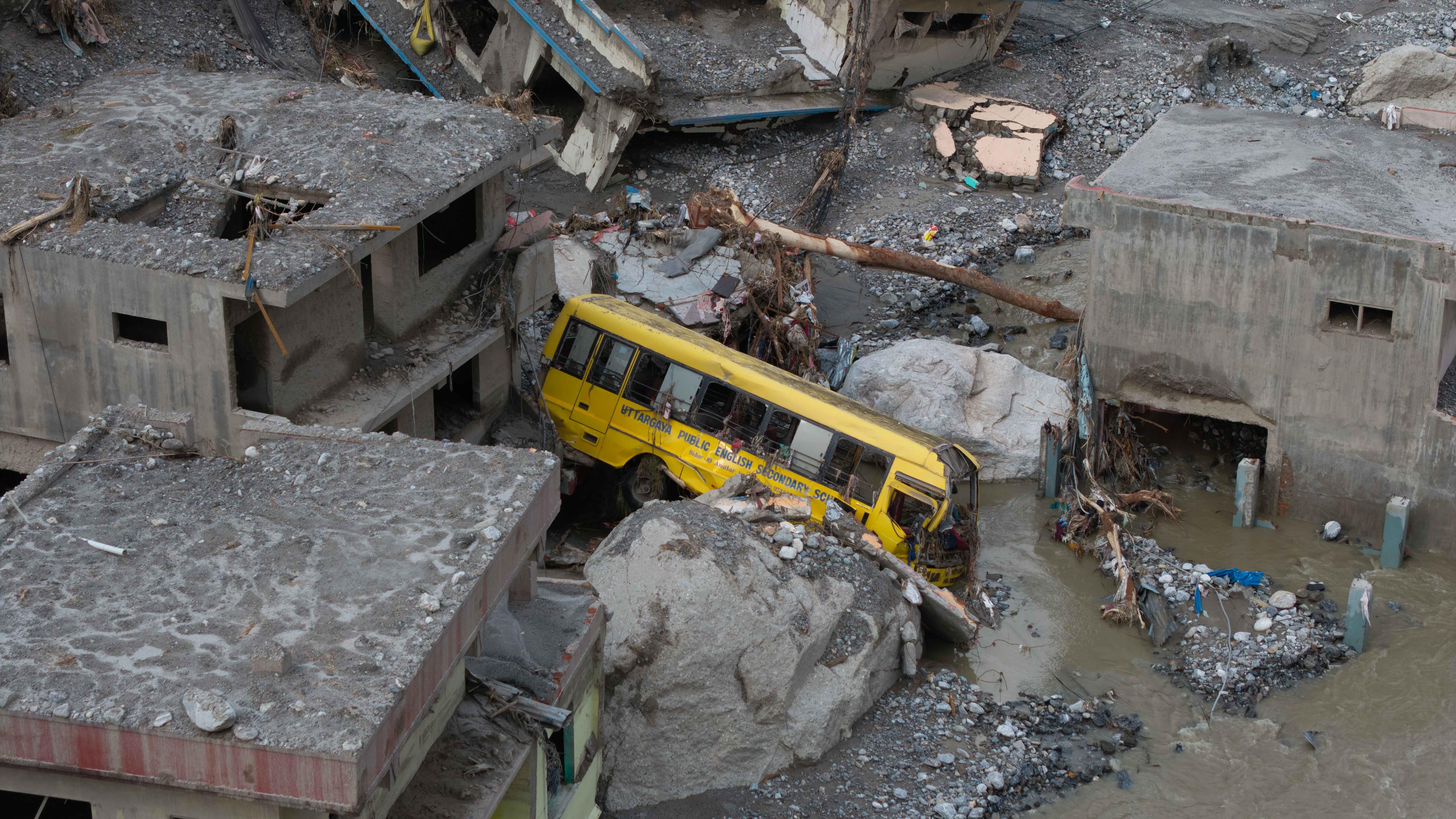
In Rasuwa, at least 100 out of the 508 students and three staff members from Nilkantha Secondary School are still unaccounted for after the flood. Another 87 students have their lost guardians, among whom 56 lost both parents. The school has now become a shelter for many of its own students who have lost everything and everyone.
“Our hostel can accommodate 100 students, but we now need additional residential capacity for at least 150 students and 30 staff who survived,” says Nilkantha principal Madhav Lamichhane.
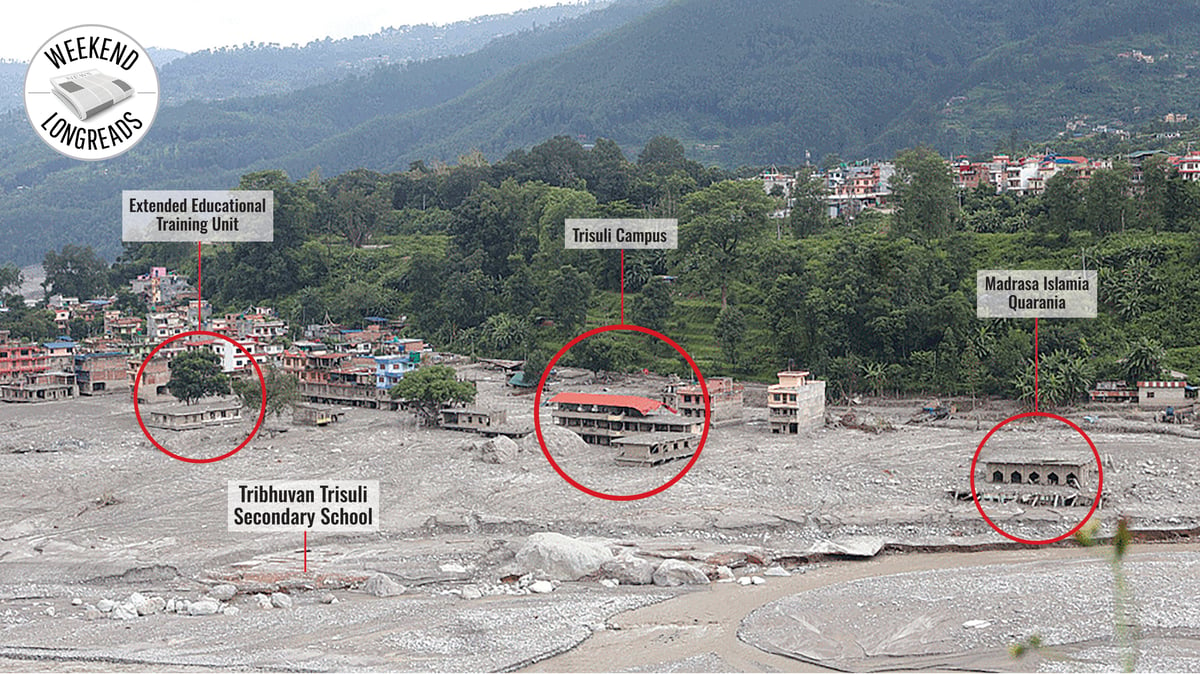
In Bidur Municipality, seven teachers and 233 students from various schools are still missing more than a month after the flood. Hope has faded for them to be ever found. The wall of mud damaged three public and two private schools, one college, the Islamia Quarania Madrasa, and an Extended Education Training Unit operated by the provincial government. The flood also swept away a hostel for blind and visually impaired students (pictured above).
At Trisuli Bazar’s Tribhuvan Trishuli Secondary School, one of Nuwakot’s oldest, quick response to early warning by the school’s staff and a subsequent mass evacuation saved all students who were on the school’s premises on 26 August. The historic school building which had an enrolment of 1,643 students was swept away.
The flood swept away at least 30 bridges — ranging from pedestrian suspension bridges to motorable ones — across the Trisuli from Syaprubesi, and Uttargaya in Rasuwa to Galchhi in Dhading. Hundreds of children who used to cross the river to attend school on the other bank have not been able to attend classes.
Before the flood, Tara Prasad Shrestha, who is the head teacher at Bidur’s Mahendra Secondary School, used to make the daily journey from home to work across the Simchaur bridge in seven minutes. With the bridge now gone, the only way for him to get to work is to cross the river via a perilous cable crossing.
“We had 250 students before the flood, now it appears the number will drop by at least 50,” says Shrestha. “Among them are 25 students who used to cross the bridge to attend school, and 25 children whose homes and farms were swept away.”
At Bidur’s Prithvi Secondary School, 104 out of the 928 students used to commute to school from settlements across the Trisuli River. The flood swept away the homes of 63 of these students.
Headmaster Baburam Lamichhane says that in the aftermath of the disaster, parents of students who are marooned on the school’s side of the river are asking that their children be admitted at his school.
Even schools that survived are so close to the river, or were so damaged by the flood that it is too risky to hold classes there.
“There are many unanswered questions now,” says Bidur Municipality Education Chief Navaraj Sapkota. “How safe are these schools? How will parents send their children to school, how will children continue their education, and how will the municipality resume and manage the remaining institutions?”
Officials say that there is an immediate need for an integrated plan that includes hostel facilities, temporary learning centres, and psychosocial counselling for children who have lost families, homes, and educational material.
Across Nuwakot and Rasuwa, arrangements are underway to turn still functional insitutions into boarding schools, including Annapurna Panchakanya Basic School in Shera and Koming Wangfel Secondary School in Syaprubesi.
Tribhuvan Trishuli Secondary School is being temporarily relocated to Division Office in Ward 9, but a lack of road access has hindered delivery of relief material from the Chaudhary Foundation.
REMAPPING SCHOOLS
A proposal for a hostel accommodating 350 students has been submitted to the Ministry of Education. But securing safe and sufficient land to rebuild the school remains a challenge.
“Because many schools and settlements are under metres of sediment and boulders, school locations need to be re-mapped and their catchments redefined,” says Uttargaya Rural Municipality Education Chief Bodhraj Pathak.
Provisions under Nepal’s Education Act and National Education Policy dictate that schools must be constructed and operated based on geography, population, and risk factors. Two or more schools can be consolidated if student enrolment is low.
In theory, these guidelines ensure that there is a reasonable distance between children and their schools, as well as a safe way for them to reach there. However, arbitrary permits for schools on hazardous terrain with no regard for disaster risk or geographical accessibility mean policies are limited to paper.
More than a month after the flood, many children remain cut off from schools due to damage to roads and bridges. Many families have relocated to neighbouring districts and Kathmandu.
Enrolment policies must be flexible so children can attend schools wherever their families have relocated, without hassles or paperwork, says Baburam Lamichhane of Prithvi Secondary School.
Experts agree that all three levels of government should be on the same page to set up an integrated education crisis fund to set up temporary learning centres and distribute educational materials in affected institutions. The government must also fast-track budget disbursement for reconstruction, they add.
Schools must be rebuilt so they serve a multi-purpose function, and can be used as community shelters in times of calamities, says educationist Bishnu Karki.
“We must take this crisis as an opportunity to overhaul guidelines on the construction and operation of our schools,” he adds, “We must rebuild schools only after evaluating geographical and geological risks, and adopt climate resilient infrastructure standards.”
This field report was translated from Sikshak Magazine and financially supported by the Karkhana Group’s Civil Society Empowerment for Accountable Education (CSE) project.
“We will return and rebuild.”

When the wall of mud and debris engulfed the four-storey Rastriya Adharbhut School in Timure on the morning of 26 August, headmaster Phurba Dorje Ghale (left) watched helplessly from his house, 50m up the slope.
“There was nothing I could do, the surge was so sudden that there was no time to think or warn the staff to get to safety,” Ghale recalls. The school was run by 11 staff, including six teachers from outside Rasuwa district.
With an anguished voice, Ghale remembers the names of his colleagues who were swept away: “Ramchandra BK taught English, Santosh Shrestha taught Mathematics, along with Himansingh Tamang, Kanchhi Ghale, Kavita Neupane, and Sonam Butti, all lived at the school. All gone.”
The flood destroyed at least 200 houses in Timure, which is only 7km from the China border. The school offered classes up to Grade 8, and was a state-of-the-art building that had a well equipped computer lab. Most students were children of freight handlers who worked at the border crossing.
“We had a small number of students, but it was a well-run, quality school,” Ghale says. “We can rebuild the structure, but our teachers are gone, where will we put the surviving children?”
Thinking about the displaced survivors has only strengthened Ghale’s resolve to get his school back up and running for the community. The government should identify where it is safe to rebuild and make necessary arrangements so that the community can rebuild and return, if not here, then on higher ground, he says.
Ghale adds: “Survivors here have said that they will return if we rebuild the school, so that is what I want to do, come back and rebuild. Leaving and settling elsewhere is not an option for those of us who live here in the mountains— despite our great loss, this land is near and dear to us.”
This field report was translated from Sikshak Magazine and financially supported by the Karkhana Group’s Civil Society Empowerment for Accountable Education (CSE) project.