
The early years of flying in Nepal
Timeline of the first four decades of aviation from 1933-1973 is a tale of highs and lows
Dan EdwardsMultimedia, Longread
3 April, 1933
The first recorded flight in Nepal’s airspace was by British pilots Lord Clydesdale (Douglas Douglas-Hamilton) Flight Lt. D.F. M’Intyre, on two Westland PV3s with Bristol Pegasus engines. The biplanes took off from Purnea in Bihar on 3 April, and were equipped with electric heating, oxygen supplies and cameras.
This was to be the first ever overflight of Mt Everest, and the pilots took photos flying 500 feet over the summit of the world’s highest mountain. Prime Minister Juddha Shamsher Rana gave special permission for 'scientific purposes'.
.jpg)
.jpg)
July, 1942
Acting on a whim, Col Robert Scott, the American commander of the Flying Tigers, while flying from India to China over the ‘Hump’ made a detour in a Republic P-43 Lancer and flew at 35,000ft above Everest.
1947
British RAF pilot Kenneth Neame made an unauthorised photographic fight over Everest in a Spitfire XIX.
April 1949
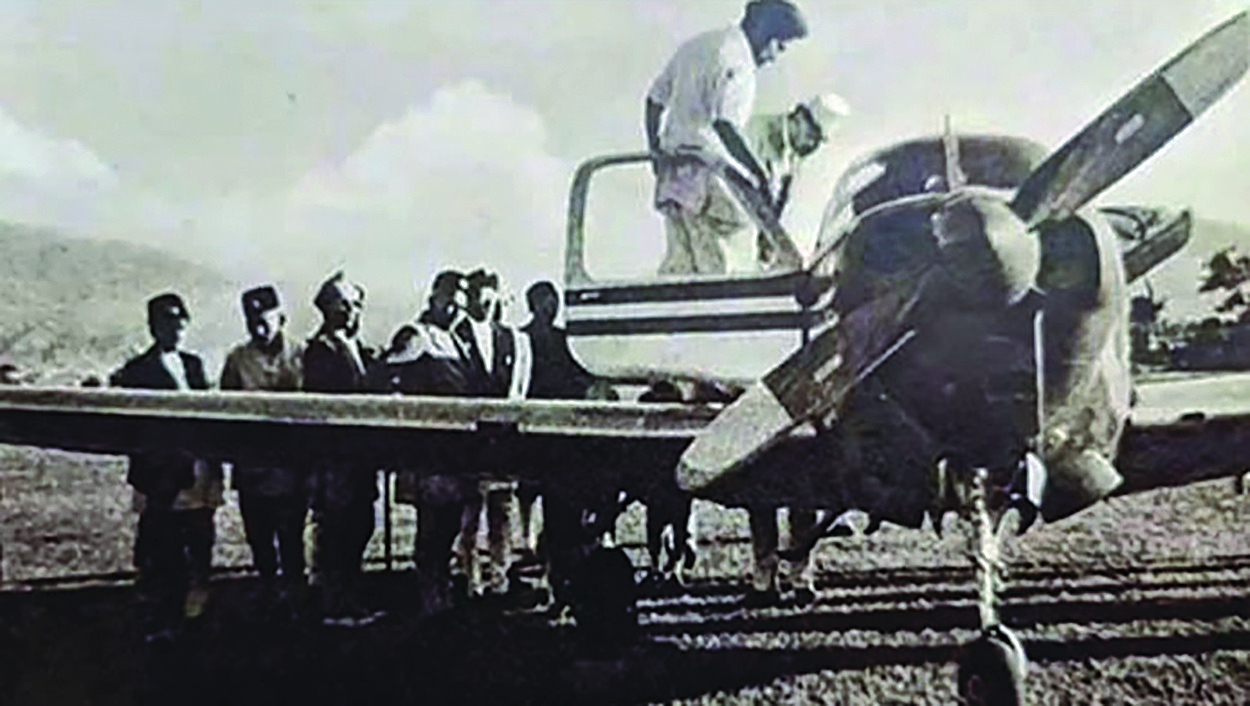
The first reported landing of an aircraft at Gauchar in Kathmandu was by RAF Squadron Leader Dalip Singh Majithia while his uncle, Surjit Singh Majithia was serving as the first Indian Ambassador to Nepal. He flew a single-engine 4-seater Beechcraft Bonanza.
1951
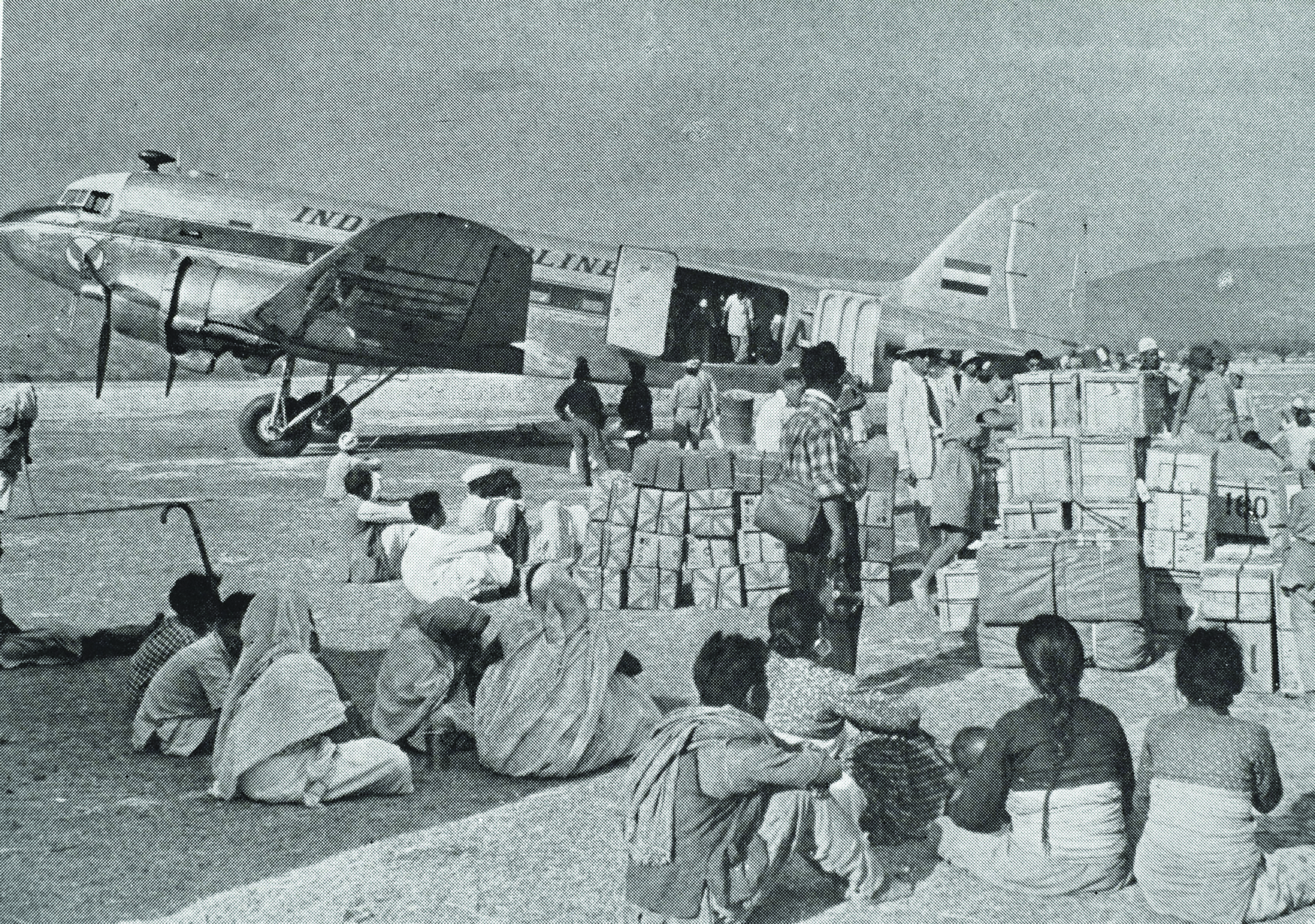
Indian National Airways began regular flights between Kathmandu and Calcutta.
18 February 1951
After the end of Rana rule, King Tribhuvan arrived in Kathmandu airport (later to be named after him).
.jpg)
1953
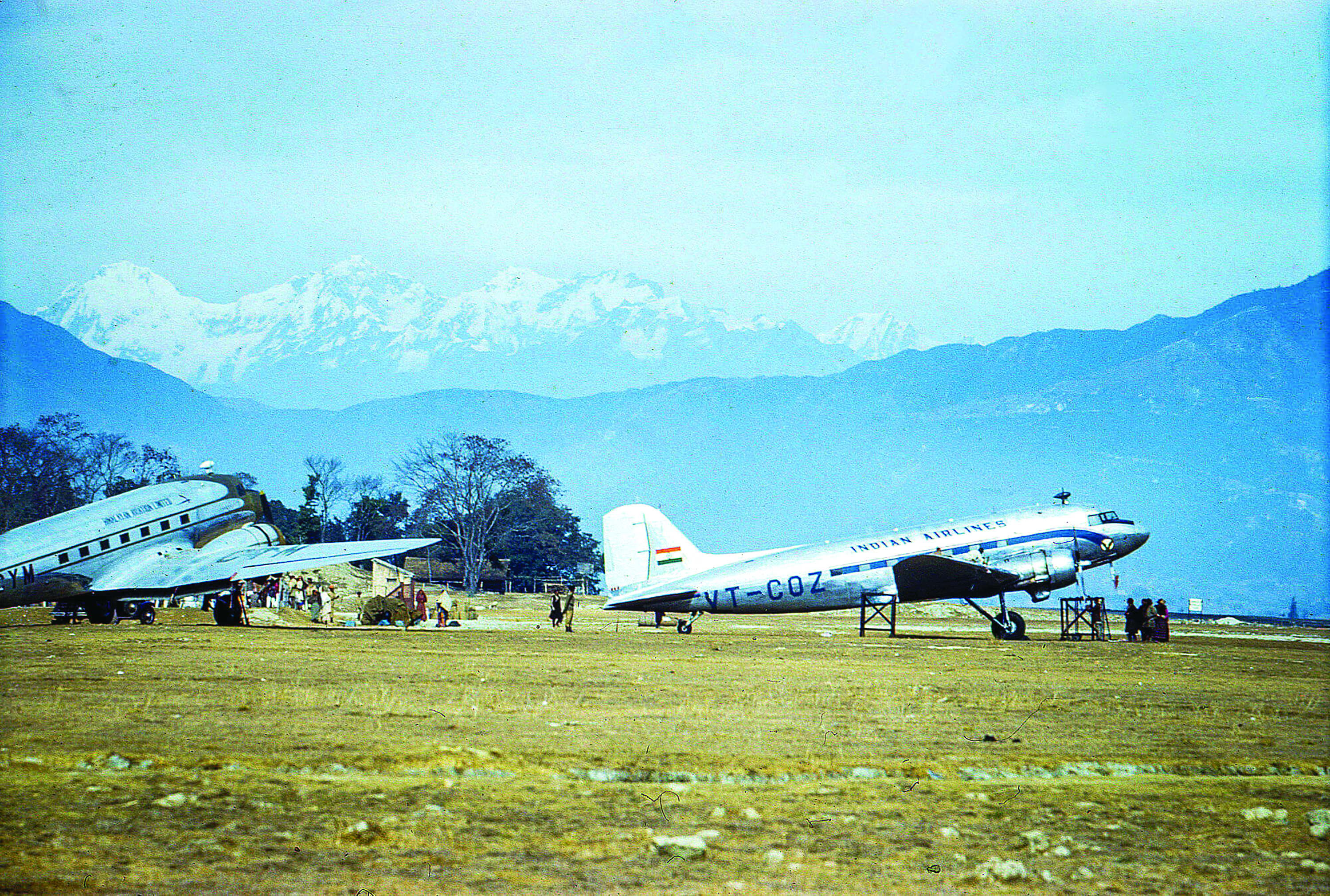
Mahabir and Madan Shamsher Rana’s Calcutta-based Himalayan Aviation initiated flights from Kathmandu to Pokhara, Bhairawa, Simara and Biratnagar using DC-3s aircraft.
August 1953
India nationalised its airline industry and state-owned Indian Airlines took over flights to and within Nepal.
1954
Ticket prices (Indian currency) of Indian Airlines and JAMAIR:
Biratnagar – Kathmandu: Rs44
Kathmandu – Simara: Rs23
Kathmandu – Pokhara: Rs40
Kathmandu – Bhairawa: Rs68
Calcutta – Kathmandu: Rs120
Patna - Muzaffarpur – Kathmandu: Rs50
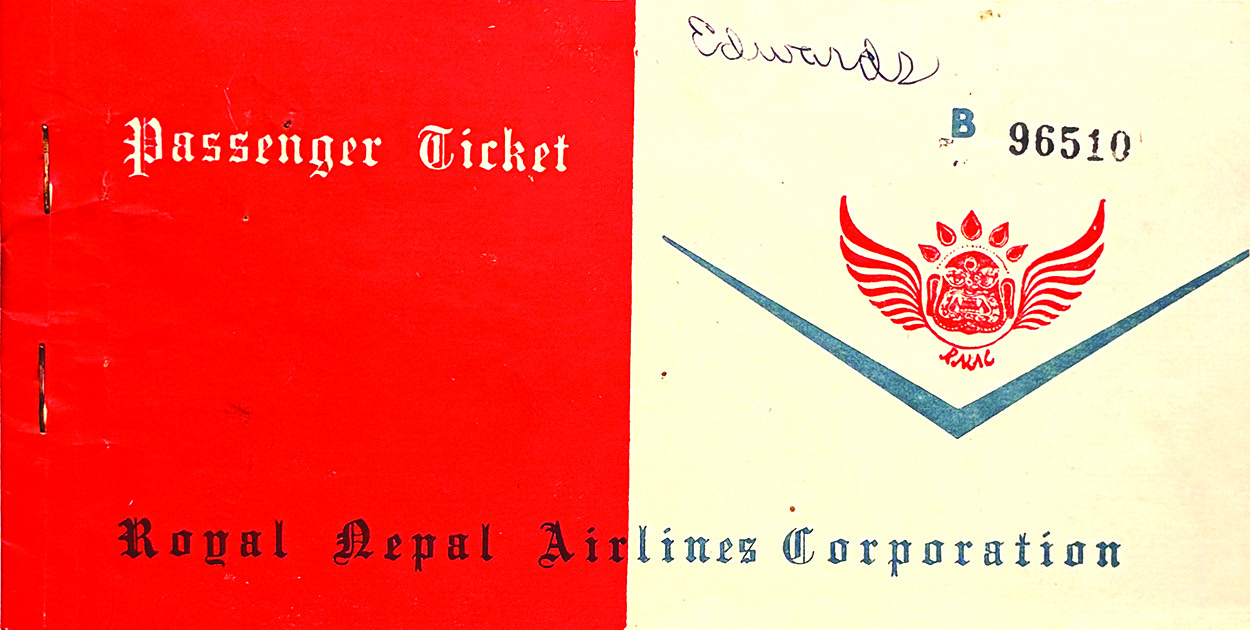
15 June 1955
Gauchar Aerodome in Kathmandu was formally inaugurated by King Mahendra.
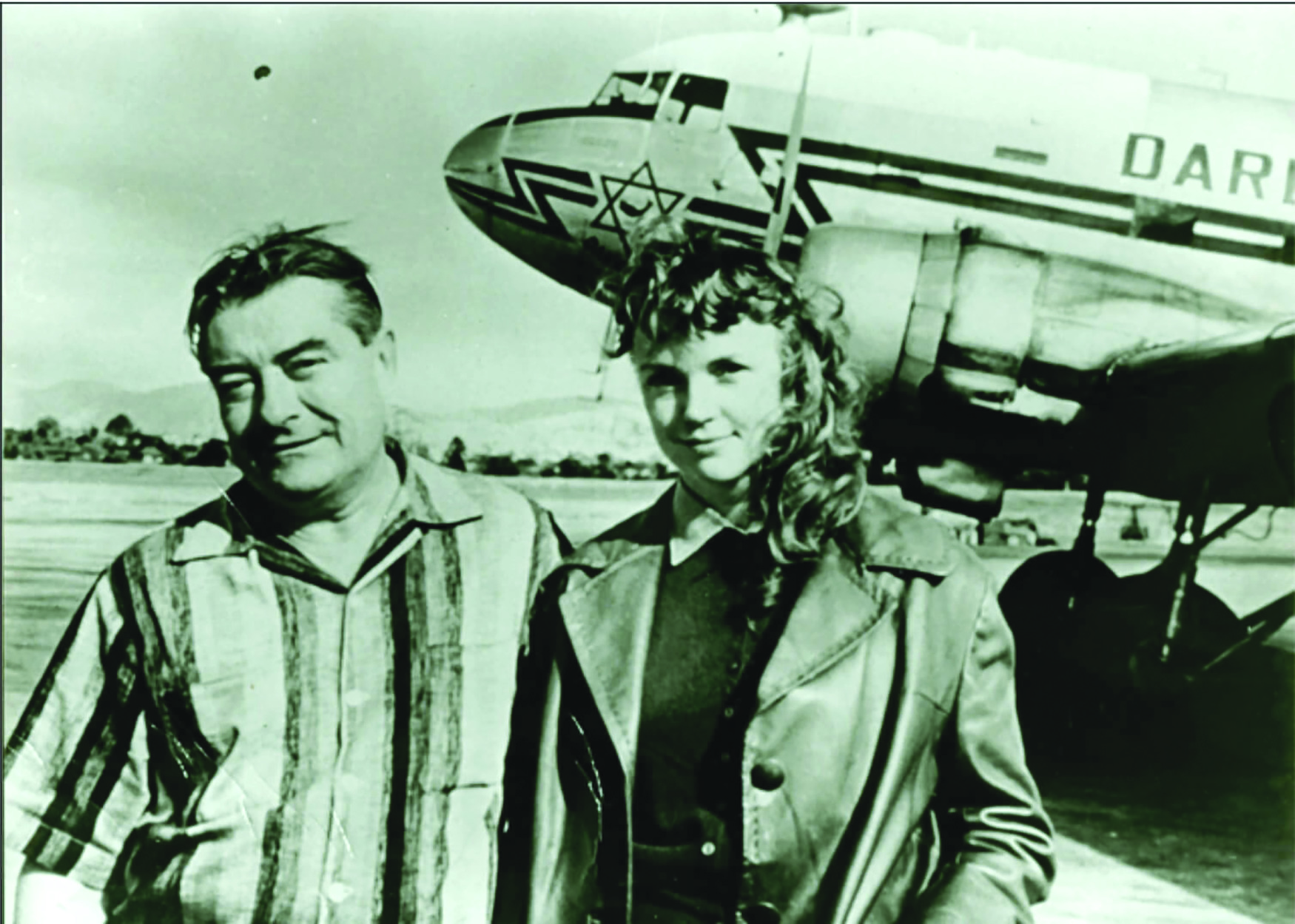
30 August 1955
Nepal’s first fatal aviation accident. Two people died when a Kalinga Airlines C-47 (DC-3) crashed in Simara after trying to avoid a person crossing the grass runway.
15 May 1956
An Indian Airlines C-47 (DC-3) crashed in Kathmandu while attempting a go-around after a hard landing, killing 15, mostly students returning from boarding school in Shimla.
1956-1961
Nepal’s First Five-Year Plan brought into service seven fair weather airfields:
Bharatpur, Dang, Dhangadi, Janakpur, Nepalganj, Palung Tar (Gorkha), and Rajbiraj.
Kathmandu’s grass airfield was paved.
1 July 1958
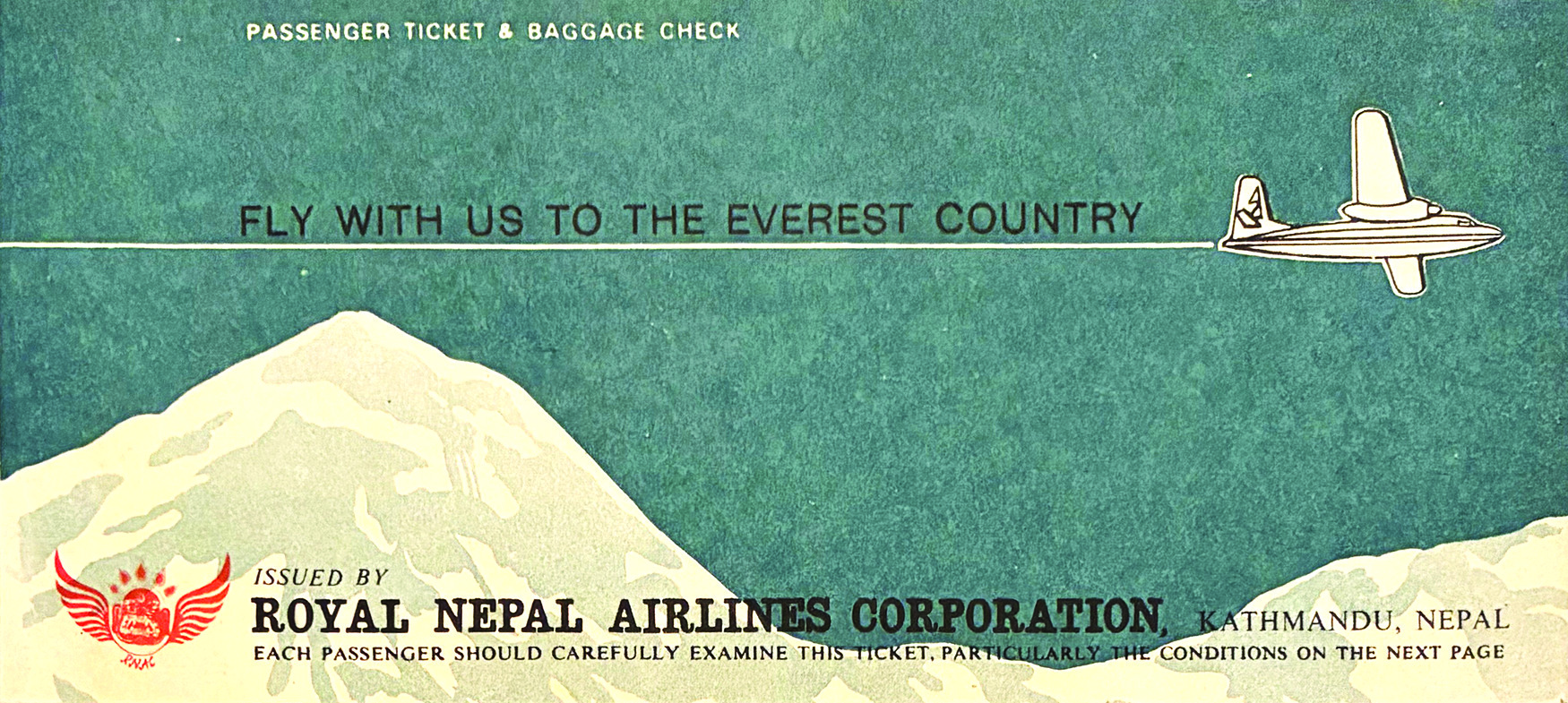
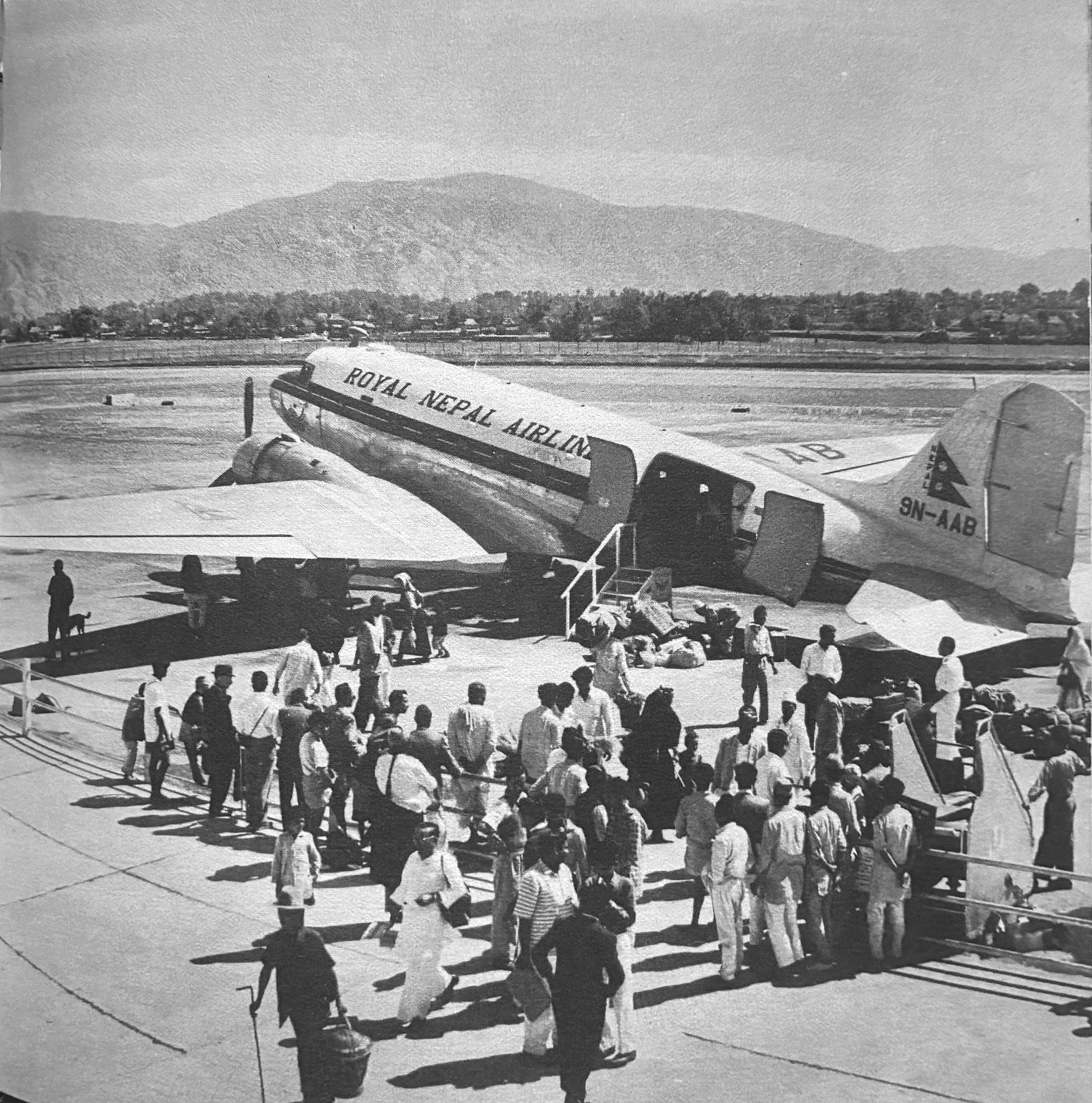
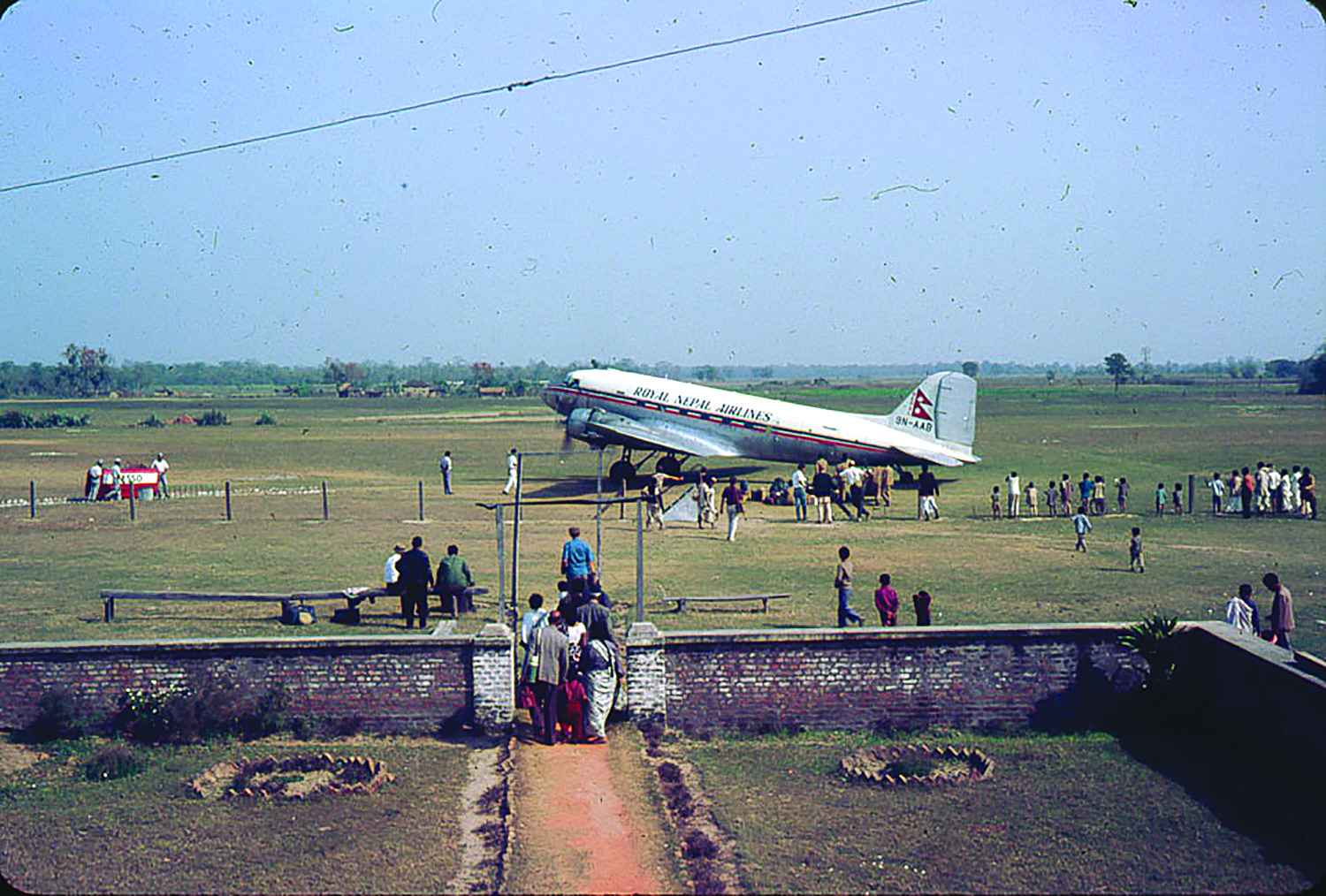
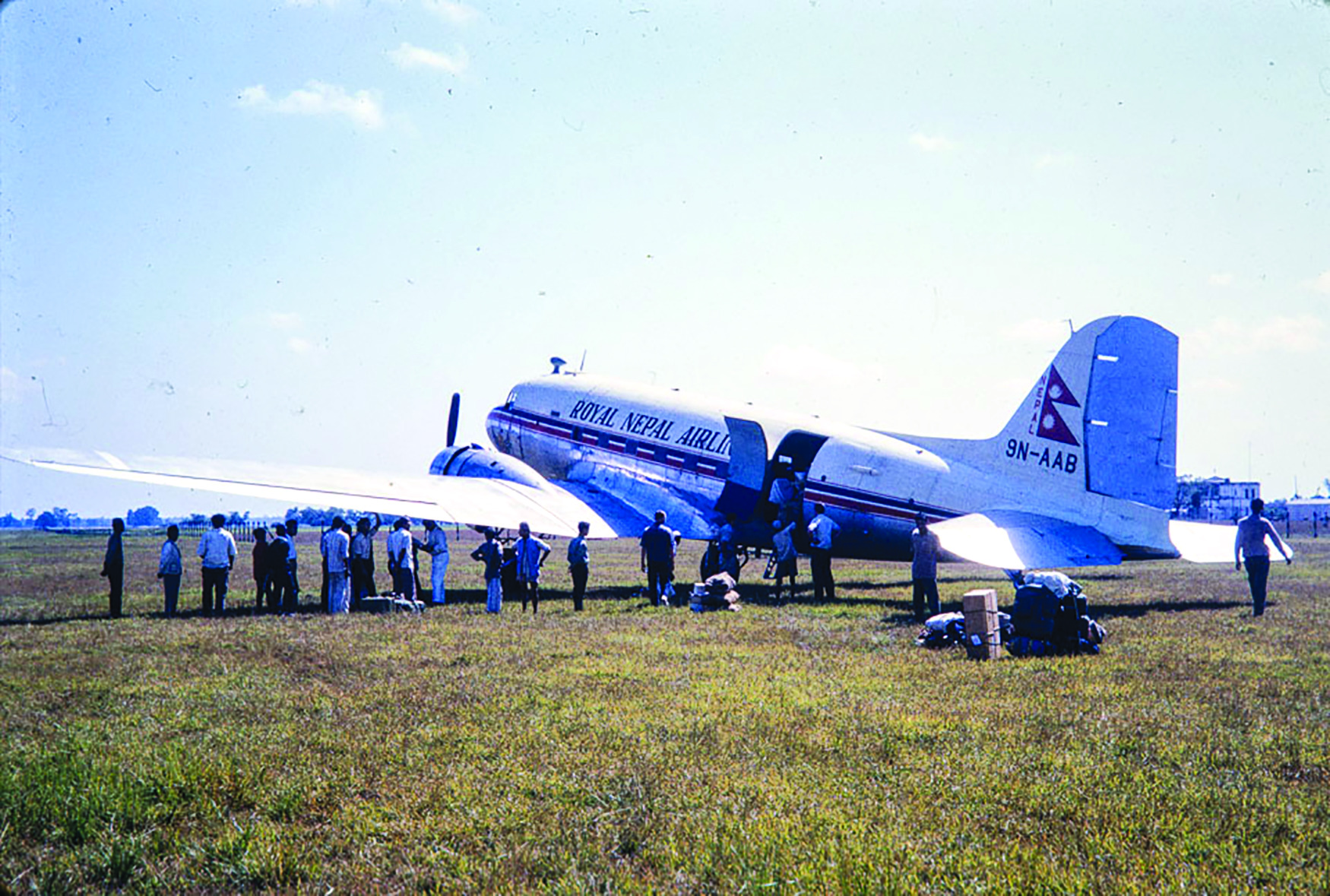
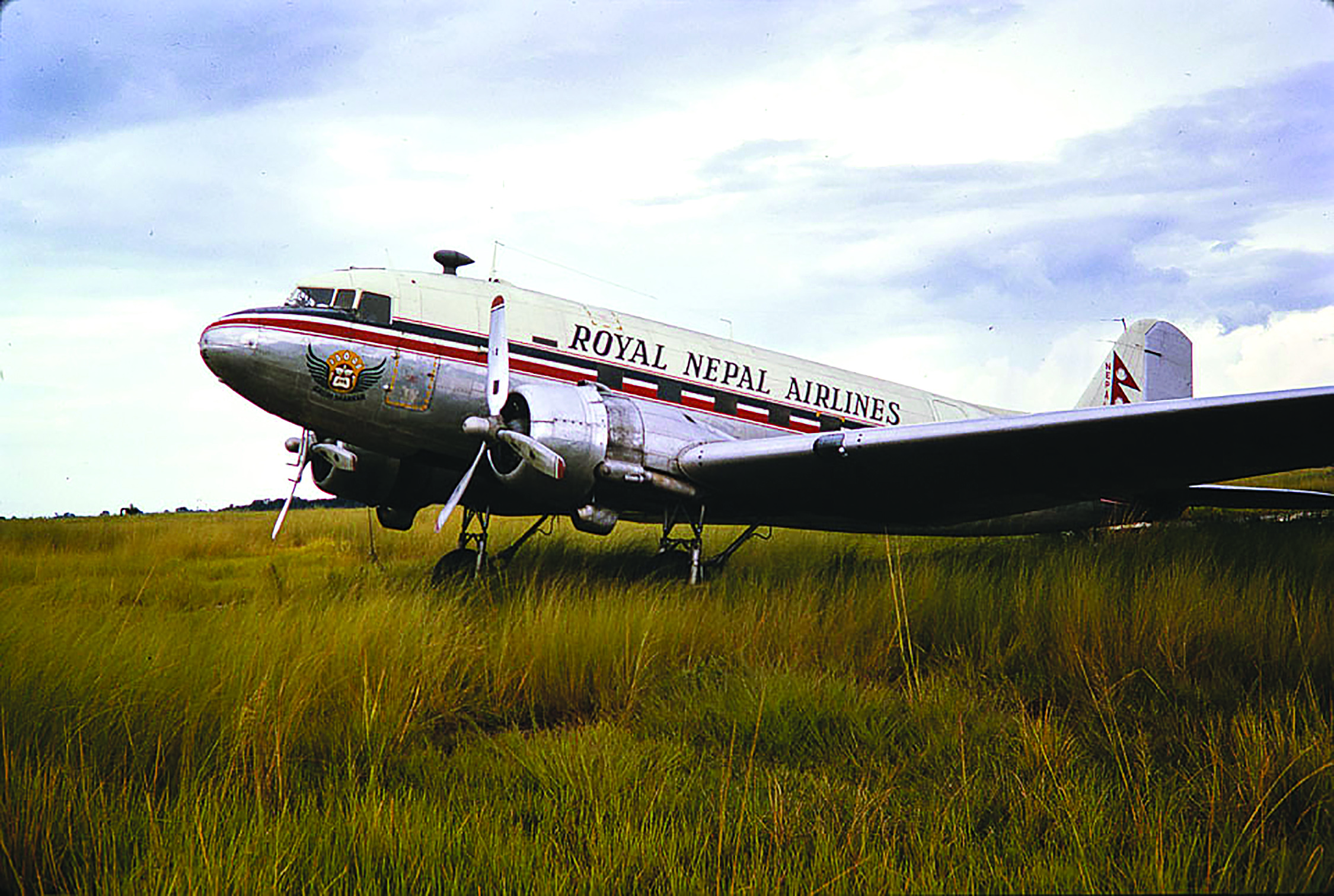
Royal Nepal Airlines Corporation (RNAC) was established with Maharaj Kumar of Mayurbhang, managing agent, owning 49% of the company. Ganesh Man Singh became Board Chair. Its first Douglas C-47 (DC-3) with tail number 9N-AAB made its first flight to Simara on 4 July. The Civil Aviation Act 2015 (1958) was passed.
1959
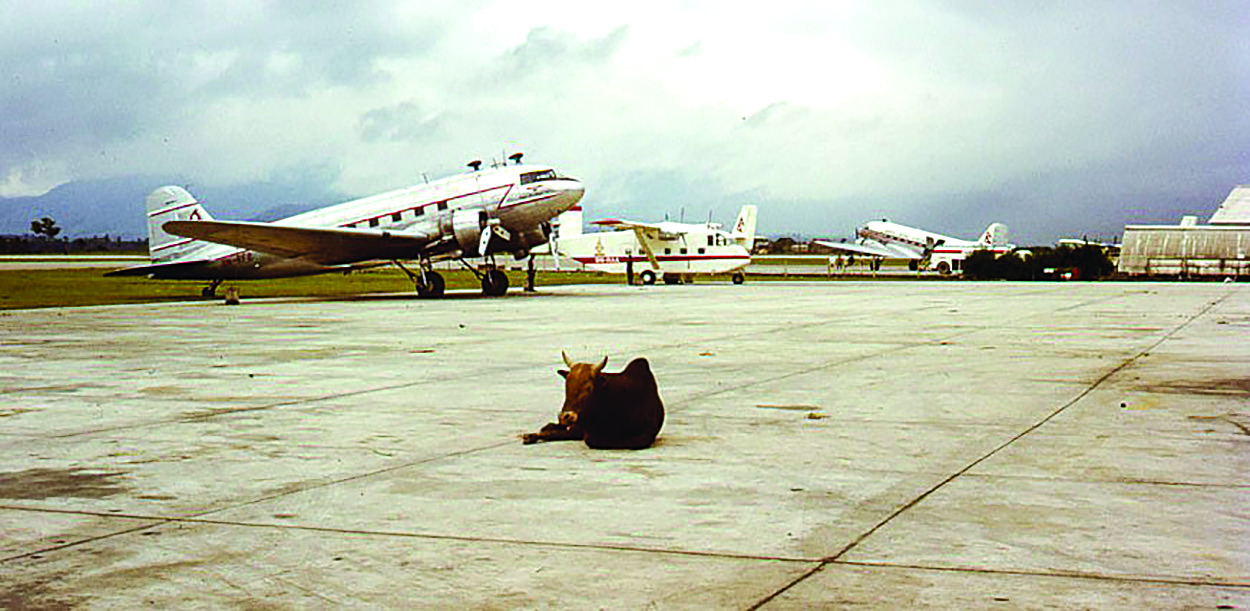
The US International Cooperation Administration (later USAID) provided two more WWII surplus C-47 Skytrain (DC-3). The freighters had benches along the windows, and passenger versions had 28 seats in the sloping cabin. Kathmandu was connected to Pokhara, Bhairawa, Biratnagar.
October 1959
Nepal government acquired full control of RNAC and its first Nepali pilots B K Shrestha, R C Upadhyaya and K K Shrestha, were hired in 1960.
May 1960
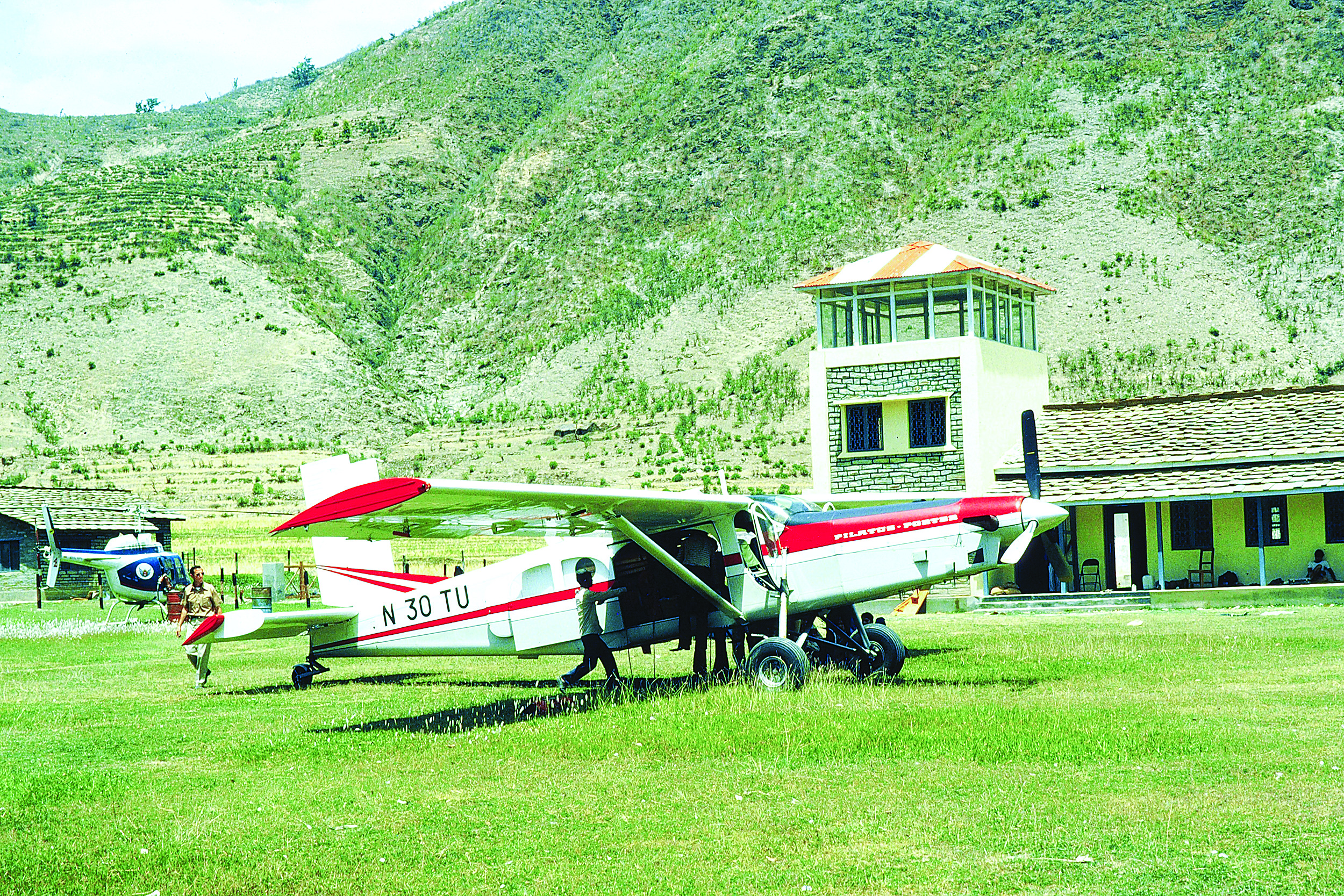
A Pilatus Porter named ‘Yeti’ crashed at 5,700m on Dhaulagiri while ferrying supplies for a Swiss expedition. No one was injured, but the plane’s earlier successful landings at that height had set a world altitude record for aircraft.
- RNAC began international services to Patna, Delhi and Calcutta.
1961
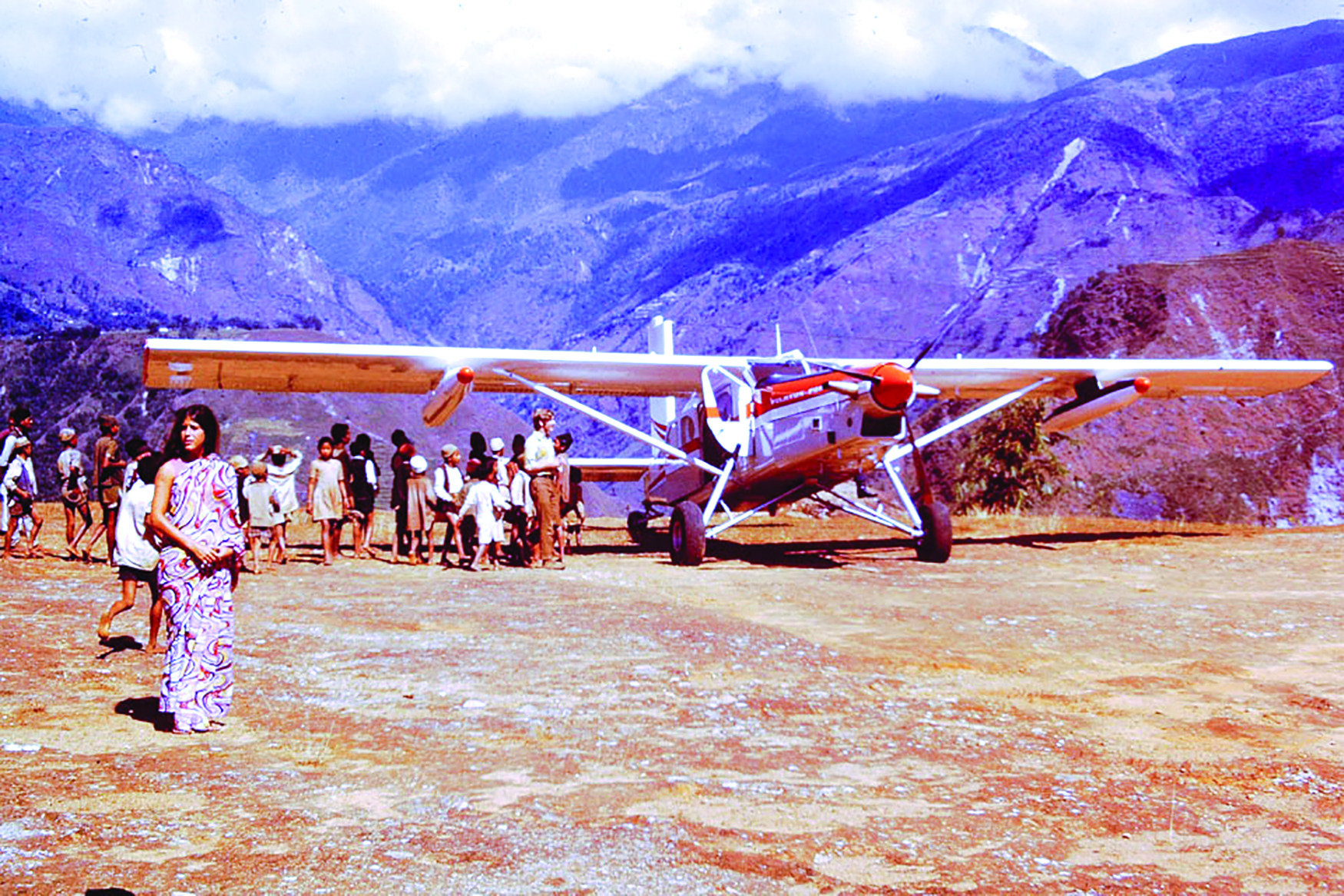
The Swiss provided two Pilatus Porters that could carry up to 10 passengers or a payload of 2,200 pounds. Another DC-3 was bought from Pakistan International Airlines (PIA).
1961/62
RNAC carried 61,955 passengers and 3,218,513 pounds of freight during the fiscal year.
1 August 1962
RNAC DC-3 (9N-AAH) disappeared and was found a week later in Dhorpatan. Nepal’s Ambassador to India was among the six passengers and four crew killed.
1962
RNAC bought one DC-3 was bought from KLM and another from Aer Lingus.
- RNAC’s annual revenue reached Rs7 million.
1962-1965
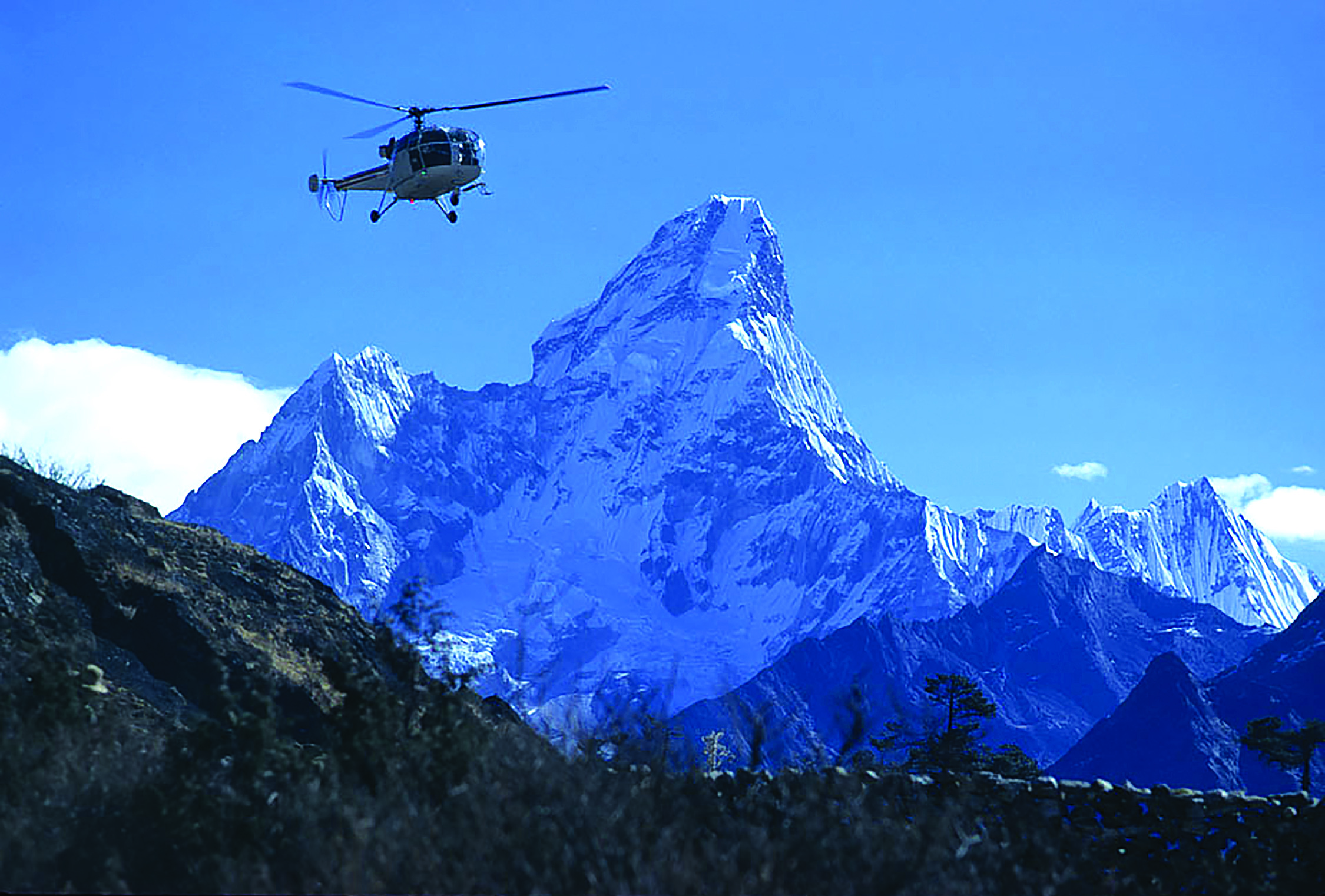
Nepal’s Three-Year Plan aimed to build 20 new STOL (short-take-off-and-landing) airstrips for services by Pilatus Porter type planes including at Jumla, Jiri and Baglung. Five existing grass runways were to be paved, but only two were finished.
Gauchar Airport was to be upgraded with a 6,600ft long 150ft wide cross runway, a terminal extension and ancillary buildings.
1963
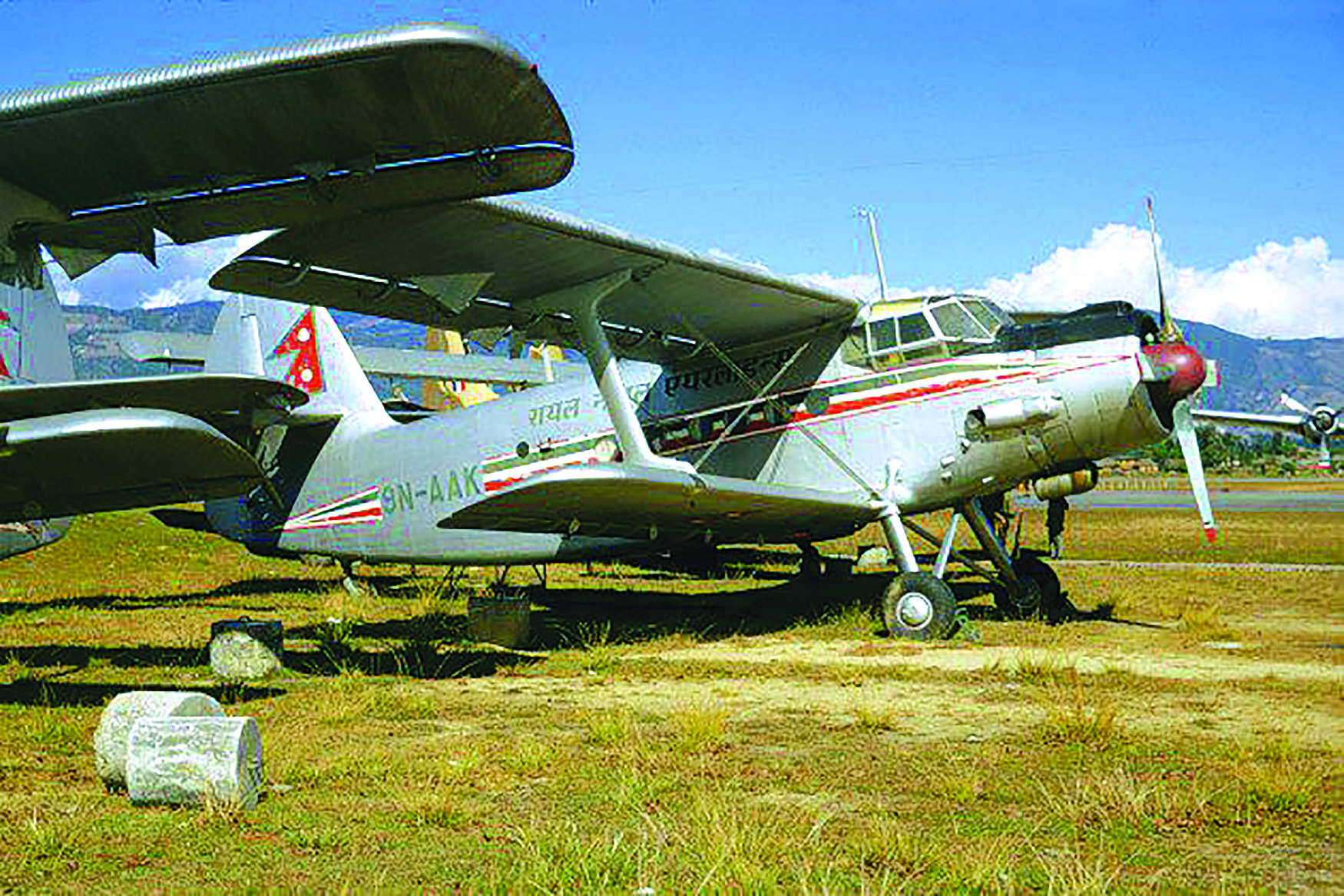
China gifted two AN-2 Fong Shee Harvester single engine biplanes, derived from Soviet-era Antonovs.
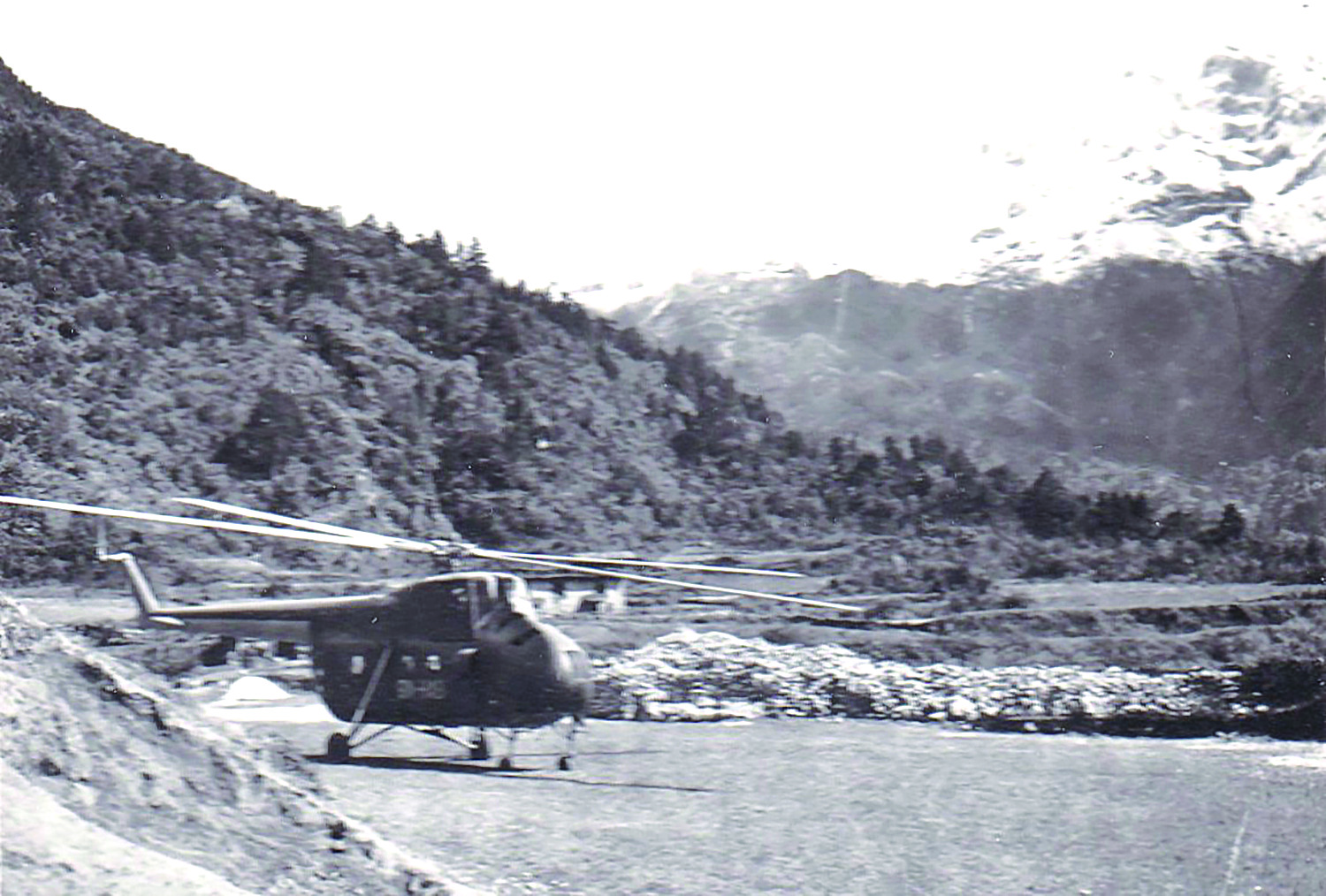
1964
RNAC’s fleet had eight DC-3s, two MI-4 helicopters, and one AN-2 Fong Shee.
The King and the Royal Nepal Army also had their own ‘Royal Flight’ aircraft, including an Ilyushin IL-14 (9N-RF1) gifted by the Soviet Union and a DC-3 (9N-RF2).
- Kathmandu was connected to airfields in Bhairawa, Nepalganj, Tumlingtar, Biratnagar, Janakpur, Pokhara and Silgadi-Doti, Bhadrapur, Gorkha, Bharatpur, and Rajbiraj.
1965/66
RNAC carried 72,141 domestic and 17,126 international passengers.
1965-1970
The Third Plan again targetted building 20 STOL airstrips by 1970. Six of the eight other airfields were to be made all-weather. Another master plan to modernise Gauchar into an international airport was revealed.
1966
Nepalis took over air traffic control duties from Indian technicians.
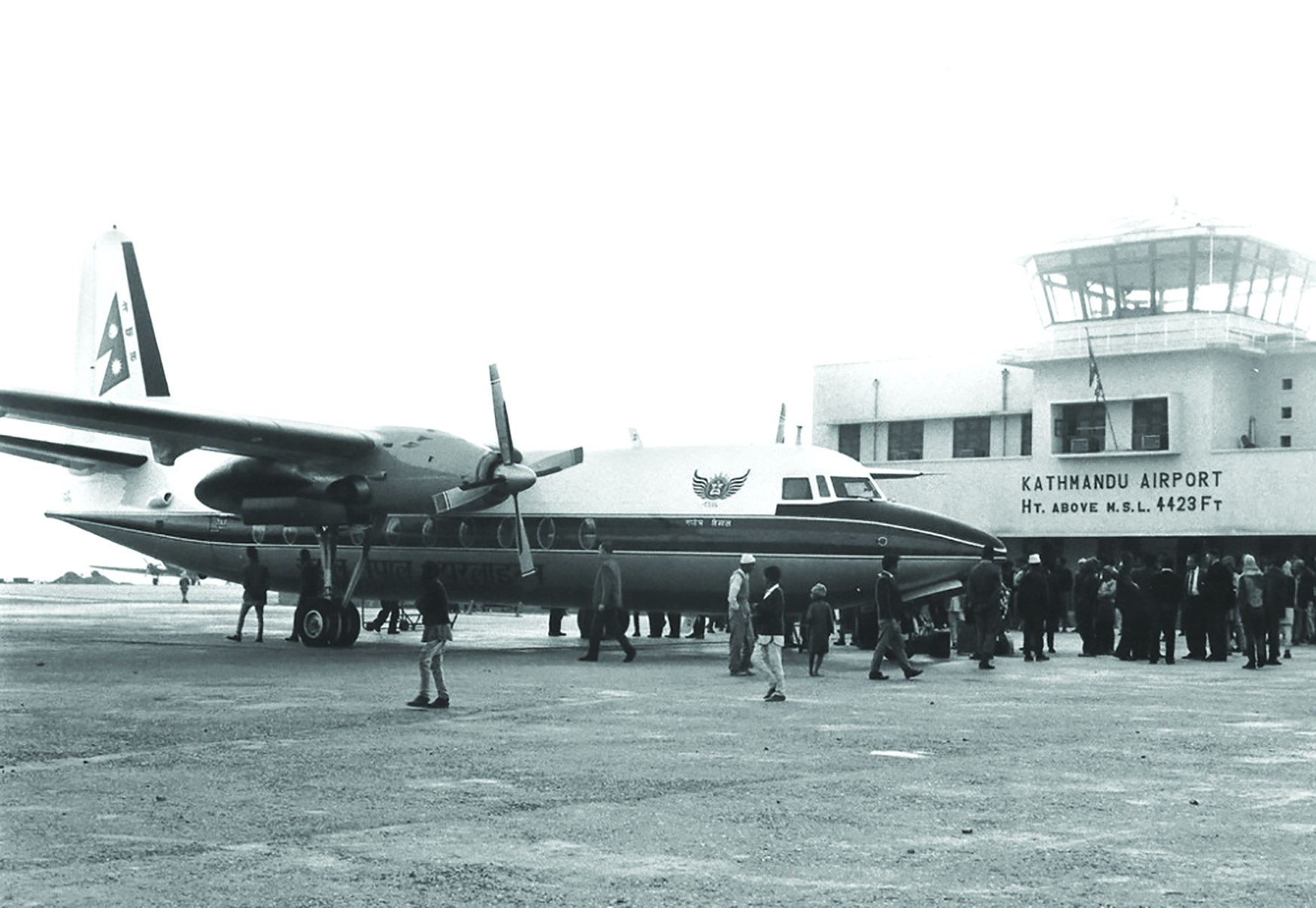
- RNAC introduced its turbo-prop service with a new 52-seater Fokker F-27 (9N-AAR).
March 1967
The first jet aircraft, a Boeing 707 landed in Kathmandu in March bringing West German President Heinrich Lübke on a state visit to Nepal.
- RNAC’s F-27 inaugurated weekly mountain sightseeing flights.
January 1968
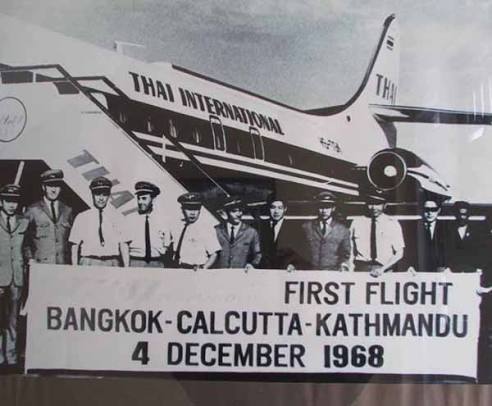
The first scheduled jet service was launched by Thai International connecting Kathmandu and Bangkok via Calcutta using its Caravelle.
1969
35 people were killed in an RNAC DC-3 crash enroute to Simara from Kathmandu on 12 July.
1970-1975
The Fourth Plan allocated Rs161 million for 19 runway extension and airport upgrade projects.
Simara was supposed to be an alternative airport for jet aircraft in case Kathmandu had bad weather. Other air strips were proposed in Mahendranagar, Tikapur, Ghorahi, Dhorpatan, Jomsom, Ramechap, Jiri, Udaipur, Rumjatar, Lukla airfields. Most did not materialise, or were not used.
1970
Nepal purchased two 58-seater Hawker Siddeley HS-748 Avro aircraft after the F-27 crashed due to wind shear on landing at New Delhi in 1970, two crew members were killed.
1971
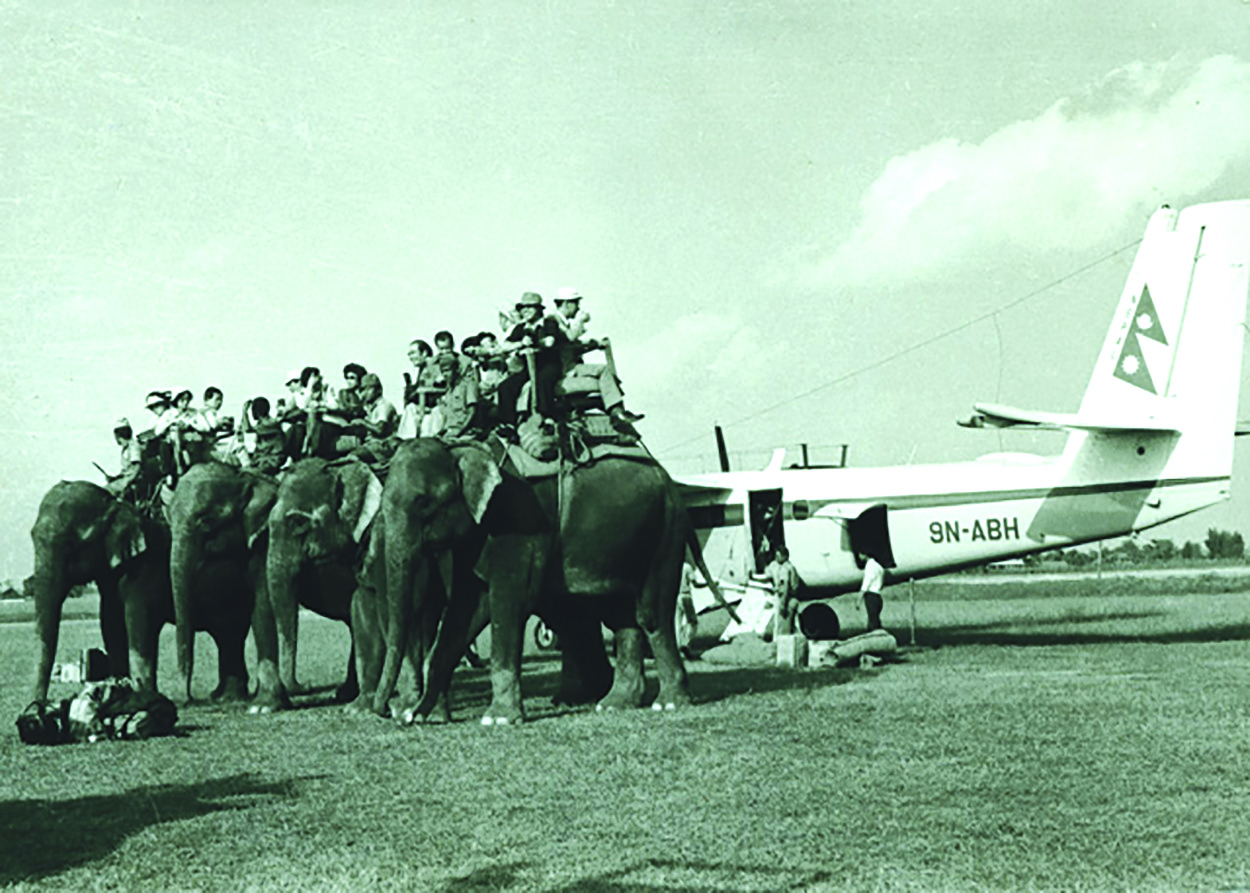
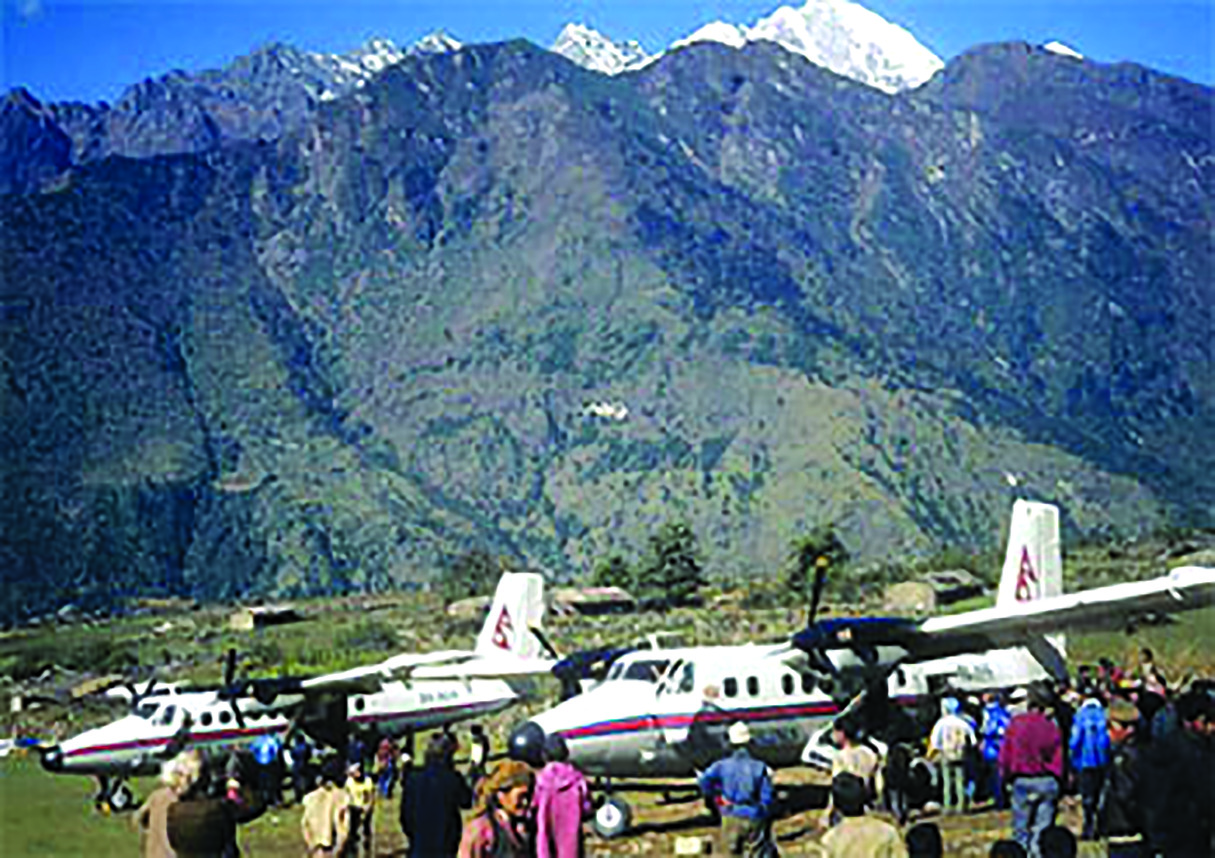
First two of DeHavilland Canada DHC-6 Twin Otters went into service and connected Lukla, Jumla and Tumlingtar.
.jpg)
15 August 1972
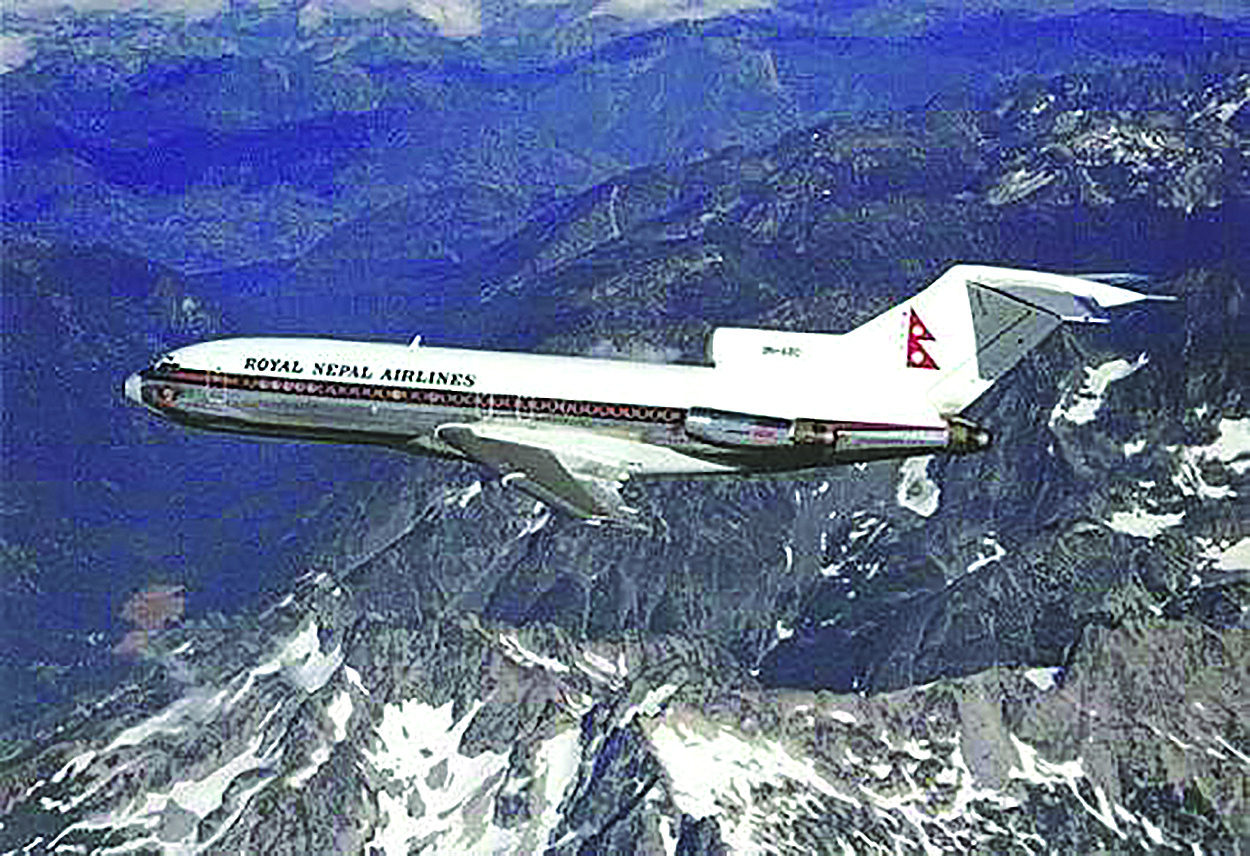
RNAC’s first Boeing 727-200 (9N-ABD) inaugurated Kathmandu-Bangkok flights.
1972
A DC-3 carrying paratroopers of Royal Nepal Army crashed at Dhulikhel killing 31.
10 May 1973
A Thai International DC-8-33 (HS-TGU) overshot the newly-elongated runway at Kathmandu. One person on the ground was killed.
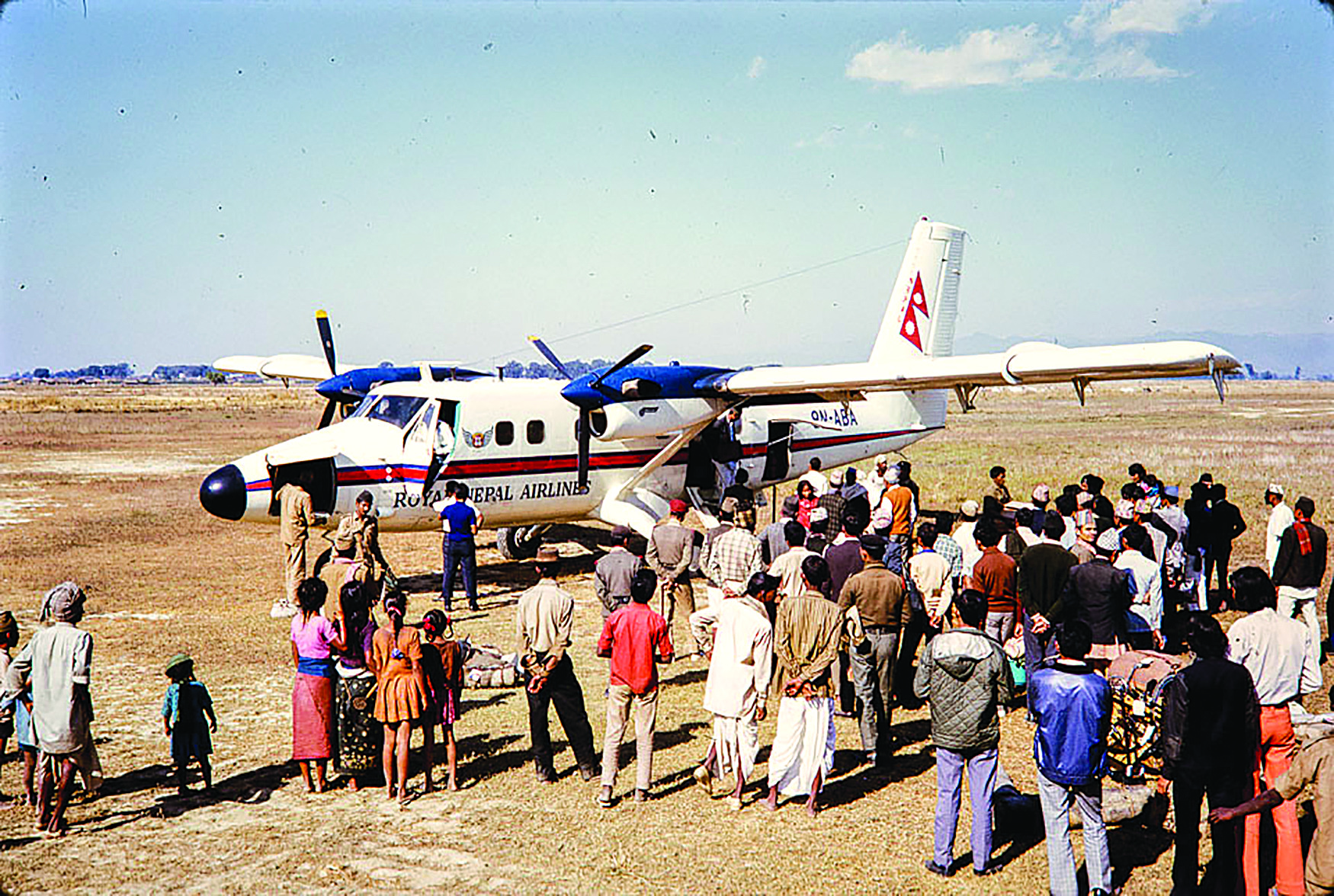
12 June 1973
A Royal Nepal Airline DHC-6 carrying Rastra Bank cash from Biratnagar to Kathmandu hijacked by underground Nepali Congress militants and flown to Forbesganj in Bihar.
1975
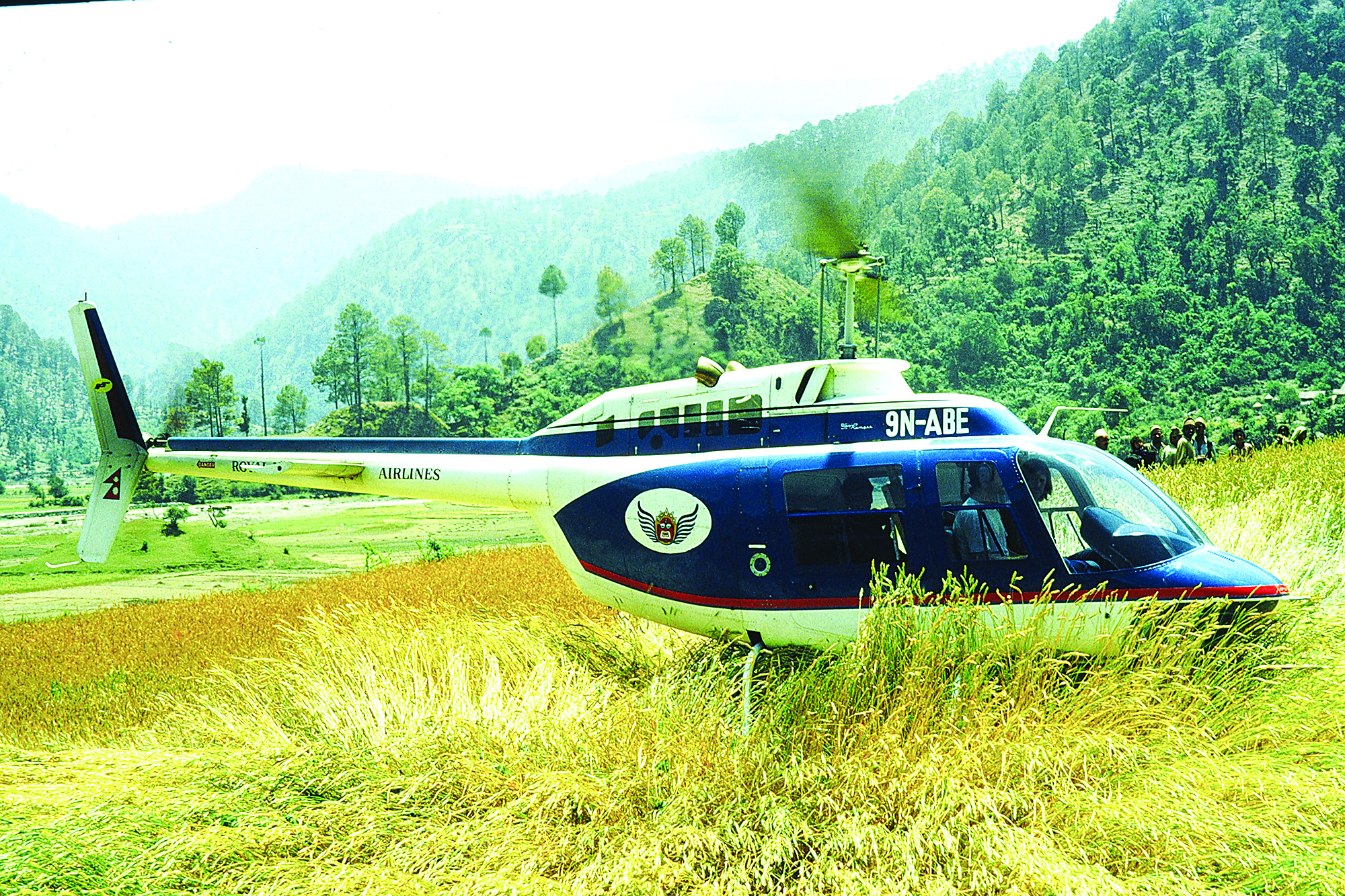
RNAC leased Bell Jetrangers from Singapore Helicopter Services for charter flights.
Dan Edwards was a Peace Corps volunteer in 1966 and is the author of several books on Nepal. This is the fifth instalment in a Nepali Times series on the history of transportation in Nepal.
Nepal enters jet age
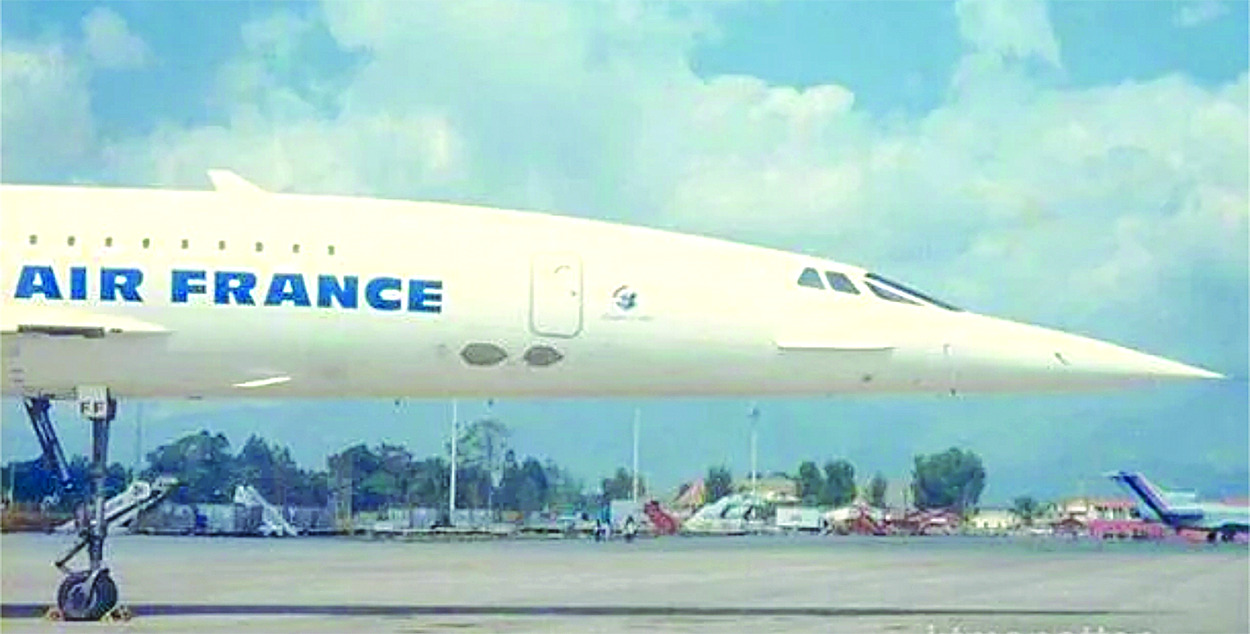
After 1973 Nepal entered the jet age with the acquisition of two more Boeing 727. In 1987, Royal Nepal Airlines became one of the first operators of the Boeing 757-200 in Asia with two planes, including a rare semi-cargo ‘Combi’ variant. The same year, an Air France Concorde round-the-world tourist charter landed in Kathmandu.
In the 1980s, RNAC operated 10 DHC-6 Twin Otters and two HS-748s on domestic routes, along with four jets for international service. Boeing 757s flew from Kathmandu to Gatwick throughout the 1990s until the airline suffered mismanagement due to political interference.
One of the 757s, named ‘Gandaki’ (9N-ACB) has been in outdoor storage for the past 10 years at Kathmandu.
Aviation safety remained a concern with 73 fatal crashes between 1962-2025 killing 935.