
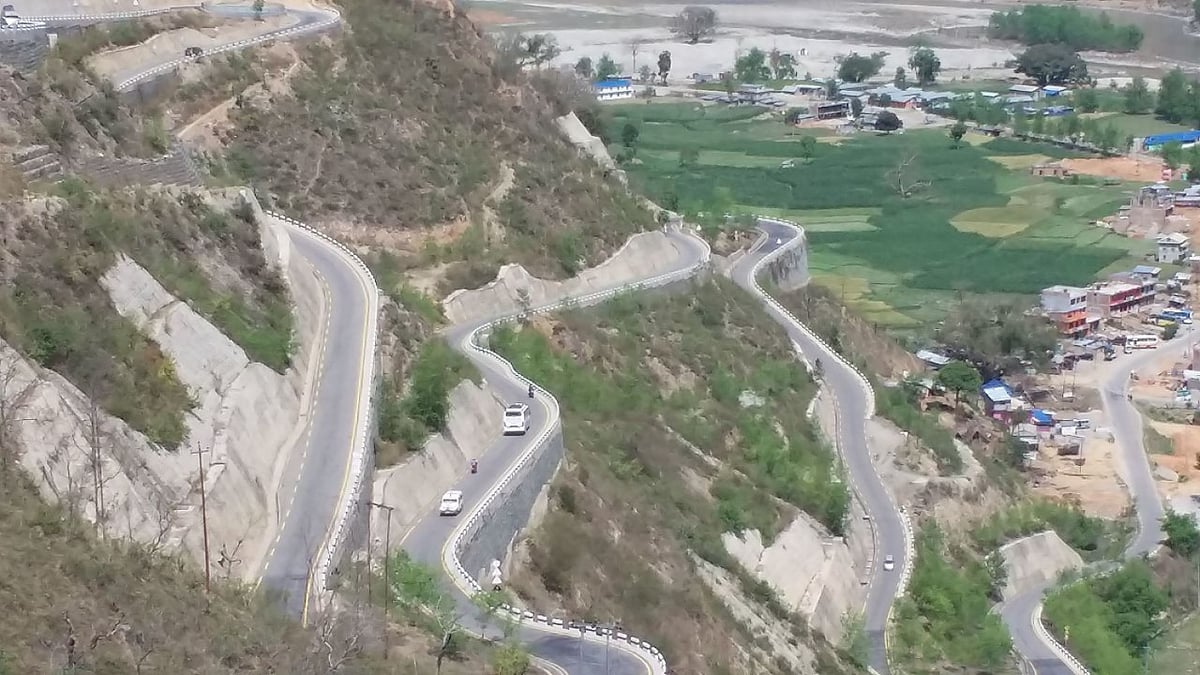
One of the government’s first priorities after federalism was to bring development to the grassroots. The political leadership concluded that the way to do that was to build a road network.
Road connectivity would encourage Nepalis to stay in their villages, connect farmers to market, and stimulate local economies. so they thought. As the roads snaked north into the mountains, Nepalis moved south to the plains along them.
Nepal's new roads have become conduits for better opportunities in the cities, the Tarai and abroad. Since 2016, every road that has reached villages in the hinterland has helped empty them. Billions of rupees were spent on roads to improve the lives of people who do not live there anymore.
According to the 2021 census, 34 of Nepal’s 77 districts have witnessed a sharp decline in population. More worryingly, there is depopulation in 329 out of Nepal’s 753 municipalities, which is 43% of the country’s geography.
It seems there is an inverse relationship between roads and migration. This is evident in districts like Ramechhap and Khotang, with the highest population decline as road connectivity spread.
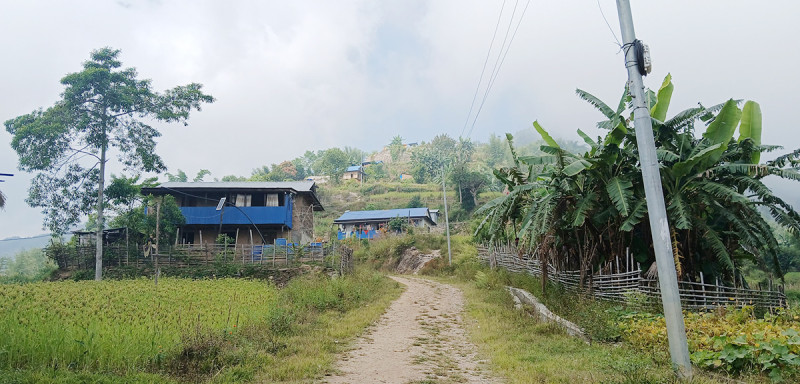
Despite its proximity to Kathmandu, the first motorised vehicle only arrived in Ramechhap in 1998. The district was cut off from the road network until a little over three decades ago, and its population was 188,064 during the 1991 census.
By the time unpaved roads were built-district wide in 2001, the population had increased by 1.2%. But in the 20 years since, as paved roads and a bridge across the Sunkosi connected rural Ramechhap to Kathmandu and the Tarai, people began to leave in droves, and the district witnessed a -0.47% decline in population by 2011.
Read also: Nepalis moving from mountains to plains, Shristi Karki
The 2015 earthquake caused extensive damage in Ramechhap, and additional roads were built to facilitate reconstruction. Most rebuilt houses now lie empty.
By 2021, major road networks connected all the municipalities in the district, and Ramechhap had a population growth rate of -1.67%. Ramechhap currently has more than 4,000km of roads.