Legal theorists once consigned the idea of ‘statelessness’ to the realm of fiction, because they considered it to be impossible within the state system that emerged after World War I.
Every human being was supposed to be assigned a nationality and a country to call his or her own. But the war had created many refugees, and as empires disintegrated and new nation-states adopted exclusionary nationality laws, not everyone was in fact included.
The rise of fascism in the 1930s and 1940s further exposed the fallibility of this system and the ominous reality of the state’s power to exclude people or strip them of citizenship. Across Europe, citizenship-stripping went hand in hand with genocide for Jews and other minority groups.
Following World War II, questions about the right to nationality, state power, and the limits of sovereignty loomed large in the development of human rights and international law. Could the states that were being created out of the independence movements and diminished European empires adopt nationality laws that excluded entire population groups? Did national governments hold the power to strip their own citizens of that status? Who was responsible for the newly stateless?
These issues remain highly pertinent today. Statelessness affects at least 15 million people, and the nationality of millions more is under threat, owing to an escalation of racially discriminatory policies and rhetoric in many countries. Nationality policies remain a favoured tool of authoritarians, who sometimes use them in tandem with mass atrocities, as in Myanmar, where the Rohingyas have been denied citizenship and subjected to genocide and mass deportations to Bangladesh.
Making matters worse, the Covid-19 pandemic has led to even more xenophobic scapegoating and ethno-nationalism, with political leaders like former US President Donald Trump and Hungarian Prime Minister Viktor Orbán blaming migrants and refugees for spreading the coronavirus.
The pandemic also reminds us of the enduring influence that nationality has over our lives. Last May, Filippo Grandi, the United Nations High Commissioner for Refugees, warned: “The right to a nationality is a fundamental human right and in this time of crisis it can mean the difference between life or death.”
When governments prioritise citizens over others in their public-health and economic responses, the stateless suffer. Because statelessness remains a major blind spot for the institutions charged with protecting life and livelihoods, stateless people have been left further behind than ever.
Ghosts from the past
At a time when statelessness demands urgent attention, two recent books provide important lessons about the nature of state power, international responses to national acts of exclusion, and the consequences of failure.
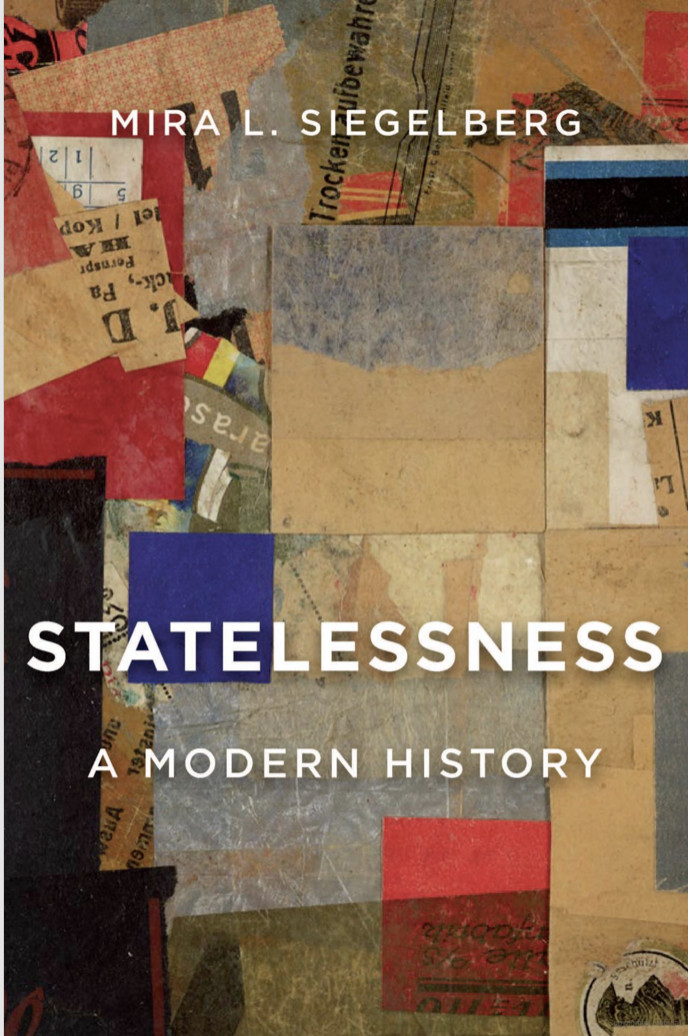
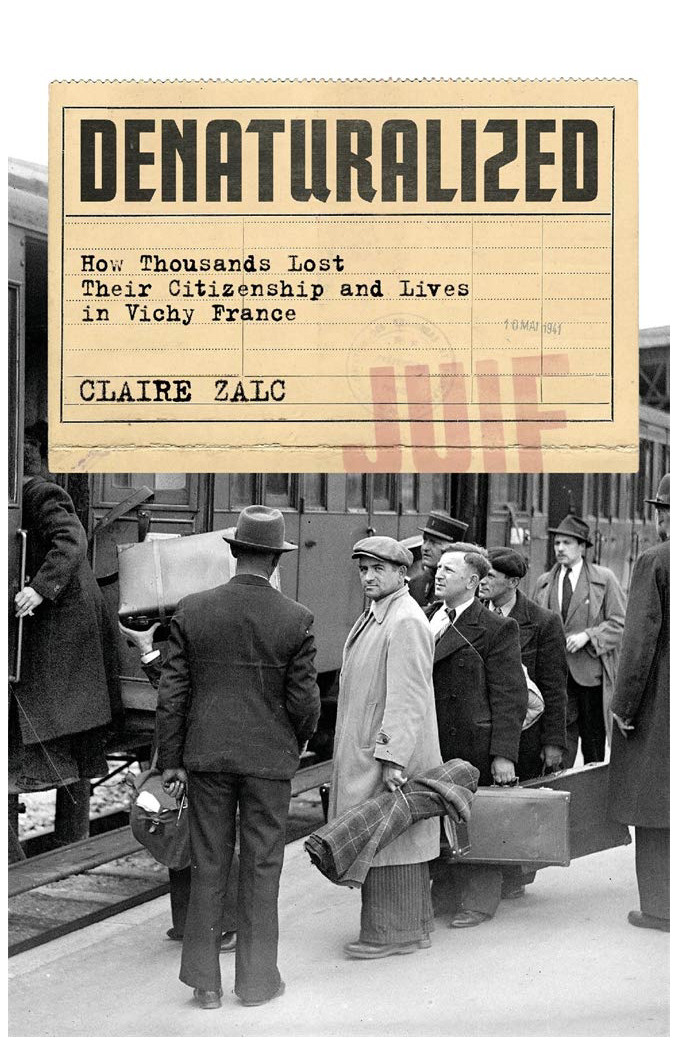
Statelessness: A Modern History, by Mira L. Siegelberg of the University of Cambridge, and Denaturalized: How Thousands Lost Their Citizenship and Lives in Vichy France, by Claire Zalc, Director of the Institute of Modern and Contemporary History at the École Normale Supérieure, underscore both the historic scale of the problem and its grim costs.
Each takes a different but equally meticulous approach to researching the history of the problem. And both explore how people have had their citizenship denied and revoked against the background of some of the most violent periods in modern history.
Together, they remind us that the history of statelessness is a history of crumbling empires, world wars, genocides, and the emergence of an interstate system based on the formal equality of states.
Siegelberg’s work is a sweeping survey of international legal and political thought, covering a period that includes WWI, the rise of fascism in the 1930s, the Holocaust, the postwar reconstruction of the international legal order, and the independence movements of the postwar decades. Drawing on a wide variety of archival sources – including popular fiction, case law, correspondence from stateless people to the League of Nations, works of legal and political theory, and notes from negotiations on human-rights treaties – she documents how the problem of statelessness informed theories of human rights and sovereignty.
Siegelberg is concerned with how notions of statelessness developed within, and then shaped, ‘the political contours of the modern interstate order’. She reminds us that the concepts of citizenship and statelessness are not static. Rather, the meanings attached to these terms are constantly being reshaped and reconstructed by historic events and shifting power relations.
While Seigelberg’s book provides a comprehensive overview of international perspectives and experiences concerning statelessness and the modern state’s power to exclude, Zalc’s work focuses on Vichy France between 1940 and 1944, when Jews and others were denaturalised in increasing numbers to serve the Nazi agenda of deportation to death camps. Her detailed investigation provides unique insights into how bureaucracies in authoritarian regimes produce and reproduce violence.
“The other”
Siegelberg’s Statelessness shows us that the racial hierarchies that characterised early twentieth-century citizenship regimes gave way not to equal citizenship, as was envisaged, but rather to other forms of racism in Europe. At the same time, Zalc’s book demonstrates how processes of citizenship were racialised with the help of seemingly neutral and innocuous bureaucratic categories and data collection.
Under the French Third Republic, Jewishness had been considered a private matter of faith and thus went largely unrecorded by the state. But as Zalc shows in fascinating detail, the categorisations of ‘Jew’ and ‘Israelite’ were deciphered and applied retroactively to stigmatise and discriminate.
With a new racialised definition of ‘Jew’, and under pressure from the occupying Nazi regime to identify, count, and denaturalise Jews according to quotas, individual citizen files were scrutinised for evidence of Jewishness.
Zalc’s work provides direct evidence of how state power – and sometimes state violence – functions through the routine processes of registration, categorisation, and counting. This was how discriminatory decisions by administrators and judges, on the basis of predominantly unstated racial criteria, ultimately resulted in deportation and mass murder.