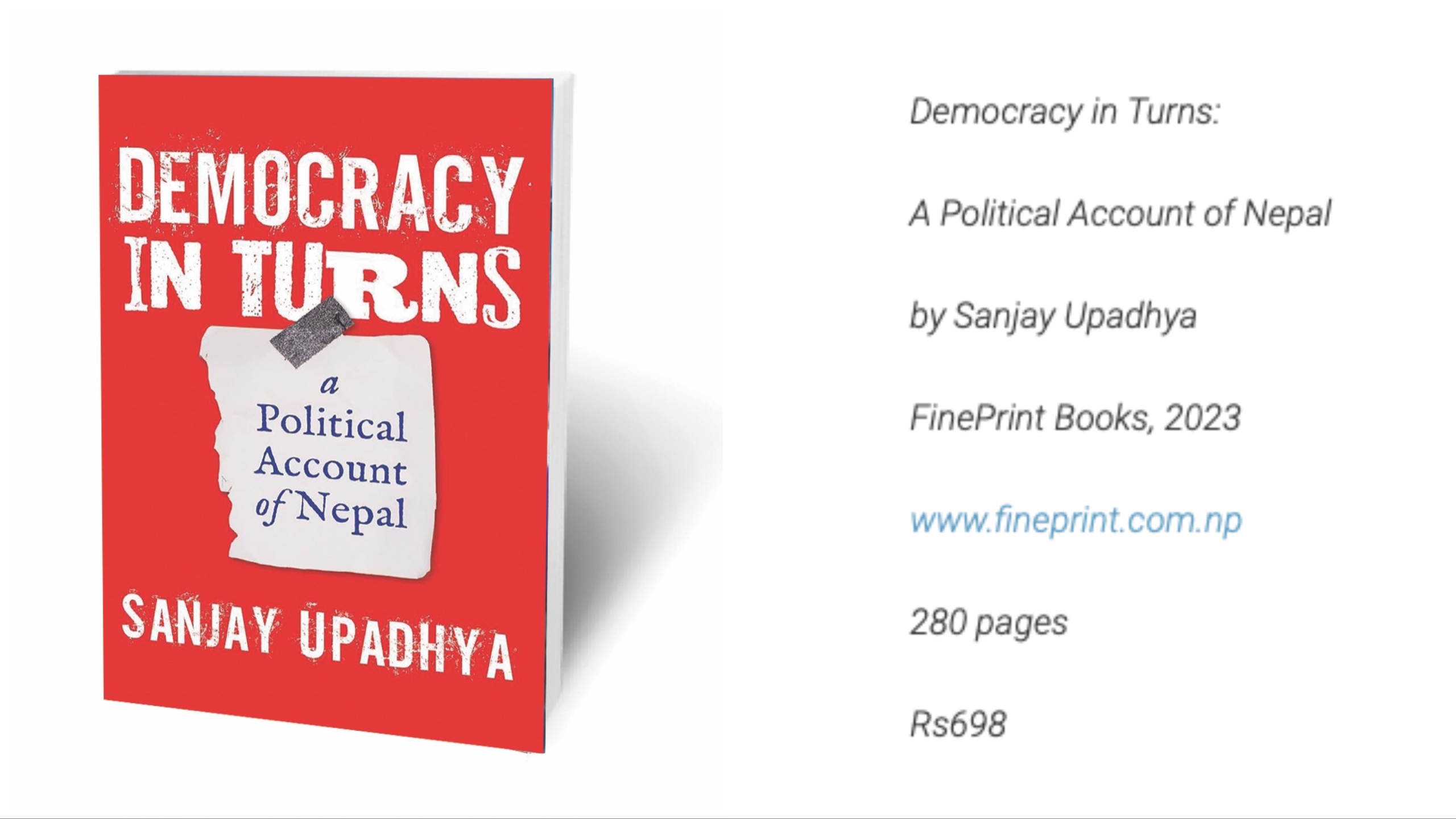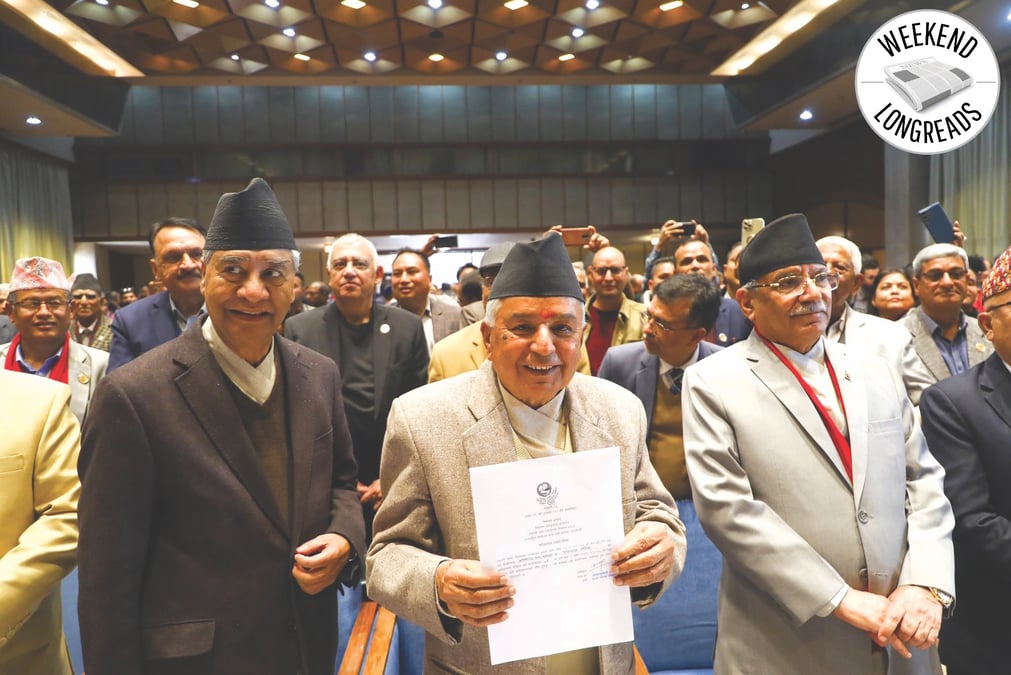
Excerpts from the last chapter of Sanjay Upadhya’s new book Democracy in Turns: A Political Account of Nepal which looks back at the country's struggle to construct a new democratic identity under 7 constitutions in 7 decades.
It is a rare republic where the deposed monarch enjoys state privileges under the successor regime, continues issuing messages on national observances, and whose activities and movements draw abiding political interest.
Former King Gyanendra Shah may have become a commoner in May 2008 through a constituent assembly vote, but he has not been out of the public’s imagination. Supporters blame the abolition of the monarchy for the country’s sordid state today. Critics accuse him of continuing to play spoiler from behind the scenes.
Both groups wonder what the ex-monarch might plan next. If King Gyanendra’s coup on 1 February 2005 removed the vital cushion the political parties had provided between the people and the constitutional monarchy, today’s political class has lost a referee in the turbulent power play, even though they are reluctant to admit it openly.
The prime beneficiary of the repeated breakdown of democracy in Nepal was, without doubt, the monarchy. Yet it would be wrong to blame the palace, which always retained significant influence through its hold on the military and the loyalty of the traditional elite, for engineering the collapses. If the last 15 years of Nepal’s political development have provided a lesson, it is that the monarchy was not the country’s problem, at least not the preponderant one.
The institution has always been controversial, beginning with whether Prithvi Narayan Shah was a unifier or a conqueror. Mahendra, who is remembered mostly as an autocrat, has undergone some rehabilitation lately as a nationalist who raised Nepal’s international profile and built its early infrastructure. The tragic nature of Birendra’s death has etched him in public memory as a modernizing monarch attuned to the popular sentiment.
But the collective consciousness easily forgets that most of his benevolent achievements were under the still reviled partyless Panchayat system. Dipendra’s three-day reign was a technicality.
The circumstances of King Gyanendra’s enthronement, his reputation as a palace hardliner and shrewd businessman, his son’s poor public image, and especially the debacle of his second takeover, reinforced a negative image. His actions and activities as ex-king have helped to rehabilitate that persona somewhat, assisted in no small measure by the conduct of the politicians succeeding him.
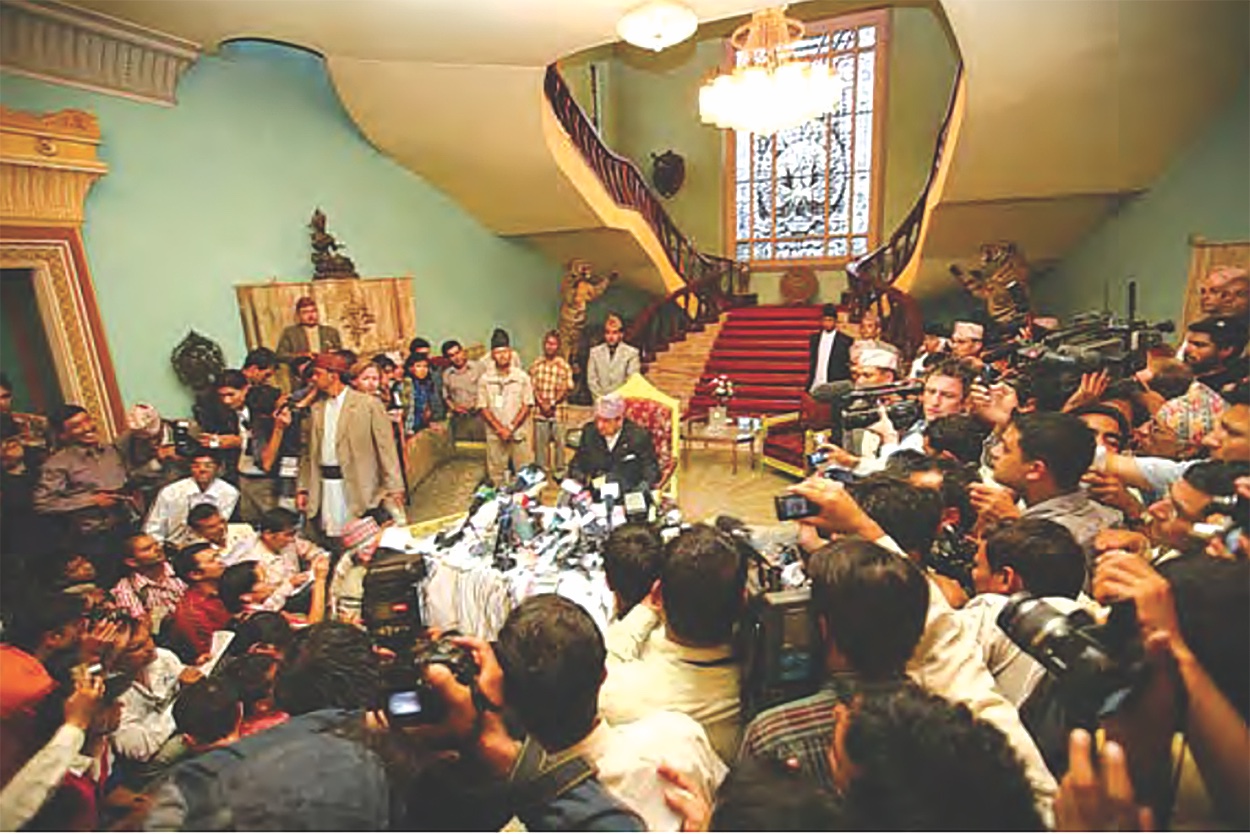
Beyond the demonisation of the monarchy, the blame game has been insidious enough. Many point to the internecine bickering in the NC. Others single out the CPN-UML for spending most of the period as a disruptive opposition or a would-be NC in power. The Maoists have been castigated for wrecking a system that stood every chance of working in their quest to build a nebulous new Nepal.
External powers have been accused of fostering instability to further geostrategic ends. Others have targeted the feudal culture the major political parties had fought against for decades but ultimately succumbed to. Then came the stark question: Had real democracy ever been achieved?
Nepal’s failure to consolidate broader reforms and sounder institutional arrangements became clearer as the euphoria of the 1951 revolution and the two People’s Movements wore off. The fact that the Maoist insurgency was driven more by a combination of historical, economic, social and gender grievances than ideological fealty to the Great Helmsman told its own story.
Monarchists continued to stress the reality that the democracy movements had taken place while Nepal was caught in India’s geostrategic adjustments. The implication that the three democracy movements were a foreign-inspired ploy is an insult to Nepalis' underlying aspiration for freedom. However, the dismal performance of the political parties made it harder for them to fight off such explanations.
In the aftermath of all democracy movements, the political leadership moved ahead with a progressive discourse amid heightened public expectations but was hardly prepared for the challenges of governance. Having won the right to choose their leaders, the people now had to ensure they did not go astray.
In theory, checks and balances among the executive, legislature and judiciary were carefully written into the constitutions. However, those entrusted with operating them brought their personal perspectives and prejudices. Great emphasis was placed on the supremacy of law and order in the emerging open and transparent order.
The commitment was undermined by such things as the haste with which the new leaders withdrew criminal cases against some of the high-profile offenders. Yet the same personalities and proclivities kept getting re-elected, further sullying the national conversation.
Distrust ran deep among the protagonists. NC leaders could not forget how the palace allowed communists greater freedom to operate during the partyless decades. The communists, worried by the global tidal wave against their ideology, were anxious to prevent the NC from striking a broad coalition with the palace.
Ideology - Personality
With the two main political forces having emerged from the anti-Rana movement and matured in their own fights against three decades of palace-led partyless rule, Nepali politics perhaps had a greater propensity for confrontation. In that context, the emergence of the Maoists to provide a more radical hue to the political ambience could only have had disruptive effects.
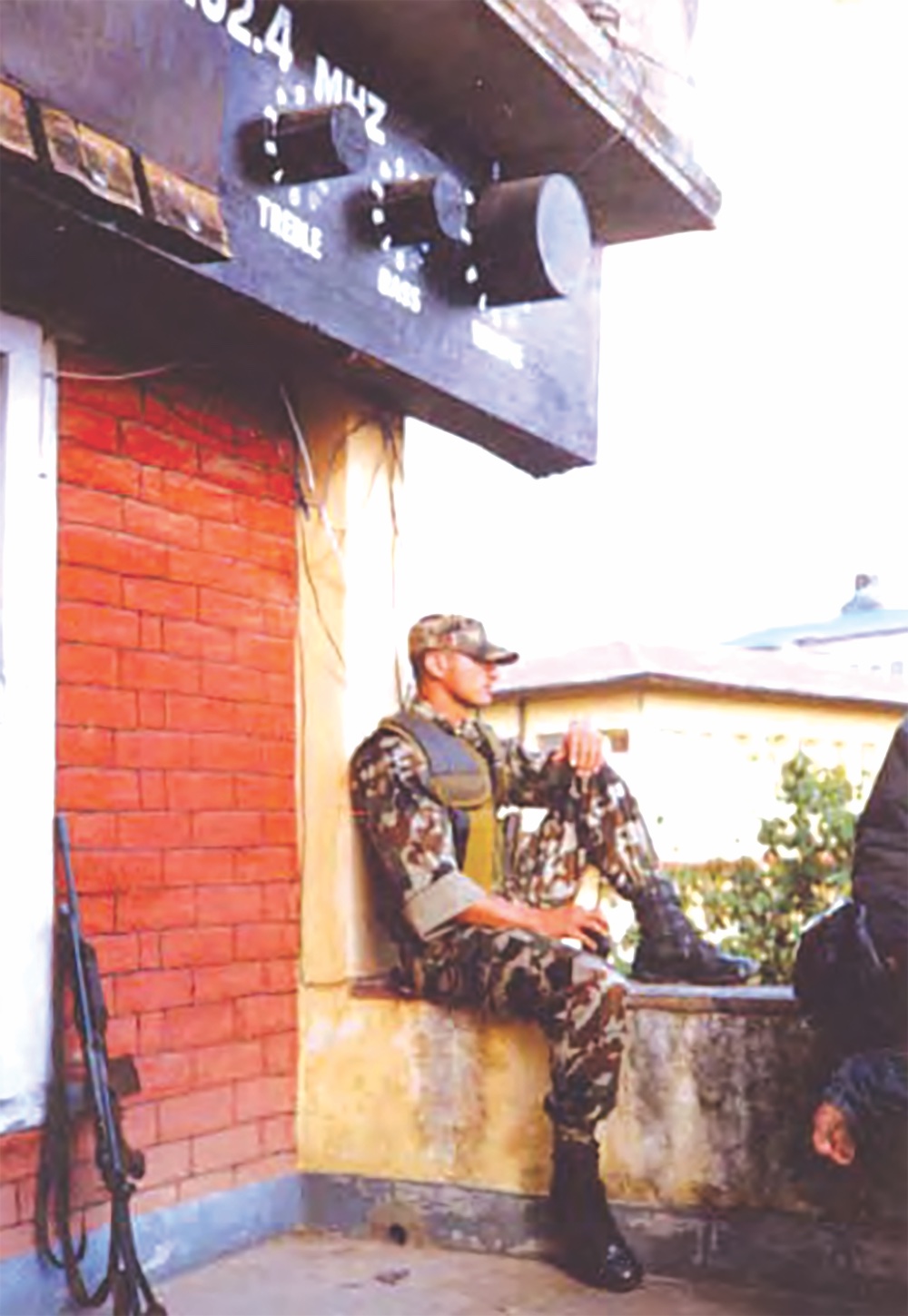
By the end of the 1990s, the ideological content of the NC and the CPN-UML was not very different. It nevertheless provided a framework for two sturdy players to build on the newly acquired democratic gains. The key imponderable was whether the two major parties would revert to their personalized leadership. They soon did. Personality conflicts were enough to attract a host of other factors to justify splits.
The NC has an obvious advantage. Having driven three successful movements for democracy, its credentials are impressive. Moreover, there is no alternative liberal democratic party in the field. In the absence of formidable external competitors, the tendency towards factionalism has grown. Not every dispute has been about power and patronage.
Those in the NC advocating some form of continued cooperation with the communists, like Ganesh Man Singh and Krishna Prasad Bhattarai, were guided by the practical politics of People’s Movement I. The anti-communist flank, represented by Girija Prasad Koirala, was too wedded to ideological considerations. That rigidity was used to mask factionalism. But royal assertiveness would lead Koirala to join hands with both the CPN-UML and, later, the Maoists.
The CPN-UML’s strong organizational footing was weakened from the start by its ambivalence on major national issues during the 1990s and after. As the main opposition party, the CPN-UML attacked the Koirala government for what it called a ‘sell-out’ of national sovereignty. Once in power, the CPN-UML was entangled in the ‘Mahakali Package’ that provoked similar attacks. Moreover, the CPN-UML’s position on Mahakali reflected serious infighting in the leadership and philosophical perplexity on the party’s status in a democratic system. The party’s anti-corruption campaign fizzled amid similar self-interest.
Such behaviour bolstered criticism that the CPN-UML excelled in turning every vital national issue – corruption, economic development, good governance, women, ethnicity – into a political weapon to serve narrow partisan purposes. That criticism would dog the party well into 2021 during the parliamentary ratification of the $500 million MCC grant.
The smaller communist parties had a minuscule electoral representation. Despite this, they were accepted as active members of the combined opposition. For the main opposition party of the day, such broad basing proved politically expedient. The corrosive effects were two-fold: As ideology gave way to narrow politics depending on the winds of the day, the smaller parties were tempted to exercise power disproportionate to their influence. Similar was the case of the royalist right.
Divide and (Mis)Rule
As the Maoists became deadlier in their attacks on the symbols of state as part of their ‘people’s war’, they became shrewder in political pursuits. Behind their arcane prose lay a clever campaign to play off power centres in Kathmandu. They succeeded in pitting the palace and political parties against each other.
Blaming the parties for corruption, mismanagement and cold indifference to the people’s concerns, the rebels were subdued in their comments against the palace. When Maoist leaders sometimes hailed the palace’s nationalistic credentials, it easily raised suspicions of collusion. Reported contacts between palace confidants and the rebel leadership went on to deepen such suspicions.
By holding consultations with the CPN-UML and other communist parties, however, the Maoists could sow suspicions in the royalist and NC camps. Most parties, for their part, appeared to acknowledge the political, social and economic grievances behind the movement while in the opposition. Once in power, they relied on the reinforcement of police units.
The rebels also gained from pitting one faction within a party against the other. In July 2001, Prachanda virtually ensured Deuba’s ascension to the premiership by insisting that the rebels would not negotiate with “Girija or Girija-like” leader. After the first peace talks’ failure, the rebels lost little time in reaching out to Koirala. This tactical gambit helped their immediate political objective but raised questions about their motives.
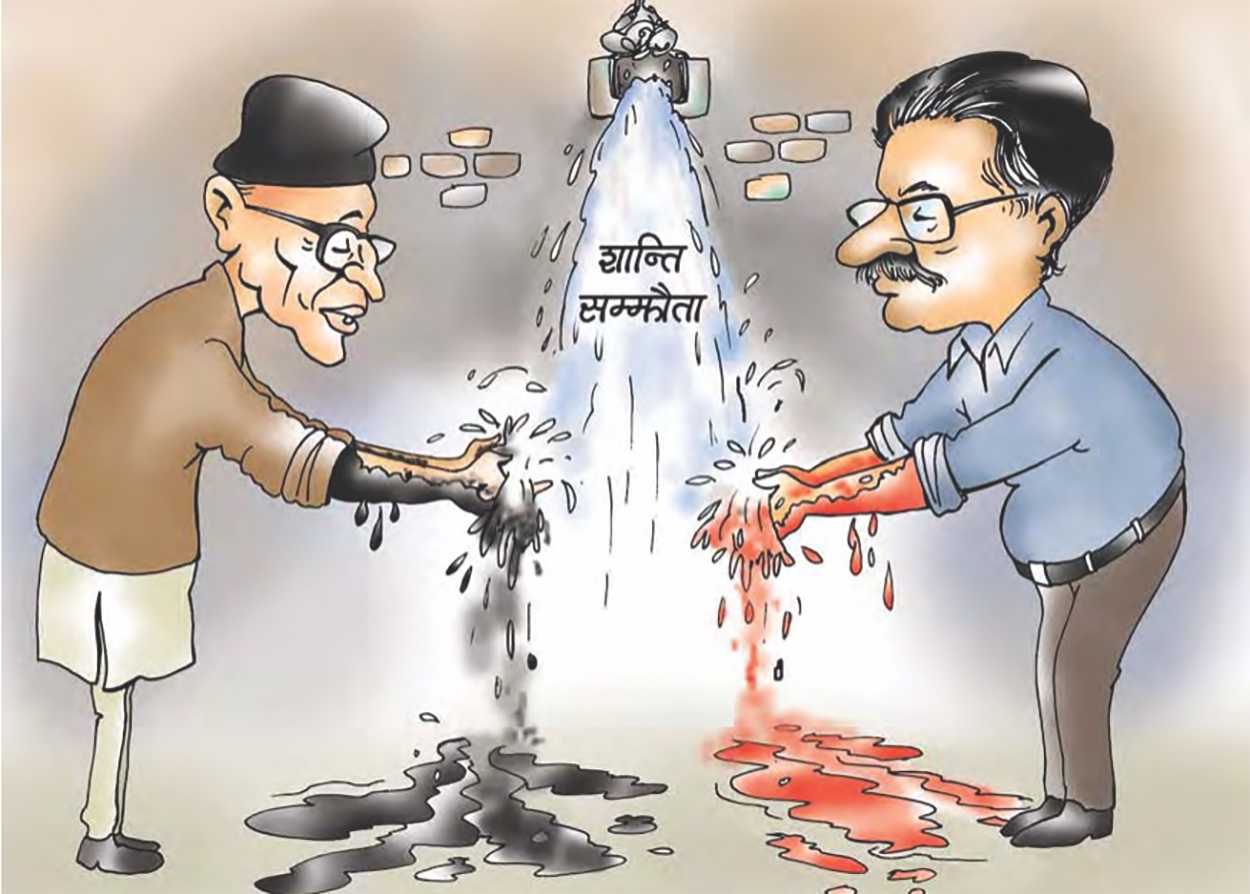
The prime reason for the constitutional deadlock, in the end, was the Maoists’ threat to disrupt the elections, which led to the two royal takeovers. Those tactics continued long after the Maoists joined competitive politics. Their role in creating and destroying a unified communist party between 2018 and 2021, doublespeak on the MCC compact and craftiness in striking power-sharing deals could only erode the polity.
Non-Political Actors
With political forces locked in intra- and inter-institutional skirmishes and leaders struggling to halt the depletion of credibility, key non-political actors emerged to exercise significant influence over the national discourse. The creation of a strong judiciary independent of executive and palace interference was a major achievement of the People’s Movements. As the top judicial authority of the country, the Supreme Court’s interpretation of a law or legal principle, orders and decisions were binding on all.
As the guarantor of fundamental rights and personal liberties laid down by the constitution, the Supreme Court had the authority to declare a law as void ab initio if the bench found that it contravened the constitution’s provisions. The Supreme Court also had the power to issue appropriate orders and writs, including habeas corpus, mandamus, certiorari, prohibition and quo warranto.
In exercising those powers, the judiciary became an early participant in the political arena. Of the four prime ministerial orders on the dissolution of the House of Representatives in the 1990-2002 period, three ended up at the Supreme Court. Both dissolution orders under the republic were tossed out by the apex court. From the Tanakpur Accord to the Citizenship Bill, judicial interpretation became a predominant feature of the political discourse. The Supreme Court ruling that the Tanakpur Accord was an agreement, not a mere understanding as Prime Minister Girija Prasad Koirala had been insisting, weakened Koirala’s political standing and emboldened the opposition CPN-UML.