
This week marks the 20th anniversary of the September 11, 2001, terrorist attacks on the United States. On that day, 19 terrorists took control of four civilian aircraft, flew two into the towers of New York’s World Trade Center, struck the Pentagon with a third, and crashed the fourth in a Pennsylvania field after passengers physically prevented the terrorists from reaching their target, often thought to be the White House or another US government building in Washington, DC.
All the hijackers were from the Middle East, 15 from Saudi Arabia alone. All were trained in Afghanistan, and four at US flight schools, as part of an operation planned, organised, and carried out by al-Qaeda (the “base”), the terrorist group headed by Osama bin Laden. By the day’s end, 2,977 innocent men, women, and children had been killed, and more than 6,000 injured. Most were American, although citizens of more than a hundred other countries also lost their lives as well.
Many at the time feared that 9/11 had ushered in an era defined by global terrorism. And, to be sure, other al-Qaeda attacks followed, including the train bombings in Madrid in March 2004 and the attack on London’s transit system in July 2005. Moreover, terrorists claiming allegiance to the Islamic State (ISIS) killed 32 people at Brussels Airport in March 2016, and staged a series of smaller attacks (often using vehicles to mow down pedestrians). But neither the US nor any of its allies has experienced another attack on the scale of 9/11 – or one even close to it. It is therefore necessary to ask: Beyond the immediate costs, what difference did 9/11 make? How did history change, if at all, as a result?
Terrorism, unplugged
There are many explanations for why terrorists have not succeeded in executing additional major attacks. With the US invasion of Afghanistan, al-Qaeda lost its sanctuary. Almost every government around the world has introduced new screening procedures that make it more difficult for would-be terrorists to gain access to airports and airplanes. Countries have dramatically increased their intelligence, police, and military capabilities devoted to minimising risks and countering threats. Countries have also increased their cooperation with one another; counterterrorism is a rare domain where governments that often disagree are willing and able to work together to a considerable degree.
There is also now broad agreement on what constitutes terrorism – the use of armed force by individuals and groups against civilians for political purposes – and a degree of support for the principle that governments should not distinguish between terrorists and those who give them sanctuary and support. Mostly gone are the days when individuals and groups who killed on behalf of their cause were romanticised as freedom fighters.
This is not to say that terrorism has not continued to claim tens of thousands of lives each and every year, which it most surely has. But almost all the attacks have taken place in the Middle East, Africa, and South Asia as part of ongoing conflicts (mostly in Iraq, Syria, Afghanistan, Libya, Somalia, Nigeria, Pakistan, and Yemen) as opposed to an isolated 9/11-style attack against one of the major powers. Terrorism is increasingly localised and decentralised. It is also resilient: capturing or killing the head of a terrorist organisation does not necessarily spell its end. Al-Qaeda, for example, survived the killing of bin Laden by US special operations forces in Pakistan nearly a decade after the 9/11 attack.
It thus comes as no surprise that terrorism continues, with no end in sight. Nor can the possibility of a new 9/11 be ruled out, even though the US government has recently stated that the “most urgent terrorism threat” the country faces is domestic. As the Provisional Irish Republican Army put it after its failed effort to assassinate British Prime Minister Margaret Thatcher in 1984, “Today we were unlucky, but remember we only have to be lucky once. You will have to be lucky always.” The danger is that the day will come when terrorists gain access to nuclear material or figure out how to manufacture and deliver a biological or chemical weapon, in which case terrorism could come to define the age. For now, though, it has not.
America, unleashed
Nonetheless, 9/11 marked a historical turning point, with a profound impact on US foreign policy in the two decades since. Although the attacks did not usher in an era of global terrorism, they did usher in the so-called Global War on Terrorism, which profoundly affected what the US did in the world, how the world came to regard the US, and how many Americans came to see their country’s foreign policy.
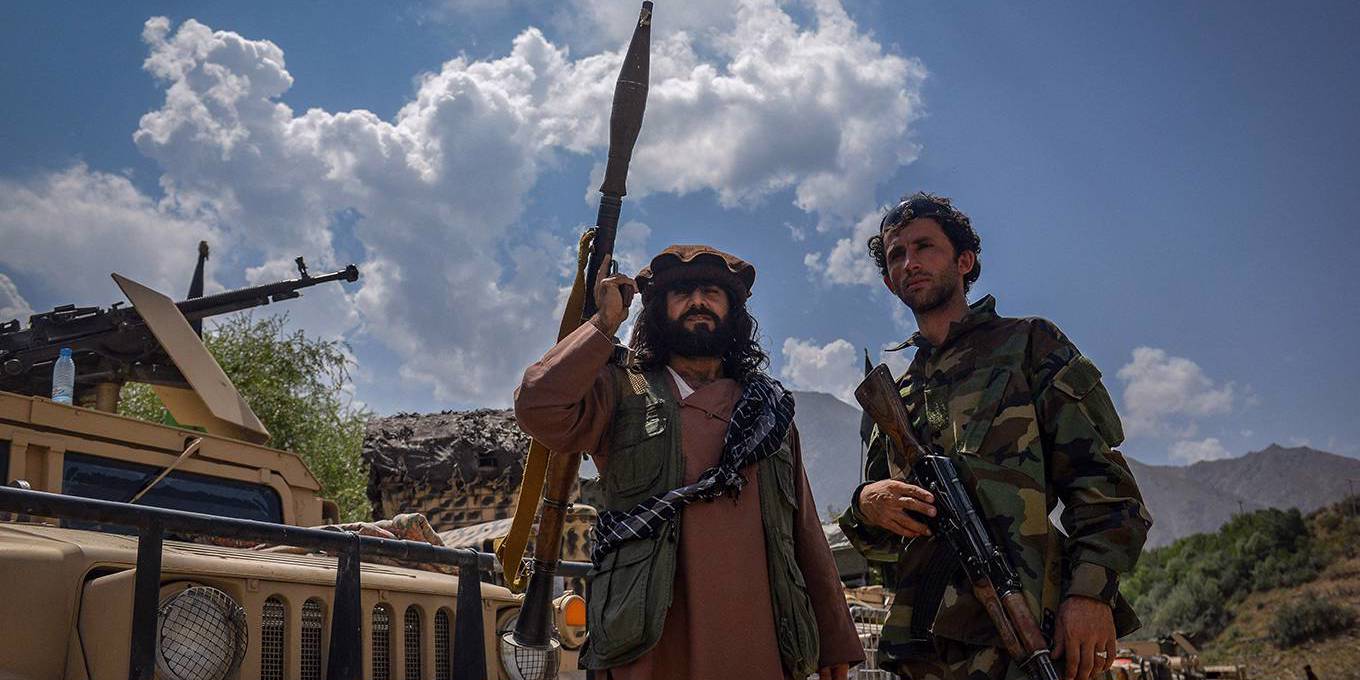
The saga begins in Afghanistan. Shortly after the 9/11 attacks, the US gave the Taliban, then in control of Afghanistan’s government, a choice: either hand over the al-Qaeda leaders who were living in their country and responsible for planning the 9/11 attack, or put their rule at risk. When the Taliban refused to hand over the al-Qaeda leaders, US intelligence and military personnel collaborated with a loose confederation of Afghan tribes known as the Northern Alliance in overthrowing the Taliban. The US helped assemble a successor government that took control of most of the country.
That control, though, was never complete or unchallenged. Many individuals loyal to the Taliban and al-Qaeda escaped to neighbouring Pakistan, where they gradually rebuilt their strength and resumed military operations against the government that had replaced them. The US for its part did not do enough to build an Afghan military, reduce corruption, or deny the Taliban a sanctuary in Pakistan. Instead, it increased its own presence and military operations in Afghanistan, essentially becoming a partner of the government in its civil war.
At its peak, the US effort in Afghanistan involved more than 100,000 of its soldiers. Over two decades, US operations cost more than $2 trillion, and more than 2,300 Americans, as well as tens of thousands of Afghans, lost their lives. The effort was at once both too much and not enough. While the US presence robbed the Afghan government of much of its legitimacy and generated opposition in the US, the Taliban proved to have more staying power than the US, which by 2020 had lost its will to continue a fight that promised only an open-ended stalemate.