
 RAMITA SHRESTHA |
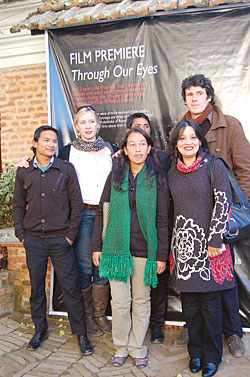
Just a few minutes into Narbahadur's film the audience gasps. After four days of walking the 18-year-old former child soldier arrives home in a remote part of Humla district. He has warned the viewers: 'There is nothing in my village.' But they are unprepared for the images of grinding poverty in the young filmmaker's home: malnourished sisters swatting flies, an emaciated mother, and his grey-haired father, a blacksmith who is going blind. Narbahadur's film, My Sun Rise, is part of the Through Our Eyes trilogy produced by three teenagers who joined the Maoists when they were only twelve. Like Narbahadur (back centre, pic), Sukmaya (centre) comes from a Dalit background, and as a child was painfully aware of the fact that she was 'at the bottom and always the last'. She narrates her story by Phewa Lake in Pokhara. The chronology is not entirely clear; Sukmaya's father died when she was young, but did her mother become mentally ill because of that or after witnessing the Maoist attack on Beni in 2004? It doesn't really matter. What is clear is that Sukmaya felt she was not given a choice. The Maoists stayed at her house, and the army knew it. "The army would not spare me. I had to go with the Maoists," she says.
Today Sukmaya still appears traumatised. She asks the audience some hard questions. "Why for us nothing has changed? They needed us then, but now we are not needed, are we? Why are we not part of the decision making? The democratic republic hasn't come, has it?" Then she breaks down.