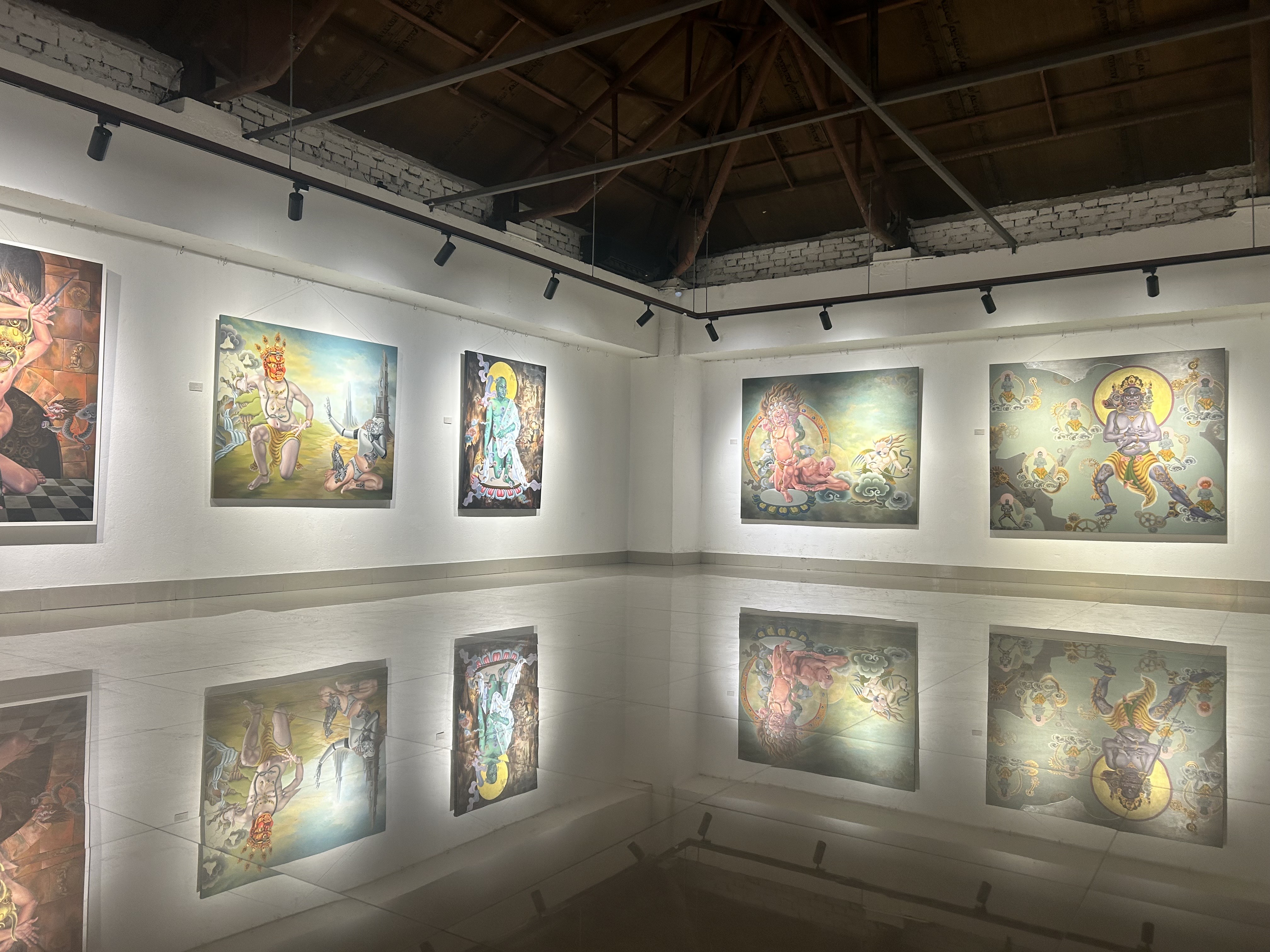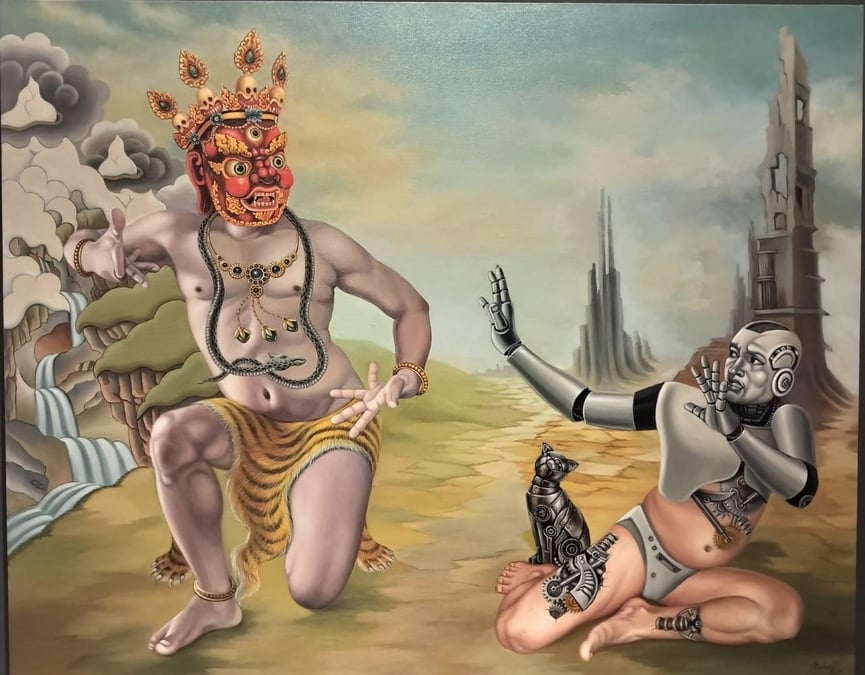
We walk past familiar neighbourhoods and wonder how much it has changed. An ongoing exhibition at The Kalā Salon titled Changing Times by The Pagoda Group aims to do just that -- capture ever-changing society within a captivating display of colourful canvases.
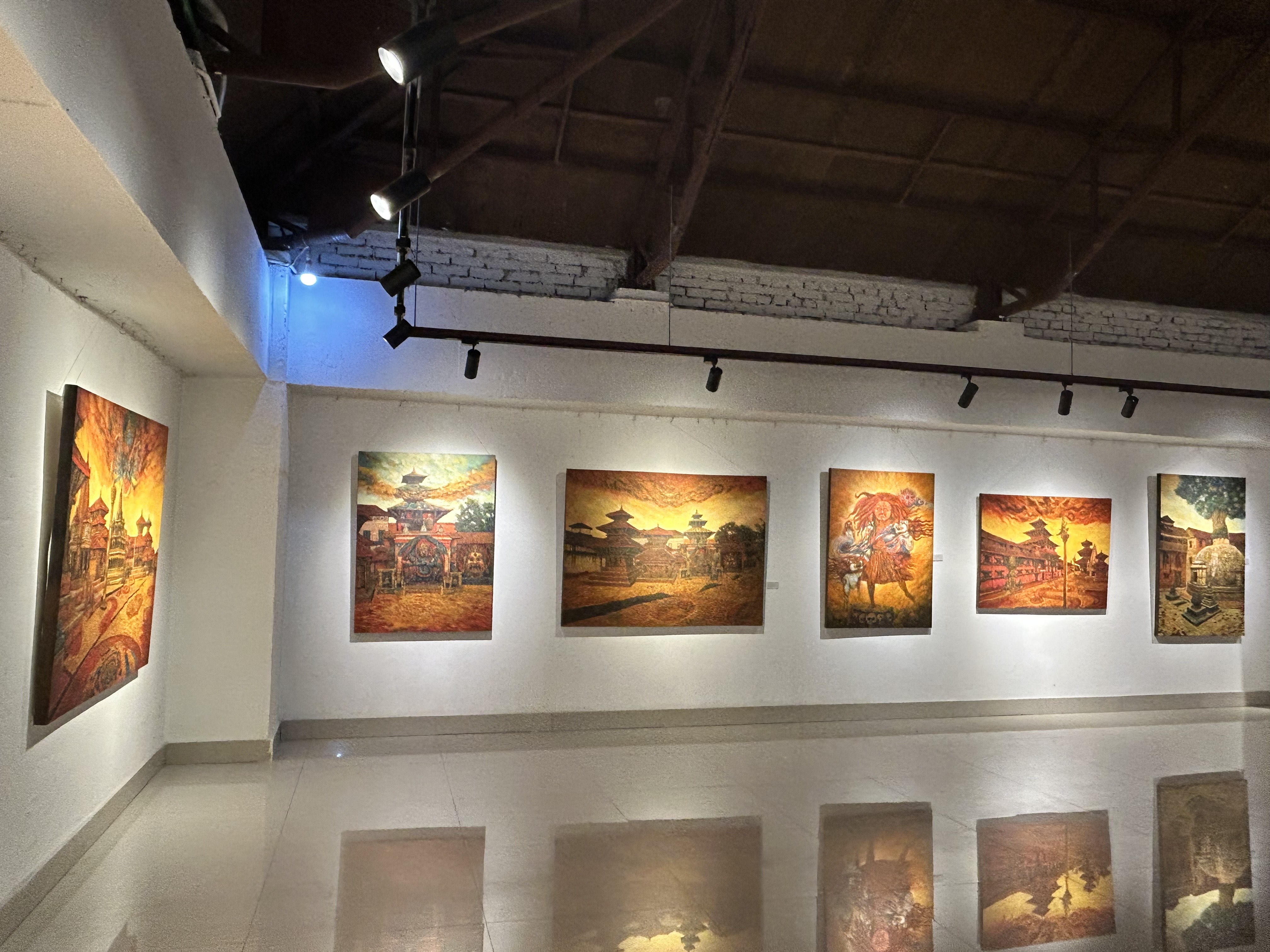
Brick-lined houses, local tea shops, ancient temples, quiet devotion are themes in Pradhumna Shrestha’s series Shangri-La, much of which is an imagined past filled with nostalgia of the place he grew up in. By keeping people out of the frame, he allows space for what he calls a divine aura to surface.
“I was born and brought up here and my canvases echo the nostalgia of cities like Kathmandu, Bhaktapur, and Lalitpur which are dense with myth, folklore, religion, and an ever-present divinity. All of this is truly what is ours, and we must treasure it,” says Shrestha. “Whatever I truly felt in my heart, I translated it into my work.”
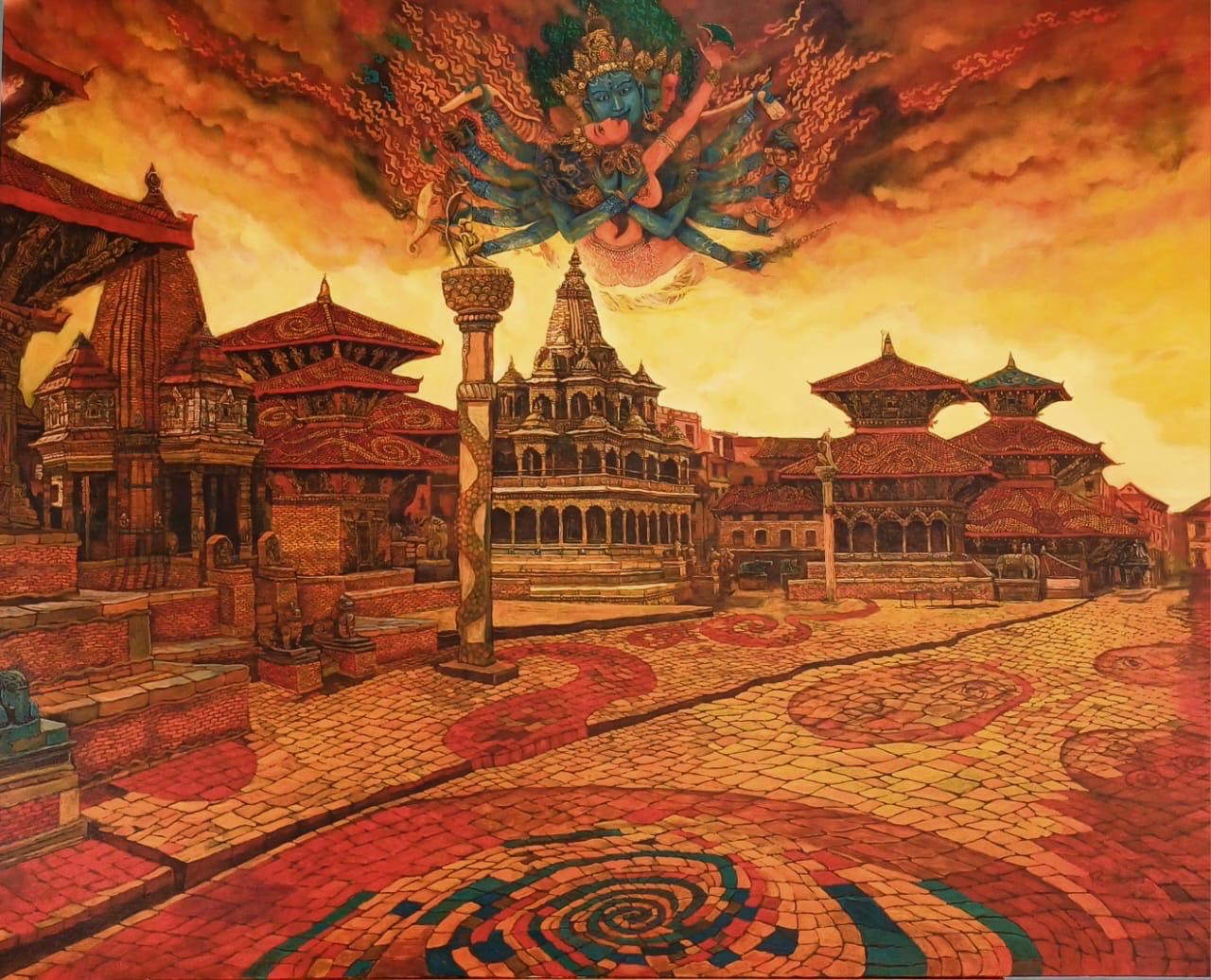
The swirling clouds that drift across Shrestha’s canvases borrow from thangka and paubha traditions, lending the scenes a sense of mysticism and otherworldliness. Within this dreamscape are red circular forms which represent wheels of chariots. The presence of divinity dominates from above, its presence asserted in soft blue brushstrokes below, as if the deity’s gaze itself has seeped into the land. Gods linger as guardians and temples hum with enigma in his paintings.
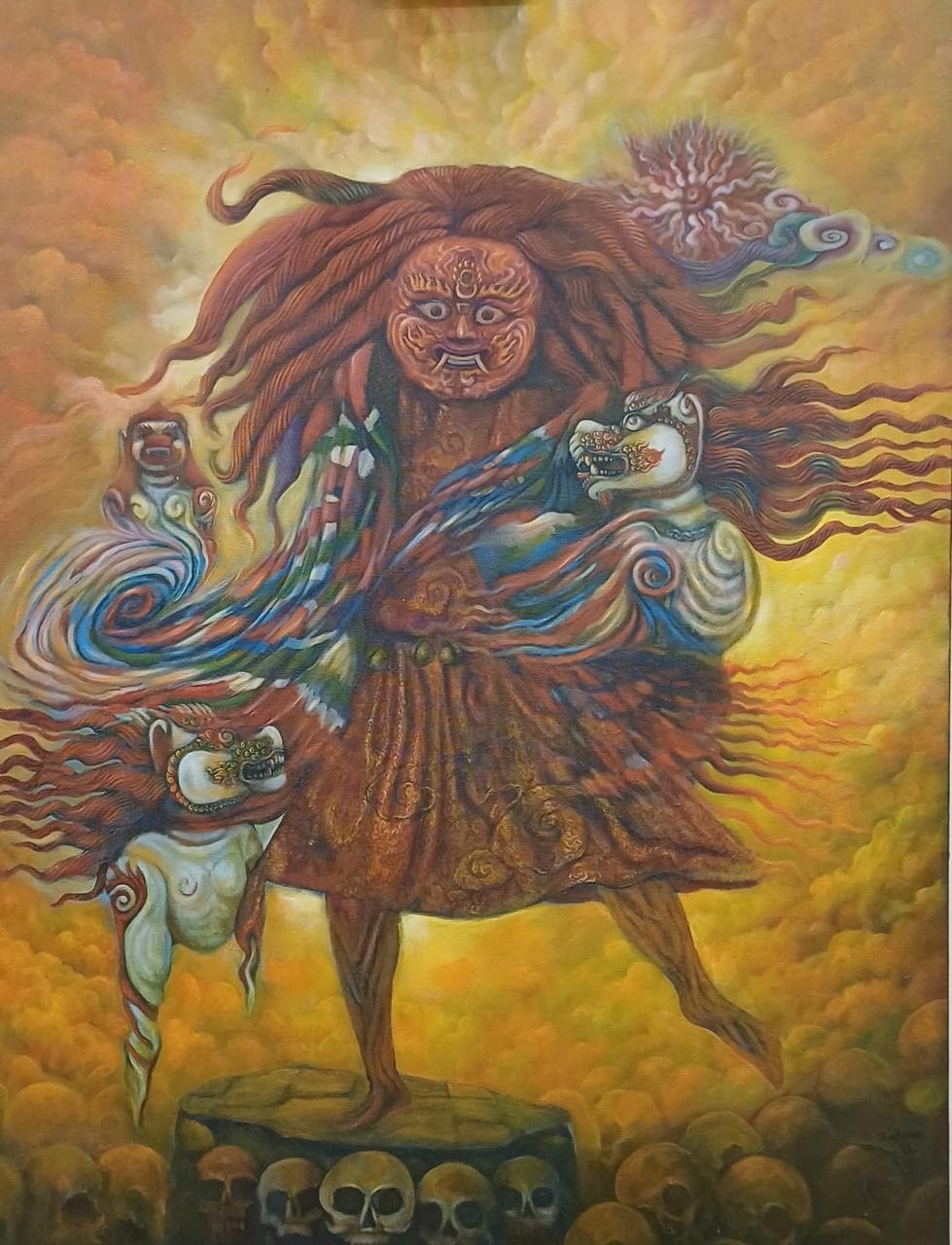
In his much earlier work, Cultural Bond, a lakhe masked dancer bursts forward in vibrant red, dancing against a backdrop of molten gold clouds. The lakhe’s trance signifies protection and where it steps, the evil cannot follow. Hence, the skulls that surround but never fall beneath its feet but, one leg hangs suspended in midair, suggesting uncertainty, raising questions.
Is this a symbol of culture and tradition, secure, or is it endangered by modernity? The work captures a society at a crossroads, honouring tradition while grappling with the risk of drifting away from it.
In Panchatatva Mandala, Pasang Bikram Lama fuses two mandalas into a single visual meditation, suggesting unity where each colour carries symbolic weight: yellow evokes the soil of the earth, blue flows as water, red burns with fire, and black opens into the vastness of the spatial sky. Together, these elements form a quiet cosmology that speaks of creation and dissolution, of life folding endlessly into death and returning again. Says Lama, “Everyone has a mandala of their own being, and the elements represent their cycle of life.”
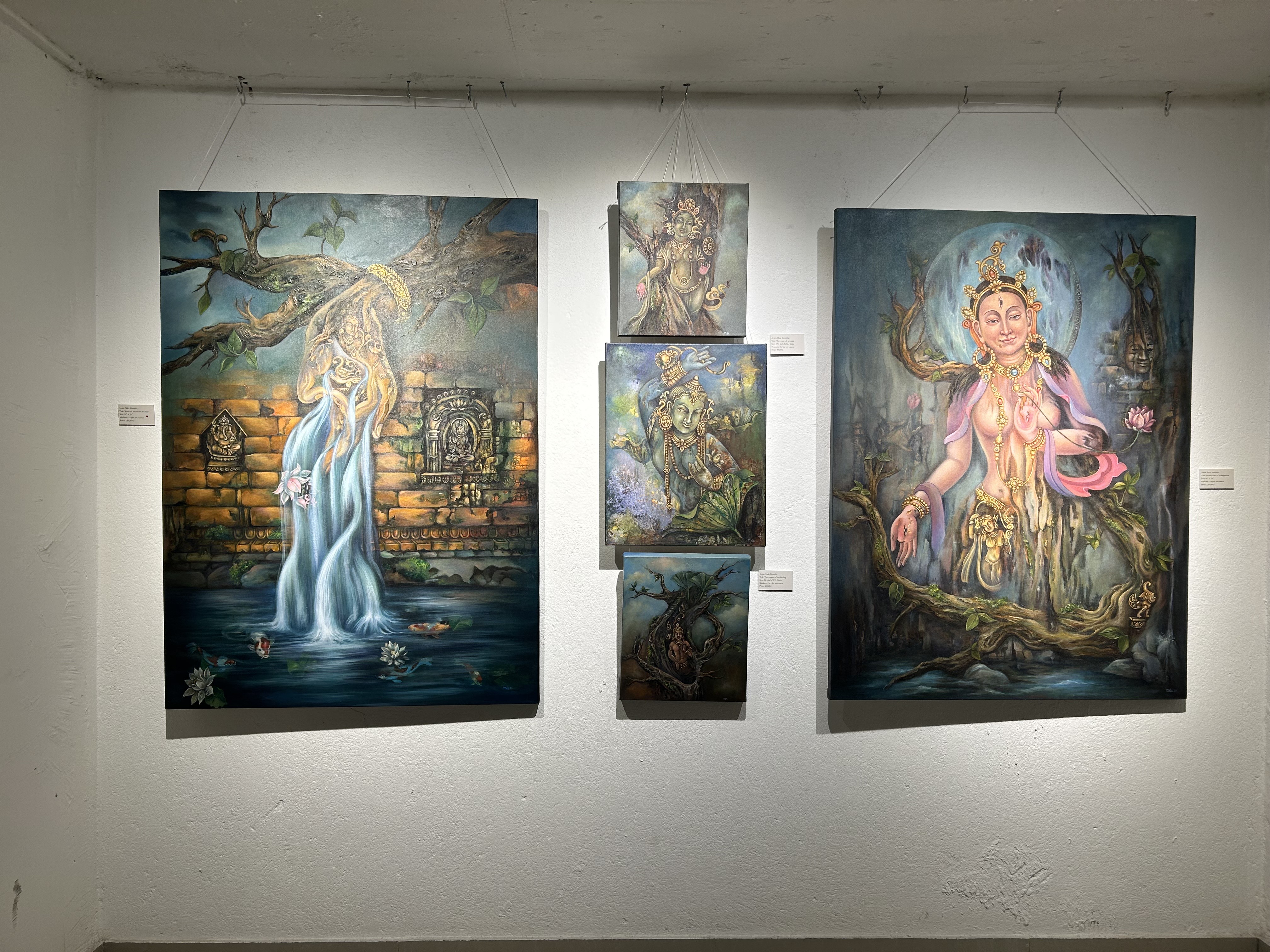
Mala Shrestha’s works Water of the Divine Mother and The Spirit of Serenity unfold in a dreamy and delicate fusion of nature and religion, suggesting that divine forms are not separate from the natural world. Trees and branch-like motifs appear as origins of sacred sculptures and spiritual presences.