
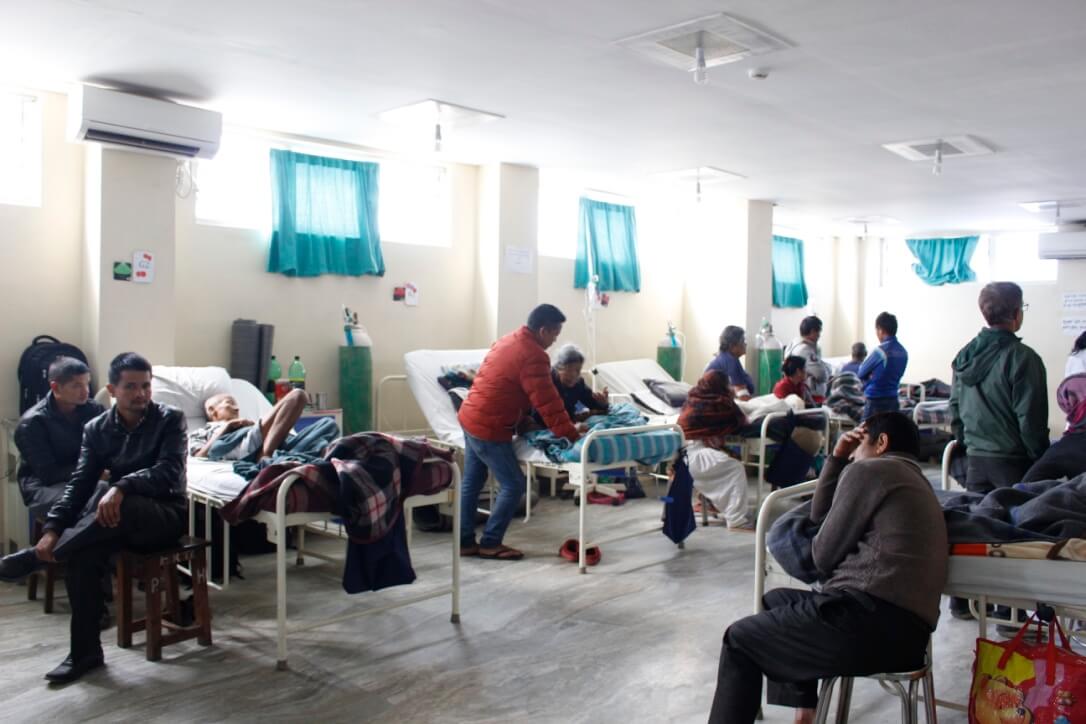
When I first visited Nepal in 1979, the causes of diarrhoea in travelers were not known, and there was no effective treatment available. Trekkers were stranded in the mountains when they became too sick to walk and were often abandoned in teahouses by their friends. Some had to be rescued by helicopter. Long-planned trips were ruined. Many did not come to Nepal because of their fear of falling ill.
When I joined the CIWEC Clinic in Kathmandu in 1983, we discovered that we were the first clinic in the world seeing travelers at their destination. We struggled to solve the problem of travelers’ diarrhoea among our patient population until we were able to join forces with a US Army research lab in Bangkok called AFRIMS, which was the best diarrhoea lab in the world at that time. They were able to check for a wide number of bacteria and viruses that could not be detected in ordinary labs.
Read also:
Going to great heights to prevent altitude illness, Peter Hackett
The research demonstrated that most diarrhoea in travelers was due to bacteria, which were susceptible to a short course of antibiotics and ended the illness within 12-24 hours. It turned out that the symptoms of bacteria-caused diarrhoea were remarkably consistent: sudden onset. In contrast, the less common causes of infection, such as Giardia and amoebas, had a gradual onset of illness that was more tolerable, but slowly wore the traveler down.
This insight into diarrhoea allowed us to arm trekkers with antibiotics and simple instructions on how and when to use them. The advent of what is called ‘empiric self-treatment’ of diarrhoea completely changed trekking in Nepal. Diarrhoea was now an inconvenience rather than a trip-ending occurrence. Within a few years, empiric self-treatment became the standard for most travelers headed anywhere in the developing world.
Our focus initially was on diagnosis and treatment, and subsequent attempts to find ways to help prevent diarrhoea were not very successful. The traveler’s best efforts at choosing what foods to eat could not control the fact that most diarrhoea was transmitted by errors made in the kitchens of restaurants: mistakes in the preparation, handling, and storage of food.
Diarrhoea also proved to be seasonal, with the pre-monsoon months having double the risk compared to the rest of the year. When we later matched this with local data, it was also true for Nepali children. Although the exact reason for this seasonal increase is not known, it does coincide with the main housefly season in Nepal.