
 |
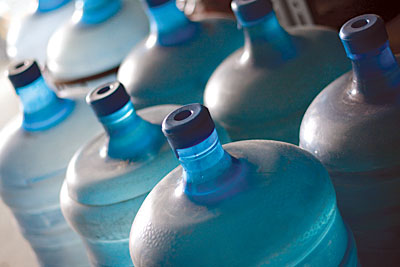
Illegal water bottlers, most of them operating in small-scale 'one-room' factories, have severely hurt the water bottling industry and pose significant health risks to consumers.
By law, water bottlers require a license to market their product from the Department of Food Technology and Quality Control (DFTQC) and registration with the Department of Small Cottage and Industries. DFTQC checks for acidity levels, the presence of harmful chemicals – such as arsenic and cadmium – and especially microbes, which pose the greatest danger in the Kathmandu Valley.
There are 73 licensed bottlers in the capital, but the number of illegal bottlers is unknown as the government has not been responsive to calls for a full accounting by industry leaders and experts. "Illegal bottlers have a huge price advantage over their legal counterparts since they don't invest in proper purification processes and techniques," says industry specialist Jogendra Prasad Rauniyar.
Illegal bottlers either fill used containers purchased from recognised brands or buy easily available caps and labels, which cost Rs 2-5, to mislead consumers. Since they forgo the purification process, the production cost per litre bottle is just Rs 10-15. This is about Rs 5 less than the production cost per bottle borne by legitimate companies.
The purification process varies depending on the source of the water: river, spring or groundwater. Most companies in Kathmandu use groundwater, and run it through at least three filters to eradicate any chemicals or microbiological matter and 'soften' it to make it less harsh on the digestive system. While many of these companies market their products as mineral water, in fact no minerals or nutrients are added, as that would raise prices to uncompetitive levels.