
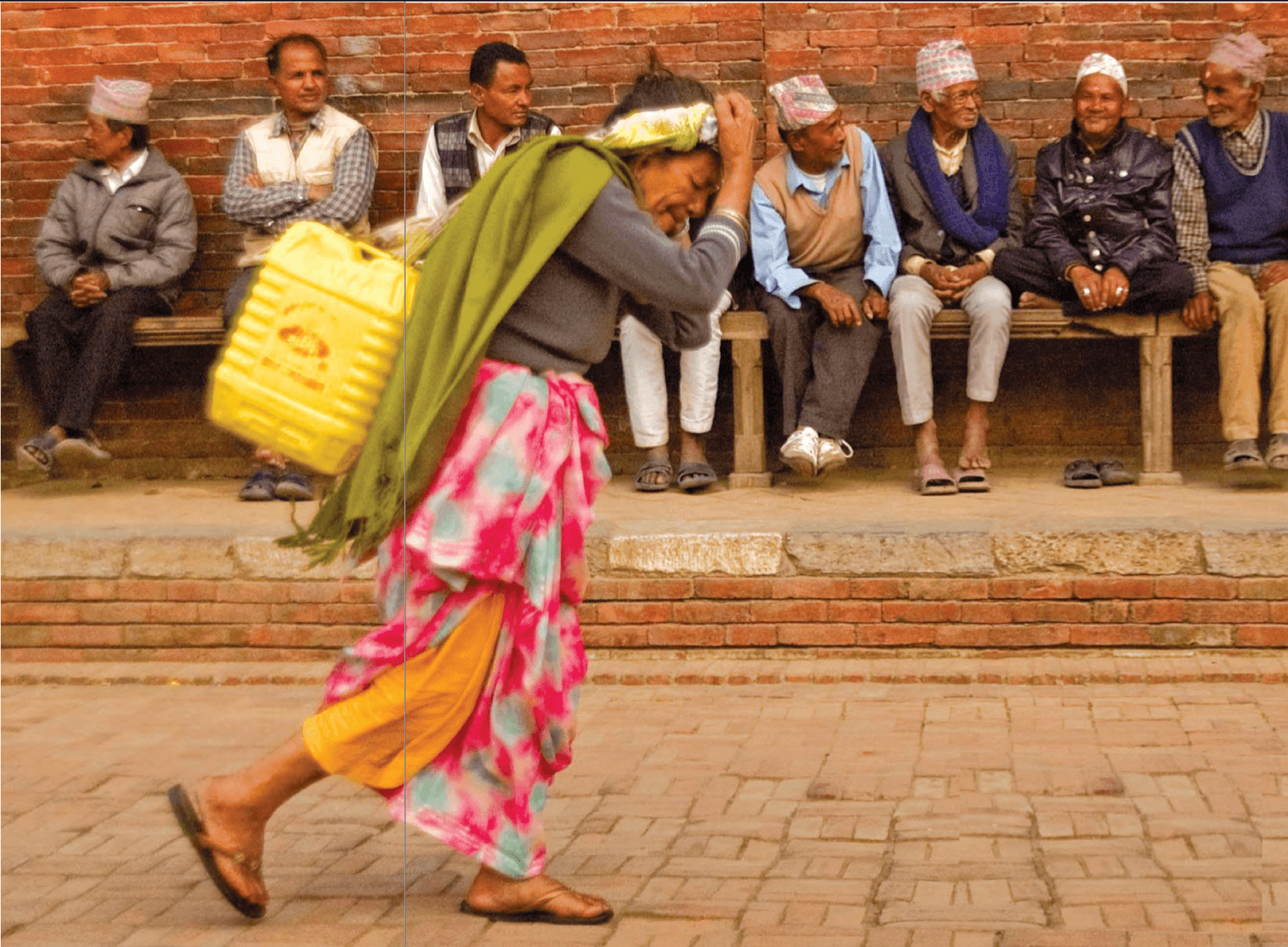
As Nepal’s economy takes a nose dive due to the global pandemic and faces a looming unemployment crisis, what is often missing in the discourse are the special needs of women who depended on income from the informal sector.
The Covid-19 crisis does not come with a single set of challenges, and nor can its effects be tackled by a one-size-fits-all policy intervention. This is especially true of the impact on Nepal’s women who were either in the pink-collar labour sector, or did unpaid household work.
Estimates show that about 70% of Nepalis were employed in the informal economy in pre-Covid days. Most of them have now been rendered jobless, and among them the percent of women that are less likely to return to such work is higher than for men.
Nepal’s working population above the age of 15 in 2018 was 71.5% of the total 30 million population. Of them, the proportion of working-age females was actually higher with 11.53 million – as opposed to 9.2 million males.
Only 8.5 million Nepalis of working age were in the labour force, either employed or in search of employment. And among them only 2.8 million (22.5%) of the women in the labour force had jobs. The informal sector was the highest employer of workforce (62.2%) of which 66.5% were female while 59.7% were male.
These numbers have been severely skewed during 2020 with the onset of pandemic, especially for those employed in the informal sector. A World Bank Report projects Nepal’s economy to grow by a meagre 0.6% after an average growth of 7.3% for last three years.
Those employed in the informal sector in towns and cities are more vulnerable to such a sharp economic slump, with many of them at a higher risk of falling into extreme poverty – compared to those in rural areas who can rely on subsistence farming for sustenance.
As more young Nepali men leave for the cities or employment in India and overseas, it was projected that the domestic labour force would be feminised. However, the problem in such sectors, apart from the lack of availability of jobs for women, was that they lacked basic facilities to accommodate female workers.
Similarly, women were more likely to cede regular employment opportunities to male members of the family, while they concentrated on household work.
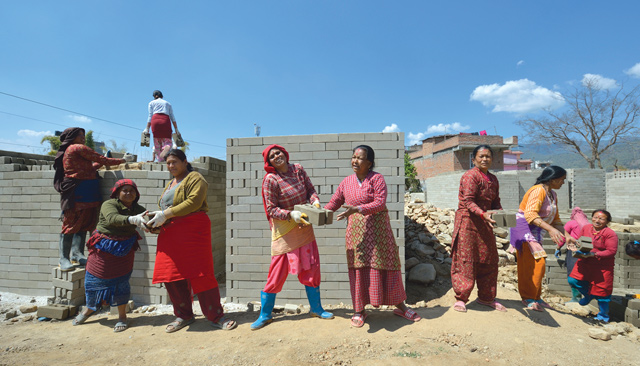
Traditional norms have deprived many Nepali women of agency in decision-making about their education or careers. Often, this results in young women dropping out of school or college, quitting their jobs, or even opting for positions below their preference or qualifications.
Conventionally, women working outside their homes are still considered frivolous. Some are judged to be pursuing a hobby, rather than making an incumbent career move like their male counterparts.