 NAYAN POKHREL |
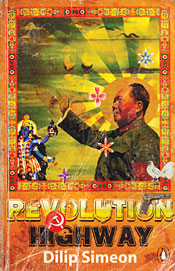
Dilip Simeon's debut novel Revolutionary Highway charts the course of a group of students at Delhi University in the late 1960s. Inspired by what appears to be the global pulse of revolution, they become involved in the Naxalite movement taking root in their own countryside. To the dismay of their middle-class, conservative parents, Pranav, Mohan, and Rathin drop out to taste revolution for themselves. The result is both a serious reflection on how individuals decide what makes for (and what can make, including violence) a just society, and a light-hearted evocation of the often absurd everyday of young urban idealists faced with the reality of the rural populations they aspire to liberate.
The novel reads like something of a pastiche, combining as it does frequent (sometimes inexplicable) temporal leaps within the lives of its characters, as well as short case files on various revolutionaries through India's twentieth century history. Simeon, a former professor at Delhi University himself, is clearly trying to draw a thread through the loops of revolution past and present against the backdrop of Indian history, but here the chunks of blocky explicatory text inspired by a professorial instinct to edify jar with the more lively characterisations of his novel's protagonists. But Revolutionary Highway is a spirited portrayal of troubled times that does succeed in illuminating a somewhat forgotten history, and delving into the motivations of the people who were involved.