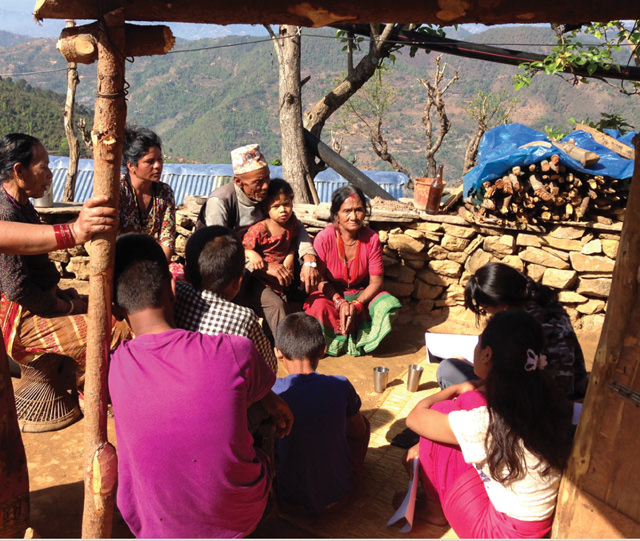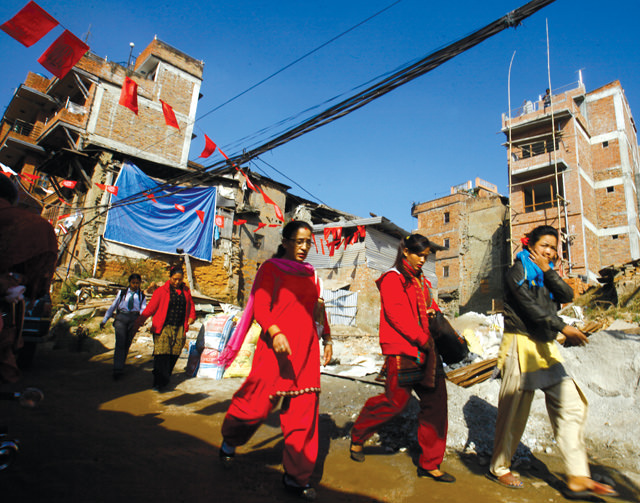
Ishwori Paudel of Mandan Deupur municipality of Kavre has gone to his bank 10 times for the second tranche of the government's earthquake reconstruction grant of Rs150,000 for his house. He still hasn't got the money.
“I was supposed to get the second instalment two months ago, but I still haven’t, and they just told me the money is delayed because of the elections," he says.
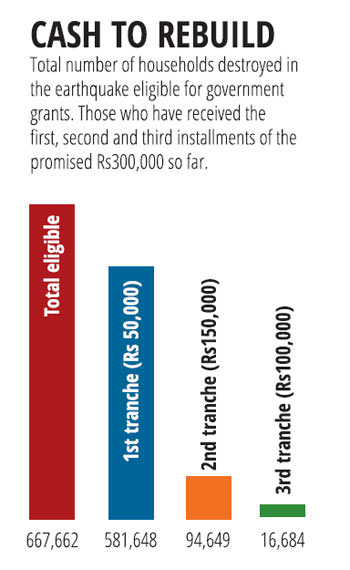
Paudel’s house was destroyed in the 2015 earthquake and he was one of the 667,662 beneficiaries identified by the government to receive the housing grants. Almost three years later, most survivors are struggling to get the money.
Read Also
Real reconstruction authorities, Yubaraj Bhusal, Guest Editorial
Uncharted territory, Editorial
After receiving his first tranche of Rs 50,000 Paudel started building a new house as per a seismic-resistant design approved by an engineer and forwarded for a green light from the local ward office.
“The ward chair is busy with elections, but it should not be an excuse when it comes to compensating quake victims like me,” laments Paudel.
Several other families in Paudel’s ward also haven’t received their second instalment, and 34 families never even got their first tranche.
In the past, reconstruction work was delayed due to government negligence, mismanagement and frequent changes of the CEO at the National Reconstruction Authority (NRA). Now, the elections are also delaying rebuilding.
NRA CEO Govind Pokharel stepped down from his post to vie for a parliamentary seat in Pyuthan, and it will take time for his replacement, Yubaraj Bhusal, to master the NRA's files. Bhusal will be the agency's fourth CEO in two years. Meanwhile, many quake survivors are hunkering down for a third winter in tents.
Jhalak Paudel, who heads Paudel’s Ward 8 in Mandan Deupur municipality, told Nepal Times his workload has increased three-fold because of the upcoming polls.
“As of now I am not just the head of the ward. I have election-related multiple responsibilities and I am not able to find time to look after the reconstruction process,” says Paudel.
The fourth in a series of reports by The Asia Foundation, Aid and Recovery in Post-Earthquake Nepal, reveals that quake victims felt that preparations for the local elections earlier this year affected reconstruction.
'The main impacts were the temporary suspension of the distribution of reconstruction cash grants, NRA’s grievance management and NGOs’ and INGOs’ work,' the report notes.
Released in October and based on surveys of earthquake-affected households in April 2017, the report recommends finding ways to continue reconstruction while the Election Code of Conduct is in force for the provincial and national elections.
The on-going campaigns for provincial and parliamentary elections have affected the reconstruction process in many ways, yet none of the political parties has included reconstruction in election manifestos — proving once more the apathy and neglect of earthquake victims by the polticial leadership.
Rudra Malla of the NRA office in Sindhupalchok is now deployed at the Election Office. He says he hasn’t seen any parties talk about reconstruction during their campaigning in his district.
Other rebuilding work is also at a standstill, he explains. “It is difficult to start any new agreement with development partners, even if they want,” says Malla, adding, “at the same time people don’t want to go for masonry or other training because the election campaigns are like carnivals.”
New NRA CEO Bhusal disagrees that the overall delay in reconstruction has been caused by elections. “The real reason is the structural problem of the NRA," he told us, admitting that poll campaigning could have distracted people from rebuilding.