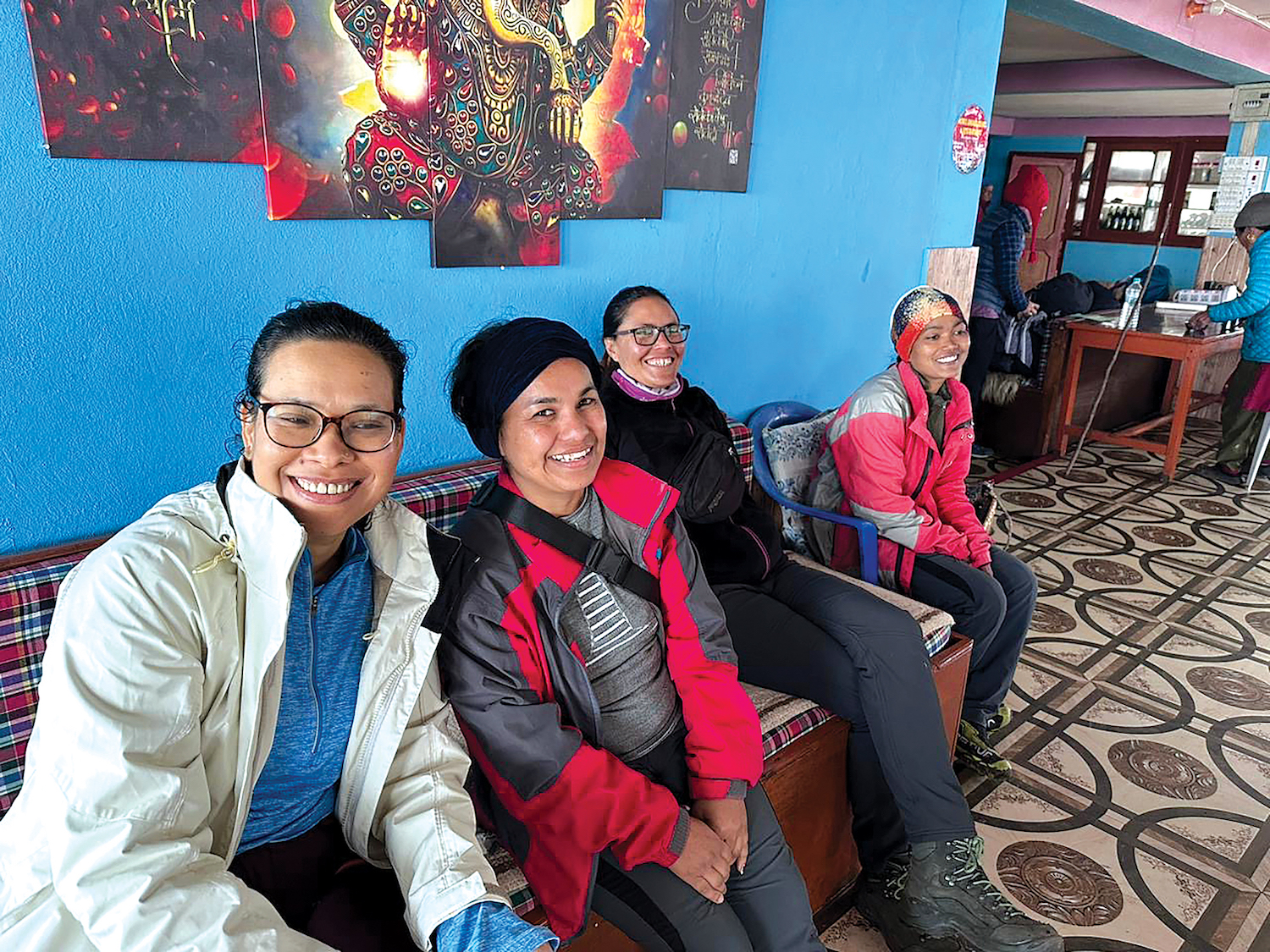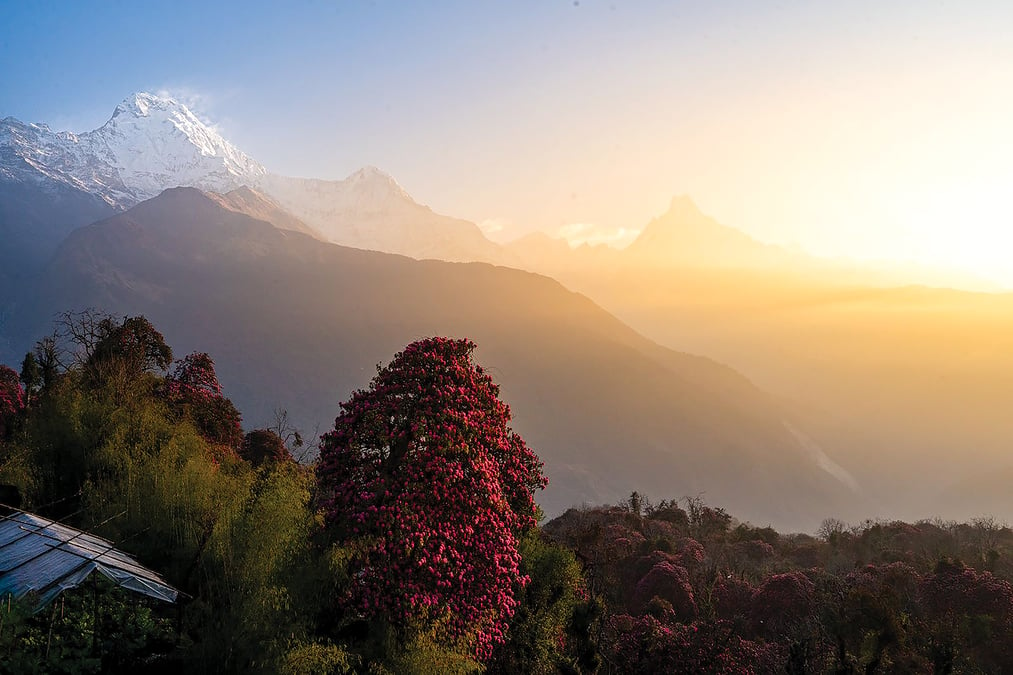
A 4-day family trek last month was vivid proof of the truth in the old adage: it is the journey and the people that truly matter, not just the destination.
It was word-of-mouth recommendation that brought us to the sustainable tourism company Three Sisters, owned and run by women. The guides assured us our children would be well taken care of and our group of novice trekkers would not be rushed.
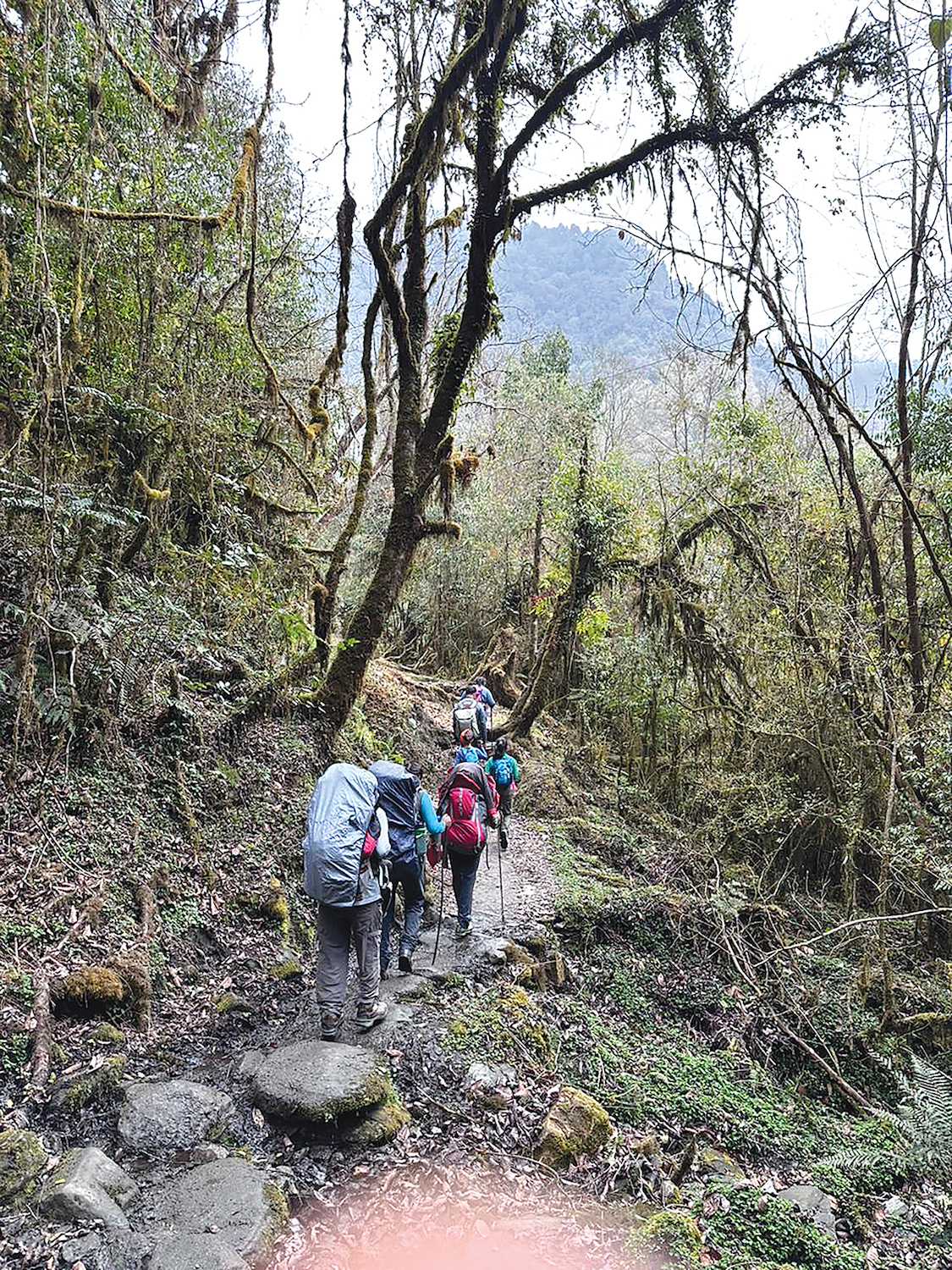
As we negotiated the uphill steps, passing gushing waterfalls and forests ablaze with rhododendron, we had plenty of time to get to know our two experienced guides and the eight support staff. Their life stories highlighted the transformative power of sustainable, ethical, and empowering tourism in shaping lives and journeys.
THE GUIDES
Yasudhara is literally a trailblazer. A mother of a 7-year-old, she has had to seamlessly blend her caring role at home with her professional responsibilities as a guide in a male dominated and uncertain industry. Besides leading the pack, Yasudhara kept our children motivated and entertained, leaving an indelible mark on them.
By the journey’s end, the little ones of our foreign friends soaked Nepali phrases. “जाम जाम” became their spirited rallying cry as we moved up and down the trails. Even as Yasudhara sometimes told them to slow down with “बिस्तारै बिस्तारै” it was the rhythmic chant of “जाम जाम” that followed.
When she first became a guide, Yasudhara recalled she had to defy her family’s wishes. They were skeptical of her choice of career to lead foreigners through Nepal’s remote, rural landscapes. The workplace was equally challenging. At that time, no one was accustomed to female guides, and accommodations were scarce.
Yasudhara slept in dining rooms and outdoors, keeping her distance from male guides who often drank and indulged in unwelcome behaviour. But times have changed. Female-led teams from Three Sisters now guide trekkers all over Nepal.
But now, Yasudhara grapples with the guilt of leaving her child behind, even though she is shaping a future where her son will understand the power of gender equality and women’s economic empowerment. “I want to earn my keep, without having to rely on my brothers and husband,” Yasudhara tells us during a rest stop.
Tila is in her mid-30s, and thrived as a guide before the pandemic, navigating and overcoming many gender stereotypes and challenges in her profession. Starting as an assistant at the agency, she steadily climbed the ranks to become a permanent guide, earning a modest base salary and commissions.
She enjoys preferential access to trips involving foreign visitors. During peak seasons, work flows steadily, allowing her to hibernate during quieter times. She also seized learning opportunities provided by her employer. She participated in courses on the ecosystems of trekking regions, cultural sensitivity, first aid and emergency response, navigation and route knowledge, and sharpening her English proficiency.
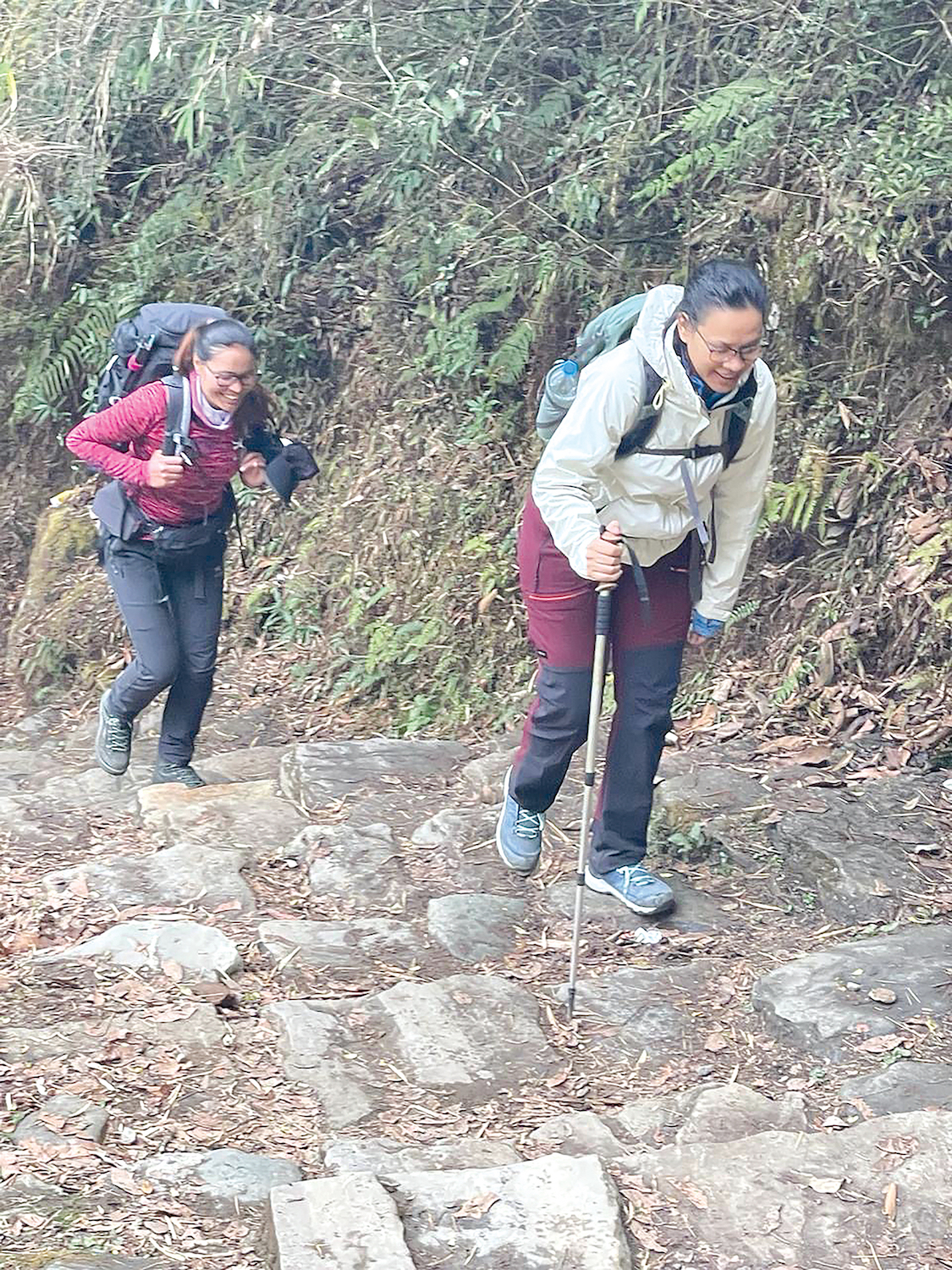
Then, the pandemic struck. Trekkers vanished. Tila’s gratitude for finally returning to work is tempered by the reality that Nepal’s trekking industry has not fully recovered. This was her fourth consecutive trek, leaving her cautiously optimistic. Yet the trail ahead remains uncertain.
THE ASSISTANTS
The eight assistants who accompanied us, three women and five men, were more than ‘porters’. This was a group of eight remarkable individuals, distinct from traditional porters found on trekking trails and their significance extended far beyond carrying our gear.
Kusum, 19, harbours dreams of being the first in her family to pursue a Bachelor’s degree in Commerce from a college in Pokhara. Her motivation for joining the trek was twofold: to earn enough to pay for her accommodation expenses, and eventually to earn the experience to be a guide herself one day. With every step she took, she carried not only her backpack but also her aspiration for a brighter future.