Photo: Kunda Dixit
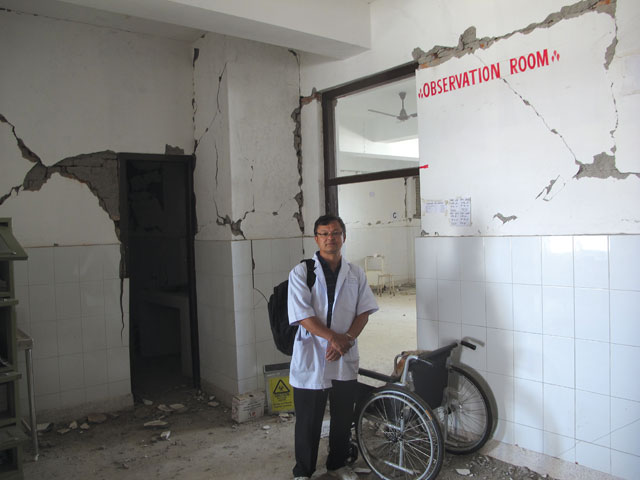
Dislocated beams hang precariously over the emergency ward, a doctor’s consulting room has a gaping hole, a three-storey ramp for wheel chairs is teetering dangerously. What was left of the Sindhupalchok District Hospital in Chautara after the 25 April earthquake was destroyed in the 12 May aftershock.
More than half the dead and wounded in last month’s earthquake are from this district northeast of Kathmandu. No one here talks about the 12 May tremor as an aftershock, they say Chautara was hit by two big earthquakes. One month later, the district lies in ruins, in village after village outside Chautara people are still too dazed to start rebuilding. People with crutches, or arms in slings sit under trees gazing listlessly at the devastation all around.
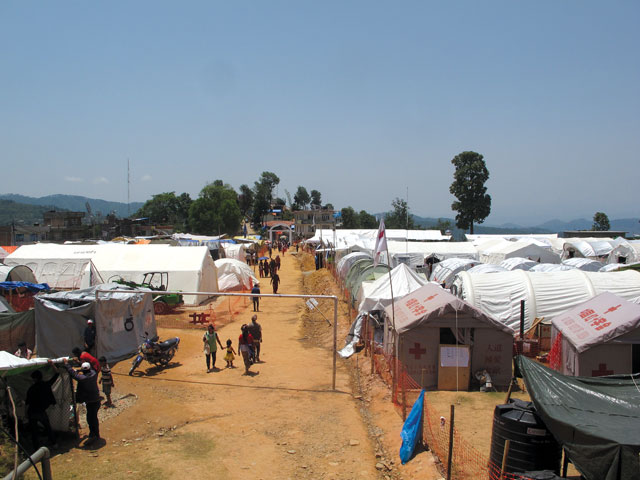
Only a maternal child clinic of the hospital is functioning, and the wounded are being treated in a field hospital in the open space of Tundikhel nearby. An excavator is clearing the debris of a nurse quarter so that the hospital can reopen in a large tent soon.
“We are racing against time, we need to get the hospital up and running before the rains come,” says Medical Superintendent Sagar Rajbhandari. “We are already getting cases of dysentery, we don’t even need a monsoon for outbreaks.”
The damaged hospital is now used as a warehouse for medicines being stockpiled for the epidemics that everyone knows will come. Amidst piles of fallen masonry and dust-covered tables are stacks of oral rehydration salts, IV fluids, zinc tablets, micro-nutritional supplements and peanut paste.
The challenge for Rajbhandari is to get these supplies to health posts before the rains destroy roads. Ninety per cent of Sindhupalchok’s 75 health posts are in ruins, birthing tables and other equipment have been crushed. A female health worker was killed, and many of the over 700 Female Community Health Volunteers (FCHVs) in the district have lost families or homes, and are not in the frame of mind to go back to work (see box, below).
The hospital’s priority is to reach the more vulnerable survivors: pregnant women, young mothers, babies and children. There are an estimated 160,000 pregnant women in the affected districts, and there are already cases of premature deliveries and miscarriages.
UNICEF estimates there are 70,000 children under-five who are at risk of malnutrition. Though food isn’t the most immediate need in many villages compared to the early phase of disaster, families are still not getting adequate nutritious foods. The district’s community radio stations have been crucial in spreading the message about prevention of infections, the importance of sanitation, locating latrines away from water sources and to wash hands.
“The rescue part is nearly over, now we are moving to the relief phase and the monsoon has made everything much more urgent,” says S P Kalaunee of the health group, Possible, that is working with the Ministry of Health and had brought a replacement x-ray machine to Chautara.
In the first three days after 25 April, the hospital treated 300 patients in tents outdoors. The 20 medical staff worked day and night with help from the Nepal Army. The badly wounded were air lifted to Kathmandu. “We were operating on the living inside tents, while there were 31 bodies outside,” Rajbhandari recalls. “Now we are moving from attending to the injured to preparing for outbreaks and treating infections.”