
World leaders, including from Nepal, will gather again at Sharm El-Sheikh in Egypt this month to assess the climate emergency, and agree on urgent measures to avert irreversible damage to the ecosphere.
The Climate Summit is burdened with unnecessarily unwieldy nomenclature and acronyms which make its deliberations unnecessarily esoteric to politicians and ordinary people.
United Nations Framework Convention on Climate Change (UNFCCC) will be having its 27th session of the Conference of Parties (COP) to take stock of the latest report of the Intergovernmental Panel on Climate Change Working Group II Sixth Assessment Report (IPCC WG II AR 6).
We need to first to de-jargonise the above, and translate targets and commitments into everyday language so that people the world over understand the urgency of the emergency. Plain words would also expose the hypocrisy, grandstanding, victim-playing and victim-blaming that occurs every year at these summits.
This conference is called COP27. This means governments have met every year 27 times since 1994 to find ways to ‘stabilise greenhouse gas concentrations in the atmosphere to prevent dangerous interference from human activity on the climate system’. The atmosphere would be a lot warmer if nothing had been done, but it would have been a lot cooler if more had been done.
The summit in Egypt from 6-8 November 2022 takes place in a year during which the world suffered unprecedented back-to-back climate-induced disasters like record-breaking heat waves, forest fires, storms, glacial retreat and floods. Scientists say the intensity and frequency of these calamities are happening decades earlier than forecast.
If COP27 just meets earlier commitments from governments to pay $100 billion a year for mitigation and adaptation it will have served its purpose. But given the current global economic crisis due to the pandemic and the Ukraine conflict, that does not look likely.
Which is why climate justice demands by some countries, including Nepal, for ‘loss and damage’ is probably dead in the water. The argument is that the impact of the climate crisis is causing so much loss of life, livelihoods and property that just adapting to the change is no longer adequate.
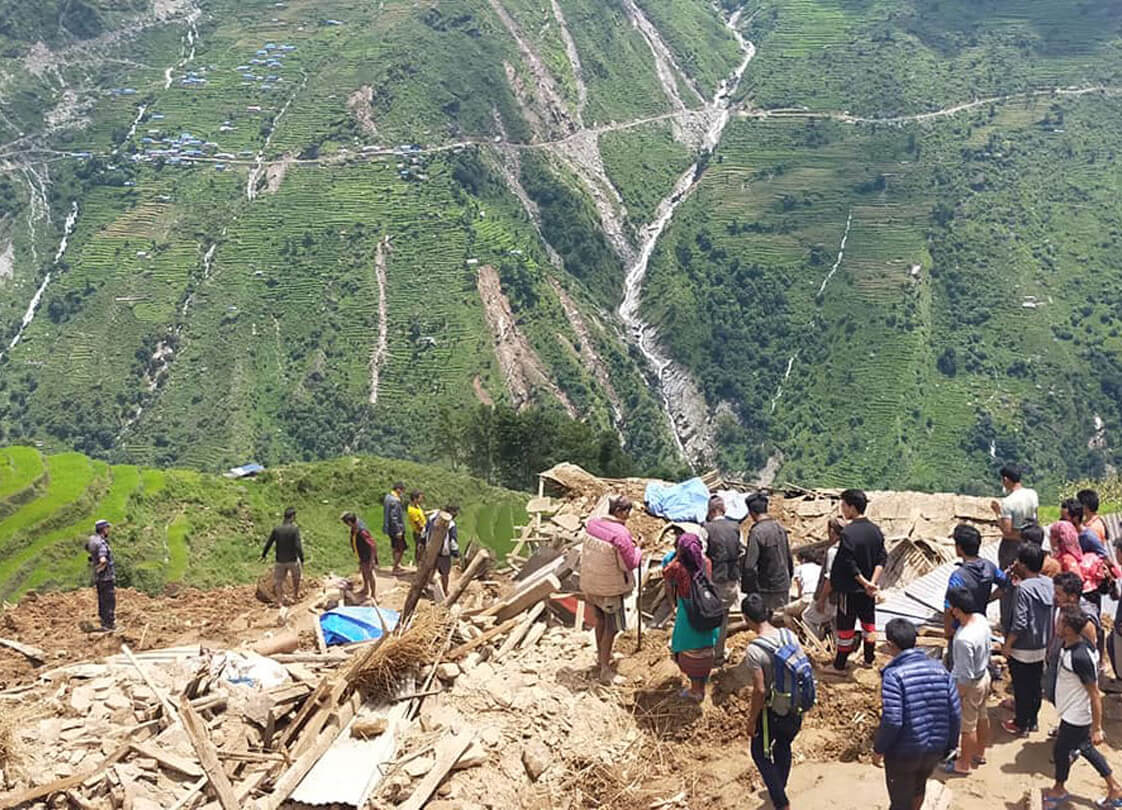
Given the severity of the floods in Pakistan this year, the prolonged heat waves in India and China, landslides and floods in Nepal, it is clear that developing countries are unjustly and disproportionately paying for a crisis not of their making.
Even so, we in Nepal have to recognise that the climate crisis is just tip of the pyramid of problems that pre-date climate change. Structural factors like state neglect, governance failure, corruption and exclusion was already putting much of the population at risk.
Politicians in Kathmandu cannot blame the chronic food insecurity in western Nepal on climate change. They have done little in the past half-century to provide hill-irrigation to lessen farmers’ dependence on rain-fed subsistence agriculture.