

Many students in Nepal do not even learn half the content of the school curriculum in various subjects because of teachers without adequate training and motivation.
The 2020 report National Assessment of Student Achievement (NASA) in Mathematics, Science, Nepali and English for Grade 8, published recently by the Education Review Office (ERO) showed that students are struggling to acquire even minimum learning.
The report draws from its assessment of 43,886 students from 1,800 schools across the country, and concluded that the majority of students are not able to learn even half of the content of the subjects they are taught.
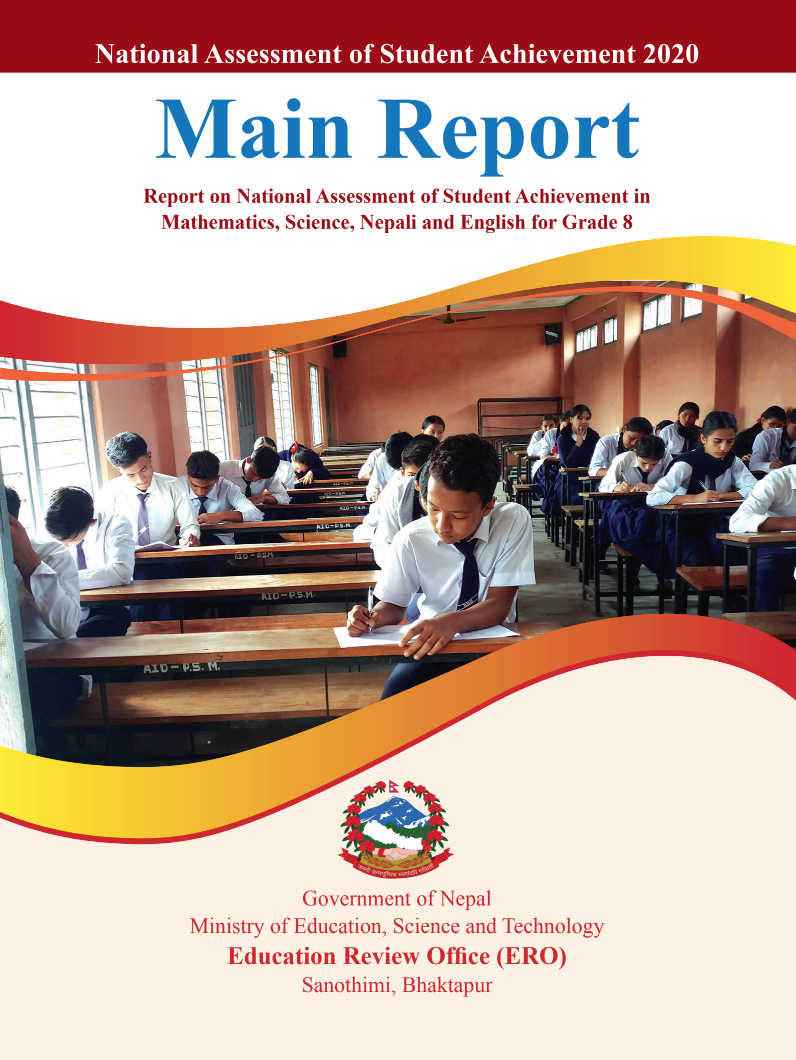
Three versions of standardised tests, together with the background information in the questionnaire to the sample students, the teacher questionnaire to subject teachers and the school survey questionnaire to the head teachers, were administered in each school.
Only 32.1% of eighth graders in Nepal passed the basic proficiency level in mathematics. The numbers for science, Nepali and English stand at 37.7%, 58.8% and 51.1% respectively.
In the case of mathematics, the national average of learning achievement in 2020 decreased by 17 scale scores from 500 in 2017. Similarly, the national mean of science was 470, which is 30 scale scores below the national mean from the NASA 2017 study.
And while the students from Bagmati, Gandaki and Kosi scored above the national average, the report adds that the performance of Madhesh, Karnali and Sudur Paschim students was lower in all four subjects than the national average.
“The increased number of students with minimum learning achievement shows problems in the teaching-learning strategies, remedial actions and the role of head teachers,” says Devi Ram Acharya of ERO.
The assessment was designed to prepare baseline data for the School Sector Development Plan (SSDP), as well as to compare the learning achievement of 2020 with the previous cycle of NASA in 2017 to ensure quality school education. Since 2011, ERO has published four reports, all of which have found lower-than-average learning achievements.
"We have been suggesting the government and policymakers to formulate practical and implementable educational policies at national and sub-national level for the much-needed educational reforms,” adds Acharya. “But the government has failed to address the problem.”
The factors considered in the research are age, home language, school type, distance between home and school, career aspirations, parental education and occupation, family size, teacher's regularity, permanent head teacher, and subject teachers.