
Female environmentalists struggle against gender stereotypes as they work to save Nepal’s nature
Mukesh Pokhrel in Himal Khabarpatrika 13-19 May
When Madhuri Karki, then chief of the District Forest Office in Bhaktapur, introduced herself to the CDO in Chitwan, he asked, shocked: “A woman forest officer?”
Karki was the first female forest officer in the country, and those were the days when the proportion of women in the Department of Forest was so small, Karki recalls: “There was a queue of people who came to watch us as if we were animals in a zoo.”
Twenty years on, Karki is under-secretary in the department, but things have not changed much. The number of women in conservation has gone up, but the perception that being a forest officer is a ‘man’s job’ still remains.
Saraswati Sapkota was 18 when she started working as a national park officer. The enthusiasm for her first job soon turned bitter when she got only two pairs of uniforms when the male officers all got three pairs every year. She was the only woman among 15 staff members.
“It was a way of showing me that they thought I was not capable,” recalls Sapkota. “Instead of trying to understand the issues women face working in national parks, and trying to make the workplace female-friendly, people treated us as a part of the problem.”
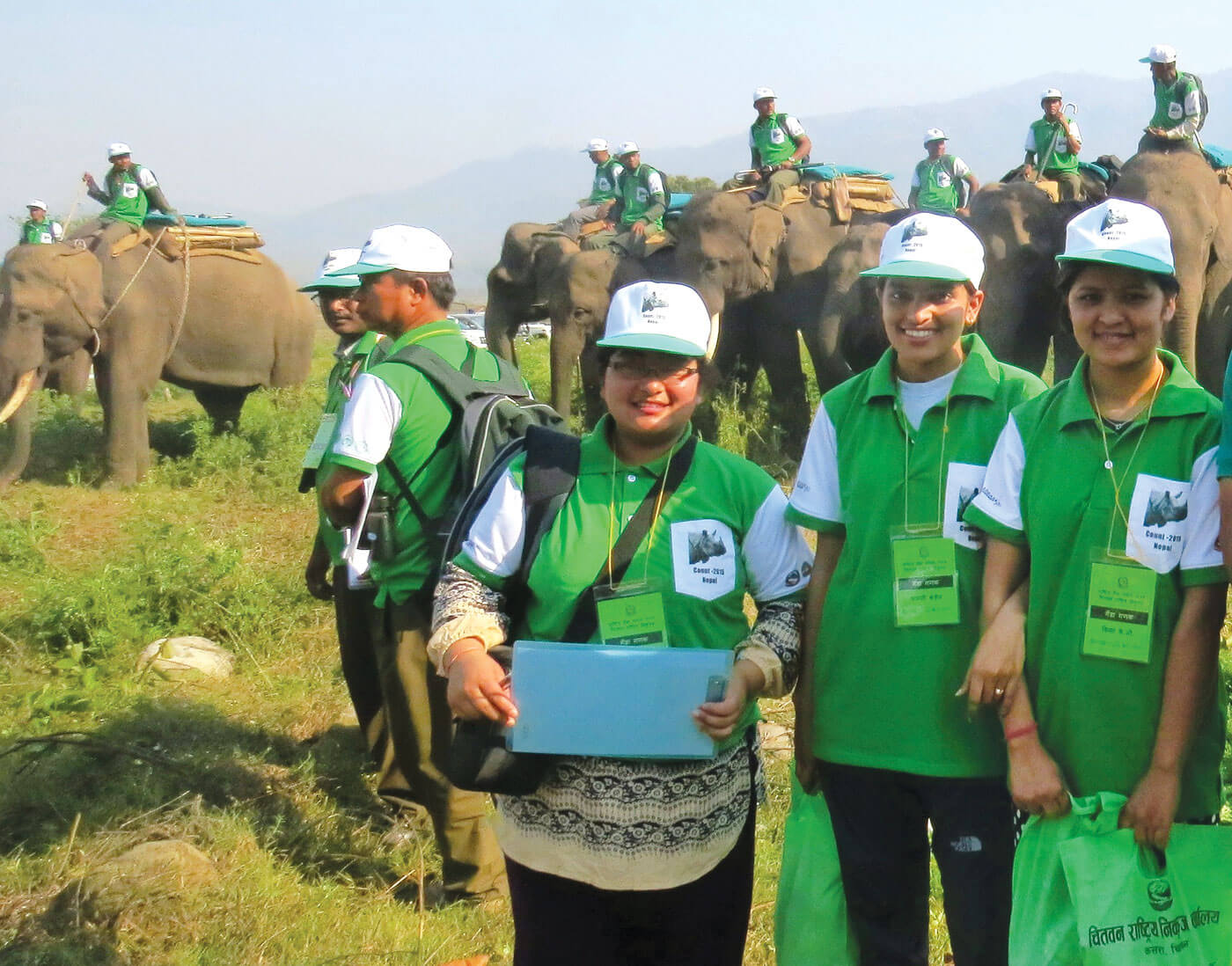
This is all very familiar to other female conservation officers here. They work equally as hard as the men, if not more, to contribute to the protection and conservation of wildlife, but are not given the same responsibilities or trust.
The working conditions are challenging: living alone in the middle of the jungle, patrolling with Army soldiers, being on call all the time, being close to wild animals, having to climb trees and do physically challenging work. This has given people the notion that women are not suitable for this kind of work.