
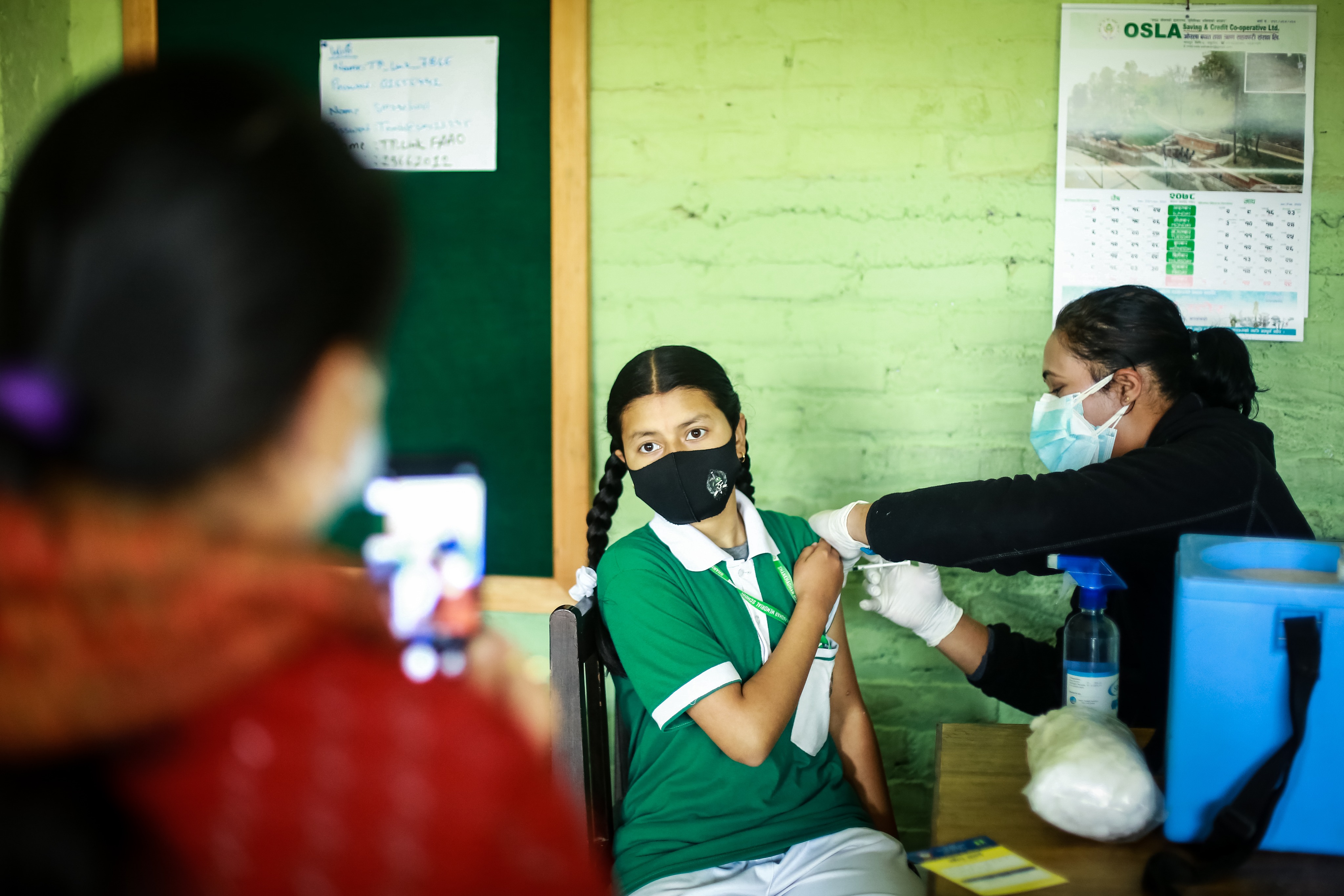
A new surge in Covid cases in Nepal has served as a reminder that the pandemic is not over yet, and on the need to keep masks one, avoid crowds, and get booster shots.
Hospitals have not reported an increase in admissions, and no fatalities from Covid have been reported since March. But highly transmissible new sub-strains like BA.4 and BA.5 have also been detected in Nepal, as they have elsewhere in the world.
“For the most part, people who have been fully vaccinated are unlikely to get very sick from the new strains, there has been no real increase in hospitalisation,” confirms Sher Bahadur Pun, virologist at Teku Hospital in Kathmandu.
The fact that the new sub-strains are all Omicron variants means that, unlike the deadly Delta variant, they mostly infect the upper respiratory tract and not the lungs. Delta was responsible for millions of deaths in India in 2021, and killed at least 8,000 people in Nepal as hospitals ran out of oxygen and vaccines were delayed.
But with 82% of the eligible population now fully vaccinated, Nepalis are now more protected from severe illness. But the virus is still mutating, and scientists are engaged in a cat-and-mouse to stay one step ahead of new strains.
“Covid-19 has proven itself to be even more cunning than we thought. It is clearly still prevalent, and can be life-threatening for some,” warns Buddha Basnyat, physician at the Patan Academy of Health Sciences. “This is not the end of the Covid story.”
That is not to say that the present surge is a new wave. While each new sub-lineage of Omicron is more contagious, they are also milder. That is good news, but asymptomatic infected people are also spreading the virus wider.
While active cases are on the rise in Nepal, hospitalisations are not, and infected individuals could be putting the elderly and those with co-morbidities at risk at home, or at work.
Studies overseas have shown that up to half of those infected with the new sub-strains are asymptomatic. As people travel more this summer and shed masks, the BA.5 and other variants are infecting and re-infecting even those who are vaccinated.
“We must continue to vaccinate and take a booster, especially those who haven’t even had their first shot. It might also be the time to start thinking about a fourth dose for vulnerable populations,” says Buddha Basnyat.