
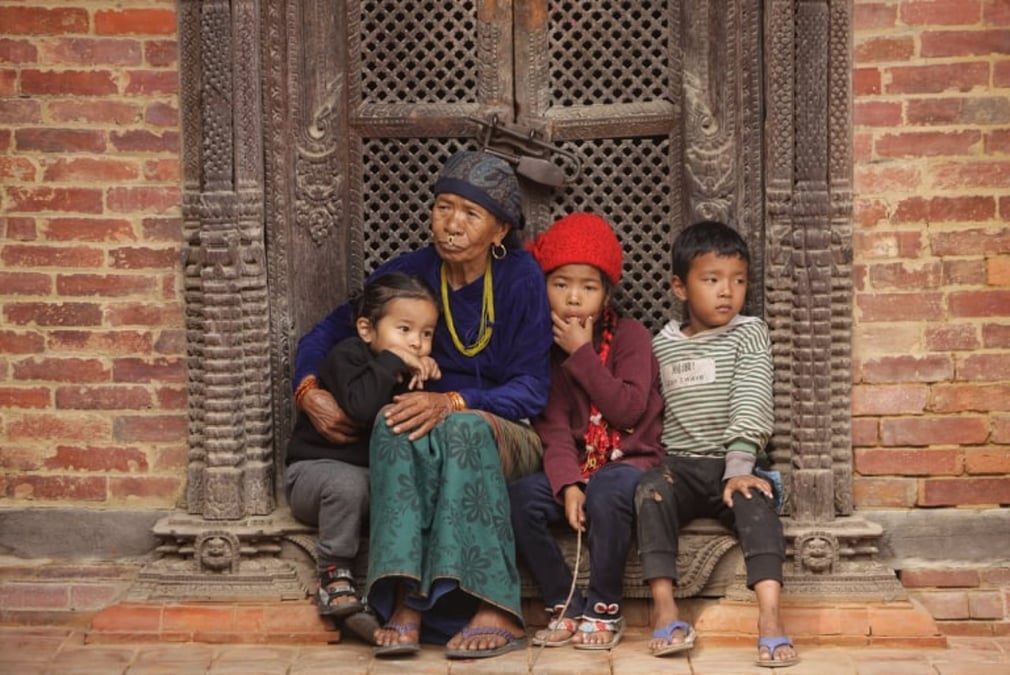
Sixty years ago, the average lifespan of Nepalis was only 28 years. It has now risen to 71.3.
How did this happen, despite poor governance, conflict and the upheavals of the past decade in the country?
Demographers cite a confluence of factors: a sharp decline in infant and child mortality rates, improvements in health care and nutrition because of a remittance-driven rise in household income from the four million or so Nepalis living and working abroad who send home Rs1 billion a month.
The new figure for average lifespan came from the 2021 census data, which also shows that women in Nepal live on average 5.6 years longer than men. Worldwide, women tend to live longer than men because of higher mortality among young men due to lifestyle reasons, disease, profession and accidents.
Read also: More equal than others, Editorial
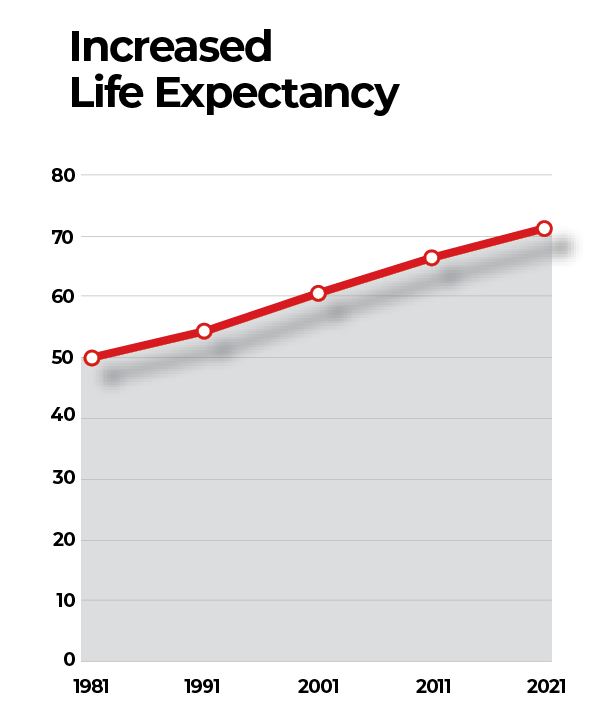
Three decades ago, the average life expectancy of Nepalis was 54.3. Going further back, to 1961, the average lifespan was only 28. These are average national statistics, and do not necessarily mean that the current generation of Nepalis are living longer — it just shows that many fewer babies are dying.
Meaning: if the mortality rate of children and adults goes down, the average lifespan goes up. And there has been a dramatic reduction in the infant mortality rate.
In 1991, 97 out of every 1,000 babies died before their first birthday. Today, the national average is down to 17. Similarly, while the child mortality rate in 1991 meant that 28 out of every 1,000 died before age five, today it has dropped to six.
Nepal’s total mortality rate has also dropped by half from 13.3 per 1,000 in 1981 to 6.8 today. Education is a factor: Nepal’s literacy rate was 14% in 1971, now there is almost 100% enrollment.
Read also: Not rising Nepal, Editorial
Literacy does not just mean being able to read and write, it is directly correlated with higher income, broader knowledge and lifestyle improvements, leading to greater awareness about health-related issues. All this adds up to longer life expectancy.
Although there are still problems with access and affordability of medical care, in general the health and nutrition status of Nepalis has improved. There is a drop in the prevalence of gastric infections caused by contaminated drinking water. The incidence of tuberculosis, pneumonia and other communicable diseases have also gone down.