
Social media has long been more than entertainment for young Nepalis. It has become a civic space where they stay informed on national issues, challenge authority, demand accountability, and organise for change.
In early September, TikTok, Reddit, and other platforms were flooded with a 'naming and shaming' campaign aimed at so-called 'nepo babies' in Nepal. Echoing similar movements in Indonesia and Sri Lanka, the campaign resonated deeply with disillusioned Nepali Gen Z.
Frustration escalated when the government banned 26 social media platforms including Facebook, WhatsApp, and Instagram, for failing to register within Nepal. The ban shut down the civic space Gen Z relied on. What began online spilled onto the streets, sparking nationwide protests now known as the GenZ protests. Young Nepalis voluntarily marched, demanding two urgent reforms: lifting the social media ban and rooting out corruption.
For many, the anger runs far deeper than digital restrictions. Public trust in politicians has withered after decades of power struggles between Sher Bahadur Deuba, Pushpa Kamal Dahal and K P Oli. Tired of the endless game of musical chairs who promise change but deliver betrayal, GenZ insists that politicians are not divine power to be worshipped but public servants who must answer to the people.
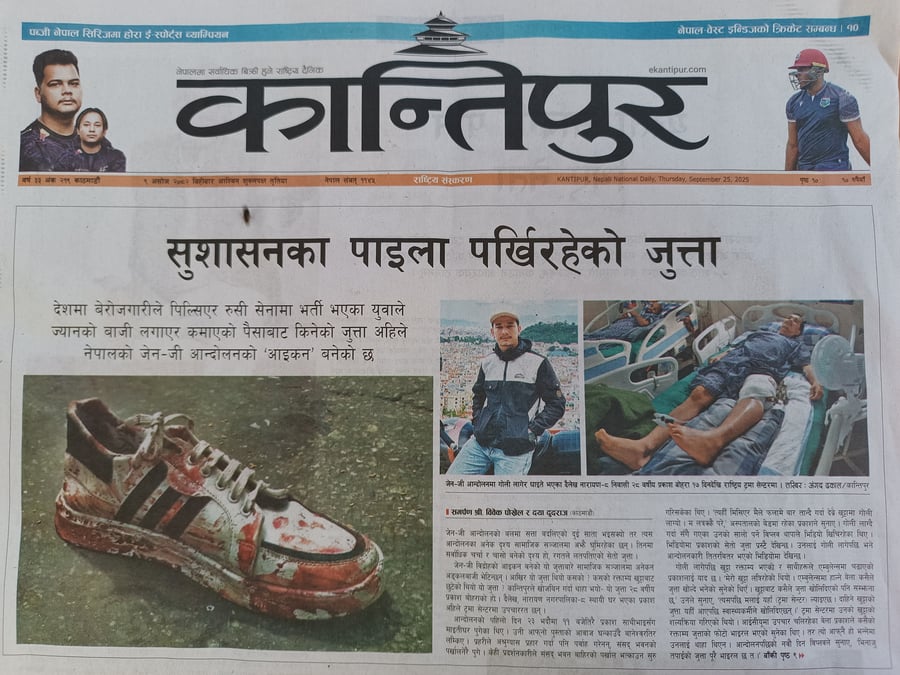
On 8 September, GenZ protesters marched peacefully, carrying artistic placards and singing patriotic songs. Police responded with deadly force firing live rounds, deploying tear gas, and beating protesters with batons and water cannons, resulting in the mass killing of our fellow protesters. What began as a citizen’s duty to hold the government accountable turned into a tragedy because the government forgot that it is the guardian of its people, not their murderer.
On 9 September, rage engulfed the nation. People from every corner joined the protests, responding to the government’s failure and the brutal mass murder of young people. Taking advantage of the situation, some vested groups infiltrated the demonstrations, which escalated into violence, including arson, vandalism, and attacks on property and individuals holding political power.
Following the incident, the government was overthrown, and GenZ formed a citizen’s Government. Our primary demand to this new government is a full and impartial investigation into the mass murder. GenZ has specifically identified former Prime Minister K P Oli, former Home Minister Ramesh Lekhak, and the former Inspector General of Police Chandra Kuber Khapung who must be investigated free from political interference.
Those found guilty must be held accountable under national law. Additionally, GenZ demands a transparent inquiry into the vandalism and arson that occurred on 9 September, emphasising that attacks on public property undermine the true spirit of their movement.