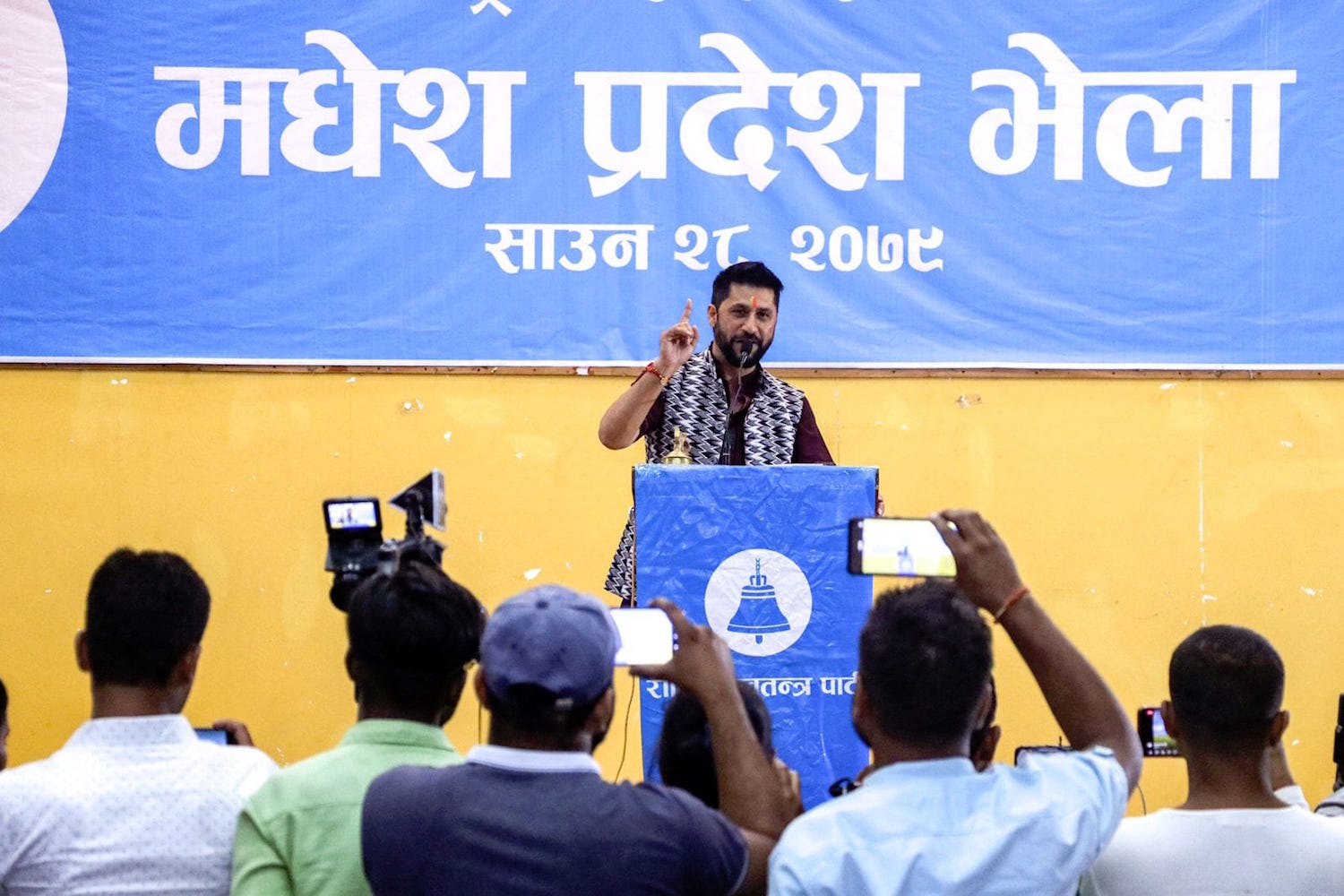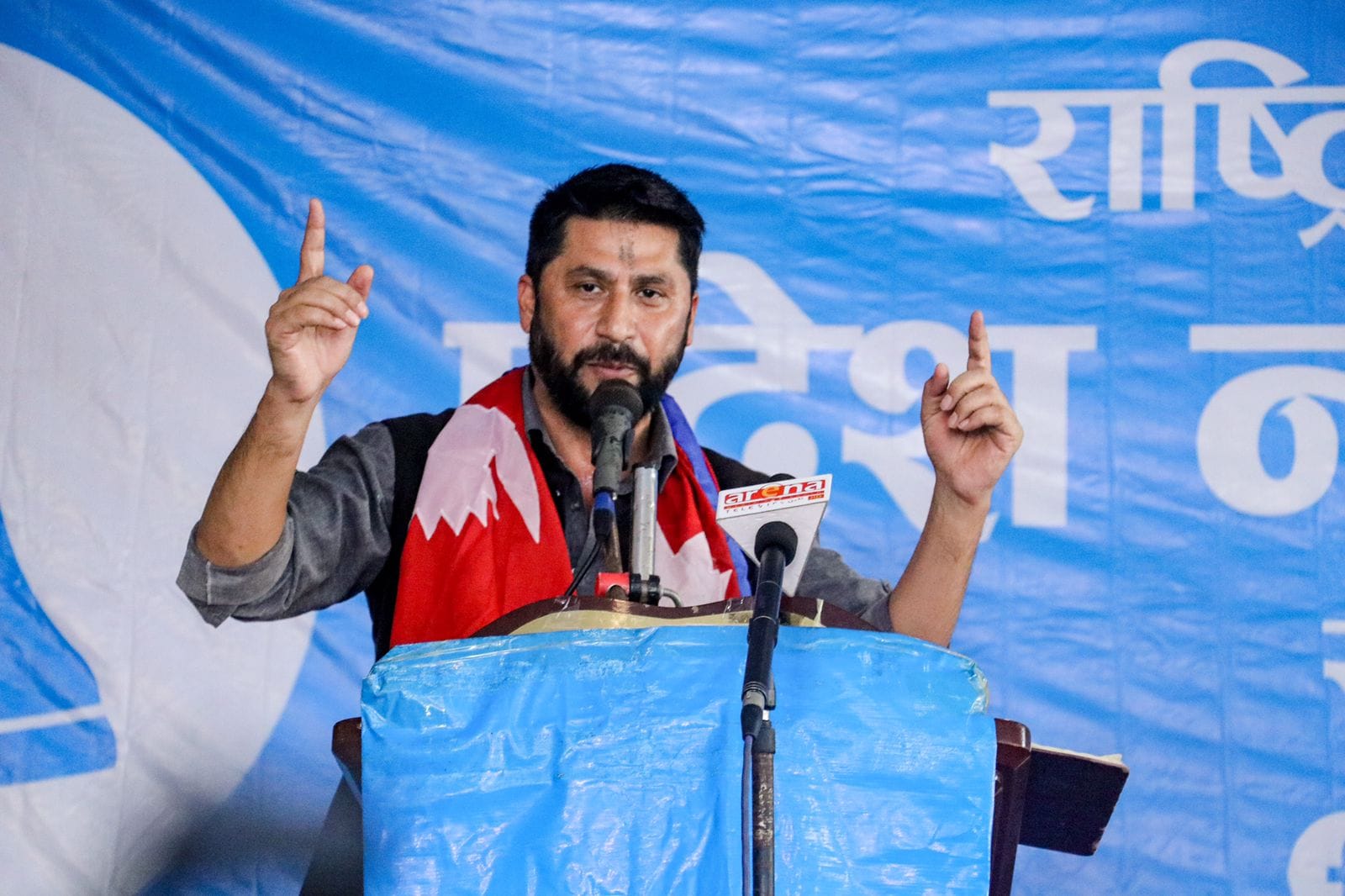
While mainstream political leaders in Kathmandu were vacillating on a date for the upcoming provincial and federal elections, one Ram Bahadur Biswokarma was up on a stage of an open stadium in Nepalganj.
“May my country be like Rabi Lamichhane,” said Biswokarma in a quivering voice. He was prompted to speak about ‘the country of his imagination’ at a district meeting of the newly launched National Independent Party in Banke.
Another participant, Balkrishna Chapagain added: “May my country be what Rabi Sir has envisioned!”
Rabi Lamichhane is using this public preference for independent candidates because the incumbents are old and incompetent to his advantage and to catapult his National Independent Party to prominence. His personal brand as a well-recognised face has helped.
Lamichhane is only the latest figure cultivating tv popularity for politics in a long list in Nepal, India and other countries. Viz: Donald Trump, Silvio Berlusconi, Volodymyr Zelensky, Smriti Irani.
According to John Street, English professor and author of Mass Media, Politics and Democracy, it is easy to have 'celebrity influence' on politics through television. The reason: compared to any other mass medium, television focuses more on the human aspect of the people -- making the audience in turn feel seen and heard.
Lamichhane’s News 24 show सधा कुरा, जनता संग (Straight Talk with the People) allowed him to generate a massive fan base after it was first aired in 2016. He took on issues of public concern including foreign employment fraud, mismanagement of airport immigration, and corruption. Heated political confrontation in the studio, live rescue of abused workers meant that people were now coming to him in the hope of solving their problems instead of going to the police.
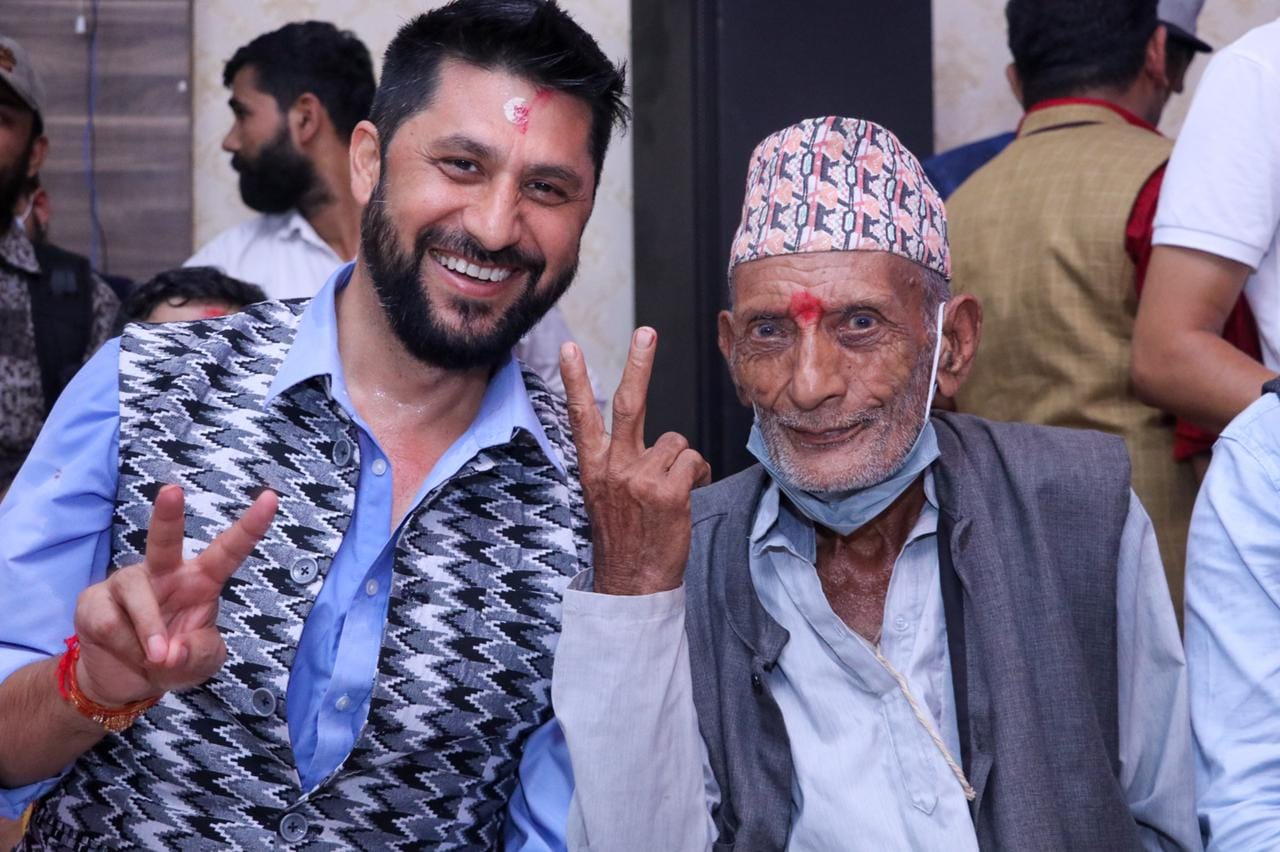
Soon enough, Lamichhane was everywhere. At political party events, the crowd lined up for selfies with ‘Rabi Dai’. On Facebook, he has over a million followers which is more than the combined total Sher Bahadur Deuba, K P Oli and Pushpa Kamal Dahal have on the platform.
But his influence was perhaps most visible when he was taken into custody by Chitwan Police in 2019 for the suicide case of a former employee. Even as an alleged video emerged where Salikram Pudasaini before his death blamed Lamichhane among others for mistreatment, supporters took to the streets calling the incident a smear campaign against the tv presenter.
Read also: Kathmandu’s ‘Balen Phenomenon’, Sarala Gautam
Which might as well be, but Lamichhane’s persona is cultivated by sensational, clickbait journalism. his content is provocative and unapologetic, it incites antagonism against guess. Few anchors on national television have hurled invectives and threats as he has.
But when the Press Council sent Lamichhane a warning letter, he wrote back, ‘I’m not a journalist, not yet.’ And yet, he has used the media to propel himself to national popularity. 'I would rather be a cobbler than apply for a press pass,' he added, which the followers supported by waging a cyber jihad.
For a celebrity presenter of his status, he is quite fast and loose with facts. His forte is not fact-checking, as exemplified by episodes on Nepal manufacturing its own Covid vaccine and a haunted house in Kathmandu which were baseless, problematic and promoted false narratives.
So it is only natural to wonder if his politics will resemble his journalism. After all, a leader has the responsibility to forge a path without crowd pressure, having judged right from wrong.