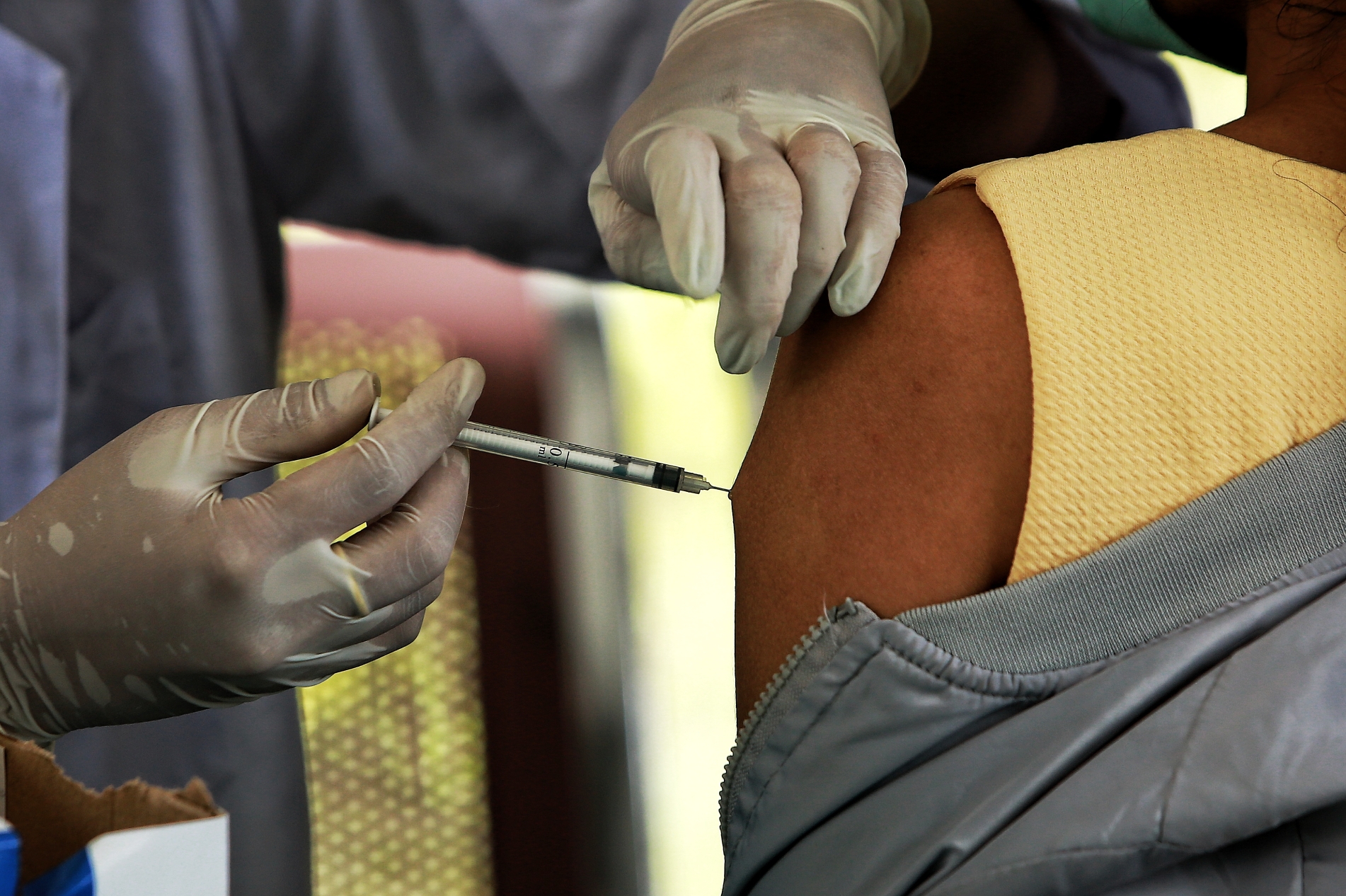
Following initial lab reports that AstraZeneca and VeroCell boosters afford lower or no protection against the new Omicron strain, Nepal Times reached out to Andrew Pollard, who helped develop the Oxford AstraZeneca vaccines.
Majority of the vaccinated Nepalis have been administered either with the Chinese VeroCell or the AstraZeneca Covishield manufactured in India. At least 12.2 million Nepalis (42% of the population) have got at least one dose of vaccine, and 9.7 million have got both jabs (33% of population).
Of these 28.5% got the Covishield and 62.1% got the VeroCell which are vector vaccines made from disabled viruses, as per the government figures last updated 18 November. Another 9.2% got J&J. Less than 4,000 have received Pfizer or Moderna which are genetically engineered mRNA vaccines.
Nepal currently has nearly 14 million vaccines in stock and wants to fully vaccinate 40% of the population before offering booster shots by the end of the month.
Excerpts of the conversation with Andrew Pollard:
Read also: “Nepal has all the conditions for an Omicron surge”, Nepali Times
Nepali Times: Is it true that AstraZeneca boosters are not as effective against Omicron?
Andrew Pollard: The new coronavirus is here to stay and it will remain with us for decades to come. To do this is will find ways to continue to infect people in communities even if they are vaccinated. The important role of the vaccines is to prevent severe disease and the evidence so far, even with Omicron, does appear to indicate that vaccines are still holding up in preventing most of the severe outcomes.
New variants are able to cause asymptomatic or mild disease in vaccinated people with any of the vaccines that are being used around the world, and Omicron is the champion so far in doing this. But vaccines remain highly effective in preventing severe disease from all variants and make us a lot safer than if we are unvaccinated.