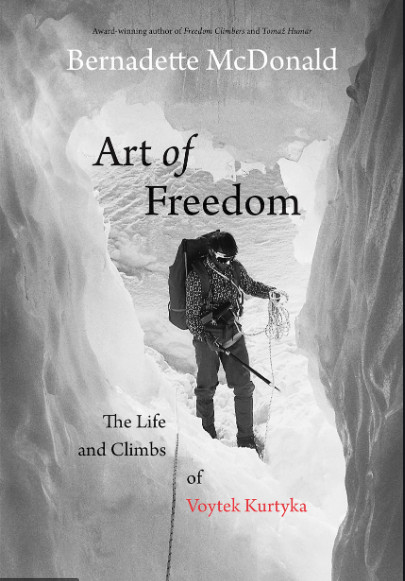
In a week when Mt Everest grew by nearly one metre, we lost Doug Scott who with Dougal Haston was the first to scale the formidable southwest face of the world’s highest mountain. He was one of the earlier proponents of climbing Alpine style -- ascents without bottled oxygen, fixed ropes and porters, not expeditions that are executed like military offensives.
Among the people Scott and his generation of ‘clean climbers’ inspired were
and her climbing partner Tomasz Mackiewicz, Nirmal (Nimsdai) Purja and Voytek Kurtyka. Their adventures in the mountains are relived in three recent books that are tales of triumph and tragedy in the Himalaya.On 25 January 2018, Revol and Mackiewicz reached to the top of Nanga Parbat (8,126m) the world’s ninth highest peak in the Karakoram. This was the second winter ascent of the mountain, and Revol was the first woman to do so. It was already dark when they got to the summit, Mackiewicz became snow-blind, and had severe altitude sickness and frostbite.
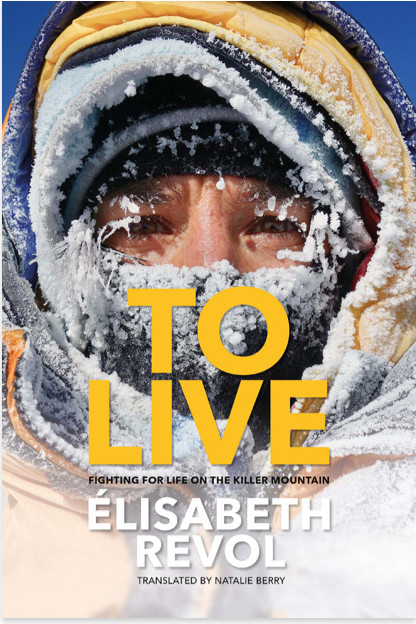
Revol’s book To Live: Fighting for Life on the Killer Mountain tells the story of her heroic rescue from the Nanga Parbat by two Polish climbers who were on K2 at the time, and the trauma of not just the harrowing descent, but also of having to abandon Mackiewicz in a crevasse at 7,280m on Nanga Parbat’s northwest face.
Called the ‘killer mountain’, this enormous pyramid of ice and rock has been claiming climbers’ lives for the past 140 years. The first two Nepali casualties in a Himalayan mountaineering expedition were with British climber Albert Mummery in 1895 when they fell to their deaths on Nanga Parbat.
Six more Nepalis were among nine killed in a German expedition in 1934, then 16 others were killed in an avalanche three years later. German climber Heinrich Harrer was captured in 1939 at Nanga Parbat by the British, later fled to Tibet, and wrote Seven Years in Tibet about his adventures and friendship with the young Dalai Lama.
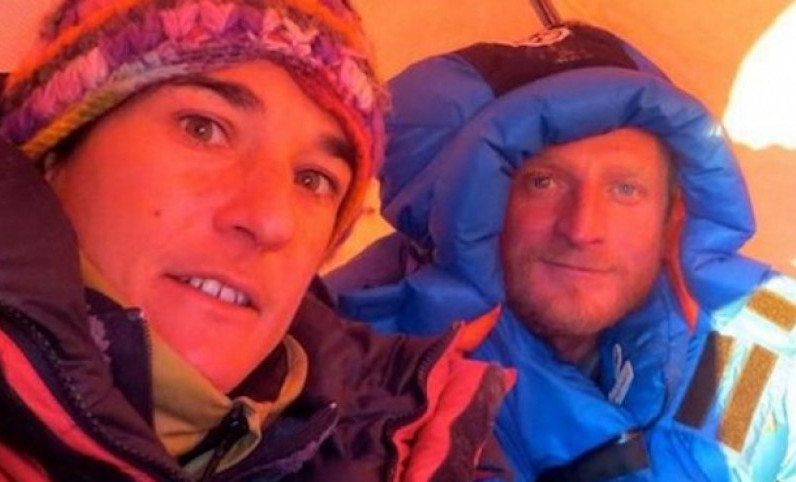
To Live is Élisabeth Revol’s attempt to come to terms with the loss of her climbing partner, relive the three nights she spent on the mountain waiting for the rescue, and two years later, rationalise for herself why she descended alone.
Revol’s account is almost like stream of consciousness diary entry, re-experiencing the thrill of climbing, the shock of discovering that her partner had gone blind on the summit, and carrying him down a treacherous slope of black ice in the dark.
This is an extreme saga of survival against all odds. The book reads like the other mountaineering classic, Annapurna, written by Revol’s compatriot Maurice Herzog about the first ascent of an eight-thousander 70 years ago.
After staying at 6,780m for a helicopter rescue that does not happen, Revol decides that instead of waiting to die, she would risk going down the Mummery Spur despite severe frost bite, hunger, thirst, fatigue, the darkness and no climbing gear.
This is also adventure literature at its most spellbinding:
‘Everything seems improbably, unreal. I’m descending at night, without a head torch, on a route I don’t know, without any equipment; no ice axe or belay device, no French prusik, no ice screws or dynamic rope. Without having a drink for 55 hours at least. Almost sleepless for 80 hours apart from my daydreams and last night’s hallucinated torments.’
This is not a spoiler, since the whole world knows the story: the rescuers arrive.
‘Suddenly a beam of light from the slope below pierces the darkness. They climbed up? My God, they climbed up, they climbed up! The beam of the head torch shines on me and I hear: “Adam I have her”.’
To Live is a very personal account in which Revol shares the terror of the descent, her friend’s obsession and spiritual bond with Nanga Parbat, and she ends her book with a letter to Tomasz Mackiewicz that is a farewell, and also a personal closure.
‘Tomek had freely decided to be free, to make the purity of the mountains his noble passion ... Thank you, Tomek, for being what you were.’
As a child in France, Revol had a poster of Mt Everest on her bedroom wall. So, a year after the tragedy on Nanga Parbat, while still wrestling her demons, she decides to climb Everest. She negotiates the traffic jam in May 2019 to descend to the South Col, and also re-climbs Lhotse. She describes the feeling:
‘The sunrise over Nepal and the Valley of Silence is magnificent. What luck! I indulge myself in my kingdom, far away from the world, in my element, in solitude. The mountain welcomes me with kindness for the time being ...’
**
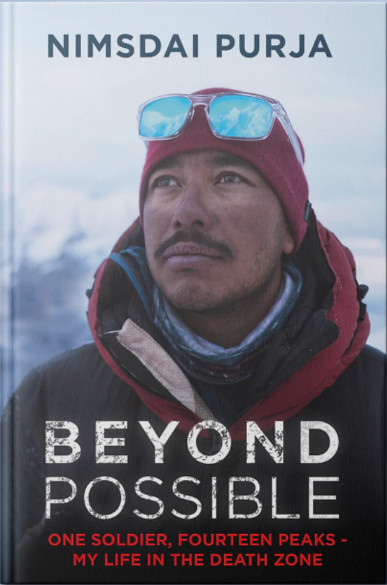
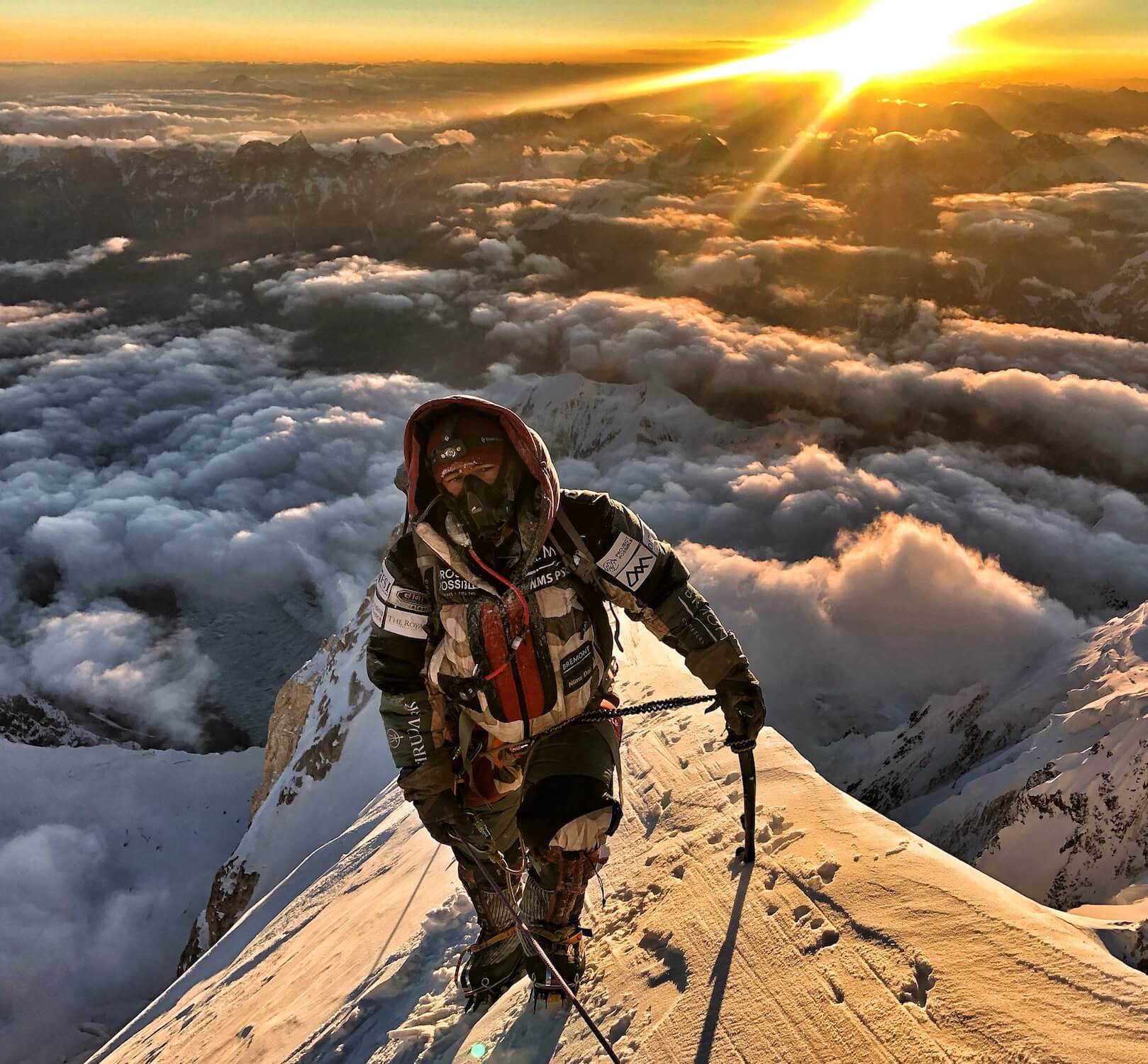
It is also on Nanga Parbat that Nimsdai Purja begins Beyond Possible: One Soldier, Fourteen Peaks – My Life in the Death Zone with an account of his near-death experience after slipping on ice at almost the same point where a year previously Élisabeth Revol had made her second night’s bivouac on the Kinshofer Route. It was his presence of mind, acute situational awareness and survival instinct that allowed him to arrest his fall.
In tone and content, the Revol and Purja books could not be more different. While To Live is about survival, Beyond Possible chronicles an ex-Gurkha commando’s never say die ambition to attain the impossible – climb the world’s 14 highest mountains in seven months. He ended up doing it in 6 months and 6 days, when the previous record by Korean climber Kim Chang-ho was 7 years, 10 months and 6 days.
Labeling this kind of extreme mountain-hopping ‘Alpine style’ is not adequate, it demands the fitness of a Special Forces commando that Purja was, and the kind of mental drive and focus that only someone like him could command.