
One smoggy winter morning in February 2019, Ekta regretted coming to her sculpture class. It was the first day of her period, and the 19-year-old wished she was home, curled up in bed with a hot water bag to soothe her cramps.
Her class was at Kalapremi Ceramic Studio, a dark room on the ground floor of a house in Maharajganj, and Ekta’s teacher was the artist Gopal Das Shrestha ‘Kalapremi’, a noted sculptor.
Two other students were already there, using all their muscle strength to knead the sculpting clay. Ekta, now 24, recalls how Kalapremi asked her if she was feeling all right. She avoided him, as she did not want everyone to know she was menstruating.
Kalapremi repeatedly asked Ekta what was wrong. She finally muttered that she was having her period, after which he grabbed her hand and led her to a partitioned corner of the studio and sat her on a chair. Before she could stop him, he slid his hand under her dress, and started massaging her abdomen.
“I was horrified,” Ekta recalls. “I told him to stop, but he didn’t listen, asking me not to be shy, saying he knew how to relieve my pain. He stopped only after I protested furiously.”
The art tutor then said, “You’re like my daughter. I’m doing it out of love to make you feel better, but you’re so stubborn.”
“Instead of saying sorry he acted like I was the one having crazy thoughts,” remembers Ekta, adding that from April 2016 to August 2020 beginning the time she was 16, the artist sexually abused and harassed her on several occasions.
Now, Ekta and the artist’s other former students are finally sharing their experiences and some are pressing legal charges against him, hoping that others do not have to endure what they did.
Award-winning artist and teacher Gopal Das Shrestha ‘Kalapremi’ (the name means ‘Art Lover’) is known for his ceramic art, sculpture, and contemporary pottery. He was profiled in Nepali Times after a collaborative exhibition, ‘Where the Wild Things Are’ at the Siddhartha Art Gallery three years ago.
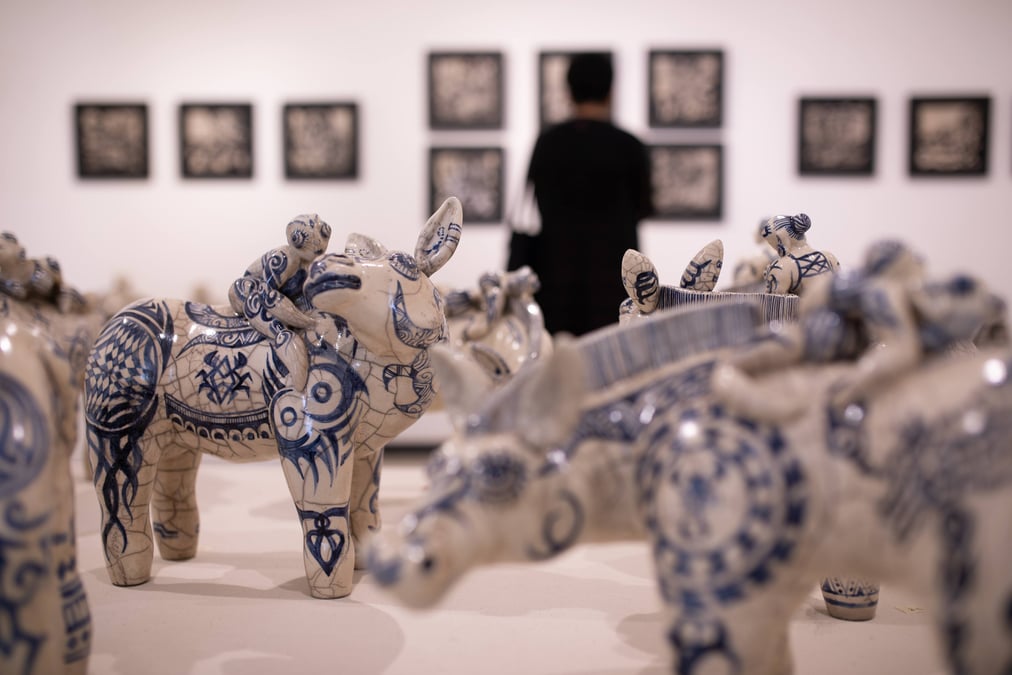
His pieces, titled Gaalis, featured sculpted female figures with the heads of dogs, sheep, and donkeys (pictured) to depict derogatory terms for women. Some critics said the collection was a satire on feminists.
Kalapremi started his artistic and teaching career in 1983 and over the years taught at Bhanubhakta School, Kathmandu University School of Arts, Lalitkala Campus and at his private Kalapremi Ceramic Studio. He has also lectured at Jeonju University in South Korea and recently at Tabor Academy in the United States.
Seven of Kalapremi’s former students were interviewed for this story. Five female students said he touched them inappropriately in his studio or at Kathmandu University. Two male students said they witnessed him abuse and harass the women. In all cases, the students struggled to recognise the abuse when it occurred, and the lack of reporting systems left them to cope on their own for years.
Earlier this year, students shared a social media post hinting at Kalapremi’s history of abusive behaviour following which more students of the artist reached out sharing similar experiences. Some students spoke of abuse that happened as long as 20 years ago.
Kalapremi, 60, has denied the allegations. He told Nepali Times: “Some years ago, there was a movement encouraging people to hug and kiss. I used to do it purely out of friendship and love. But after seeing posts on social media last year calling out my behaviour, I realised my actions may have hurt some people. I understand now that I should have been more mindful.”
He added: “I am also an auxiliary health worker, so I know the exact points to massage to relieve menstrual pain. It’s not just menstruation, I take anyone who is ill to the hospital.”
Sexual abuse is much more rampant than reported given how difficult it is to prove it in court. The law defines sexual abuse as occuring when someone touches another’s private parts, coerces them into touching theirs, uses vulgar language, shows degrading images, or behaves indecently towards them without consent.
Ekta and her fellow students are consulting lawyer Suneeta Regmi Pokhrel, who says they know that even if the court decides in their favour, it is difficult to survive after speaking up, and influential men defend themselves saying they are being framed.
“They are in a lot of pain and weep when recalling how he abused them,” Regmi Pokhrel told us. “They are angry and have filed a case against him, but they are also terrified. They know he is a powerful man and they have seen how our society treats women who speak up against abusers. Unless people speak up, perpetrators will be emboldened.”
Art and academia in Nepal simply reflect the power imbalances in society where people with intersecting identities experience worse forms of abuse. Theatre actors Raj Kumar Pudasaini, Rajan Khatiwada, and Sunil Pokhrel were called out during the #MeToo movement in the Nepali theatre scene in 2019. Even after the allegations Pokhrel went on to receive national awards, while others continued to work without repercussions.
“If you speak up against abusers, you gradually get sidelined from projects,” explained a theatre artist who wished anonymity fearing professional setbacks. “The theatre scene in Nepal is quite small, you just have to make peace with the perpetrators and work with them if you want to sustain yourself.”
In academia there is a history of faculty members sexually harassing students and getting away with it. After Tribhuvan University (TU) lecturer Krishna Bhattachan was accused of harassing women students, the university said it would follow Nepal’s sexual harassment law and set up a reporting mechanism. But nothing happened to the professor, who had already retired. Instead, he counter-accused the students of 'attacking the indigenous people’s movement with baseless allegations' as he told the Kathmandu Post in 2019. He continues to be featured as a prominent speaker including at TU.
Other faculty members previously accused of sexual harassment include Jagadish Murti Koirala from TU, Bishnu Prasad Acharya from Ratna Rajya Campus, and Bodha Raj Tripathee from Lalitpur Madhyamik Vidhyalaya. A woman staff member from TU also filed a sexual abuse complaint against Dambar Chemjong from TU.
Prominent figures like mountaineer Nims Purja have been accused of sexual assault, and cricketer Sandeep Lamichhane, actor Paul Shah, and former speaker of Parliament Krishna Bahadur Mahara have been accused of rape, but society-at-large has let off the alleged perpetrators amdist a larger debate about justice for survivors and punishment of perpetrators.
‘Gaushala-26’ is the court name given to the 18-year-old who accused Sandeep Lamichhane, former captain of Nepal’s national cricket team and skipper of Biratnagar Kings in the ongoing Nepal Premier League, of rape. She left the country citing society questioning her character affecting her mental health while Lamichhane got an outpouring of support. In May, the Patan High Court overturned a prior verdict that found Lamichhane guilty of rape and had sentenced him to eight years in prison. During the 23-month legal battle to pursue justice, Gaushala-26 faced threats of gang rape and acid attacks.