
Nepal’s history of rural-to-urban as well as international migration has been reflected in its music and poetry ever since Nepalis began to migrate, in dohori duets to folk music, the ballads of the Gandarva and songs of longing for home and family.
Nepalis have written poetry about the pain of separation from loved ones, the struggle to assimilate in a new world, about Lahure soldiers fighting and dying in faraway lands, and workers toiling in मुग्लान of British India.
Perhaps all Nepalis have the heart of poets. Or perhaps the desire to turn translate homesickness into art is universal.
In South Korea, Sunil Dipta, Dilip Bantawa, and Jiwan Khatri carry the tradition of Nepali migrants turning their lived realities to verse.
Their poems, along with those of other Nepalis who are currently working or who have since returned from South Korea, was published as an anthology titled Yo Machineko Sahar Ho.
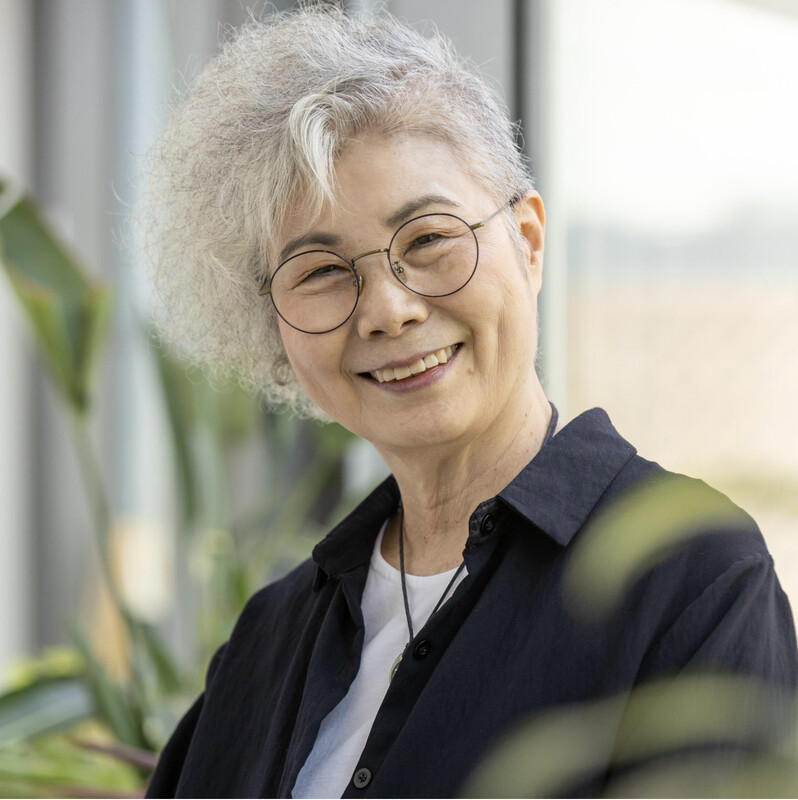
The anthology inspired director Kim Ok-young (pictured below) to film the poignant 2025 documentary In the land of Machines, which tells the stories of Jiwan, Dilip, Sunil, and their fellow Nepali workers. The documentary is being screened at KIMFF 2026, where viewers will be confronted with the stark contrast between the aesthetic, technological wonderland often reflected in popular media, and the realities that workers face every day.
Sunil works at a mushroom substrate factory, mixing and packaging a number of organic matter for hours on end. He is covered in dust from head to toe soon after he starts work. During lunch breaks, he carefully takes out his tightly plastic-wrapped phone from his pocket to call his wife back home and his toddler daughter, whom he has never met.
When Dilip calls home, his daughter excitedly asks him if he knows BTS, and he smiles, nodding. Away from the glitter of cities where K-pop musicians smile from giant digital billboards, Dilip, who was a teacher before he left Nepal, works a solitary job looking after cattle in rural South Korea, and has become attached to the cows in his charge.
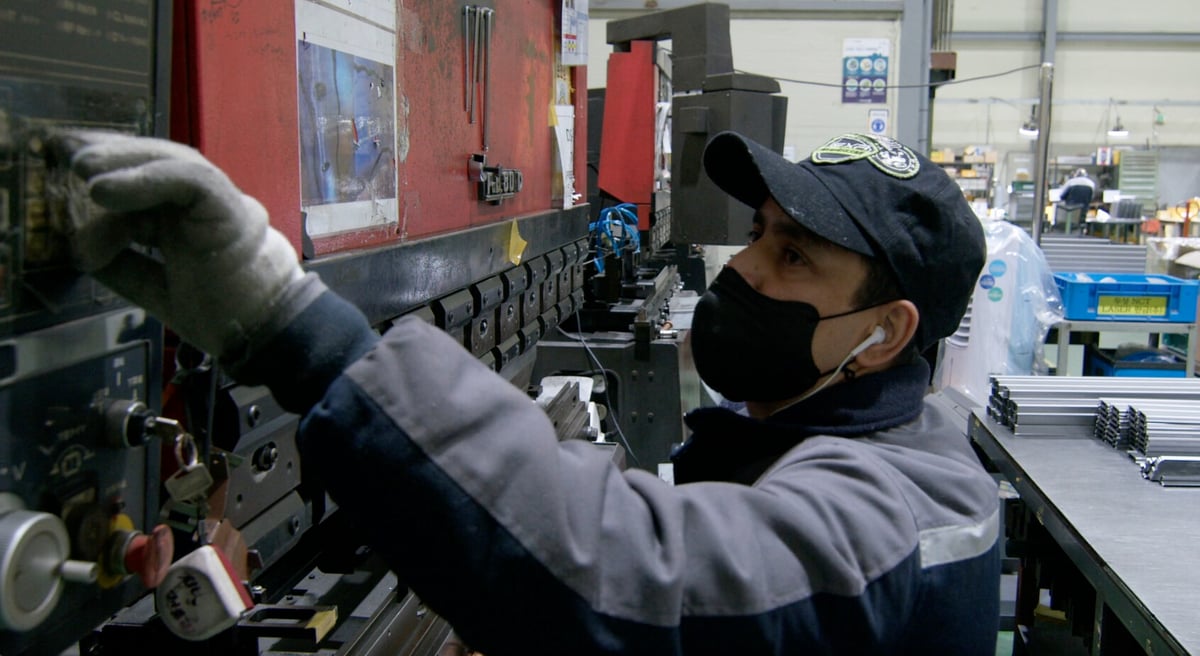
Jiwan is the senior-most Nepali worker at a sheet metal factory, and serves as a liaison between his fellow Nepalis and his employers. But Jiwan has not forgotten his broadcaster roots in Nepal— he still reports on the Nepali diaspora in Korea, sending it back home via the Rastriya Samachar Samiti.
Thousands of kilometres away from home, the men have found companionship, common ground, and solidarity through their poetry, and meet when they can in person or over video conference to keep in touch with fellow Nepali workers currently or previously in South Korea.
The stories of their lives in Korea serve as backdrops for their poems that document their experiences. Some of the most poignant ones are those about the initial indignity of trading diplomas earned in Nepal for farm animals, about lives now held within battered suitcases and tiny rooms, about the cruelty shown to foreigners by their employers.
The poems are interpreted in English and Korean on screen, but some of the impact and nuance of the words are lost in translation.
The documentary is also interspersed with Jiwan’s reporting in the film of fellow Nepalis who have died while working in Korea: from accidents, by suicide, in their sleep.
The experiences of the Nepali workers spotlights how Korea’s rapid post-war economic development combined with the nation’s particular hierarchal socio-culture has manifested into a work ethic that is defined by impassive, unyielding, relentless efficiency. This has not left much room for compassion or humanity.
“Most Koreans think of foreigners like machines. They think we don’t feel pain when they hit us. They don’t see our spirits aching and crying,” says a Nepali worker as a group of them meet at a restaurant.
But through their despair, the men attempt to rationalise the reality of the land they have come to depend upon.
“Without treating people like machines, they wouldn’t have developed this far,” one Nepali worker says matter-of-factly. “Although machines cause us pain, they also give us opportunities.”
Which is why Jiwan, Dilip, Sunil, and their friends will show up for work another day, cogs in South Korea’s economic engine. And in their small apartments, empty pages await, offering respite.
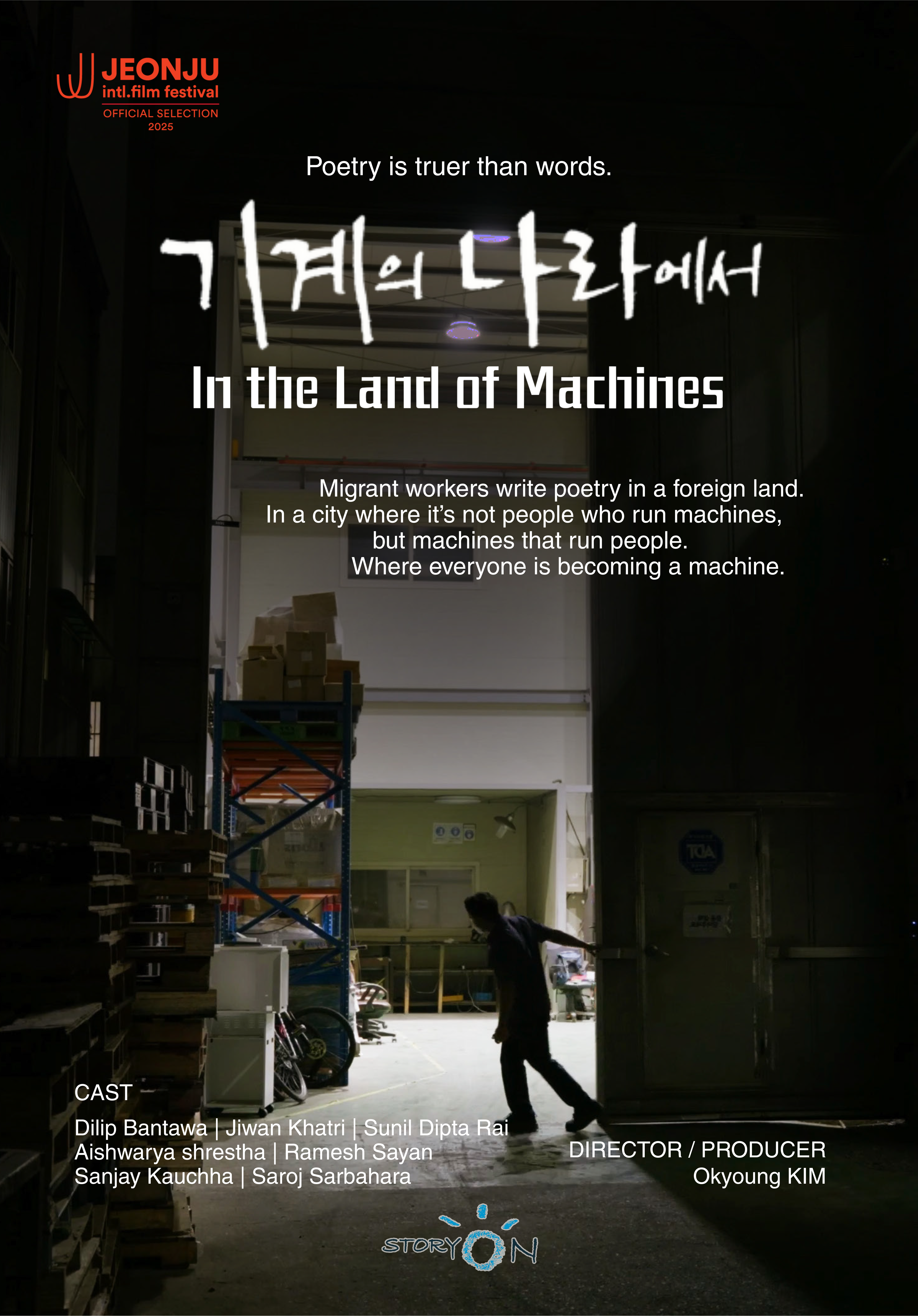
In the Land of Machines
Directed by Kim Ok-young
92 min | South Korea / Nepal | 2025
28 May, 4pm