While packs of street dogs howling at night are annoying for those of us trying to sleep, there are more serious issues about their presence that need addressing: overpopulation and rabies.
Neither are a new phenomenon, but Bhaktapur Municipality’s approach to the problem is. Instead of poisoning them, it is taking a more humane approach to eradicate rabies and control the dog population.
Read also: A woof of fresh air, Ryan Chang
The canine squad wakes up early in Gahiti of Bhaktapur, as they lure female dogs into the truck with biscuits. They also keep their eyes peeled for unvaccinated males. The team is a mix of uniformed officials, volunteers, and vets, who are combing the streets as part of the Sanitation Department’s Street Dog Sterilisation and Anti-Rabies Vaccination Campaign.
Complaints of locals and tourists being bitten or attacked by strays are serious. Two-hundred deaths per year are attributed to rabies, and the number is rising. There are about 35,000 courses of shots distributed each year. The treatment for rabies comes at a serious cost too: Rs2,000 per course of four injections.
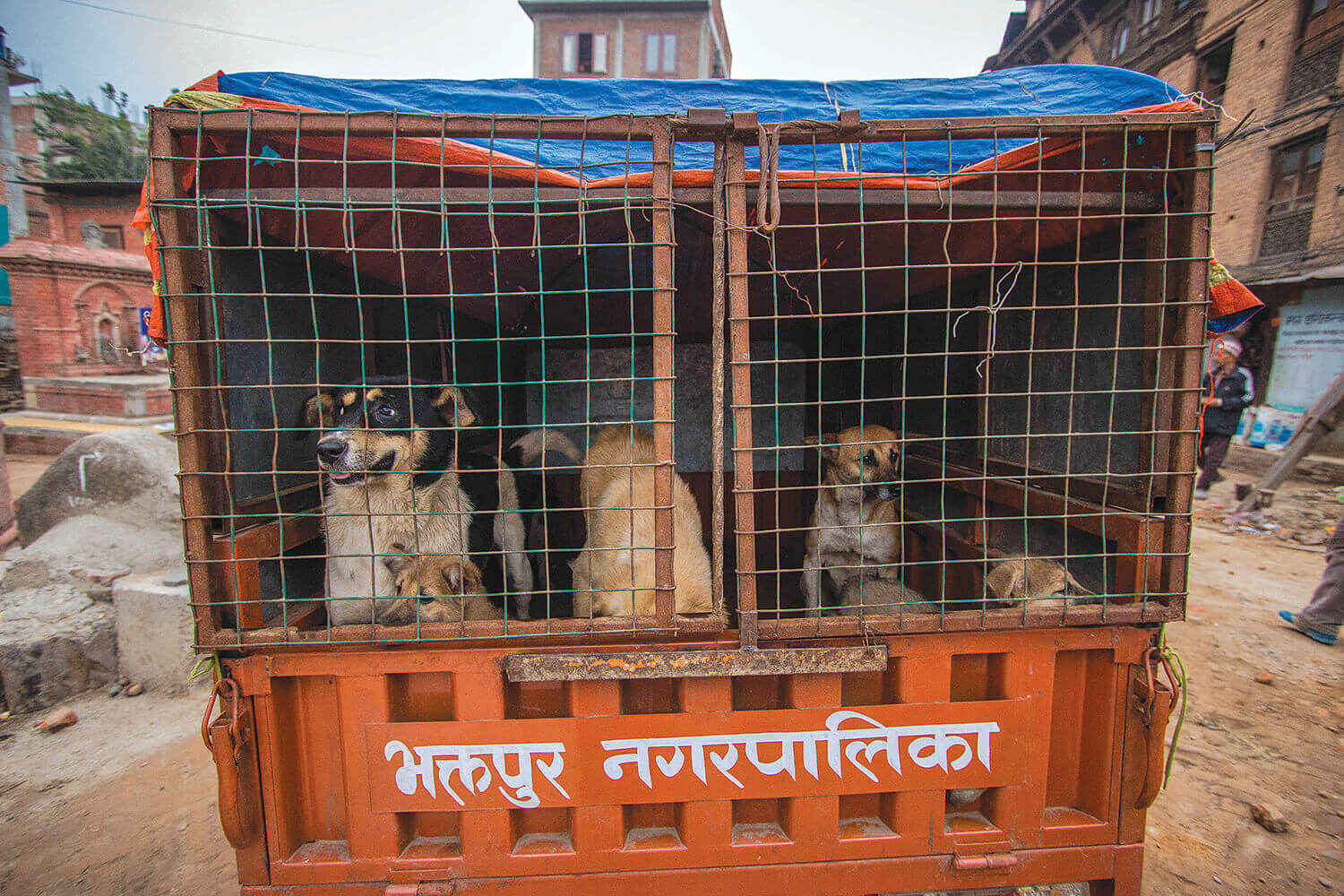
This takes some explaining to the locals, but there is nothing sinister going on. Most respond positively as the team tells them what they are doing, and that it is not an act against nature or god. The dogs are not being culled, rather spayed, given an orange collar or notched ear for identification, and released.
Sanitisation Department chief Dilip Kumar Suwal believes this is going to benefit the city’s overall canine health. It should also help eradicate rabies, which was the reason for several complaints of stray dog attacks.
It’s a far more humane alternative to the previous quarterly poisonings, the city had a record of killing up to 500 dogs a year. The new technique could replace the culling, Suwal says.