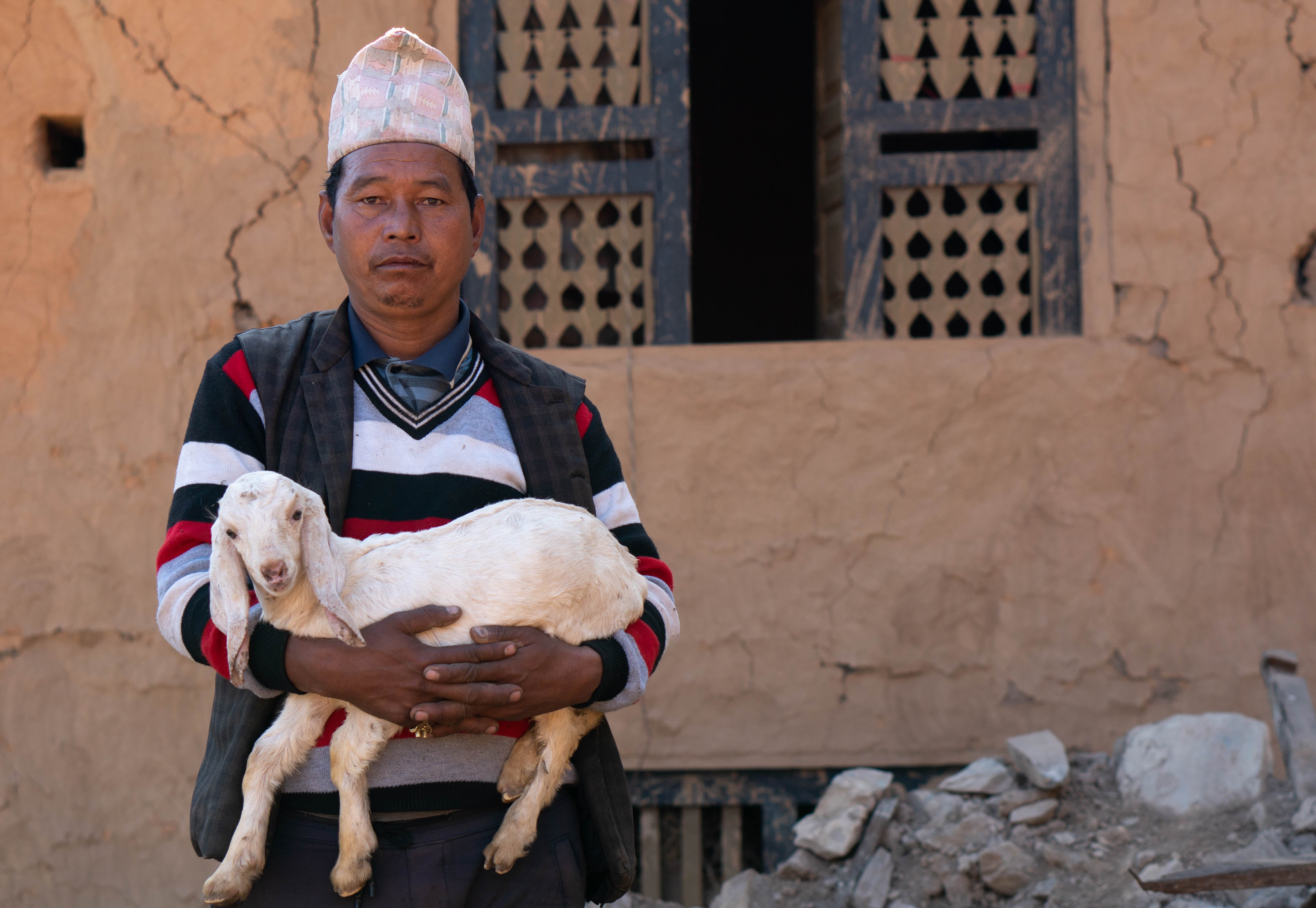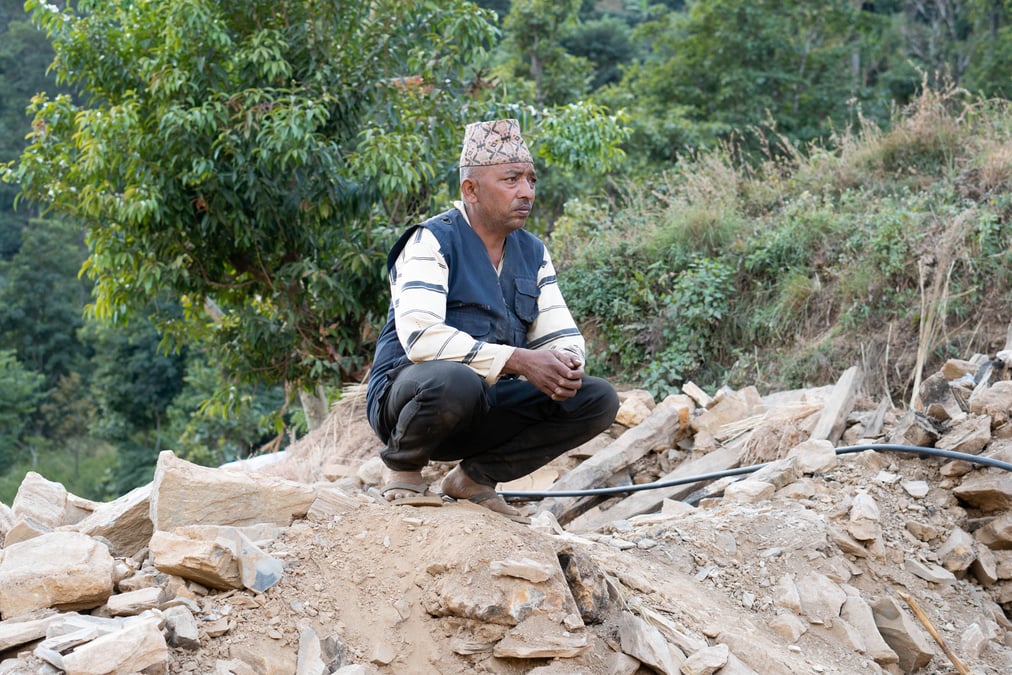
In Chuiri village, Hasta Bahadur Kami, 62, stays on the roof of his damaged house to escape recent rains. He spends nights lighting fires and endures the scorching sun during the day on the roof of the same earthquake-damaged house.
Kami lost his father and grandson who were trapped in the collapsing house.
He single-handedly struggled to clear the debris with his bare hands but could not get to them in time. Every structure in Chuiri succumbed to the quake's force.
“Water can quench thirst, but a lost life can never be restored,” says a tearful Kami, his grief still raw more than two months after the quake on 3 November.
Read also: Jajarkot survivors show collective resilience, Durga Rana Magar
With loans from relatives, aid from the community and Rs 15,000 from the UN’s World Food Programme (WFP) he paid for their funerals. But he still has unpaid loans.
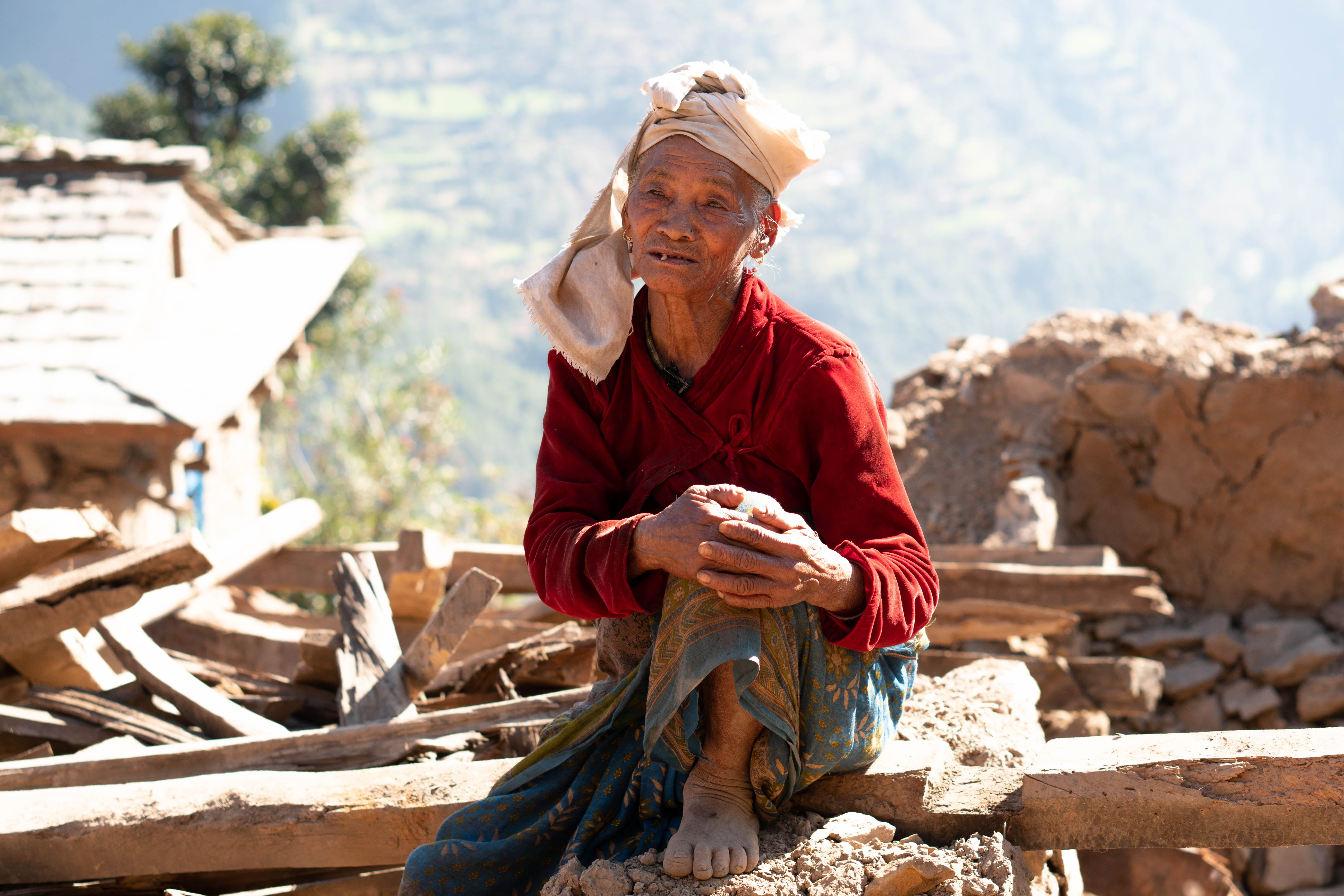
Similarly, Kali Pun, 73, from Pali village has survived on meagre provisions while caring for her grandson amidst the ruins of her house. The village council provided some food, but what helped at that crucial time was the WFP cash grant which she used to buy medicine for herself and process her grandson’s citizenship papers.
Ganesh Pun, 58, lost 47 of his 50 goats in the earthquake. Today he sits listlessly in the sun, with no more goats left to graze and his source of livelihood gone. Pali was once known as a rich farming village, but the earthquake exacted a heavy toll on livestock.
According to the Ministry of Land Management, Agriculture, and Cooperatives of Karnali Province, 513 cows, goats, buffalos were killed.
The Ministry Secretary, Narahari Prasad Ghimire, has submitted a proposal worth Rs9,974,000 to the cabinet for providing relief support to farmers affected by the earthquake.