
It was exactly three years ago that the novel coronavirus first emerged from Wuhan. SARS-COV-2 has now come full circle as cases soar and hospitals are overwhelmed across China.
Beijing abandoned its zero-Covid policy, and has stopped registering fatalities from Covid-19. Official case load and death figures are said to be underreported. International health experts believe more than 1 million people may die from the disease this winter.
Several countries now require mandatory Covid tests from passengers arriving from China, after Beijing eased travel restrictions in the new year. Countries in the region including Nepal are on high alert.
The Health Ministry last week made masks once again mandatory in public places while appealing to people to resume hand washing and social distancing. On 28 December Nepal reported only 8 cases and zero Covid deaths.
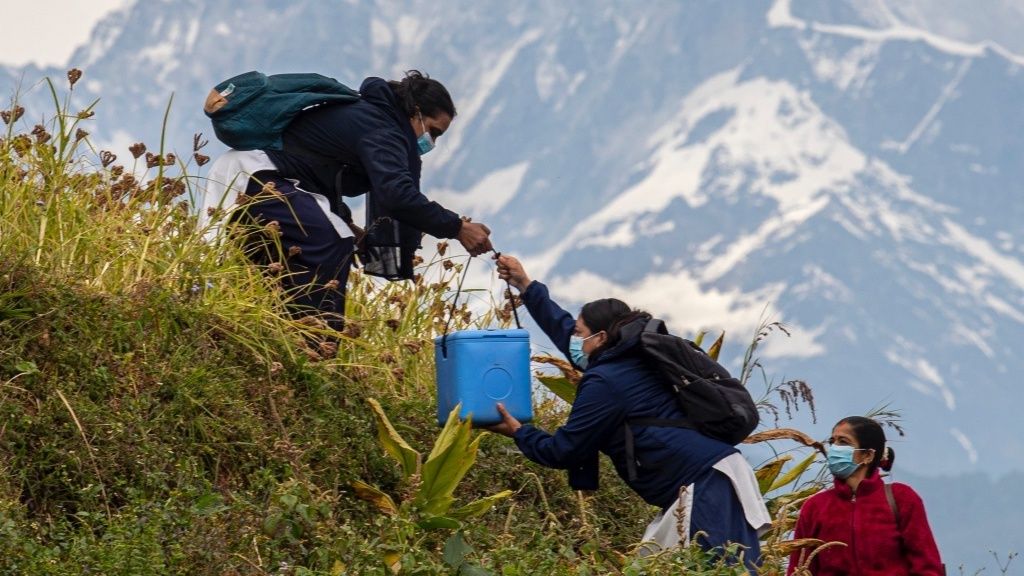
The Ministry has also urged the public to take booster shots, and second boosters for people above 55 and the immunocompromised. The Drug Advisory Committee on 27 December granted emergency use approval for the Pfizer-BioNtech bivalent vaccine of which Nepal is set to receive 1.5 million doses from the COVAX global initiative by mid-January.
Read also: Three Years of living dangerously, Sonia Awale
“What is of utmost priority now is to protect our elderly and vulnerable populations. We need to fully vaccinate them if they have not or give them a booster, bivalent would be even more effective as it can fight both the original and Omicron strains,” explains Sher Bahadur Pun at the Teku Hospital.
Pun likens what is happening in China now to the Omicron surge in Hong Kong earlier this year which also saw a significant rise in hospitalisations and deaths. Nepal also suffered a spike in fatalities among the elderly towards the end of the Omicron third surge in 2022. In both cases, the unvaccinated were victims.
“Omicron might be less severe but in vulnerable groups who have not been vaccinated, even this strain can cause complications,” he warns.
More than 80% of Nepal's eligible population (above 5) have been fully vaccinated against Covid-19. But the booster uptake is much lower at only 27%. There is also concern that it has been more than a year since most Nepalis got their last shots, and their immunity might be waning. Officials recommend a booster even though memory cells could provide some residual protection.
The WHO has asked China to reveal its true Covid figures, and the nature of the prevalent strain. Experts attribute its surge to vaccination hesitancy among the elderly, stringent zero-Covid strategy which suppressed natural immunity, and Chinese vaccines like Sinovac being less effective than mRNA jabs.
Read also: Why is there vaccine hesitancy in Nepal? Sonia Awale
“China did great with lockdowns and restrictions but took it to unnecessary levels, which means the population is Covid naïve compared to other countries. When they reopened, the variants already present multiplied rapidly,” explains Buddha Basnyat, physician at Patan Academy of Health Sciences. “It also seems they did not learn from the rest of the world, did not vaccinate their elderly sufficiently and relied only on their own vaccines.”