
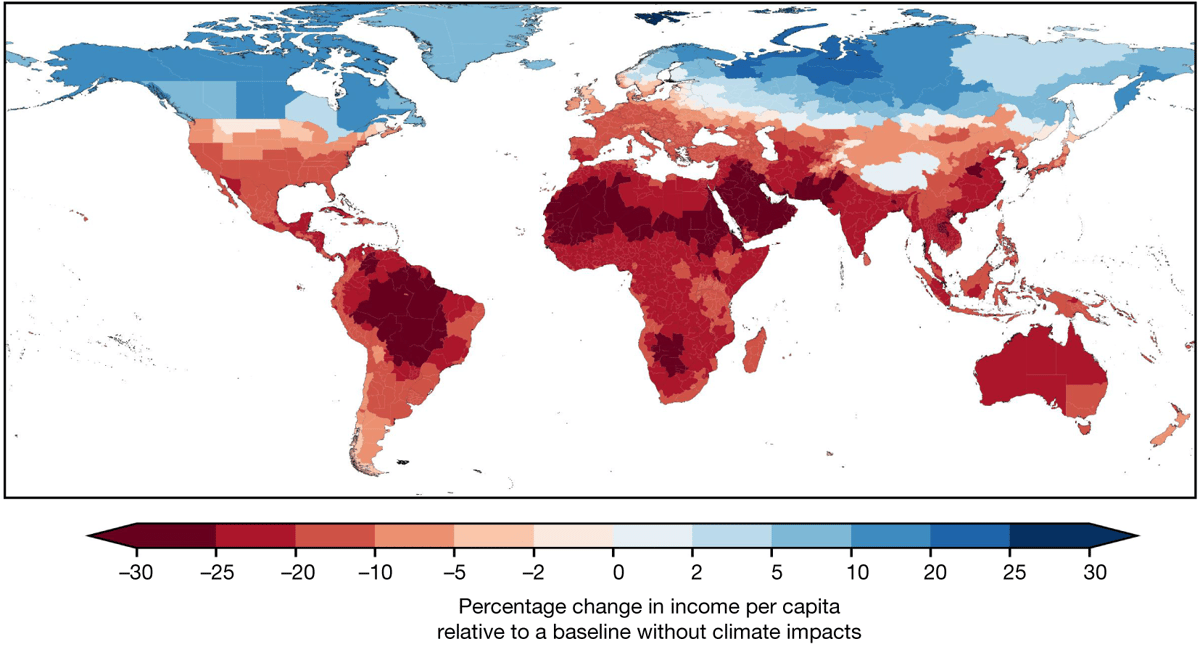
This year’s COP 29 in Baku, the capital of the oil state of Azerbaijan (fossil fuels make up 90% of the country’s exports), was dubbed the ‘finance COP’. The focus of negotiations was on a ‘new collective quantified goal’ (NCQG) for climate finance, which is supposed to support the countries of the Global South in climate change mitigation and adaptation. Current climate funding is indeed totally inadequate, hundreds of billions of dollars per year are needed.
While international public attention was on the COP negotiations about money, other issues also played a role in Baku, including the climate-peace nexus. Let us have a closer look.
On 15 November, which was the COP 29 ‘Peace, Relief and Recovery Day’, the COP Presidency (Azerbaijan), in collaboration with Egypt, Italy, Germany, Uganda, the UAE and the UK, launched the ‘Baku Call on Climate Action for Peace, Relief, and Recovery’. It was presented as “a milestone initiative aimed at addressing the urgent nexus of climate change, conflict, and humanitarian needs.
It is a response to the growing recognition that climate change’s adverse effects – such as water scarcity, food insecurity, land degradation, displacement, and livelihood disruptions – can act as catalysts for conflict and instability, especially in vulnerable regions”.
The Baku Call draws attention to the “disproportionate impacts of climate change on the most vulnerable countries and communities”, which at the same time are often the countries and communities which suffer from violent conflict or are particularly fragile and conflict-prone.
The Baku Call addresses several issue areas which link climate change and (potential) conflict, such as water scarcity, food (in)security, land degradation, climate-induced displacement, and the security implications of “loss of land of some states caused by sea level rise, in particular for small low-lying island States”.
It calls for “risk-informed, conflict-sensitive and peace-positive climate change adaptation and resilience-building measures in vulnerable areas”, and it promises to “foster solutions to mobilize climate finance for the most climate-vulnerable countries and communities affected also by conflict and humanitarian crisis”.
Finally, the Baku Call established the ‘Baku Climate and Peace Action Hub’ as a cooperative platform designed to facilitate collaboration between national, regional and international peace and climate initiatives.
The Call builds on the ‘COP 28 Declaration on Climate, Relief, Recovery and Peace’ from last year’s COP in the UAE, which in the meantime has been signed by over 90 countries. COP28 had been the first COP at which the linkages of climate change, conflict, peace and security were a prominent topic (with its own Climate, Relief, Recovery and Peace Day on 3 December 2023).
With its activities and its Declaration, COP28 firmly established the climate/conflict/peace nexus as an issue for future COPs. And it has to be welcomed that this topic played a role again at this year’s COP and in the course of its preparations, with almost three dozen events dealing with the topic, and various international networks (such as the ‘Bonn Contact Group on Climate Peace and Security ahead of COP29’ and Peace@COP or the UN’s Climate Security Mechanism) preparing reports and recommendations.
This flurry of activity, however, cannot disguise the fact that no substantial progress has been made.
The Baku Call does not go beyond the COP28 Declaration, rather, it shares the 2023 Declaration’s shortcomings. While it addresses some important issues, commitments regarding actual activities, and financing of such activities, remain vague.
It is generally acknowledged that fragile and conflict affected states (FCAS), which at the same time are severely affected by climate change, have immense difficulties to access climate funds, due to donor risk aversion.