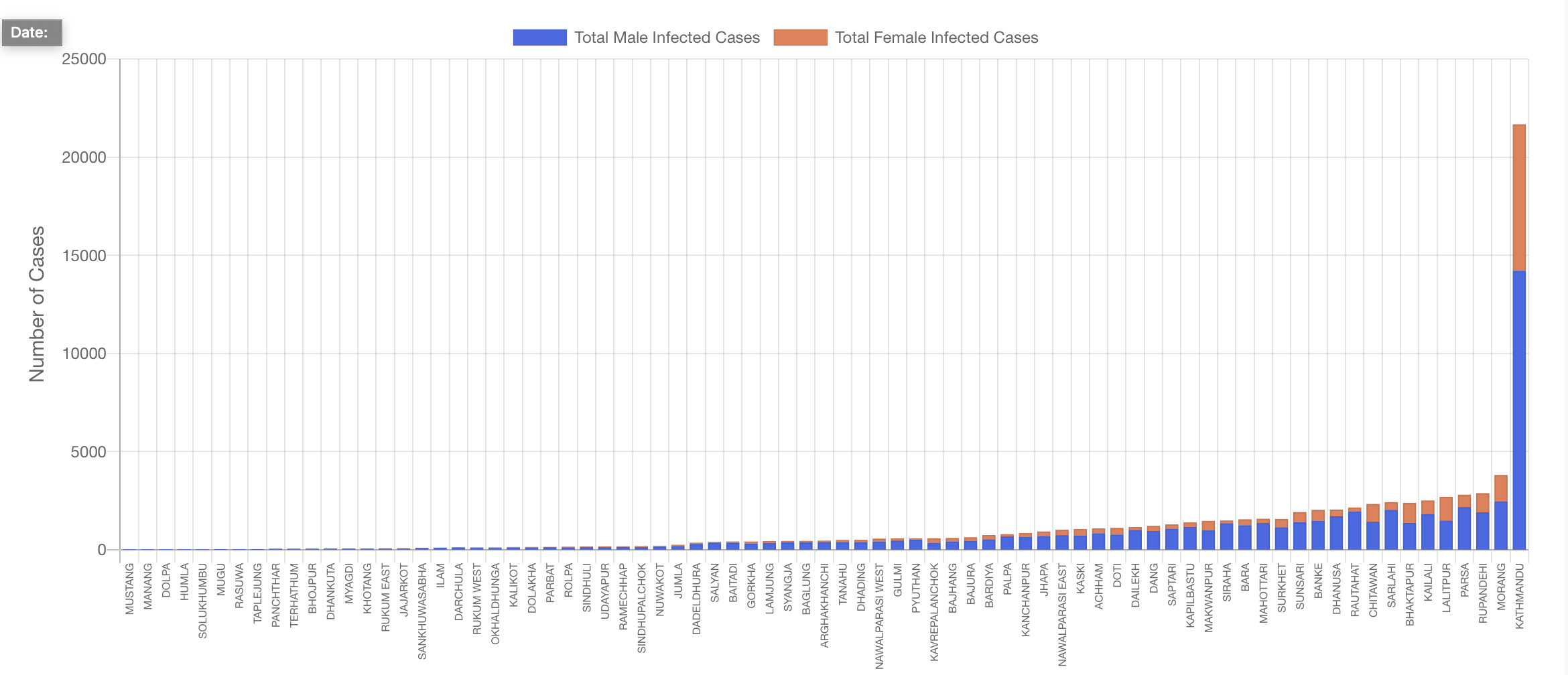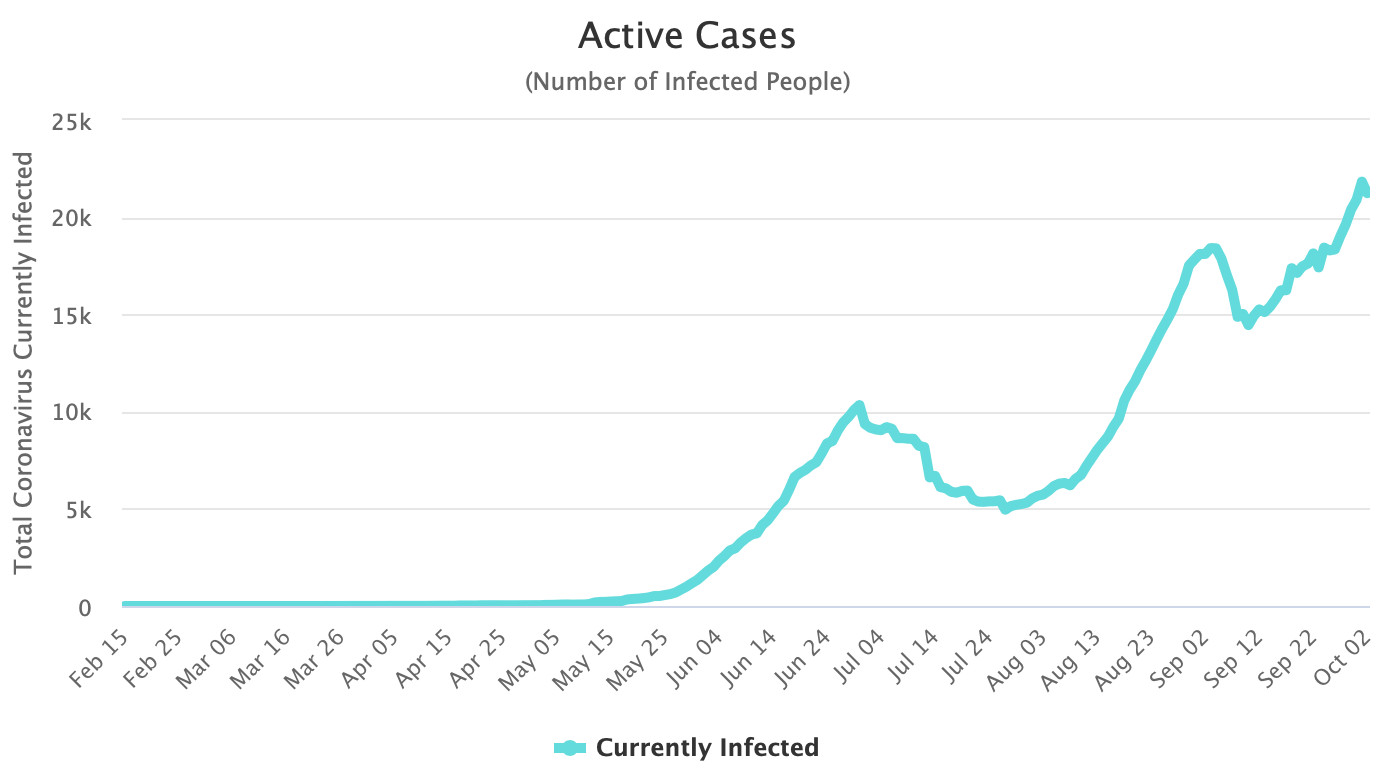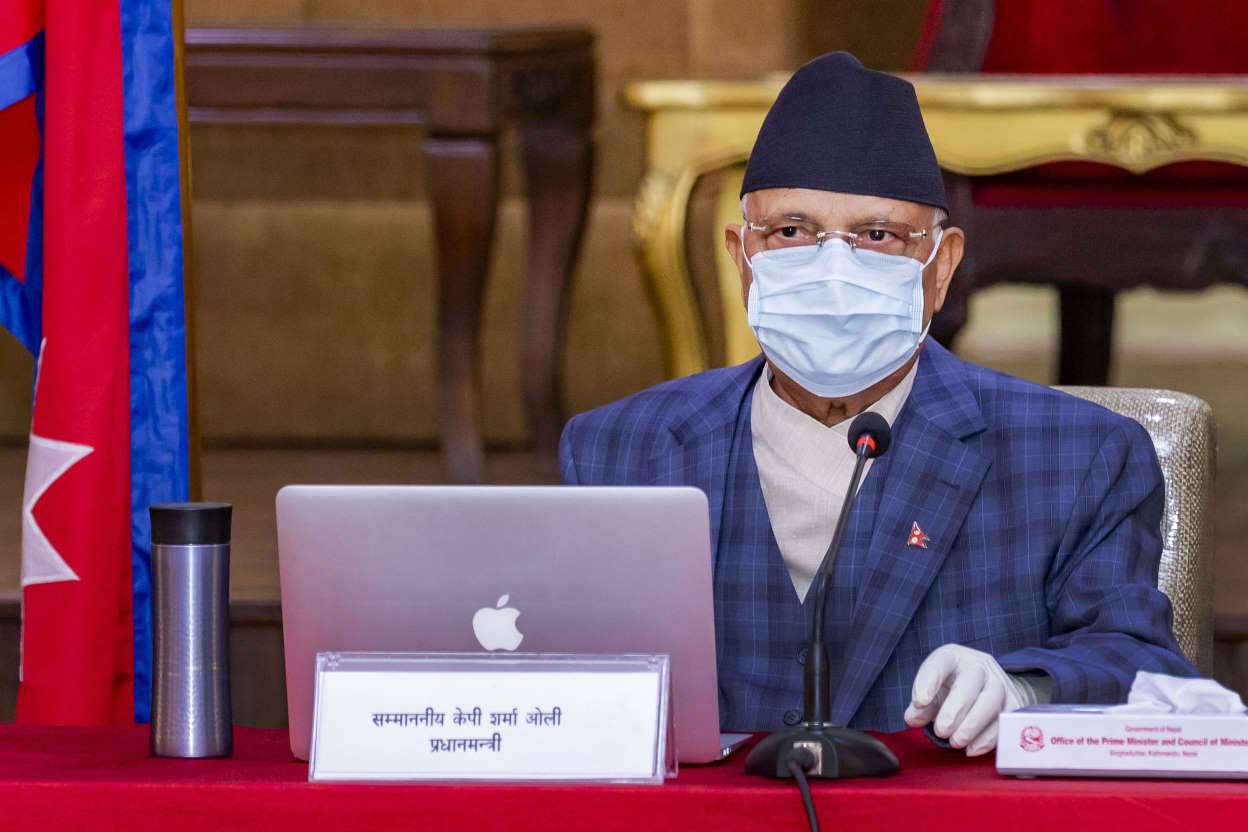
After lying relatively dormant since January, SARS-CoV-2 is spreading rapidly in Nepal, with most of the cases now in Kathmandu Valley, affecting even close advisers of Prime Minister K P Oli.
On Saturday, four of Oli’s aides including press adviser Surya Thapa, political adviser Bishnu Rimal, foreign policy adviser Rajan Bhattarai and secretary Indra Bhandari said they had tested positive. Two other staff at the PMO in Baluwatar had also tested positive last week.
Also on Saturday, 28 Nepal Army soldiers guarding the prime minister’s official residence at Baluwatar also tested positive, but none of them were said to be assigned as Prime Minister Oli’s personal body guards. The infected soldiers are in the process of being replaced.
The spread of the virus within Nepal’s corridors of power at Baluwatar has raised worries about the wellbeing of Prime Minister Oli who has had two kidney transplants and is said to be immuno-compromised.
Then came news late on Saturday that four members of the opposition Nepali Congress had also tested positive: Gagan Thapa, Arjun Narsingh KC and two other central committee members. KC is Thapa’s father-in-law.
Thapa announced that he had Covid-19 through his Twitter account, and said his condition was normal but that he was isolating at home. He also warned anyone who had been in close proximity to him to consult a doctor if they had any problems.
Interestingly, NC leader KC said through a Twitter post that he was surprised to hear that he had tested positive through the mass media, and added that the party headquarters where the tests were conducted had not informed him.
The other two NC central committee members who tested positive are Ganga Chaudhari and Sambhulal Shrestha. On 1 October the party had tested 240 of its secretariat staff, security guards and party members ahead of a meeting that has been called for 5 October.
Meanwhile, the Prison Management Department announced on Saturday that more than 700 inmates across the country had tested positive for Covid-19, and eight of the prisoners had died. Six of the fatalities were in the Central Jail in Kathmandu and one each in Banke and Morang.