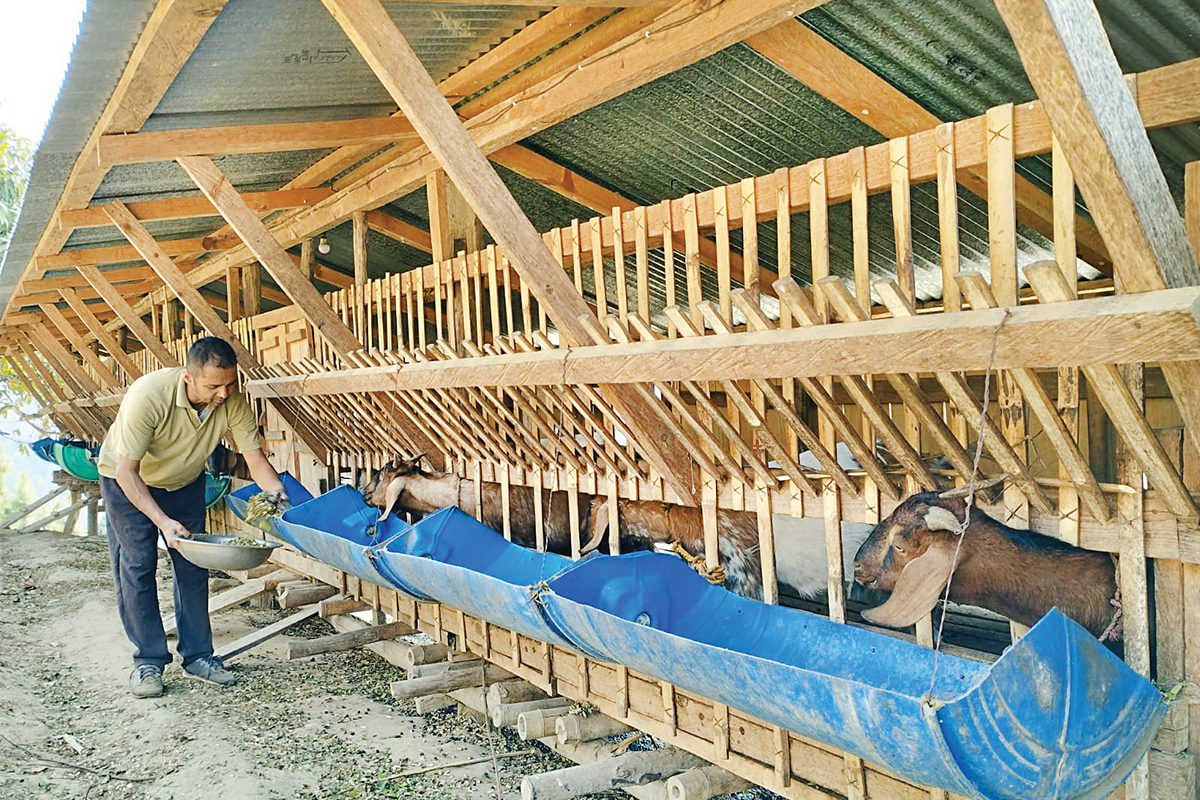
The farming household of Gopal and Rupa Pariyar is the only one still left in the sloping village of Chaubise Rural Municipality here in eastern Nepal.
After their children go off to school, the couple is alone all day at home. All their neighbours have moved out. They have to walk for an hour to bring water from the nearest spring.
Till 10 years ago, there used to be 20 households in this village. They all left one after another for the Tarai, where life is easier. Their terraced farms have turned into jungle, and the monkeys now regularly destroy crops.
“We are all alone now, and have to do everything ourselves, there is no one to ask for help when we need it,” says Gopal. “It used to be lively here, neighbours came together for festivals, and to help out with harvest.”
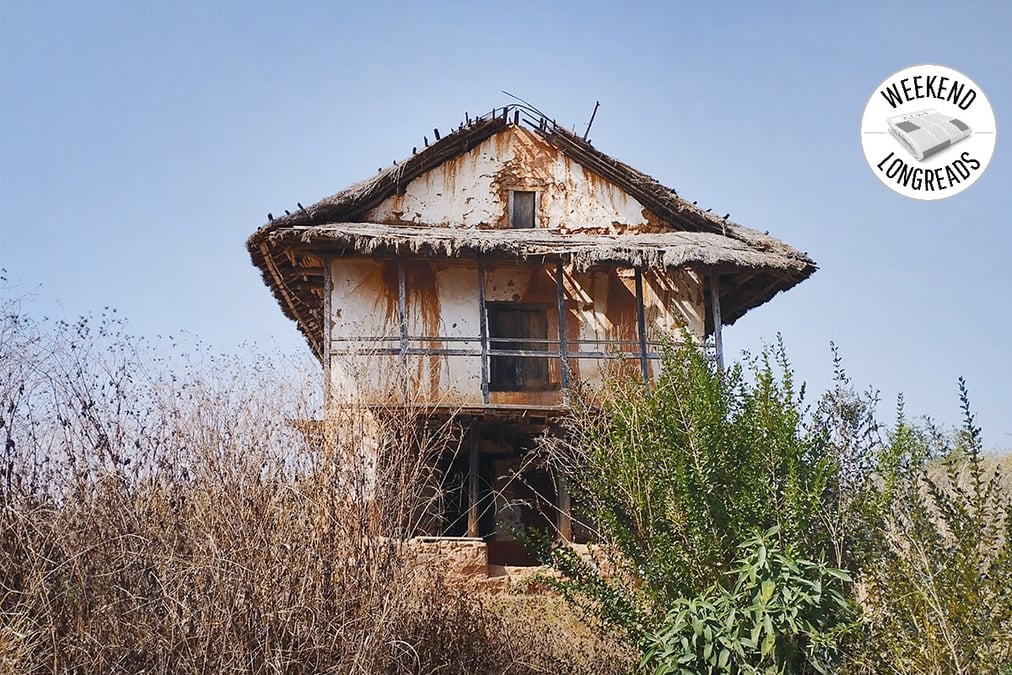
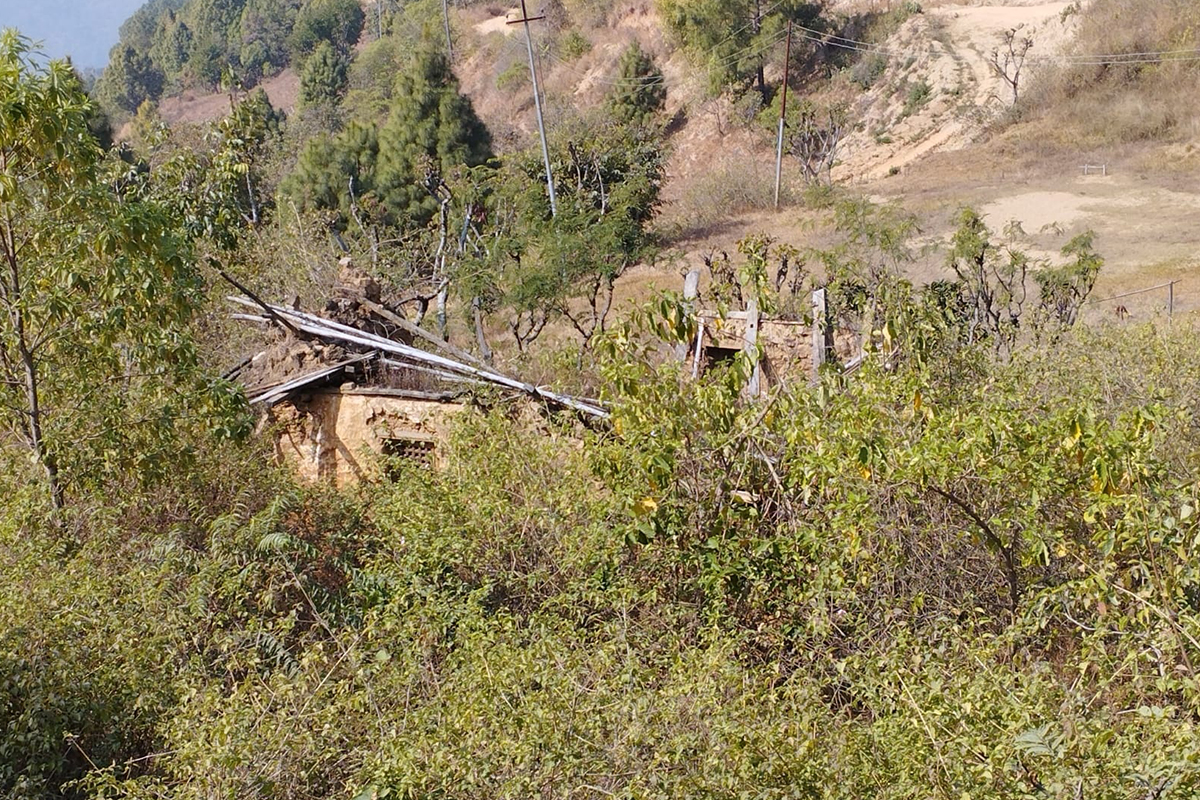
Up the mountain in Thulagaon like many others in Chaubise, only four of the 22 families that lived there are left. The mud brick homes are crumbling, the roofs of many of them have caved in, the front yards are covered in shrubs.
The rate of out migration is also accelerating: last year alone 561 residents from 185 households got migration certificates from the municipality. The real figure was probably more, many have not even bothered to get papers.
Read also: Letter from Sikles, Kunda Dixit
“No matter what we do to keep people here, they just want to leave, it is becoming a national problem,” says municipality deputy chair Tankamaya Pangmi Magar.
She adds, “We keep talking about rural development, but there is no one left to develop here. It hurts to see them abandon their ancestral land like this.”
Dhankuta Bazar was the administrative centre of eastern Nepal since the Rana days. Even till recently there would be crowds of people at government offices here. Now, even the residents of the town have moved out. The shops are closed because no one is shopping. Traders have also moved down to the Tarai.
Sabitra Rai is the District Coordination Committee head. She says, “We have tried to think of strategies to stop this trend. But have not been able to stop people who seek an easier, more convenient, life in the plains.”
Out migration is not just a problem in eastern Nepal, it is happening right across the mid-mountains, and the depopulation is seen in the 2021 census results that were released this week.
Here in the east, outmigration in Tehrathum district is even more severe than in Dhankuta. Even in the Myanglung bazar area, fields are fallow, shops are closed because there are not enough customers. Land value has dropped, there is no one buying property.
Tehrathum district had a population of 113,111 in the 2001 census, it had dropped to 101,577 in 2011, and in the latest census it is only 89,125.
Read also: Nepal's demographic dividend, Shristi Karki
According to the 2021 census results, 32 of Nepal’s 77 districts have witnessed a sharp decline in population — all of them in the mountains. Of these are all nine districts of Kosi Province, with Khotang, Bhojpur and Tehrathum showing the sharpest declines.
Of the 75 municipalities in 14 districts in Kosi Province, only those in Morang, Sunsari and Jhapa have seen population increases. While outmigration is the main factor, birth rate and death rates have also declined.
The 2015 Tehrathum District Profile noted that the push factors for outmigration was better health care, education, employment. Social scientist Suresh Dhakal says that although there is no one reason for people moving out, the main one is the search for a more convenient lifestyle.
In eastern Nepal, this is not a new phenomenon. It started in the last century with the migration of people to Assam, Sikkim and Bhutan for better opportunities. Recruitment into the British Army and the pension office in Dharan meant that most military families bought land and settled there.
Gurkha remittances have allowed the families to buy property, and resulted in the sustained real estate boom in the Dharan-Itahari-Damak corridor in the Tarai. Most people living here are from Khotang, Bhojpur, Tehrathum and Taplejung in the mountains to the north.
This trend accelerated during the 1996-2006 Maoist conflict when villagers moved out to flee the violence. Many young men in the mountains are now not just moving down to the Tarai, but to Kathmandu and then for overseas employment.
Bhojpur MP from the Maoist party, Sudan Kirati, who is now Minister for Culture, Tourism and Civil Aviation, had warned three years ago that the outmigration trend was accelerating for better education, health and water supply.
Read also: Counting on Nepal, Editorial
Destruction of crops by wildlife and springs going dry due to the climate crisis are also cited as other factors driving people out. Other factors are ethnic and caste discrimination, says journalist Khilanath BK who has himself moved from his home in Bhojpur to Dharan. He says, “Discrimination is more rife in the villages than in the cities.”