
It is that time of the year again, and another annual climate jamboree. Last year it was in the UAE, this year it is in another petrostate, Azerbaijan.
On the eve of the summit, the president of COP29 was exposed in a sting operation by World Witness while giving leads to a fake financier for fossil fuel projects in Azerbaijan. Like Dubai last year, this is another jumbo gathering with nearly 67,000 delegates. That is a large carbon footprint.
Even so, global climate negotiations are of critical importance, particularly to build a stronger case for Loss & Damage (L&D) and adaptation for countries like Nepal which are at the frontlines of climate breakdown.
Baku is billed as the ‘Finance COP’ and an agreement was signed for full operationalisation of the L&D Fund to disburse money starting next year. On 13 November, Nepal also organised a prominent event in Baku to address loss and damage in mountain areas.
COP29 is also mandated to come up with a new roadmap to mobilise $100 billion every year to developing countries by the end in 2025, as agreed ten years ago in Paris. But much water has flowed down the Seine since then, and there is bickering between rich and poor countries on the New Collective Quantified Goal (NCQG). Who is going to fund the additional $671 billion annually for loss and damage, and $2.4 trillion a year by 2030 to meet emission targets?
The hardcore negotiations will not take place till the L&D Fund board meet in Manila next month. But there are lots of things to iron out first to garner necessary political will in Baku. Who is going to pay, how much, is it going to be part of already committed development aid or is it new money, and besides, with frequent record-breaking disasters, we may need much more than $100 billion a year by 2030.
Nevertheless, the Nepali adviser to the LDC Chair at the United Nations Framework Convention on Climate Change (UNFCCC) Manjeet Dhakal is optimistic, and told us from Baku that this summit should build momentum to speed up the L&D Fund.
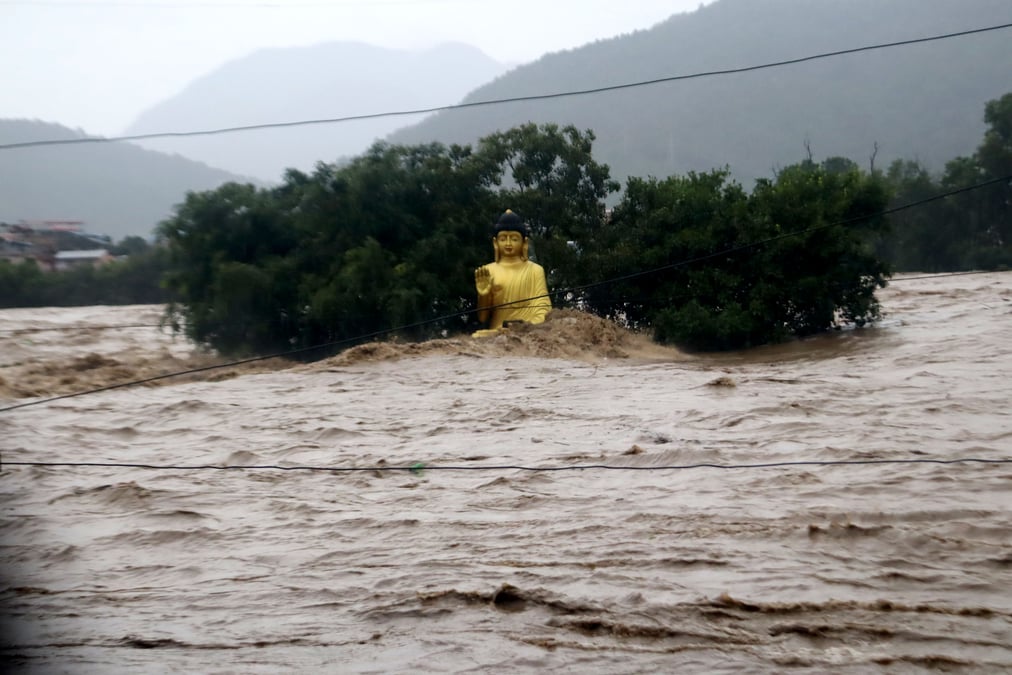
The September floods in central and eastern Nepal claimed 244 lives, and damaged more than a dozen hydropower plants temporarily, slashing domestic generation capacity by half and caused billions of rupees in damage that will take years to recover. The Melamchi disaster in 2021, the Kagbeni flood in 2022 and Thame this year are other recent climate-induced calamities.