
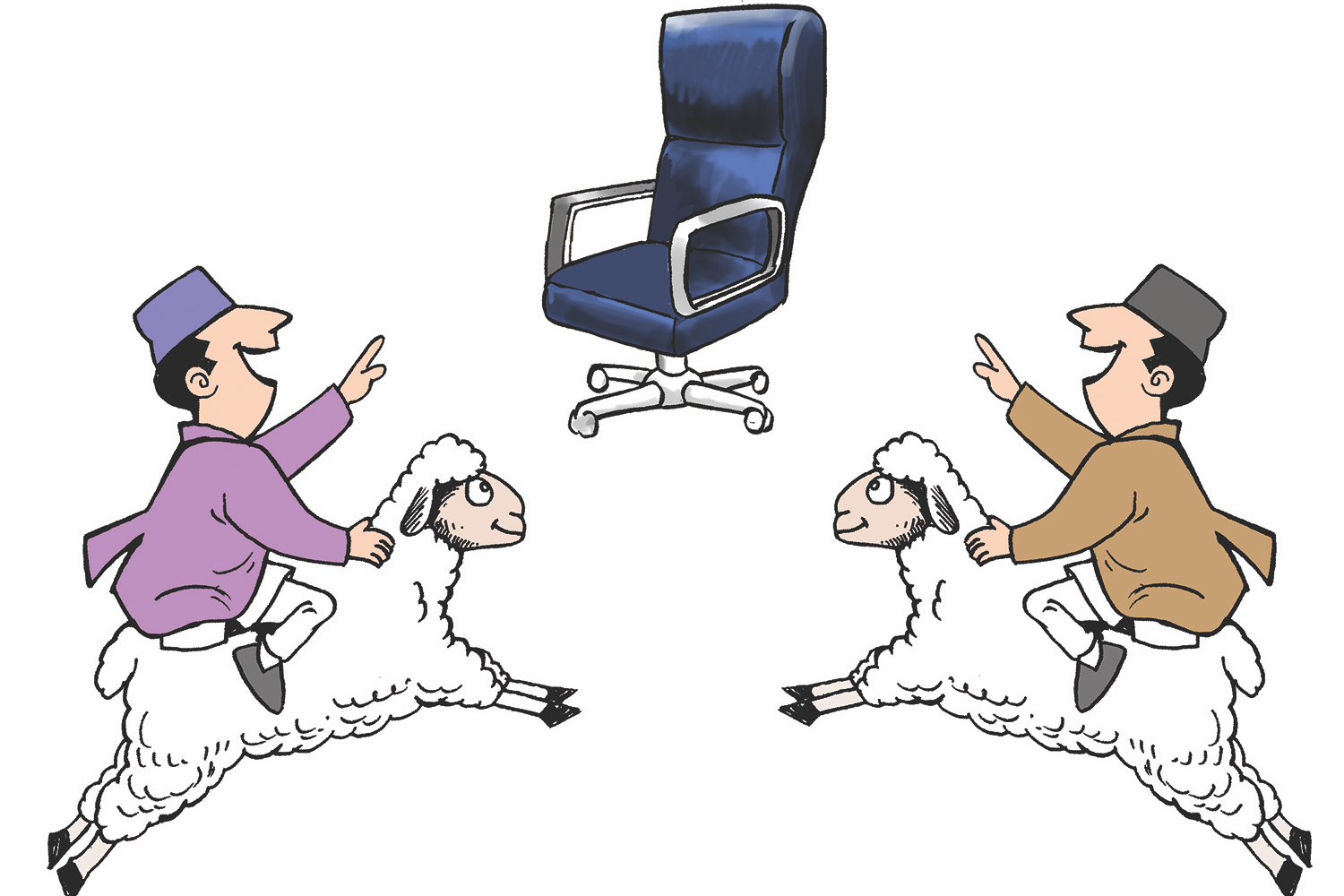
Dasain this year was a washout, but with the rains gone it is looking brighter for the approaching festivals of Tihar, Mha Puja and Chhath.
Besides its cultural and religious significance, Tihar is also a time when gambling with cards has official sanction. And, since this year the festival coincides with preparations for elections exactly a month away, there will no doubt be a lot of candidates gambling everything on their political futures.
Impunity and the rule of the lawless is rife in this country. When murderers do not have to answer for crimes, it is a small matter that bribe-takers, swindlers, extortionists can stay in office and ply their trade.
So far, we have seen malafide nominations of relatives, cronies and influential party donors on the Proportional Representation list. The leadership of all main parties have purged popular and competent candidates, treating them as more of an enemy than opposition figures. There has been shameless gerrymandering by coalition leaders to divide up constituencies so they have a 100% chance of being elected.
We in the media are preoccupied with election arithmetic and not questioning enough how the entire system has been manipulated in violation of the Constitution. We accept it as a given.
Read also: House of cards, Sonia Awale
What could be more absurd than the sight of Nepali Congress leaders in Gorkha on a stage where the photos of the warriors who sacrificed to restore democracy in Nepal were overshadowed by hammer and sickle posters? Or a Hindu-royalist candidate campaigning under the symbol of the Unified Marxist-Leninists. If there is no ideological difference between parties, why do we need parties at all?
In any other democracy worth its salt, this would be called rigging the vote. In fact, it is like cheating at cards on Laxmi Puja.
The only flickering lights we see this Tihar will be the fresh young faces who have managed to get tickets from the parties, or are standing as rebel candidates and independents. It is likely that despite a public yearning for change and an overwhelming disillusionment with established parties and their leaders, many of them may lose because Nepal’s elections are still largely determined by vote banks, tribal loyalty to parties, and the ability of candidates to spend lavishly on feasts and booze. They are not determined by the performance track record of candidates when they had a chance.