Peer pressure drove Sudip to start drinking at a young age. Soon, he was an addict and lost his job at a travel agency. His personal relationships soured and health deteriorated. He dabbled in various trades, but was often inebriated from early morning.
He did sober up. When the earthquake struck in 2015, he was travelling with his infant son. The shock drove him to drink again.
Sudip has been in and out of rehab, but nothing worked until he was tasked with organising Alcoholics Anonymous (AA) meetings in Kathmandu. The challenge finally made it possible to overcome his own addiction.
Read also: Octoberfest, Editorial
“I used to find solution in drinking. Now, I know that not drinking is the solution,” says Sudip, now in his mid 40s and 15-months sober.
We caught up with Sudip during one of his meeting with AA in Patan this week where 23 men from their 20s to 60s were seated in rows. While the oldest member spoke about how he had not had a drink for 10 years, a newly-sober member talked about how difficult it had been for him. Each was met with applause.
Alcohol kills more than three million people every year around the world, mostly men. A recent paper in the journal Lancet reported that no level of alcohol improves health, challenging the notion that moderate drinking is good for the heart.
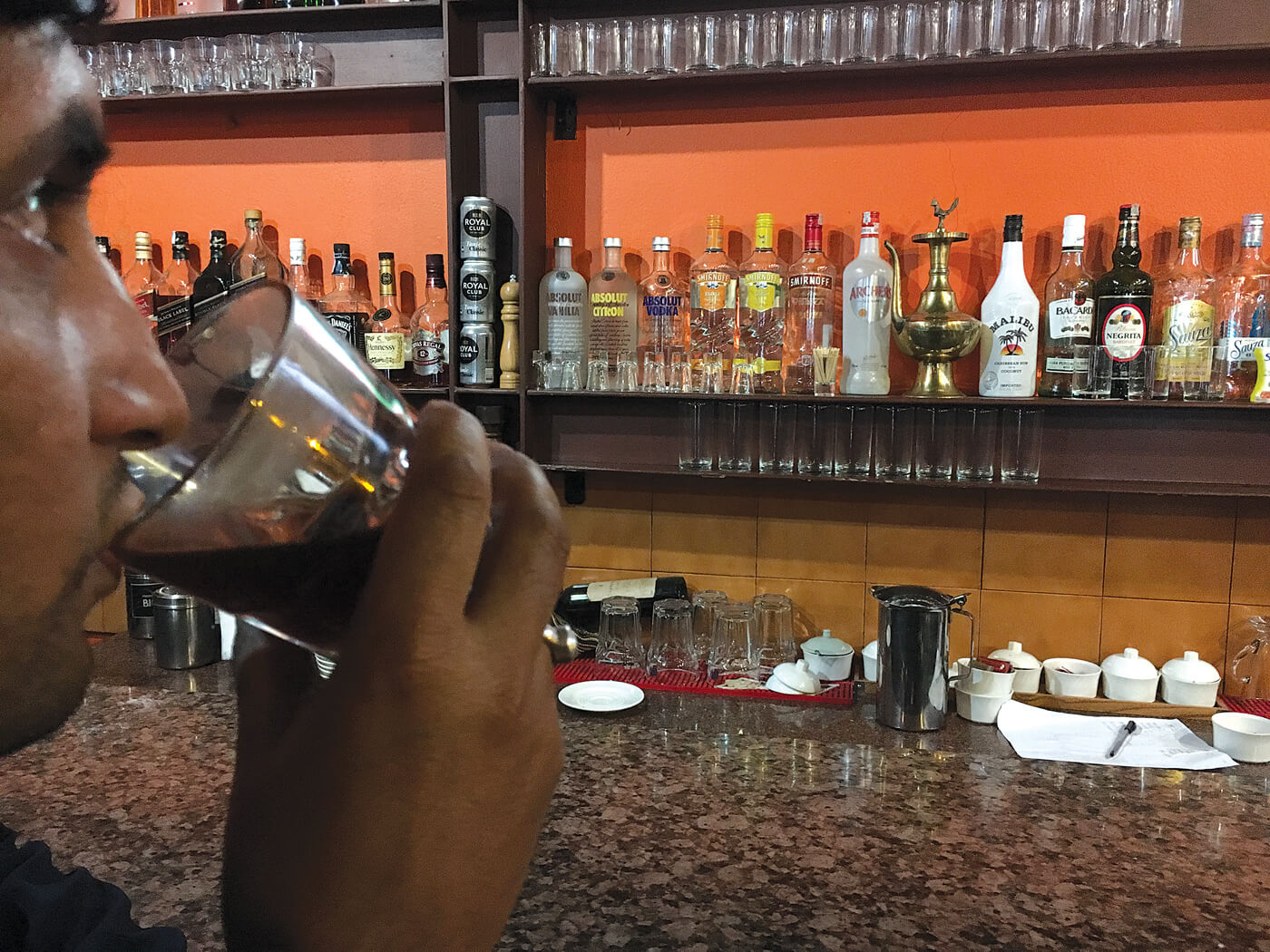
Some 21% of men in Nepal are regular drinkers, but only 1.5% of women. The annual per capita alcohol consumption among Nepalis is 2.2 litres, but increases to 28.8 litres among drinkers (36.2 litres in men). Nearly 1% of Nepalis suffer from alcohol dependence, according to WHO, but this seems to be an underestimate as it does not count homemade alcohol.
“There has been an increase in alcohol consumption in Nepal and it is a bigger risk factor than smoking, air pollution or adulterated food. Plus it leads to an increase in crime rate,” says psychiatrist Rabi Shakya at Patan Hospital.
Read also: Festivals of sisterhood, Sewa Bhattarai and Sabina Devkota
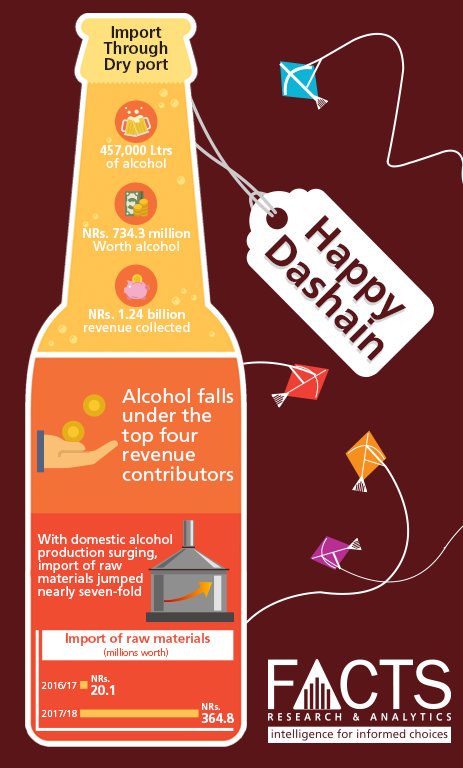
The challenge is that cultural drinking is accepted, people use it as self-medication, and social drinking has become the norm. Sale of alcohol shoots up during festivals like Dasain and Tihar.
“Alcohol-related problems are a common cause of hospital admissions, and it is rising with liver cirrhosis and mouth cancer and infectious diseases,” says Buddha Basnyat, a physician at the Patan Academy of Health Sciences.
Binge drinking during festivals like Dasain are worrisome because that is when cured alcoholics are most susceptible to suffer relapse.
“Dasain is a trigger, a temptation for all the recovering alcoholics like us,” admits Samir Timilisina, Chair of Alcoholics Anonymous in Kathmandu. AA began in Nepal in 1970s and holds meetings six days a week at Patan Hospital, Teaching Hospital and Lazimpat. There are currently 60 regular members.