
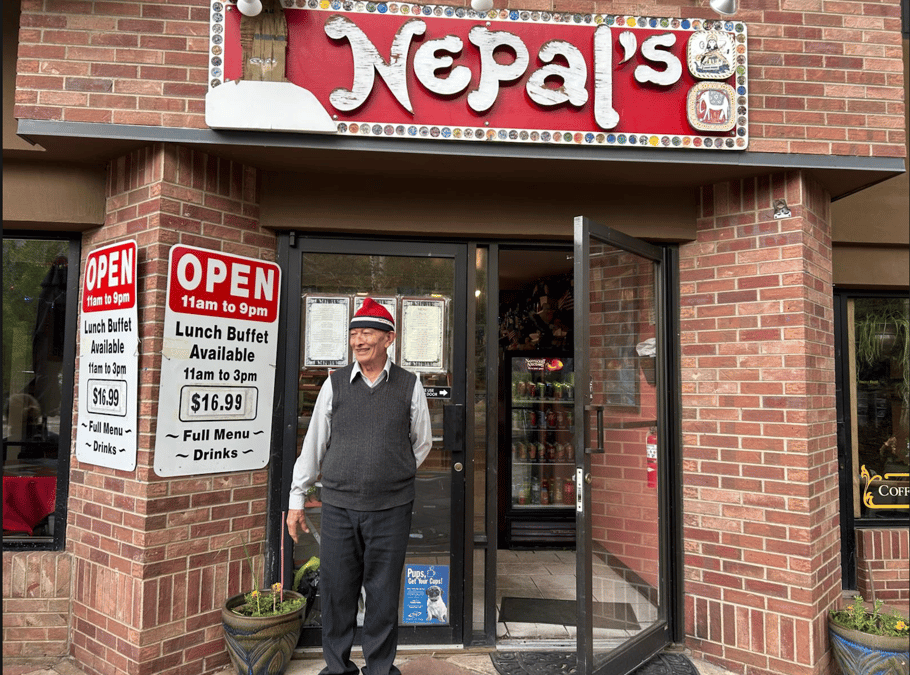
Eighty-year-old Hem Kumar Shrestha sat at a table in the crowded interior of his Nepal’s Cafe in Estes Park, Colorado. He had just watched the Argentina vs Egypt FIFA World Cup match played in Atlanta.
Shrestha had served in the British Gurkha regiment and was deployed in the Falklands/Malvinas war in 1982 along with nearly 600 other soldiers from Nepal. Taking cover in muddy trenches, he survived bombardment by Argentinian artillery and warplanes as the conflict over this tiny island in the South Atlantic raged for 74 days.
Forty-five years later, and now settled in the United States, Shreshta cheered for Lionel Messi and the team from a former enemy country. He had been worried after the Egyptians scored two initial goals, but roared when Cristian Romero made the first goal and Messi followed with the equaliser in the 83rd minute. Then came the winning third goal.
After the match, Shrestha said, “Of course I am cheering for Argentina. We won that war, Argentina lost. Maybe they don’t like Nepal because we fought on the side of their enemy, but Nepalis have no hard feelings. We love Messi and Argentina.”
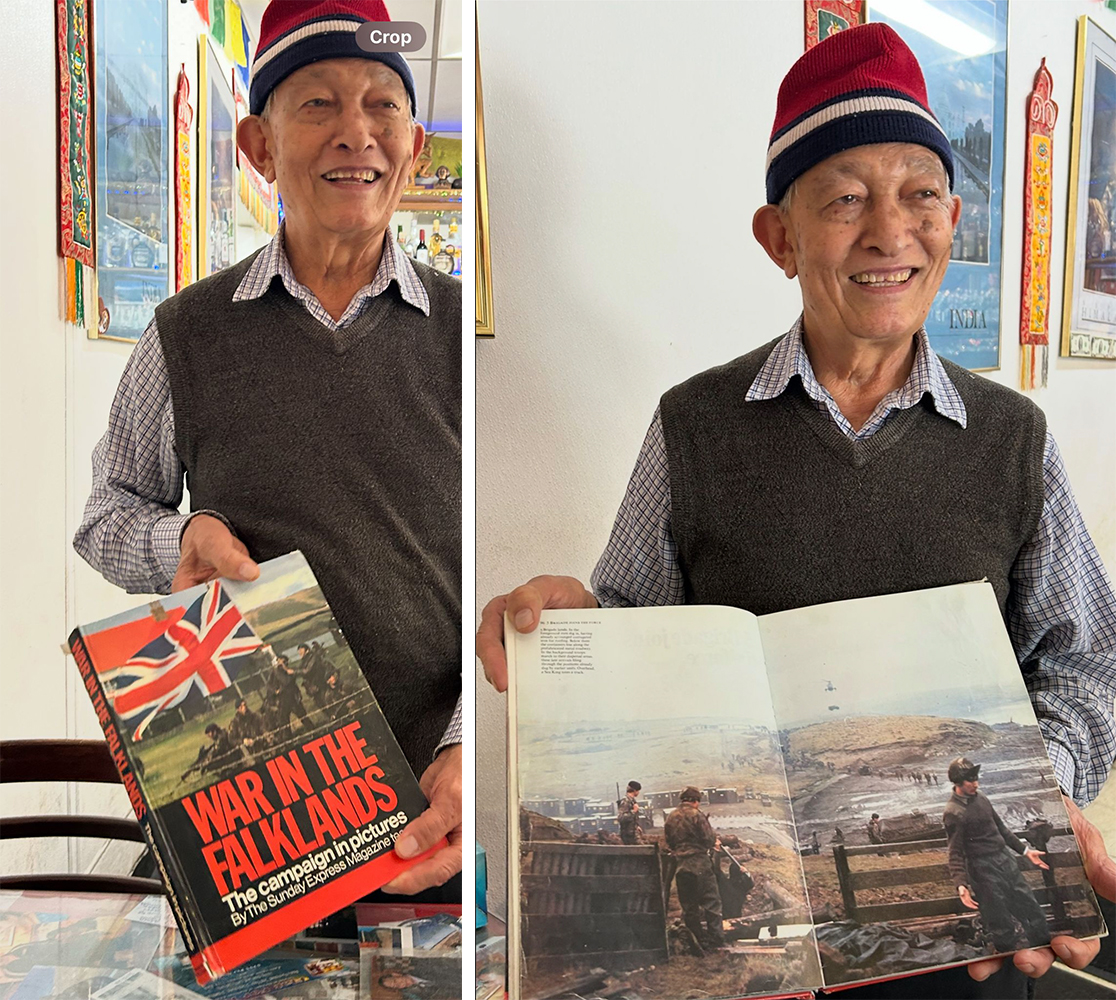
At press time, he was preparing to watch the Argentina vs Switzerland Quarter Final match in Kansas City, while managing the weekend crowds at his cafe in Colorado.
For Shrestha, memories of the war are as fresh as ever. He showed me a book about the Falklands War (pictured), pointing out the battlefields: Port Stanley, Bluff Cove, San Carlos, Goose Bay, Fitzroy.
Shrestha was born to a Newar farming family near Khandbari in eastern Nepal. He had five other siblings, and grew up grazing goats in the mountains. He used to admire the swag of British Gurkha soldiers when they came home on leave and wanted to be like them.
Because Newars were not allowed into the British Army, he got his name changed to Hem Kumar Gurung. Aged 18, weight more than 52 kg, chest 36 inch — all fulfilled the criteria for recruitment. Along with other recruits he was first taken to Calcutta and put on a ship to Malaya for military training while the British were trying to subdue a Communist rebellion.
In 1963 he joined the Seventh Duke of Edinburgh’s Own Gurkha Rifles and was posted in Hong Kong, Brunei, Fiji and finally he was based at Church Crookham near Aldershot in England.
SAILING OFF TO WAR
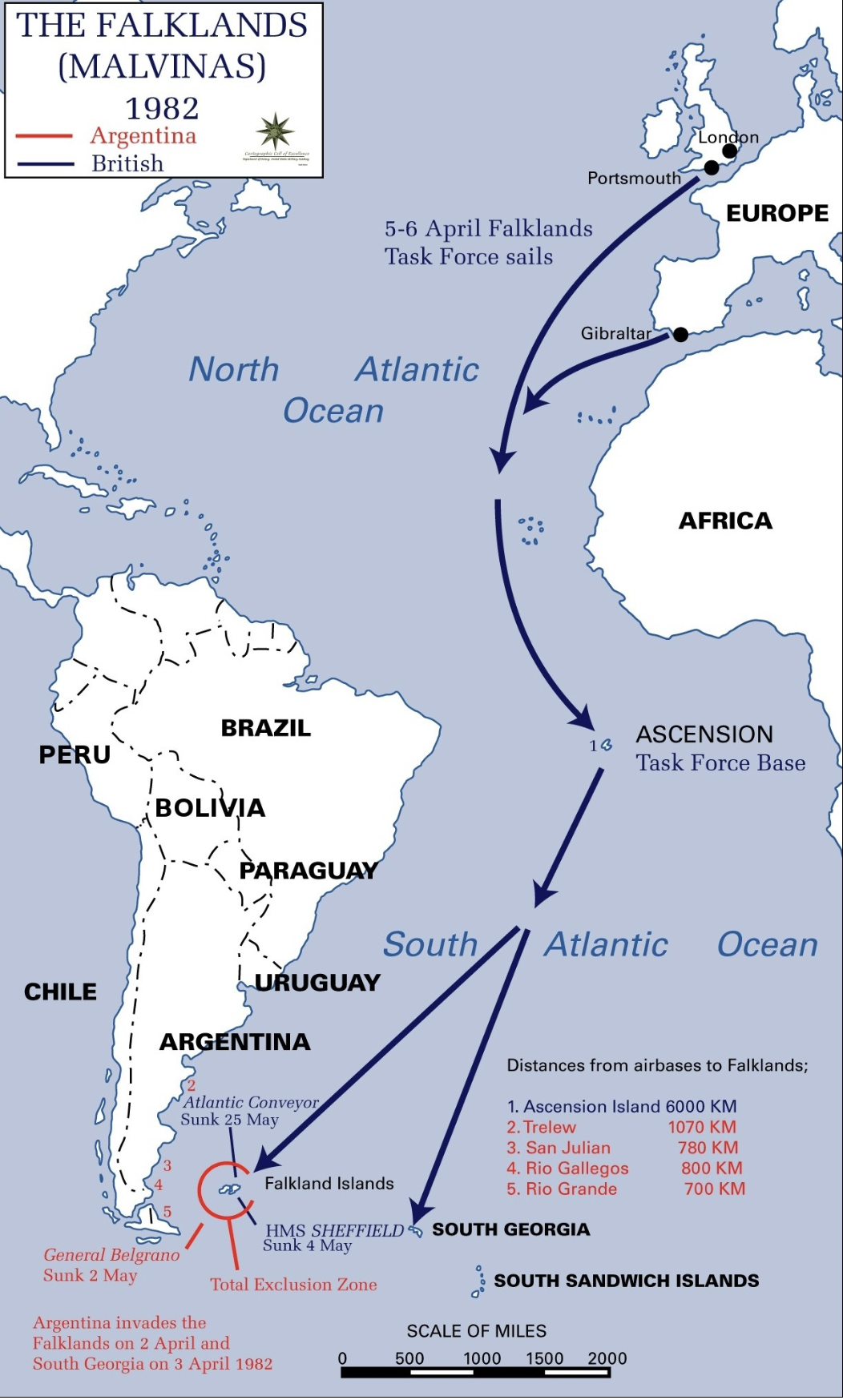
On 2 April 1982 at midnight, news came that Argentina had invaded the Malvinas, the island which the British colonised and called the Falklands. Argentina was facing economic difficulties and its junta leader Lt Gen Leopoldo Galtieri used the invasion code named ‘Operation Rosario’ to deflect domestic public attention.
In London, Prime Minister Margaret Thatcher wasted no time in dispatching bombers of her own ‘Operation Black Buck’ to drive the Argentinians back. A flotilla set sail from Southhampton on 12 May with the soldiers crammed into the QE II cruise ship which had been converted to serve as a transporter. The task force included the 1/7 Gurkha Rifles in which Hem Shrestha was serving.
“While the military band at the pier played ‘God Save the Queen’, our regiment priest, Bhawani Prasad Upadhyay, was chanting auspicious Hindu prayers,” Shrestha recalled. “It took us 16 days to reach Ascension Island and then on to South Georgia where we were transferred to the troopship Norland. The ocean was so stormy most of us Nepalis were sea sick.”
As they neared the Falklands, the ship was within range of Argentinian destroyers and anti-ship Exocet missiles. The siren would go off as soon as radar picked up enemy activity, and everyone on board had to take cover.
Even though the Argentinian ground forces had retreated, British supply ships were been strafed and bombed by warplanes. By end-May, 4,000 British troops including the Gurkhas landed at San Carlos Bay.
“I remember the commanding officer of the 1/7 Gurkha Rifles Lt Col Mike Morgan giving us a short speech exhorting us to be true to the Gurkha renowned history of bravery,” recalled Shrestha.
Goose Green and Darwin had been captured after a fierce battle two days before the Gurkhas were dropped there by helicopter. “There were bodies of Argentinian soldiers strewn everywhere, their helmets and ammunition belts scattered in the sand, the base was full of POWs,” Shrestha said.
Argentinian war planes were still bombing the area, and the Gurkhas sere ordered to dig trenches and adopt defensive positions in case of a counterattack. “It was cold, wet and miserable,” Shrestha remembers. “We had to crawl in the mud from one position to another and just wait.”
The Argentinians sank the requisitioned British supply ship Atlantic Conveyor carrying provisions, ammunition and several heavy lift Chinook helicopters. This meant that in the trenches, the Gurkhas soon started running out of food.
“A Chinese kitchen staff on the Norland had given me about 1kg of rice and I had stuffed the pockets of my combat fatigues with it, and that is what I ate until even that ran out and we had to fight on hungry stomachs,” Shrestha says.
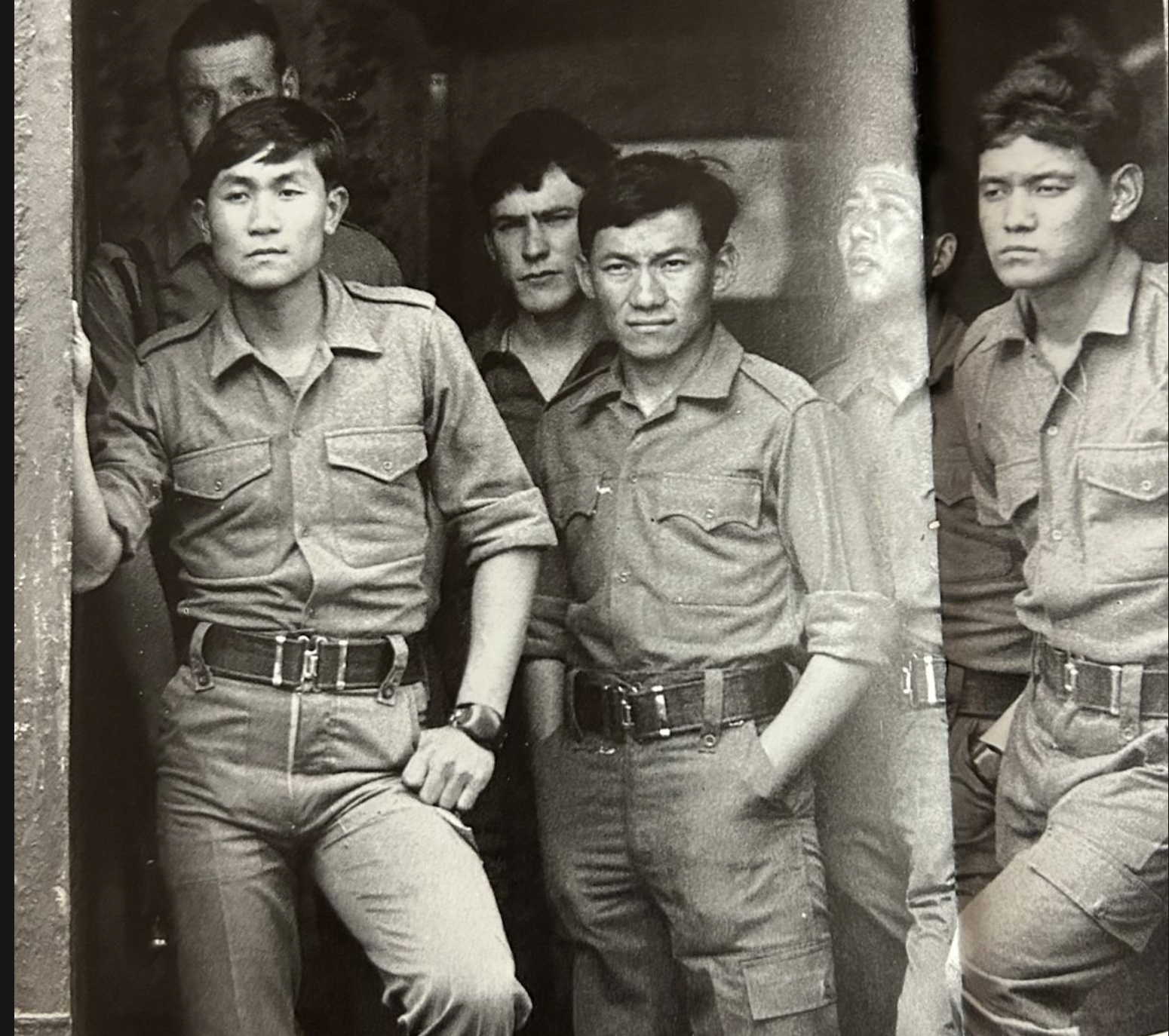
By early June, the British had managed to advance into Fitzroy and lay siege on Stanley. But on 8 June, two British frigates were sunk by Argentinian missiles, killing 48 sailors. Gurkha soldier Bhairav Rai was among those injured.
An attempt to land troops by helicopter on Bluff Cove was thwarted by Argentinian defensive artillery and mortar fire. Gurkha corporal Gyan Rai was badly wounded in the abdomen. Shrestha remembers: “I am still haunted by how we had to push the wounded soldier’s intestines back in and stretcher him out. He was saying I’m alive, save me. Lance Corporal Panchbir Rai and Ram Bahadur Gurung rushed him to the regimental aid post from where he and eight other Gurkhas were taken to the hospital ship, Uganda. They survived.”
It was the southern hemisphere winter, and it started snowing. The troops hardly saw the sun, and at night it was minus 5 degrees with wind chill. Still, the Gurkhas advanced, and managed to capture three Argentinians without firing a shot, just by waving their khukris.
The British had used the fearsome reputation of the Gurkhas to wage psychological warfare on the Argentinians. Advancing on another base, they found the Argentinians had all fled because they heard the Gurkhas were coming.
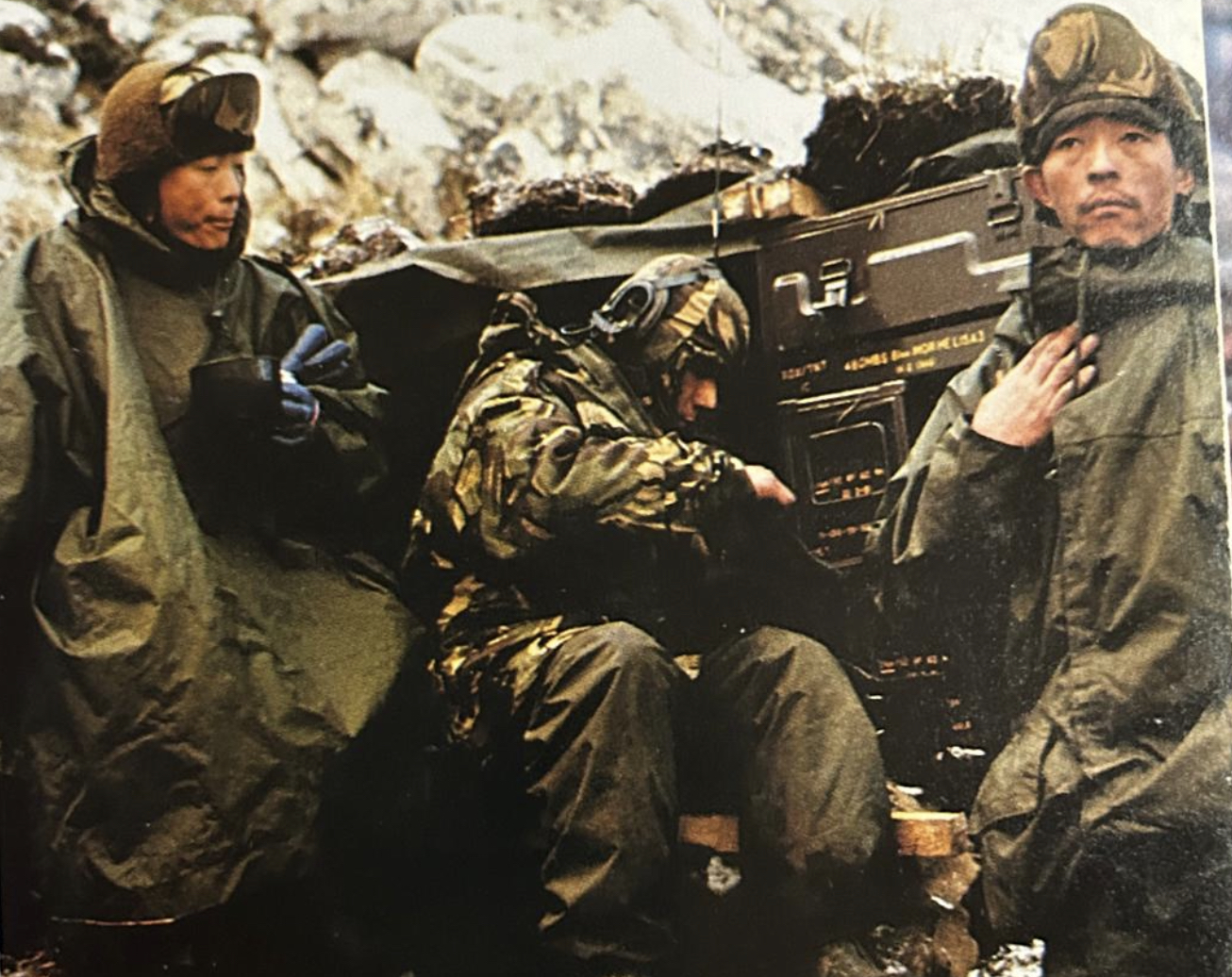
The Argentinians commanded the high ground along the ridgeline near Mt Harriet where there was a fierce firefight. “After that was the decisive battle for Stanley, we did not know whether we would live or die,” Shrestha says. “I must admit that for the first time I was afraid. In my mind I pictured my family and home in Nepal.”
But as the British advanced, Shrestha remembers seeing several white flags being waved from the Argentinian positions. On 14 June, Commander Mario Menendez and his troops surrendered and the Union Jack went up on Mt William as bagpipes played.
The Gurkhas were helicoptered out to Darwin for mopping up and demining. While looking for unexploded ordnance, one buried shell exploded killing Lance Corporal Buddha Limbu on the spot. This was the only fatality that the Gurkhas suffered in the Falklands War.
Shrestha entered one house carefully in case it was mined, there was an elderly woman inside who allowed him to take his first hot shower in weeks. Finally, 598 Gurkhas were taken back to England on the hospital ship Uganda.
“The entire 22-day voyage there was dancing, singing and laughter on the deck,” Shrestha says. “But I was homesick and did not really want to celebrate.”
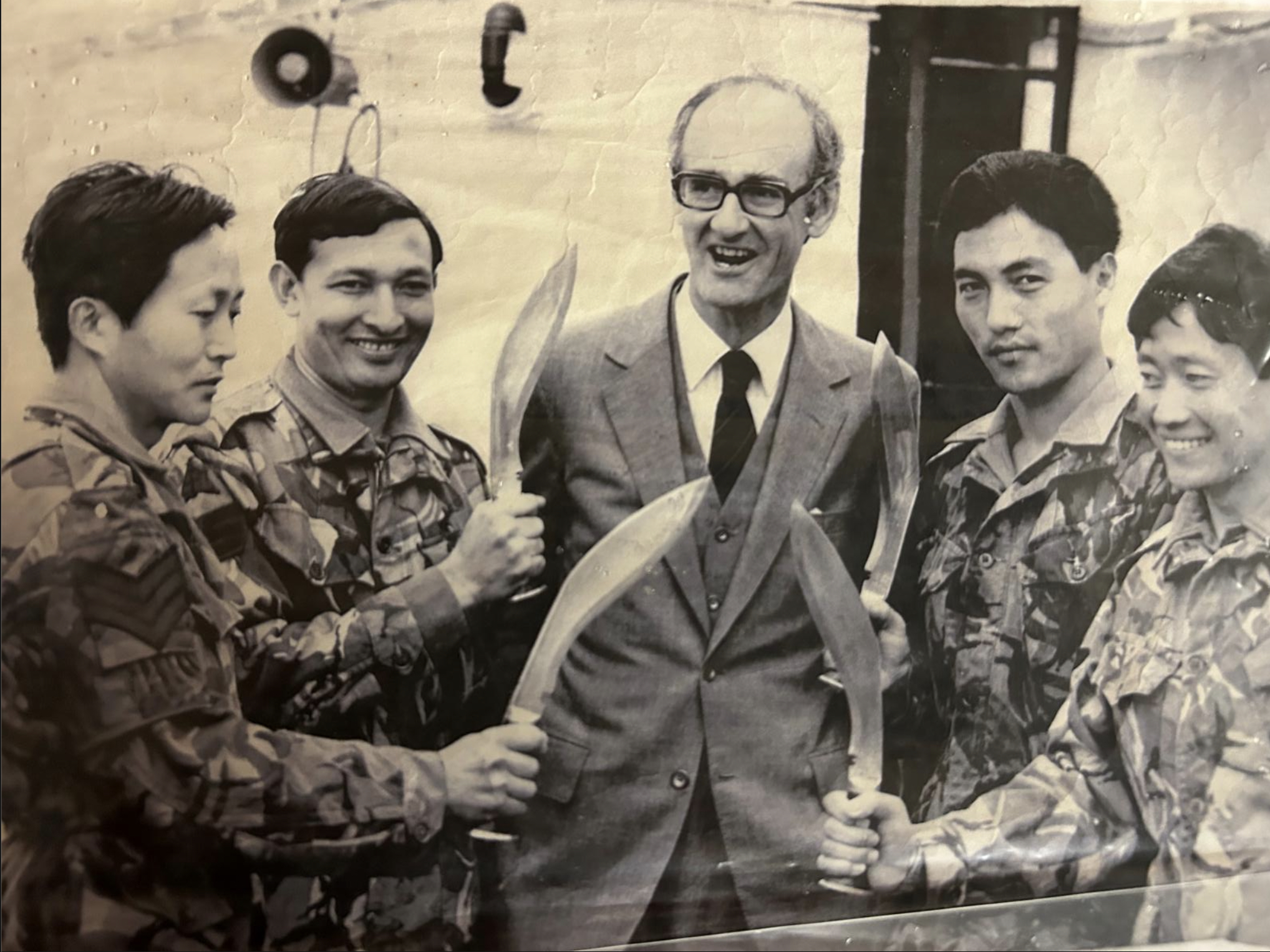
On disembarking in Southhampton, the troops were heaped with flowers and there was much jubilation. Back in Church Crookham, Shrestha and seven other soldiers were given special leave and roundtrip tickets to Nepal.
A few years later, Hem Shrestha took early retirement and emigrated to America where he has run Nepal’s Cafe in Colorado ever since.
Shrestha is looking forward to the FIFA World Cup finals in New Jersey later this month, and hopes Argentina will make it. “It is the only non-European team left, and I will be there cheering for Messi and the Argentinians.”