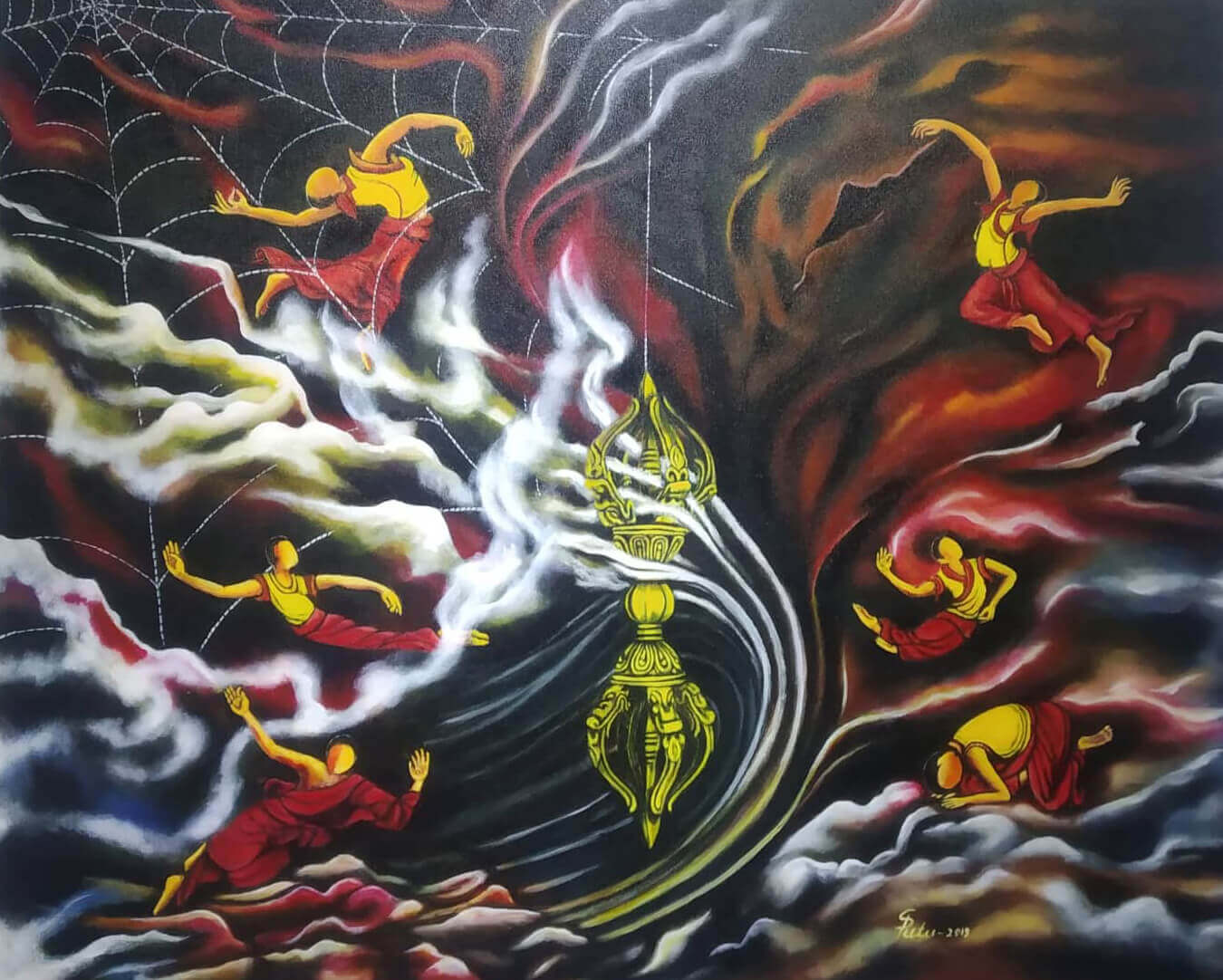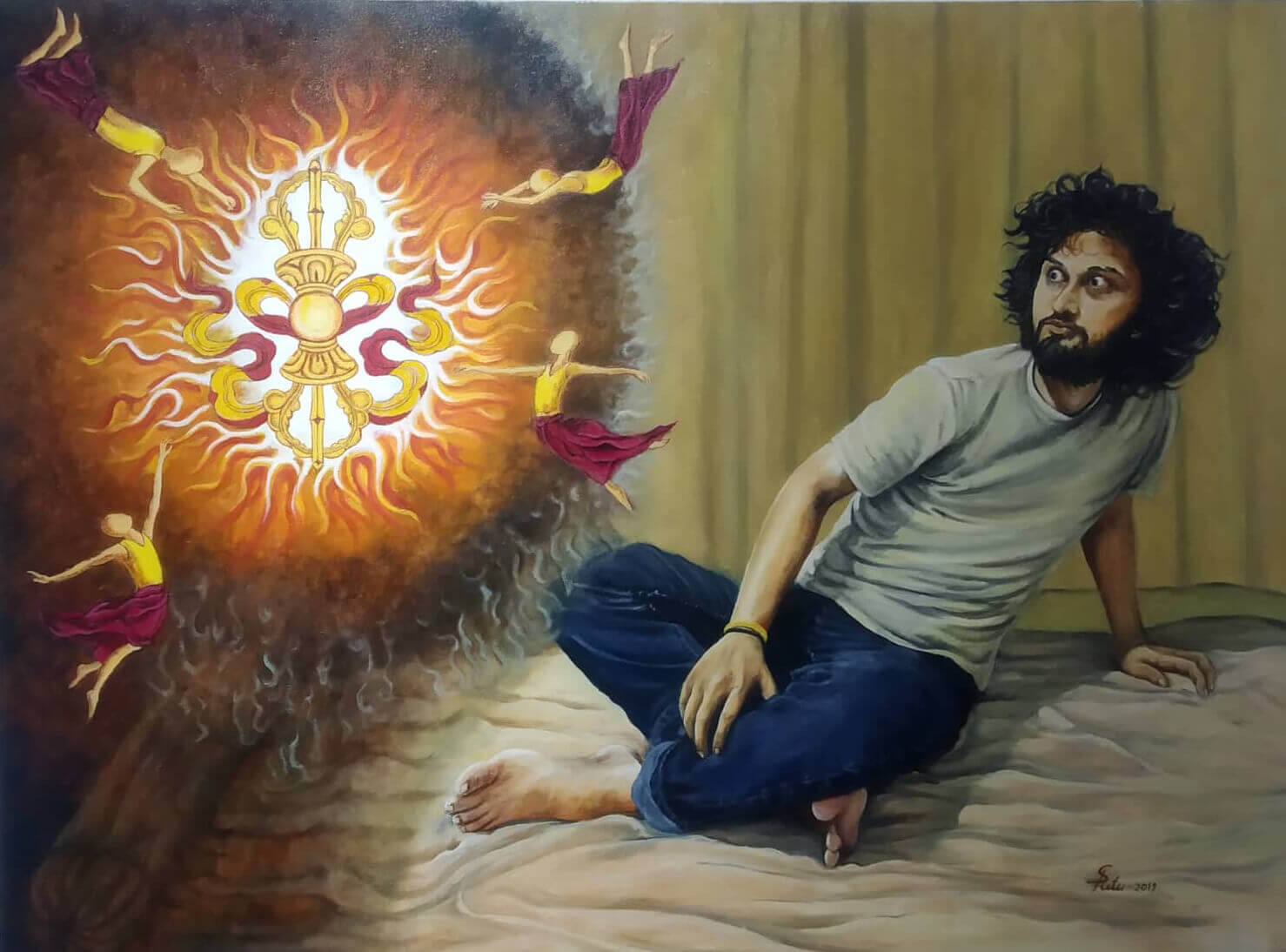
An exhibition of contemporary art on Padmasambhava does not just revive the legend of the Buddhist guru, but also displays the wide variety of art practised in Nepal today. These artworks explore spiritual questions like the value of life, afterlife and a world beyond human experiences.
Ten artists each bring their distinctive style to the personality of Padmasambhava, the Guru Rimpoche who meditated across the Himalaya, creating along the way what are now important pilgrimage sites. Known as the founder of Vajrayana Buddhism, Padmasambhava was a monk from Swat, in present day Pakistan, who travelled to Nepal to meditate among the mountains, and went on to Tibet. He is still highly revered by many Buddhist communities, including the Newa and Tibetan Buddhists of Nepal.
“The teachings of Padmasambhava mark the third turning point in the evolution of Buddhism, and advocate the importance of a guru in attaining salvation. The exhibition wants to convey this particular message,” says art critic Madan Chitrakar.
Read also: Turbulent times, Sewa Bhattarai
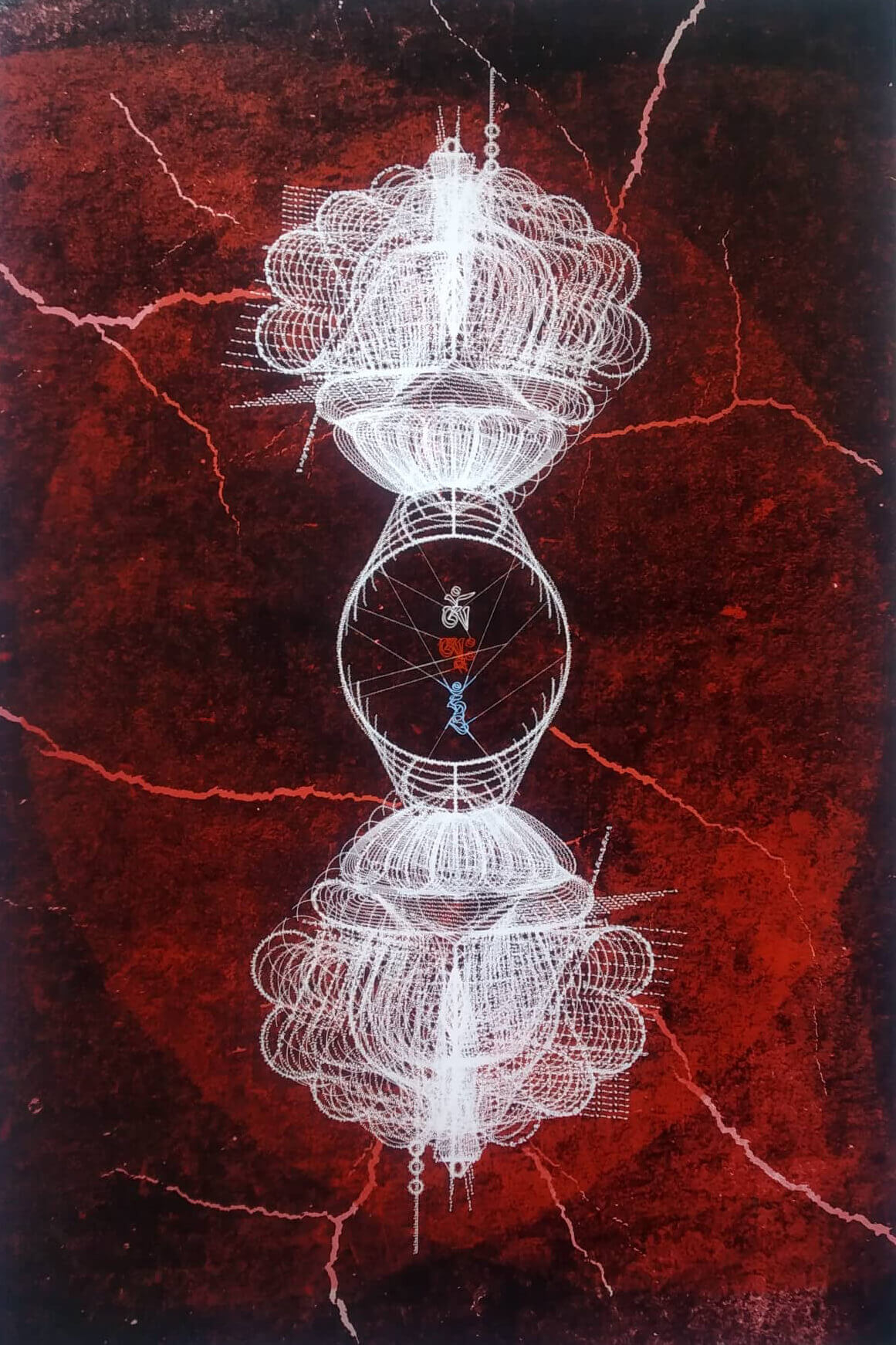
Many of the artworks in this Nepal Art Council exhibition depict the figure of the renowned Rimpoche, but it is the work of Dawa Omu Lama (pictured right) that stands out, with its Padmasambhava etched in bright white lines against a deep red and black background. Departing from traditional colour palettes, Lama chooses a minimalistic theme that gives the appearance of translucence and transcendence.
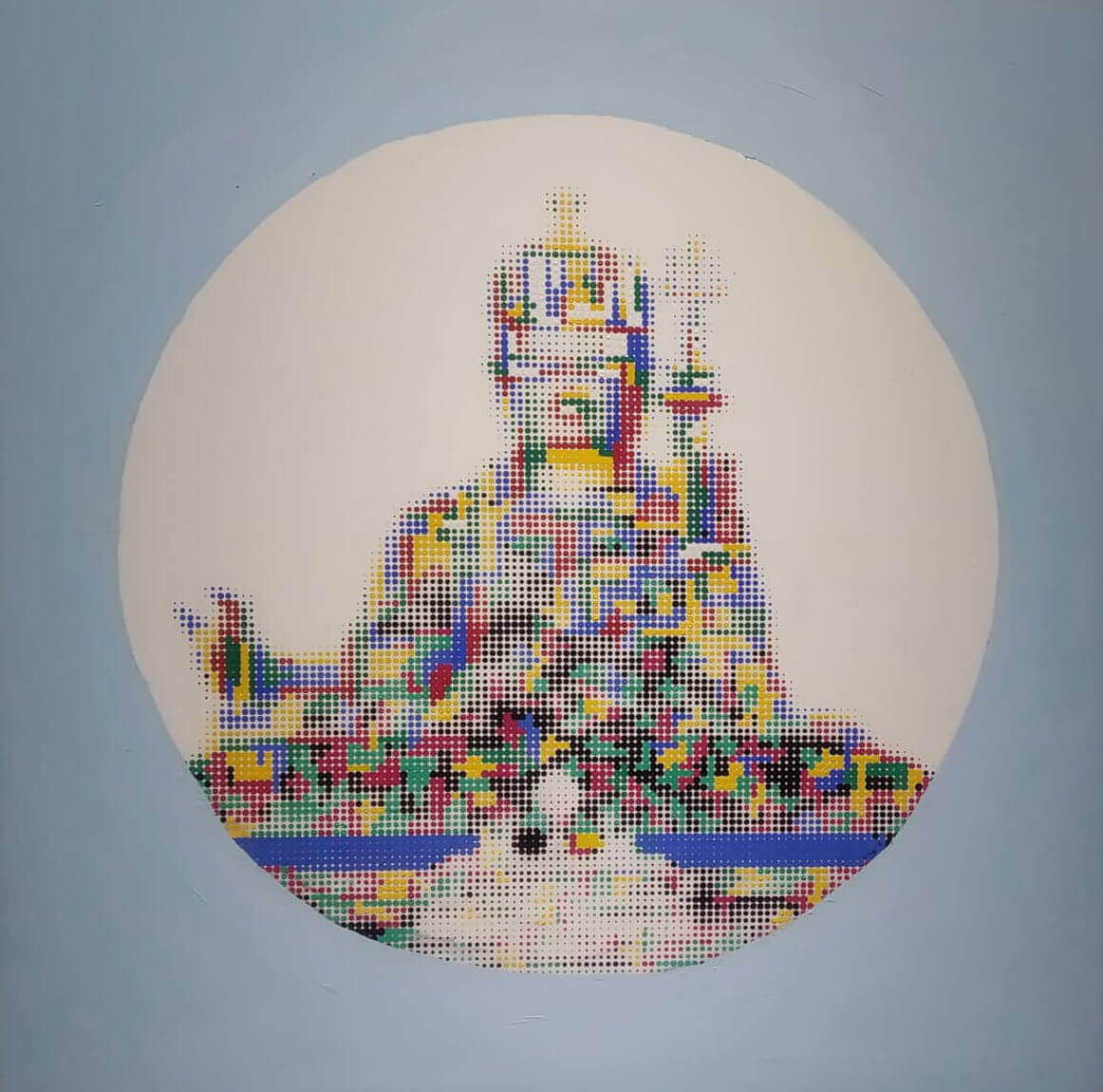
Sahil Bhopal paints a monastery in another planet, in the theme of past, present, and future. “In the past, I saw a monastery in Himachal Pradesh neglected and Padmasambhava’s sculptures were peeling off. Today, it is being restored. Tomorrow I see the guru’s teaching finding new followers,” explains the artist, whose work features aliens and modern technology in hologram.