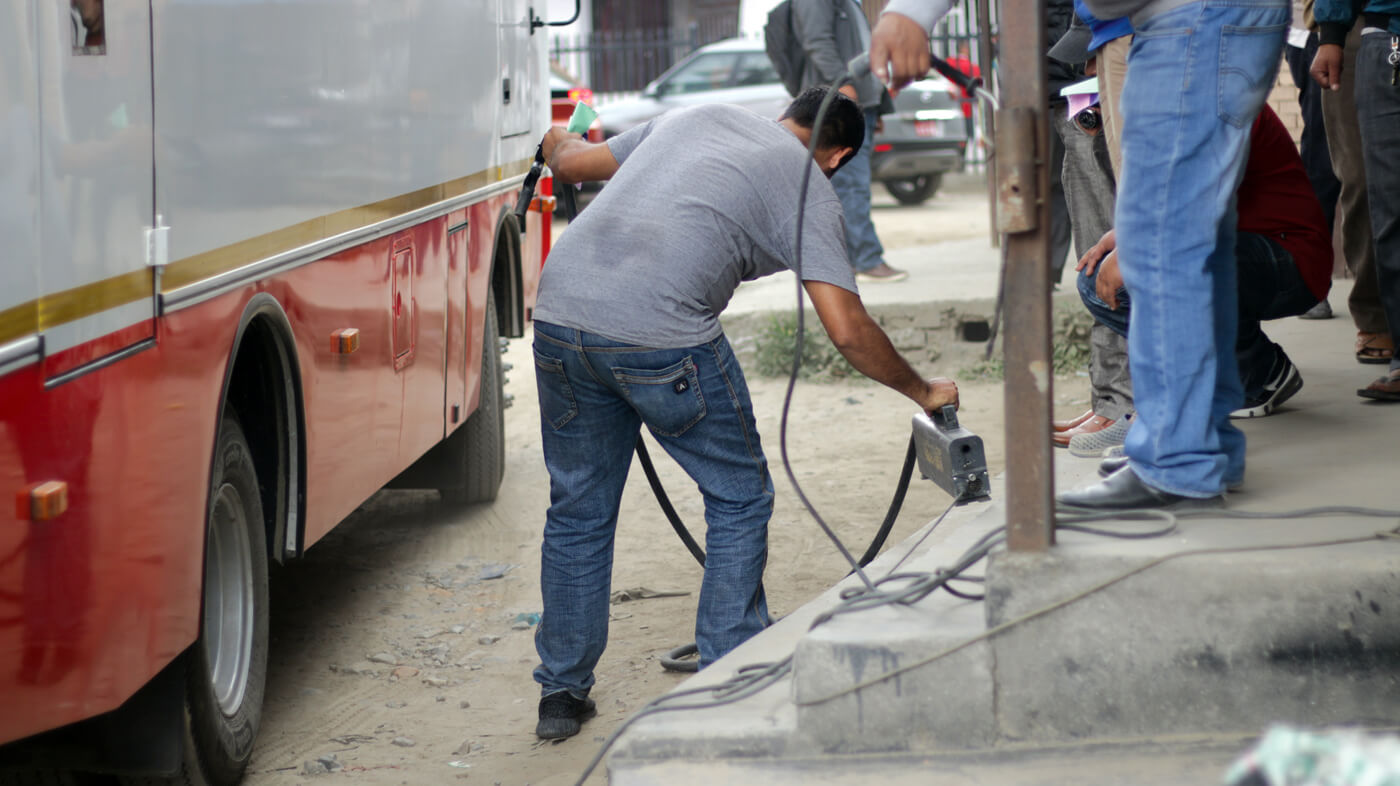
From 2 December to 5 January the Department of Environment conducted surprise checks of 581 vehicles in Kathmandu Valley to test their emission. The results were not surprising.
More than one-third of the vans, buses, two-wheelers and cars failed the test. They were emitting smoke and toxic gases above the safe threshold. The worst were school buses, micros, taxis, water tankers, and government vehicles.
Even more surprising: some of them had green stickers on their windshields to prove they had passed emissions tests. After that spot check, the Department has announced a new fine of up to Rs5,000 for drivers of polluting vehciles.
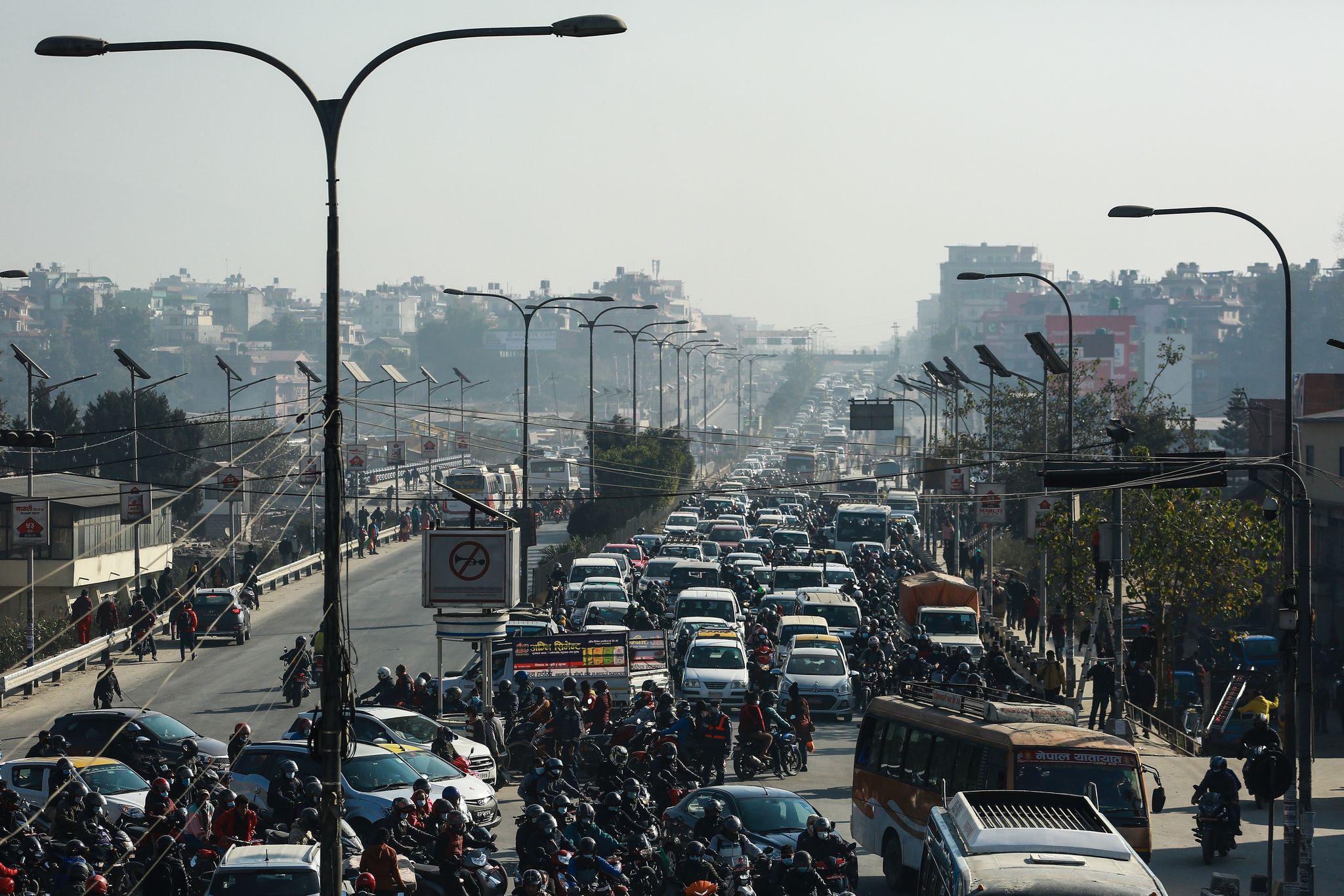
Earlier, it had identified vehicular emissions and open burning are among the primary agents of air pollution in Kathmandu – which has one of the worst air of any city in the world.
If the vehicles owners still fail emission tests after necessary repairs, they can be fined up to Rs100,000 as per the Environment Protection Act, 2019.
“At the moment, we have not imposed high fines on vehicles that cause pollution," says Saloja Adhikari, Information officer of the Environment Department. “We are enforcing stricter rules on re-inspection of those that have failed the emission tests and those that are being driven without necessary repairs."
Read also: Green sticker = green light to pollute, Sonam Choekyi Lama
She adds, "Rather than what vehicles cause more pollution, the important thing to realise is that often one can easily repair their vehicle for the cost of the fine. This is to encourage vehicle owners to service their vehicles rather than to fine them outright.”
The number of two and four-wheelers in Kathmandu valley now exceeds 1.2 million. Last year alone, 1.8 million vehicles were registered in the Ministry of Labour, Employment and Transport. These vehicles produce urban pollutants such as Nitrogen dioxide (NO₂) that highly reacts with other gases to form toxic ground-level Ozone (O3). Motorcycles also emit other gases such as Carbon monoxide (CO) that convert atmospheric oxygen to Ozone.
In addition, vehicles, open burning, brick kilns, factories and machineries release the harmful particulates measuring 2.5μm or less (PM2.5) into the air.
According to the State of Global Air, PM2.5 has caused the death of as many as 17,900 people in Nepal in 2019 alone and more than 145,000 people of all ages and gender between 2010 and 2019.
There have been repeated attempts to use Euro 6-grade oil according to the European emission standards to reduce pollution from vehicles, but the increased price of oil and coal in the international market has circulated low-grade coal that emits toxic fumes like sulfur dioxide (SO₂).