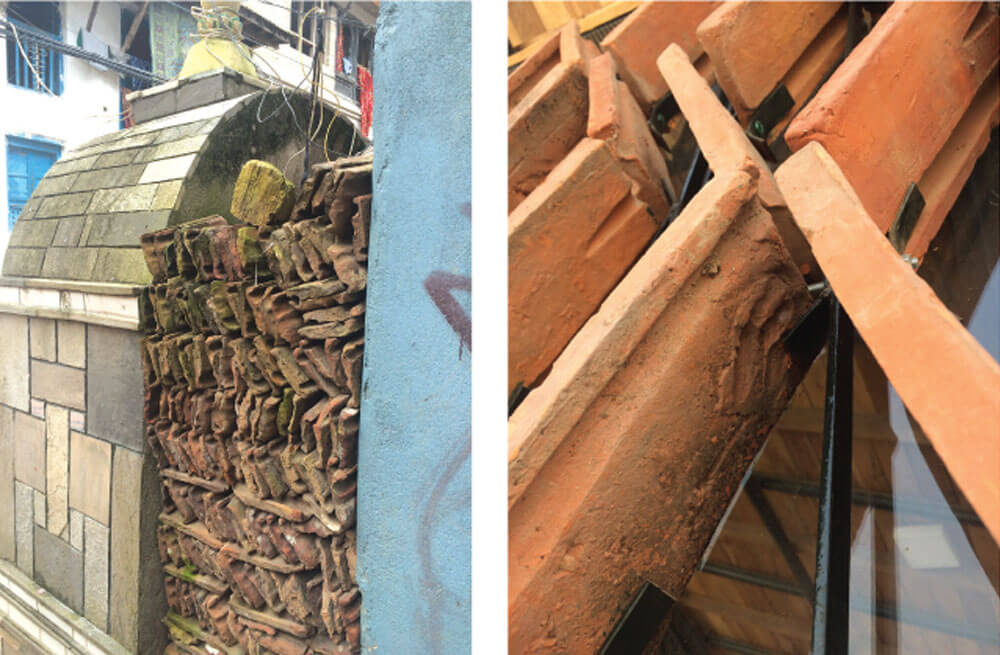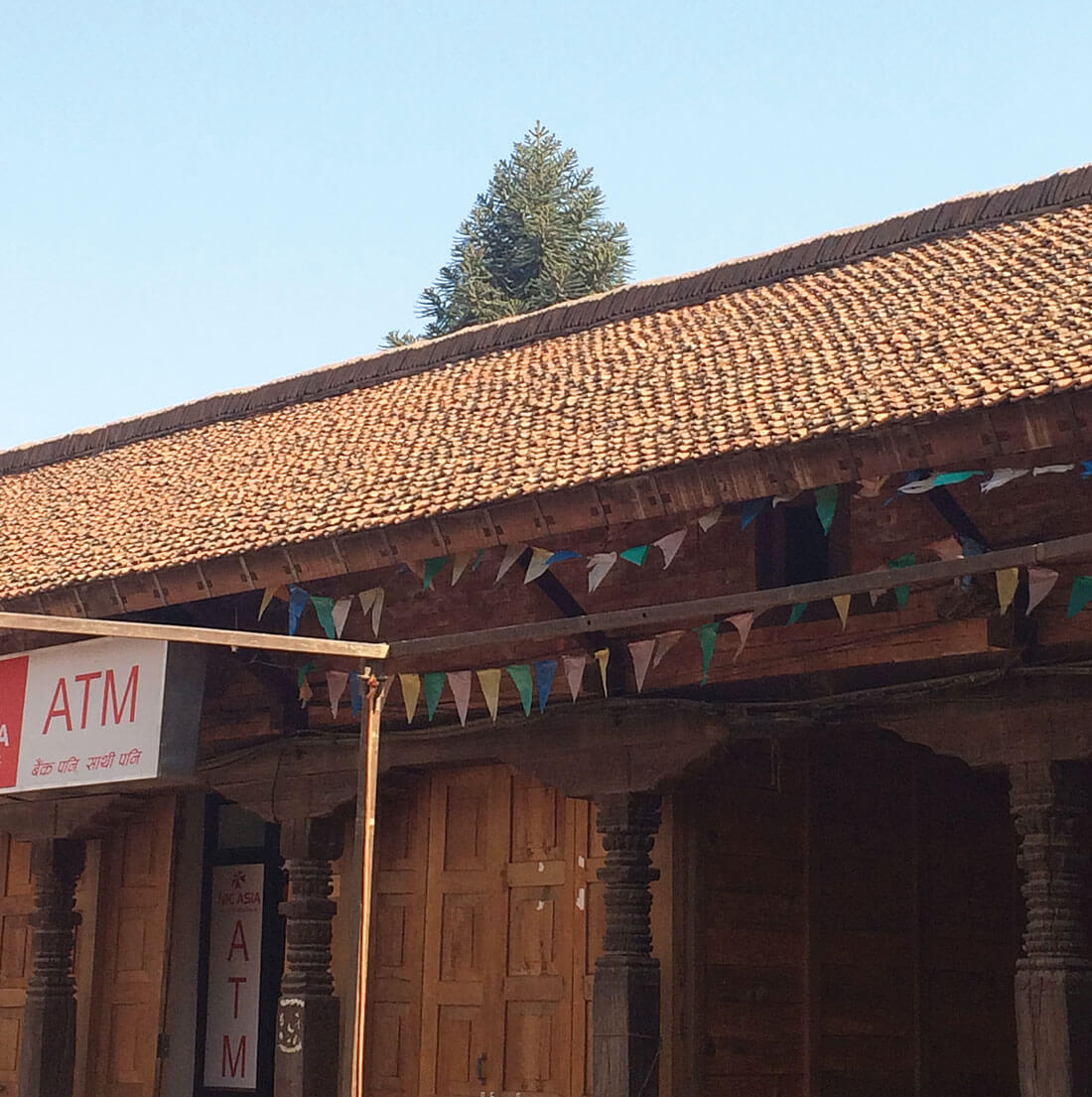
T here are many types of traditional roof tiles in Kathmandu: broad tiles, slender tiles, half-cylinders, or the elegant jhingati. Before concrete buildings started sprouting up with flat roofs, the Valley’s old towns all had distinctive sloping red-tiled roofs.
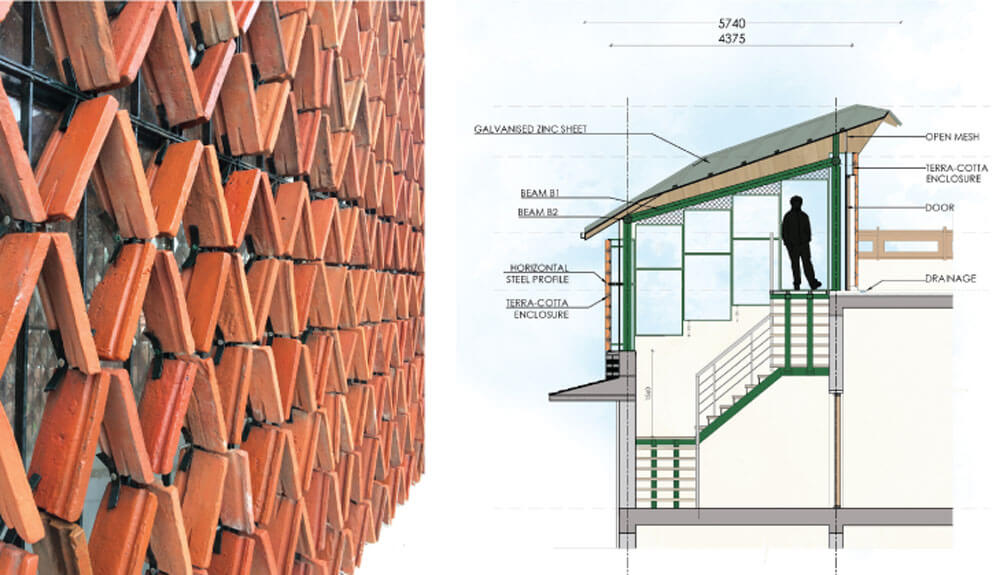
Even though houses with traditional roofs are now rare, tiles are being put to all kinds of creative uses, including to reduce the energy cost of cooling or heating homes and offices. One such example is a rooftop pavilion at the headquarters of the International Centre for Integrated Mountain Development (ICIMOD) in Khumaltar (see box).
Terracotta tiles are hard to beat in terms of sustainability and climate responsiveness, compared to concrete slabs or steel sheets. Concrete is all the rage today because of its supposed strength and water-resistance, but it makes buildings costly to heat or cool.

Well-made roof tiles are common in traditional architecture, dating back to Mesopotamia. In the Middle Ages, the clay was moulded by men on the tops of their thighs, and tapered down to the knee naturally, allowing the tiles to overlap each other. Cuzco in the Peruvian Andes, historic Lijiang in China and Dubrovnik on the Adriatic coast all offer stunning roofscapes, and have World Heritage status because of their tiles.
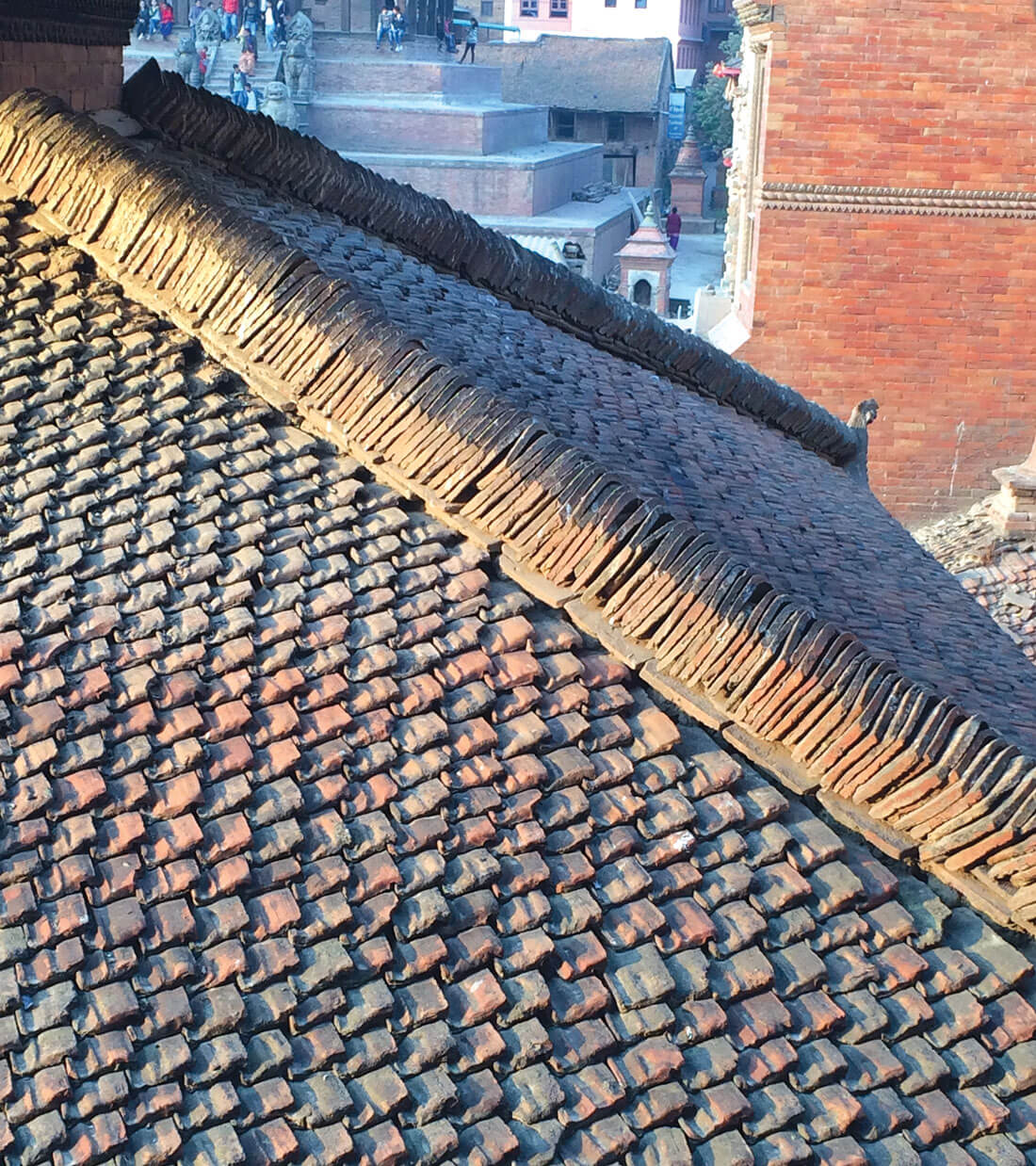
Kathmandu Valley’s roof tile grid is unique in the world. The jhingati has a distinct non-linear feel, almost like scales on a pangolin’s armour. The crafted roof, with its ingenious overlaps and slightly rotated grid, protects the interior of the historic buildings from slashing monsoon rains.
The tiles come in a spectrum of carmine, scarlet-red, vermillion and tangerine orange colours. Upon close observation, one can even see palm and thumb prints of the potters who moulded each piece by hand decades, sometimes centuries, ago.
Read also: Starting Nepal’s green school movement, Sheilin Teo
Wang Shui, the first Chinese to win the Pritzker Architecture Prize in 2012, saw many historic villages had been razed in the area where the new Ningbo Museum in China was to be built. As the architect of the museum, Wang Sui worked with building materials from the houses in the villages.
Wang Sui felt that bricks and tiles had memory and identity, and that there was a relationship between people and building materials. The museum was completed in 2008 and recycled bricks and roof tiles in its construction.
Each tile and brick in Kathmandu today has a history, a tale to tell about the forgotten potters who moulded them from the Valley’s clay soil, fired and fitted them on roofs. They are a part of our heritage and should be preserved, re-used or upcycled.
Prof Anne Feenstra is a laureate of the Global Award for Sustainable Architecture 2012 (Paris) and set up Sustainable Mountain Architecture in Nepal in 2013.