
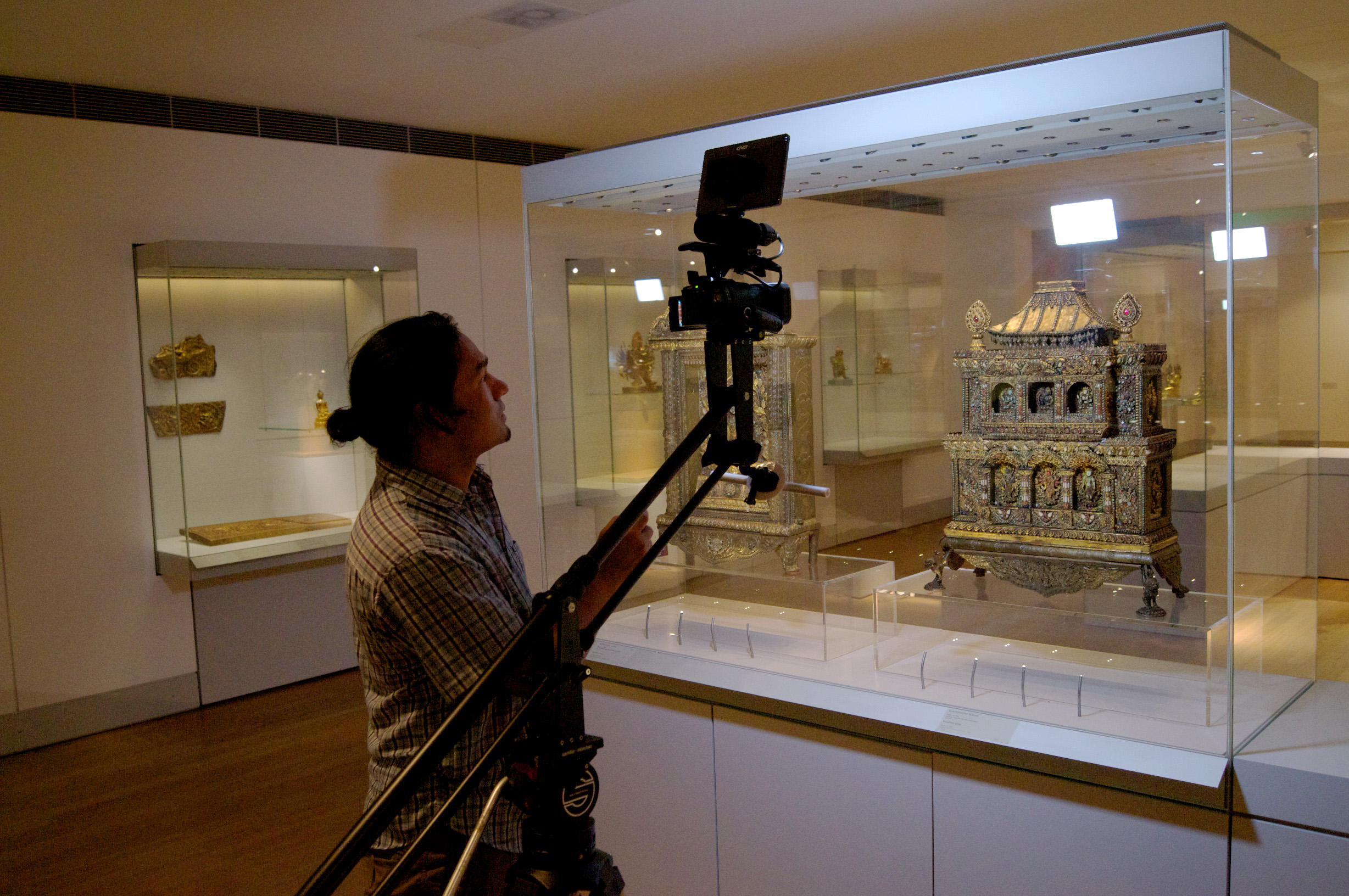
When Kathmandu-based filmmaker Deepak Tolange visited the Museum of Asian Art in Berlin seven years ago, he sought out the collection from Nepal (pictured above). It was a large section around the corner from the Tibetan artefacts on the same floor.
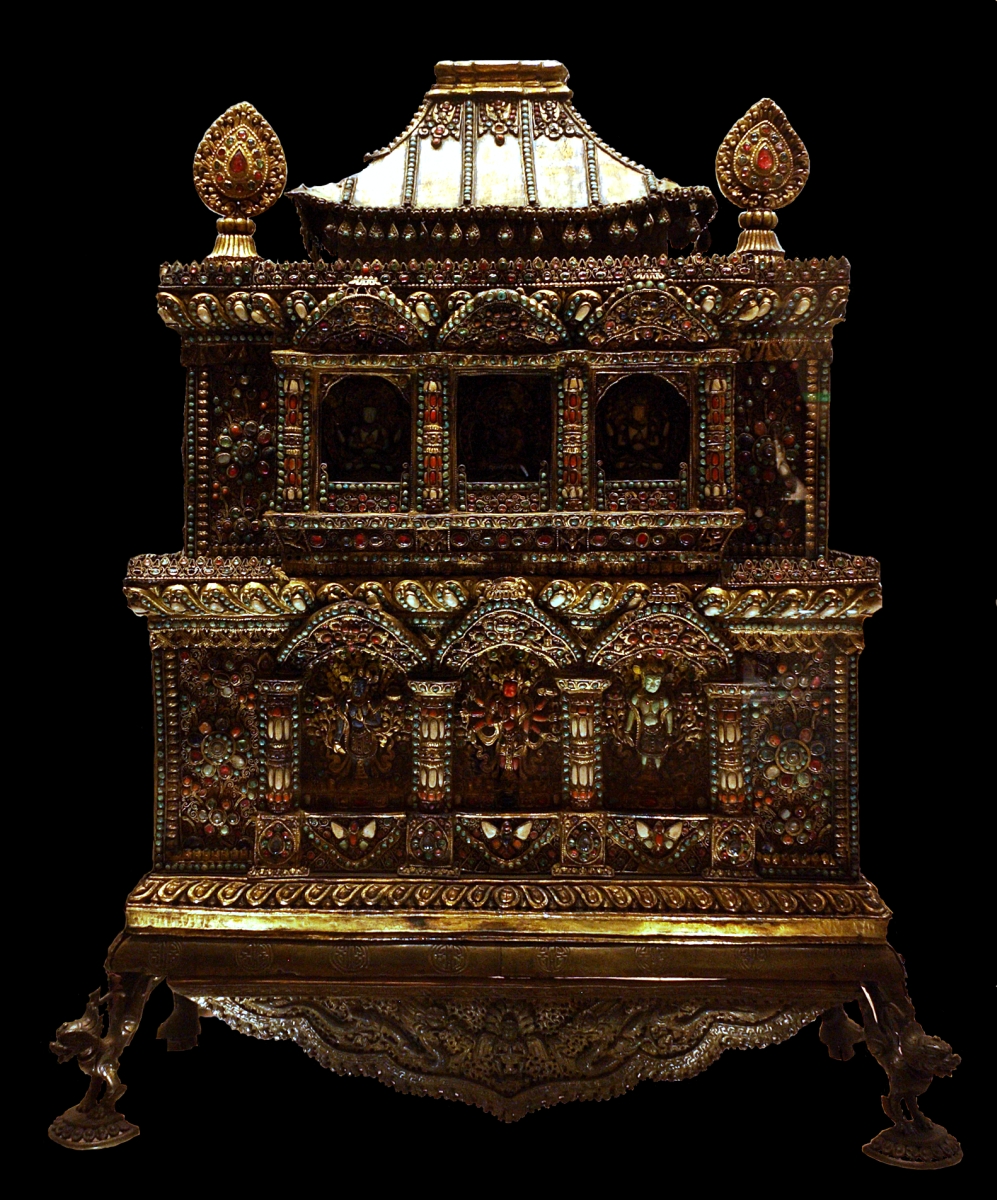
Among the items was an ornate 70.5cm tall two- storeyed Buddhist shrine richly decorated, inlaid with precious stones, gold and silver. Three standing bodhisatva were placed in niches on the lower level, and there were three other deities inside the upper chamber.
The object represented elements of Newa architecture: the torans, the iconographies, the jala nhyaka, but the roof had Tibetan touches. And, upon inspection, Tolange noticed traces of vermilion and saffron powder on the idols, indicative of continued worship.
The Nepali in him was intrigued, Tolange wondered if the antique shrine was stolen from a temple in Kathmandu Valley like many others.
The first historical account of a religious object stolen from Nepal is from 1765, when the statue of Narayan disappeared from the Bhagwati temple in Hanuman Dhoka. Plunder peaked in the 1960s, as Nepal started to open up to the outside world. Today, after campaigning by citizen groups and the government, foreign museums and collections are repatriating stolen deities. According to the Department of Archaeology (DoA), in the past decades, 93 religious objects have been returned, of which as many as 19 were repatriated since July.
Back in Berlin, Tolange reached out to Bernadette Broeskamp, a researcher of East Asian and Buddhist art at Freie Universität Berlin. Based on his findings, Tolange made a 6-minute short film Buddhist Shrine.
“I thought that maybe, if it was indeed stolen, it would be possible to return the shrine to Nepal,” Tolange recalls.
The museum dates the ritual object to the 19th century. Provenance record shows that it was sold to the museum in 1936 by one Heinrich Meinhard, but beyond that nothing is known. Tolange speculates that because war was brewing in Europe at the time, Meinhard might have been in need of money which prompted him to sell the object to the museum.
There are no other documents, which were either never kept or were subsequently lost during the war. The only thing certain is that Meinhard told the museum that the object was indeed from Nepal.
The short film was shown at the museum in 2015, where it was received well. “The Q&A after the screening was very heated,” recalls Tolange. “Everyone wanted to know if the object was really stolen and, if yes, then would it be returned.” The question remained unanswered.
Tolange returned to Nepal for three months in 2016 for a field visit as part of his MA. He had been thinking about the altar, wondering if there was a bigger story behind it.
He went to Patan to meet Bhim Ratna Shakya, senior sculpture artist, who recalled that his father had made six altars like the one in Berlin. That was a significant clue, and Tolange spoke with historians Satya Mohan Joshi, Sukra Sagar Shrestha, Mukunda Raj Aryal, KVPT’s Rohit Ranjitkar, and went to Boudha to meet the Buddhist monk S Dharmacharya.