
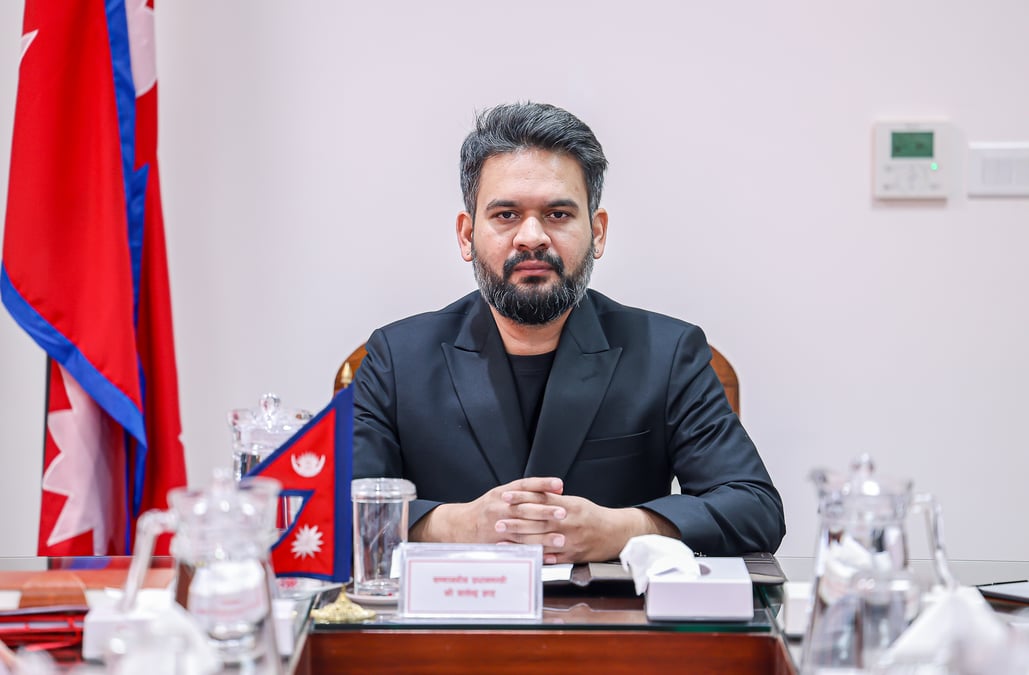
We are on exactly Day 50 of the new government under Prime Minister Balendra Shah. Let us recap: so far he has lost two ministers, he sent bulldozers out to flatten riverside settlements, he suspended Parliament to pass an ordinance to amend voting in the Constitutional Council so his man could be appointed Chief Justice, he walked out of the House as President Ram Chandra Poudel read out his own government’s programs.
He has never spoken to the media, communicates through tweets, refuses to meet emissaries of foreign governments, and he has raked up a territorial dispute with India.
Prime Minister Balendra Shah is still performing like Rapper Balen. As disruptor-in-chief, he is just being true to his own brand: someone voted in to shake things up.
Mao Zedong’s Cultural Revolution went about ruthlessly to throw out the ‘Four Olds’: old customs, old culture, old habits, old ideas. When Nepal’s Maoists took up arms and later when they were elected to power, Pushpa Kamal Dahal’s also promised “क्रम भङ्ग”, a paradigm shift. We know what became of that.
Shah is a post-ideological prime minister, and is answering the call of voters to remove all olds, which means anyone and everything with links to the legacy parties and their discredited leaders. Rule of law and due process be damned.
By going it alone and acting in the way he does, the prime minister has met resistance from the opposition parties, which was to be expected. But there are murmurs of disquiet even within his own RSP, the party for which he has shown much disdain.
Everyone, even those who have misgivings about the prime minister’s path and performance, want to give him a chance. But there is a pattern emerging: a new development every other day to be overtaken and overshadowed by another – all amplified in cyberspace.
Each new episode polarises Nepali society. The prime minister’s supporters think he can do no wrong, that he is a young Lee Kuan Yew who will steer Nepal to a bright future, and they dare anyone to utter a peep. His critics pick apart every detail (the prime minister wearing sports shoes in Parliament) which dilutes genuine criticism of more serious breaches of democratic principles.
Support and opposition to Prime Minister Shah and the RSP is played out in real time on social media. It is a no-holds-barred duel between झोले and घण्टे, the derogatory names they call each other. In this din, any debate about rights, morality, freedom and values is not possible.
For too long, the public endured chronic malgovernance and corruption, and there is a lot to set right with the RSP’s big electoral mandate. But with great majority comes great responsibility and absolute power corrupts absolutely.
More worryingly, the PMO and the government seem to be working at cross purposes. The prime minister does not hide his disregard for the House and his own party. For the sake of Nepal’s future stability, reports of rifts between the prime minister and the RSP should not be a self-fulfilling prophecy.
The RSP concluded a second orientation for its MPs this week which was necessary, even for seasoned lawmakers. But what was evident over those two days is emblematic of the larger problem.
When RSP MP from Dhading Ashika Tamang took to social media to question the decision to organise orientations at fancy hotels when conference halls at Singha Darbar are empty, the party reprimanded her instead of reflecting on her observation. Another RSP lawmaker was found soliciting gifts on a TikTok account during the briefings.
All eyes are now on the annual budget speech on 29 May. But there has been little or no parliamentary consultation so far. Finance Minister Swarnim Wagle faces the difficult task of translating the RSP’s 100-point plan into do-able budget lines, while reportedly dealing with interference from the PMO.
As a party that stands as an antithesis to everything that was wrong with the older parties, politics, and the system, the RSP and its government must at least not discredit themselves on the very platform they campaigned on. Or the principles they were against, like rewarding party loyalists with appointments to the 1,500 office-bearers sacked last week.
Not all old is bad, not all new is good. New leaders bring fresh ideas, while older politicians can have integrity and experience. Not everyone with political affiliation is tainted, just as apolitical individuals can be untested or incompetent.
It is never all black or white. There is a lot of grey in between.
Sonia Awale