Jayanti Acharya, 62, had never been ill in her life. She had never had an accident. So when she learnt that she had multiple fractures in her bones, she was shocked. The doctor who examined her was not. He ordered a blood test, and it confirmed what he had guessed: Acharya had Vitamin D deficiency.
Lasata Bajracharya, 17, began to feel pain in the hip late last year. She initially ignored the aches, and kept going to school. The pain did not subside, and she suffered unbearable muscle cramps. A blood test revealed she was suffering from Vitamin D deficiency.
Raj Shahi, 28, was passionate about martial arts, and always aspired to be an ace karate player. But a bone disorder caused by low Vitamin D forced him to give up the dream. Instead of practicing karate, he is now in physiotherapy.
Chandika Gurung, 42, was being treated for a thyroid disorder when she started suffering chronic joint pain. Soon, she could not even walk or stand up. A blood test showed it was due to a sharp drop in Vitamin D.
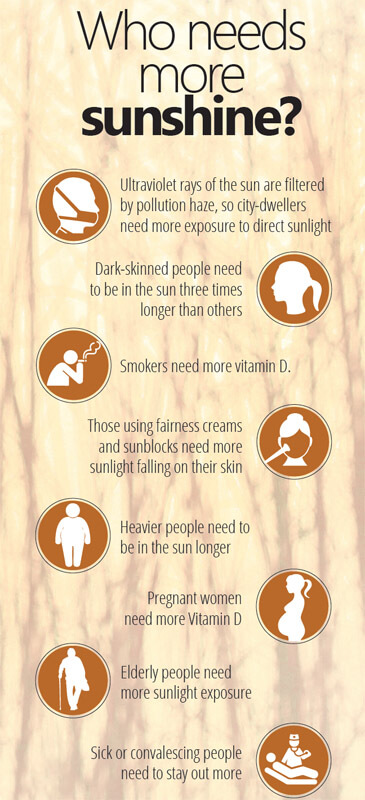
An increasing number of Nepalis are falling victim to a nationwide epidemic of Vitamin D deficiency as they adopt an urban life-style, stay indoors a lot and do not work or stay outdoors under the sun.
Exact data on the percentage of Nepalis suffering from low Vitamin D is not available, but doctors interviewed for this article all agreed that it is now becoming a national health emergency.
“Residents of Kathmandu Valley are at very high risk of Vitamin D deficiency, which leads to a host of medical complications,” says Sunil Poudel, an orthopedic specialist at Spark Health Home.
A research team found low Vitamin D levels in 74% of 2,158 patients at a medical lab in Pokhara in 2014-15 and published the finding in the Journal of Medicine and Medical Sciences in 2016. In Kathmandu, a study conducted seven years ago at a nursing home found that out of 50 patients who were treated, 78% had low Vitamin D.
Worryingly, Vitamin D deficiency is affecting under-five children more than other age groups, leaving them with life-long ailments. A study conducted by University of Oslo in 2013, examined 280 children below five in various parts of rural Nepal, and found that 91% had low Vitamin D. The same research showed that children who had been breast-fed had higher levels of vitamin D.
Decoding Vitamin D
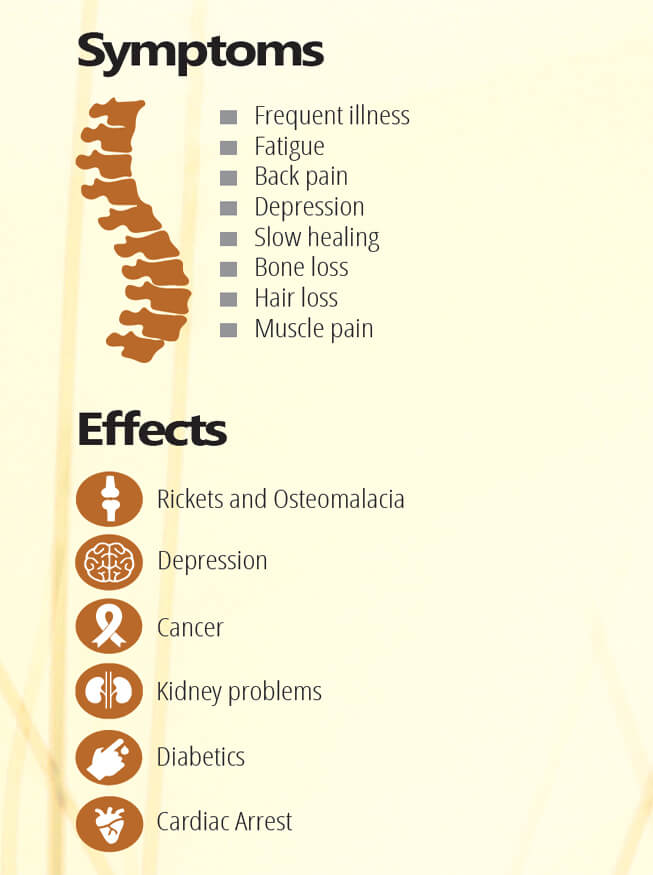
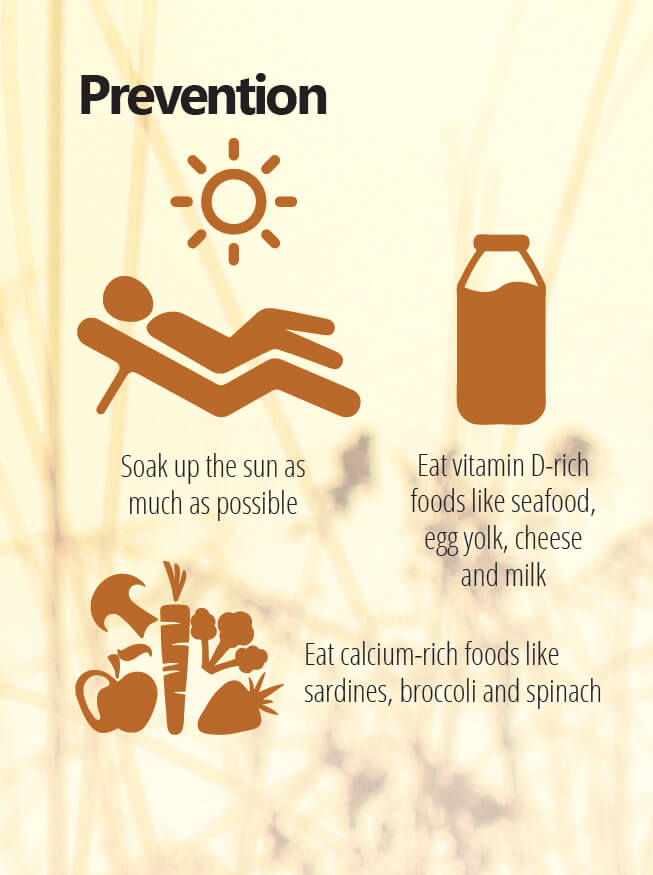
Vitamin D is vital for humans as it enhances their capacity to absorb calcium, which protects bones from rickets, osteomalacia and other disorders resulting in thin, brittle, misshapen and broken bones.
Vitamin D is naturally found in very few food items like egg yolk, cheese and salmon. But 15 minutes of exposure to direct sunlight every day is enough to replenish Vitamin D levels in the body. Ultra-violet solar radiation allows the skin to generate Vitamin D which is then transported to the liver and kidney.