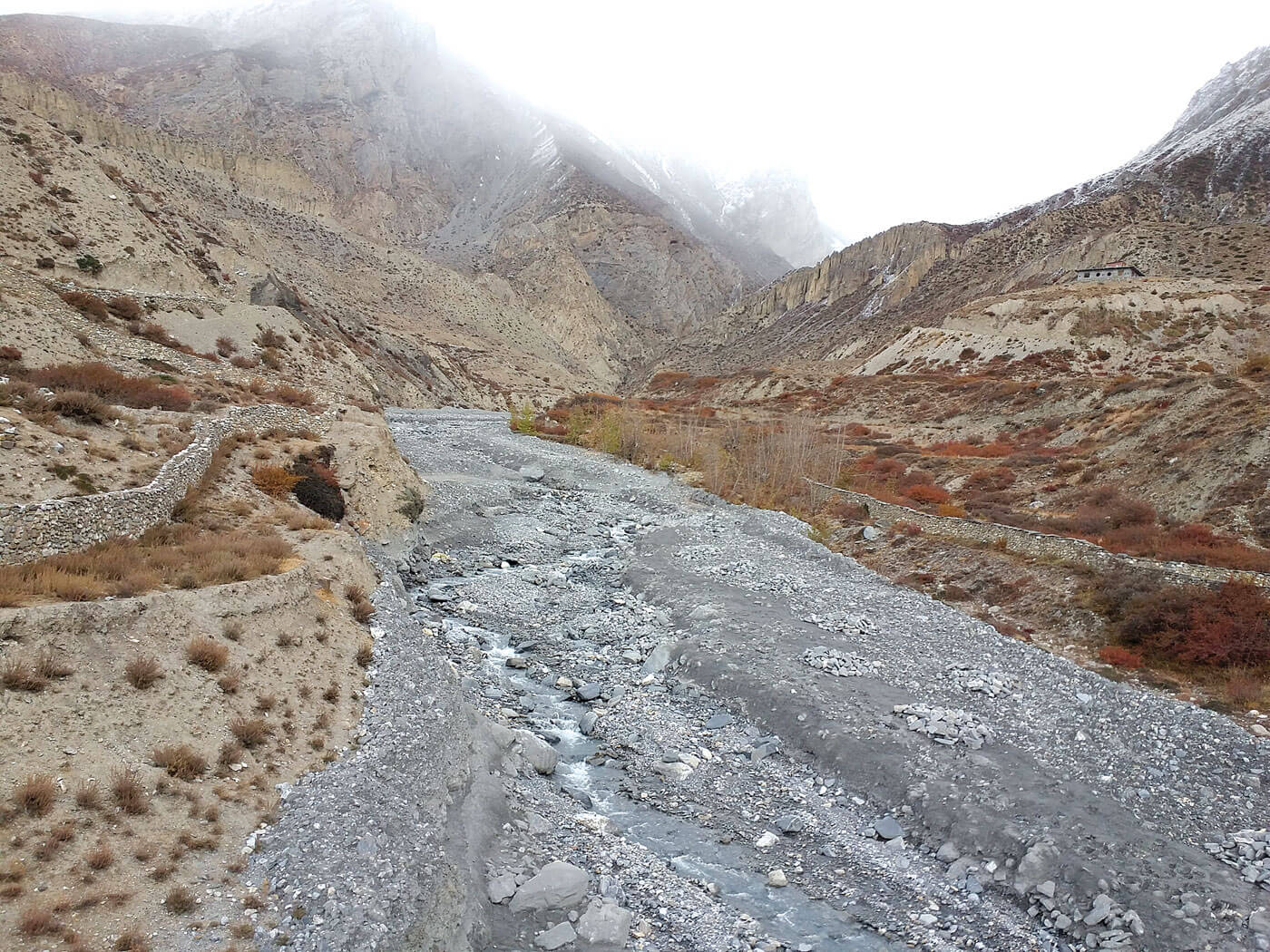
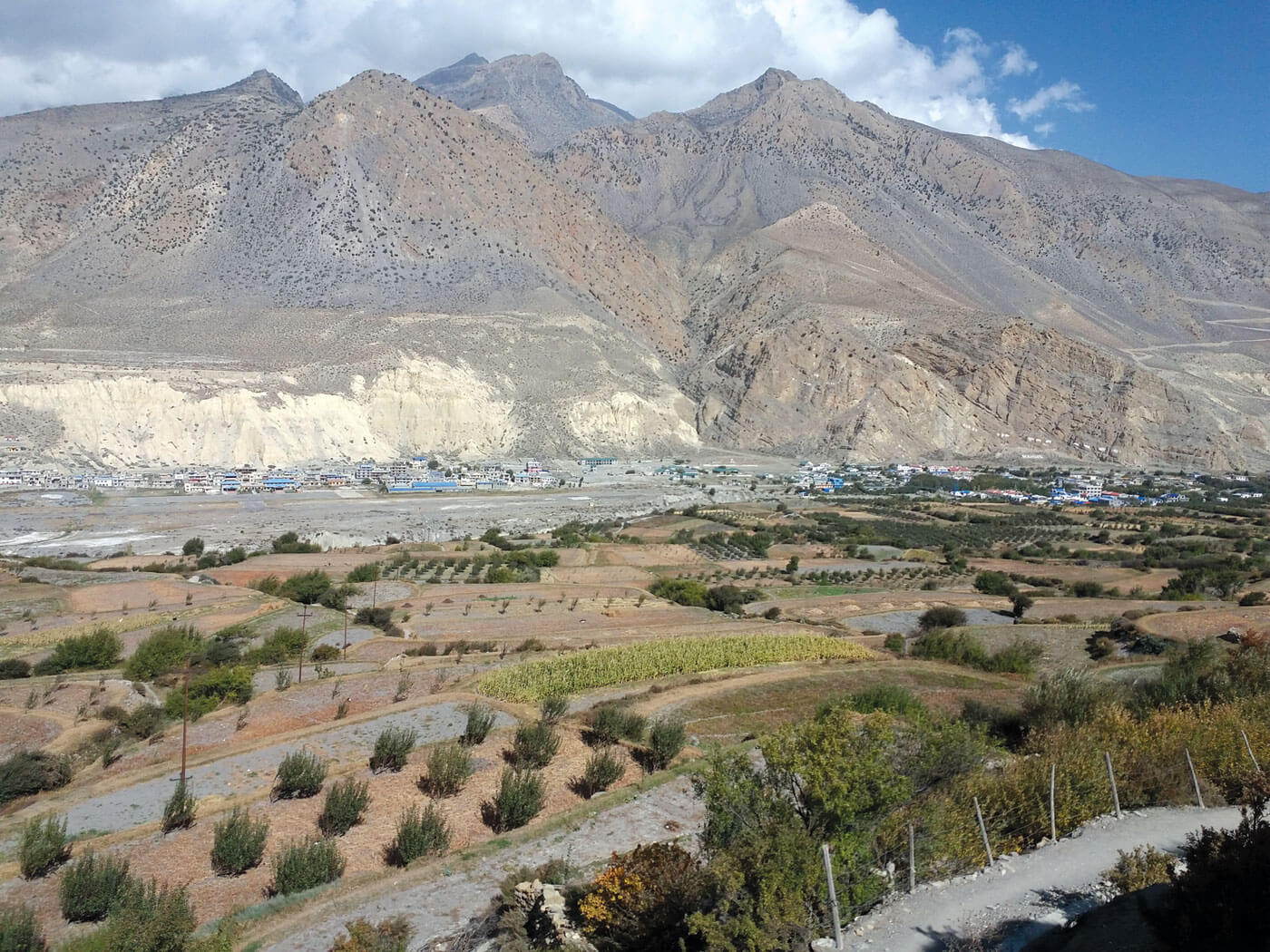
Climate change has unleashed floods, but also allowed apple and vegetable farming in what used to be a desert
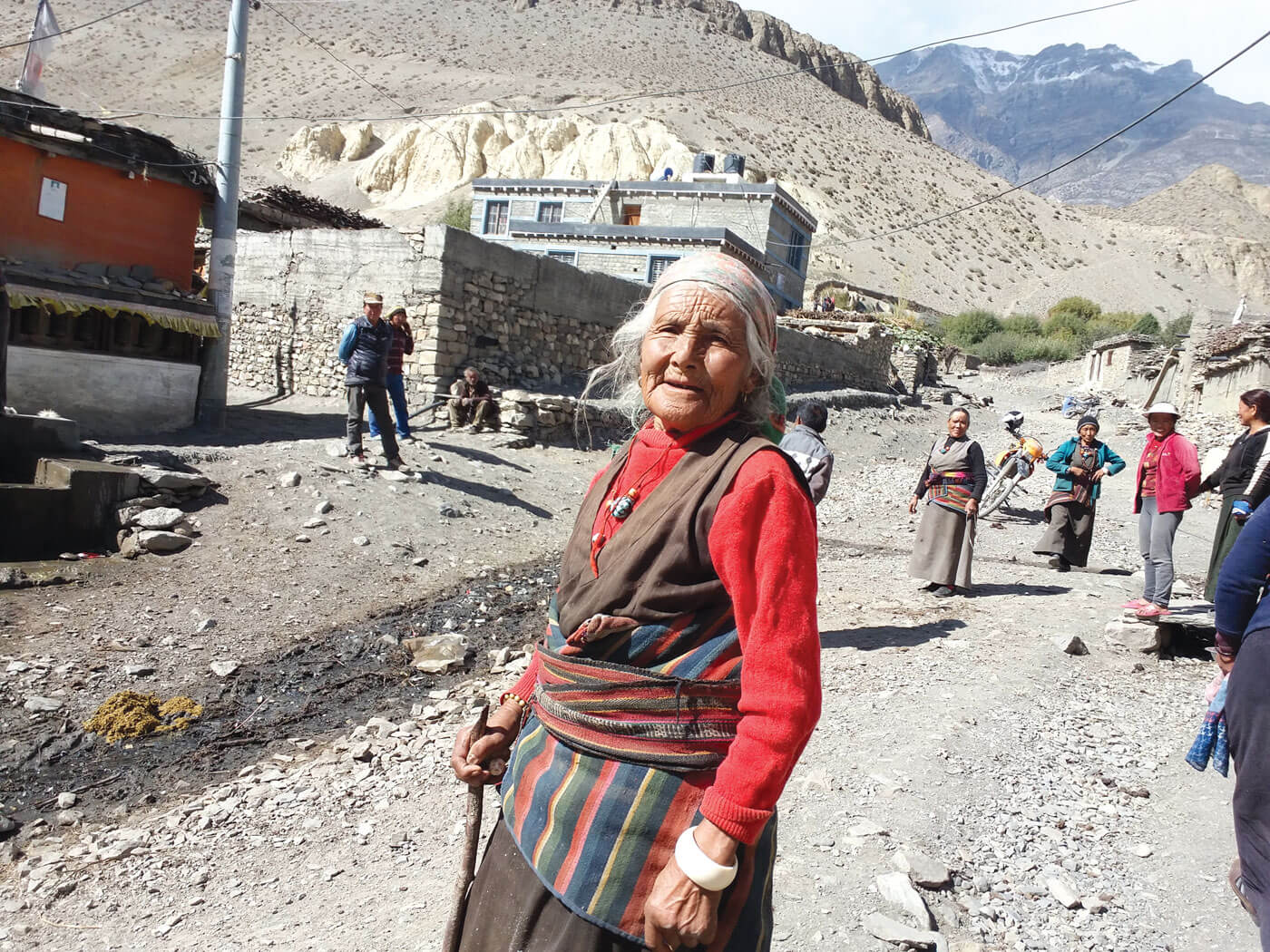
It hardly rains in Upper Mustang, the district of Nepal located beyond the Himalaya which juts out into the Tibetan Plateau.
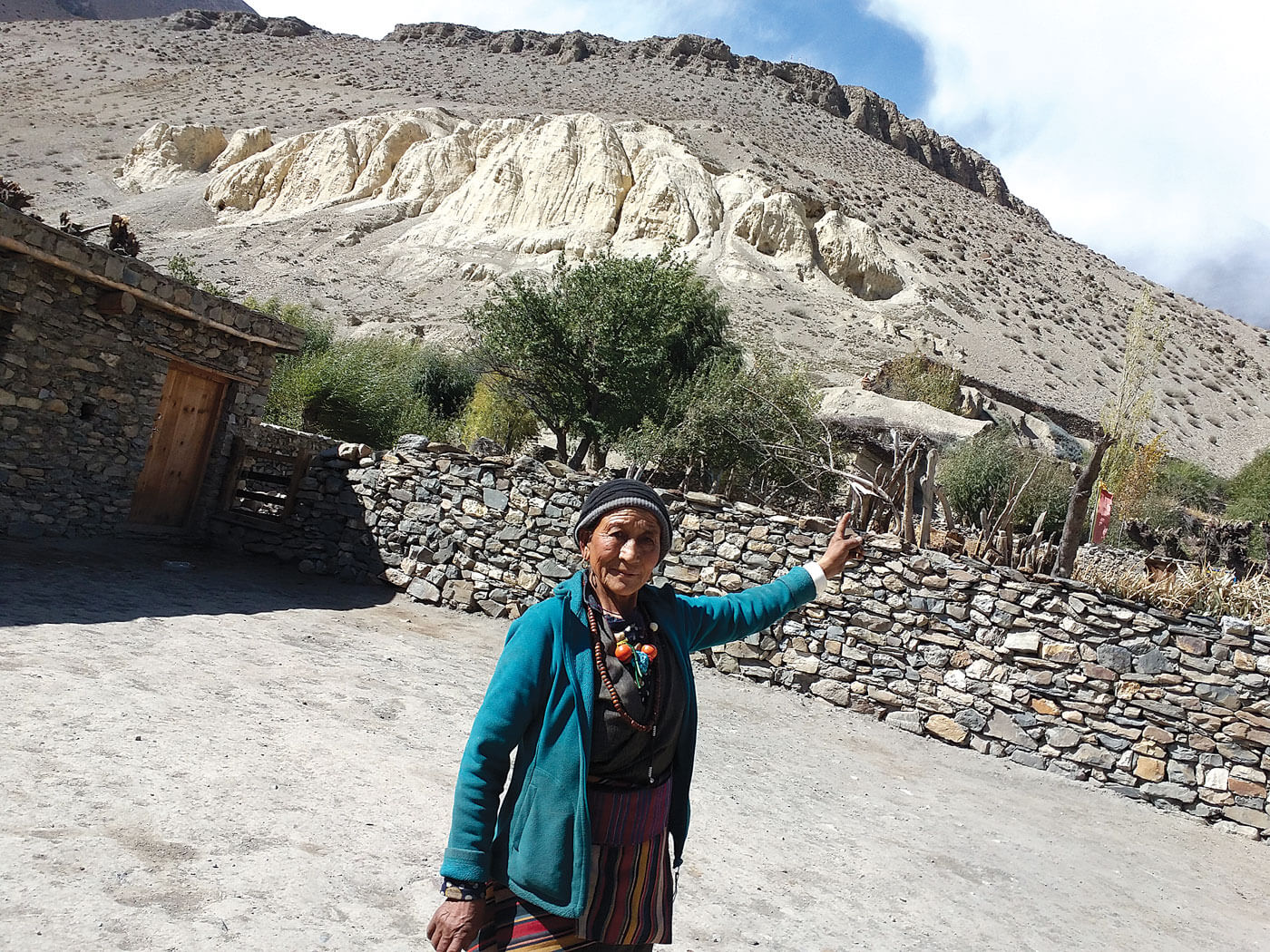
Rain is rare here, and floods even rarer. So when the stream next to her village of Tiri burst its banks five years ago, it was the first time 80-year-old Karma Gurung had ever seen a flood.
The heavy rains and flood had killed a migrant worker from Lamjung, and few livestock.
“It came suddenly, without warning and I lost 15 cows, ten goats and two horses,” recalls Norbu Gurung, pointing to how high the muddy water and boulders had reached.
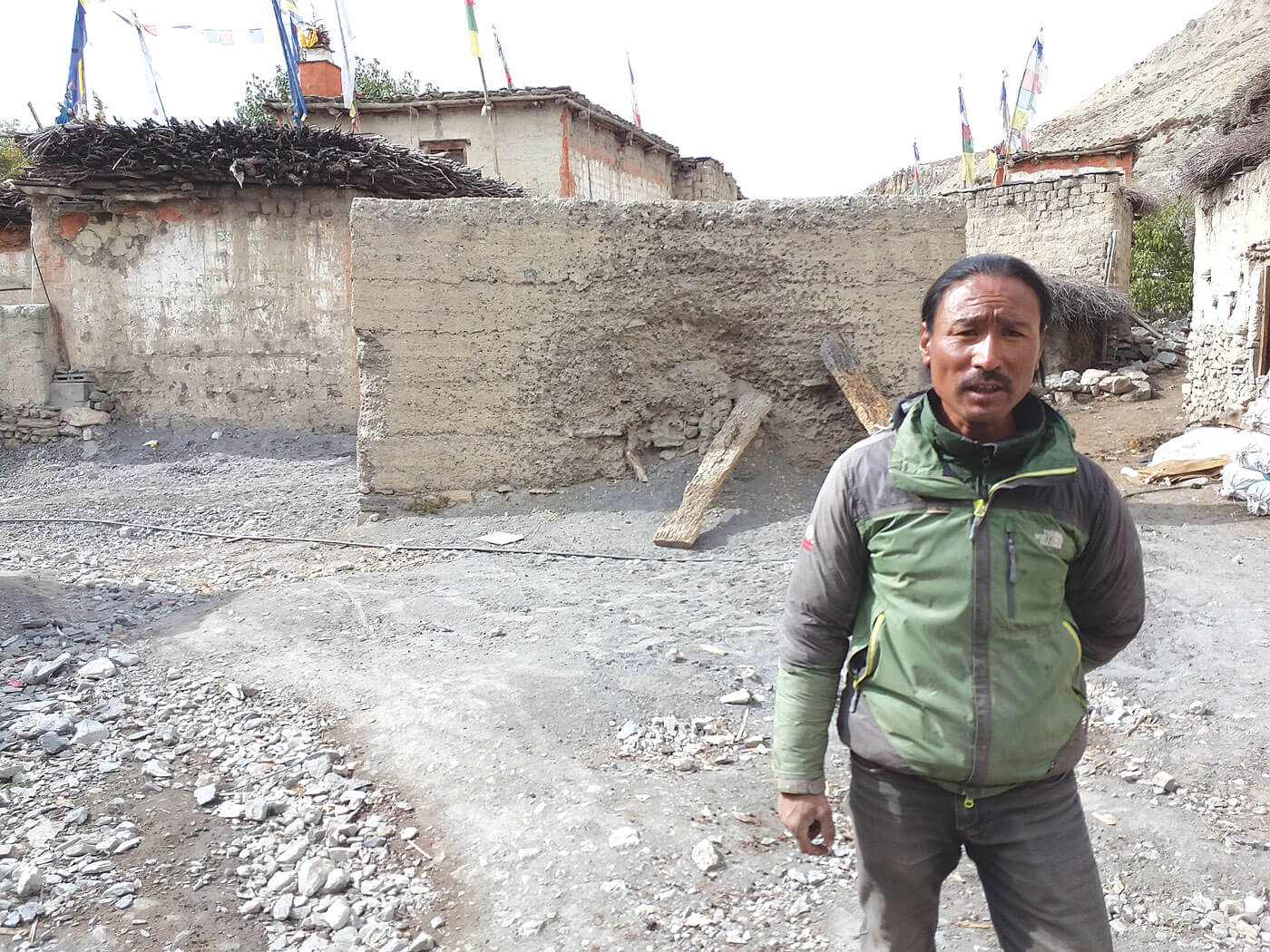
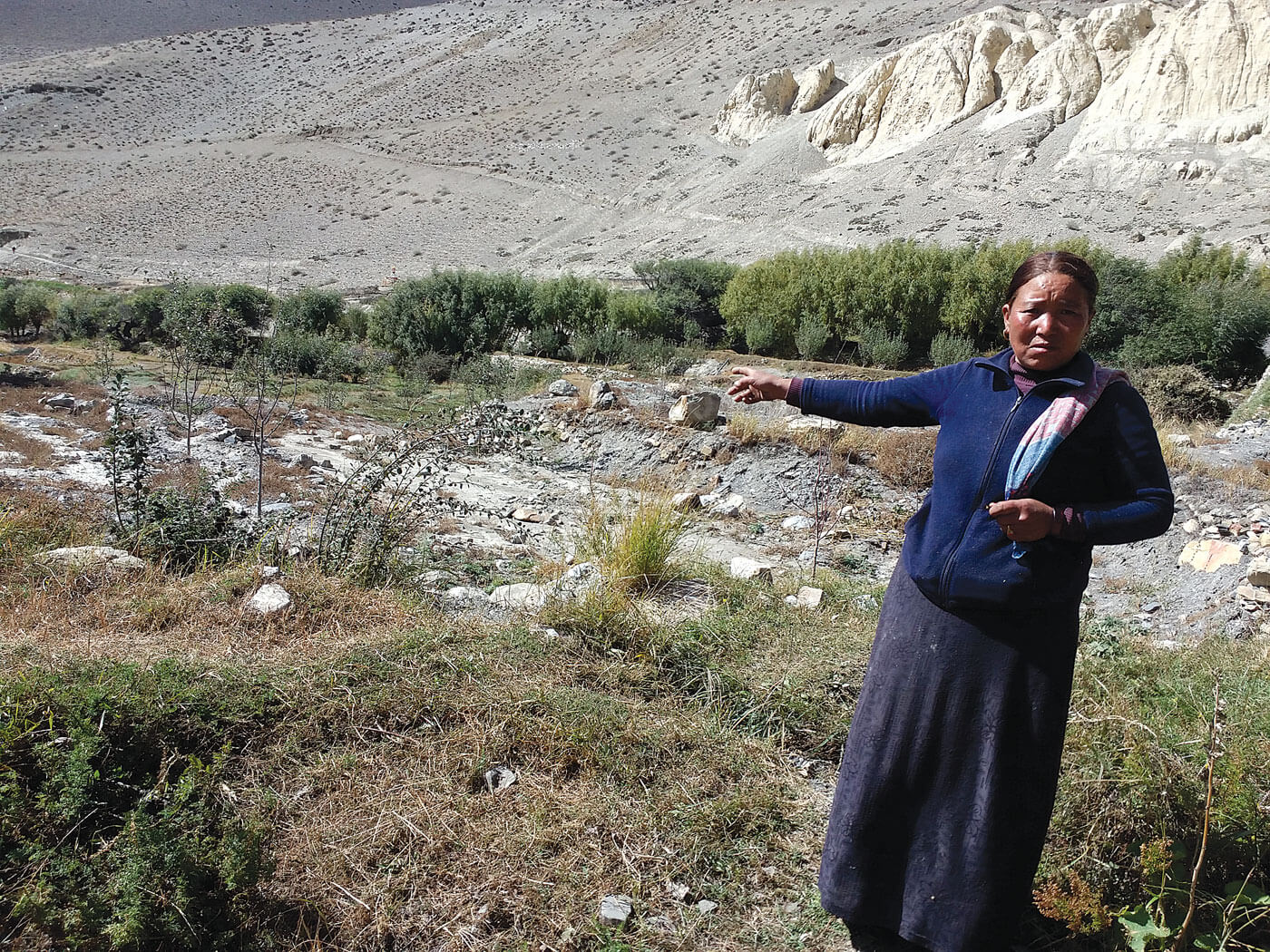
Konju Gurung lost a chunk of his nearby apple farm, which used to earn him Rs100,000 a year. Today, there are only huge boulders and sand where there used to be fruit trees.
Flash floods, which used to be rare in this part of the Himalayan rain shadow, are becoming more frequent as weather patterns become more erratic. In the past decade, the people of Mustang suffered winter droughts, unseasonal snowfalls and cloudbursts.
The geology of the area is made up of pre-historic deposits of sand and boulders, and with no trees to hold the topsoil together, these are easily dislodged by heavy rains.
It was 1 Jun 2015 when it started raining heavily in Marpha village along the Kali Gandaki. The monsoon rains were not due for another three weeks, but the freak storm dumped a huge amount of rain in the surrounding mountains, sending a wall of liquefied mud down a tributary of the Kali Gandaki.
“It had been raining heavily, and all of a sudden there was this thunderous noise as rocks the size of houses were washed down in a sea of mud,” recalls Bhakti Hirachan, 77. The flood damaged 25 houses in Marpha and the scar of the flood can still be seen from the village.
A few months later in August, floods came again and destroyed houses and fields in Jong village. Indeed, floods have become commonplace in what used to be arid Mustang.
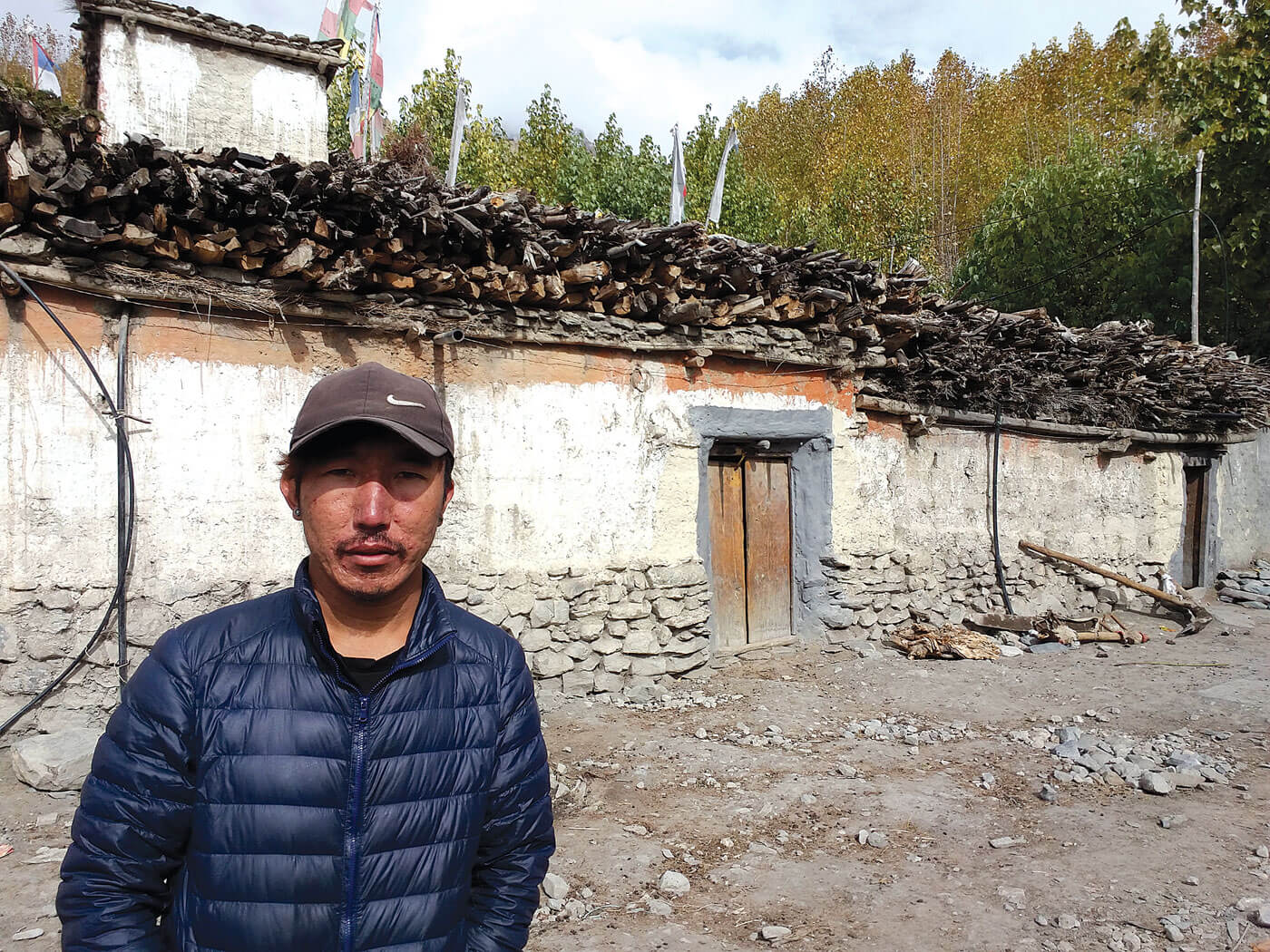
Villagers here say the weather has ‘gone mad’ in the past 20 years, and blame the wrath of the gods. Few here have heard of global warming and how scientists now believe it has made extreme rainfall and extended periods of droughts more common.
Climate expert Ngamindra Dahal explains: “There is increasing evidence that global warming has lead to more cloud build-up along the Himalaya, and this is leading to intense storms and creating erratic monsoons and winter rains in Mustang.”
Besides flash floods, the uncertain weather is also affecting local crops like buckwheat, barley and corn. Farmer Chiring Pemba Gurung of Jong village says his harvests have gone down by half in the last two years.
“Winter snow is good for the spring crop, but for the past two years we hardly had any winter snow, and when it does snow it comes in the spring planting season,” says Chiring Pemba.