
It was the last day of a series of pujas at the Shechen Monastery in Boudha. Thousands of monks and devotees participating in the prayer ceremony were in the courtyard when the ground started shaking just before noon on 25 April.
Immediately, the monks jumped right into action: managing the crowd to prevent a stampede, bringing those inside the main temple out into open spaces, and trying to calm those who were panicking.
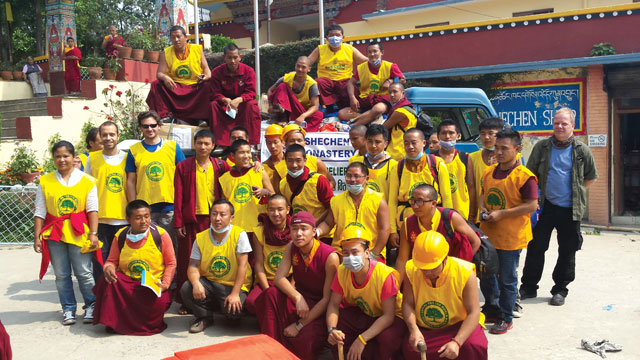
Photo: shechen.org
Had it not been for their maroon robes, the monks could have easily passed off for professional rescue workers. The reason was that the monastery had conducted training in first aid, rescue operations and emergency preparedness precisely in case of an earthquake. The monastery also had a stockpile of emergency supplies and pre-positioned rescue equipment and dry foods, blankets, first aid kits, and even loud speakers, which came in handy that day.
“We always knew such a day would come and were prepared accordingly,” says Khenpo Shelnang, who has been leading the monastery’s relief efforts.
Like many other organisations involved in relief and rescue, Shechen’s monks also faced bureaucratic hassles. Obtaining the required paperwork for relief delayed and deterred many motivated monks and nuns who had visited the villages, seen the destruction and wanted to help as soon as possible.
“Every day I had to have three sets of answers ready: for the volunteer monks, for the donors and for the people requesting relief, explaining why help couldn’t be sent,” explains Shelnang.