
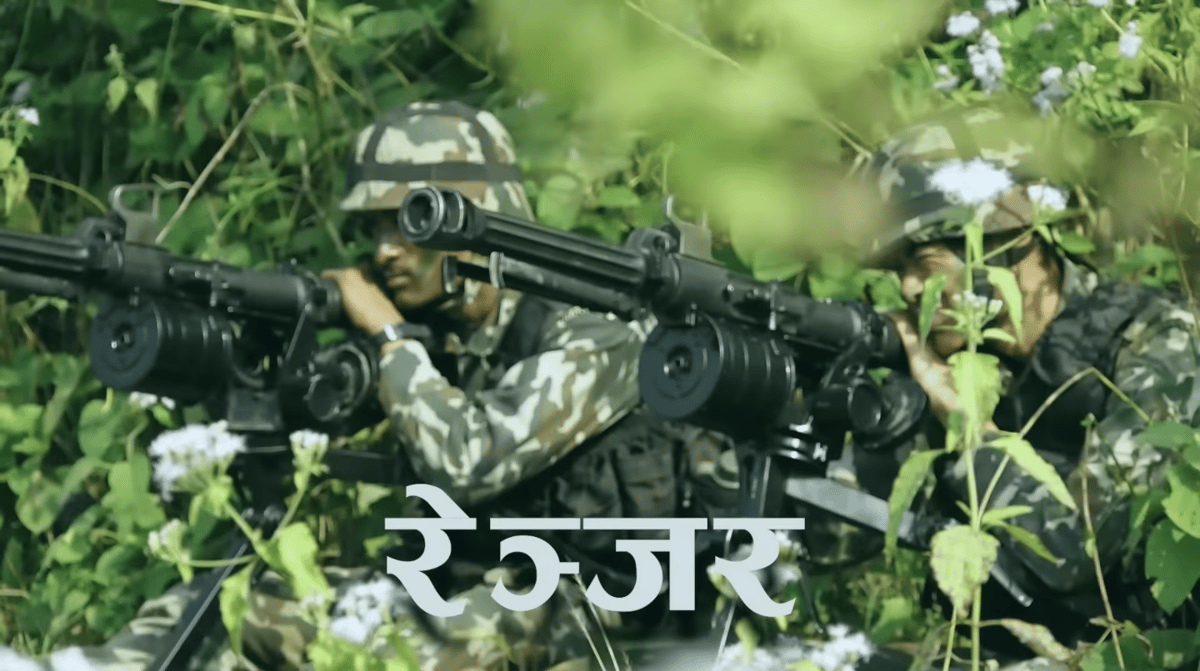
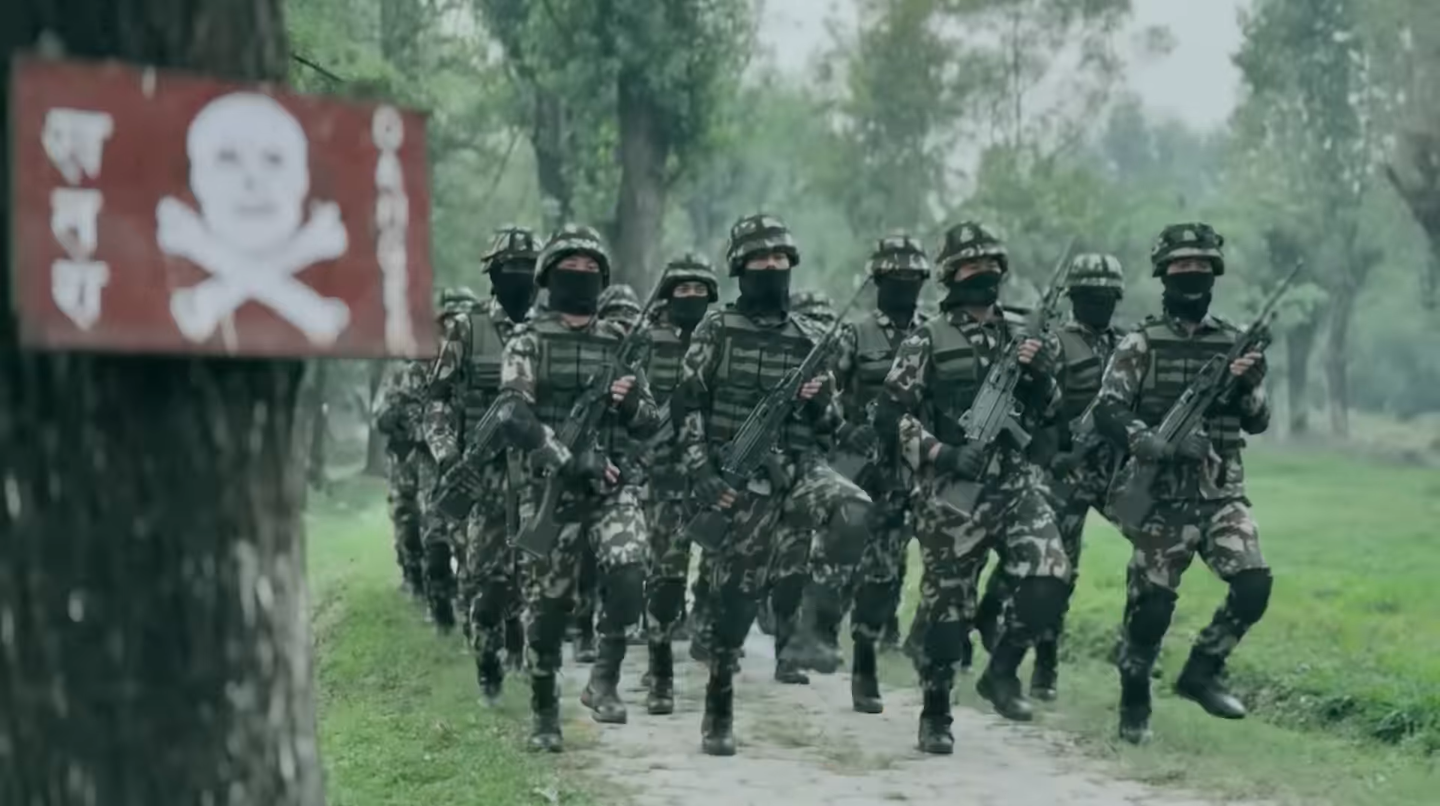
The The Nepali Army’s new rap video, Ranger, begins with force. Soldiers crawl through mud, run through obstacle courses, carry weapons, move in formation, and stare into the camera with the controlled seriousness expected of military men.
Rap carries histories of street voice, ego, humour, anger, and suspicion toward authority. In Nepal, Balen made that energy politically electric long before he made it electoral. Rap usually sounds best when it refuses to stand in line.
So there is something immediately funny, and revealing, about the Nepali Army releasing a rap video called Ranger and making the rebellious flow of rap report for disciplined duty.
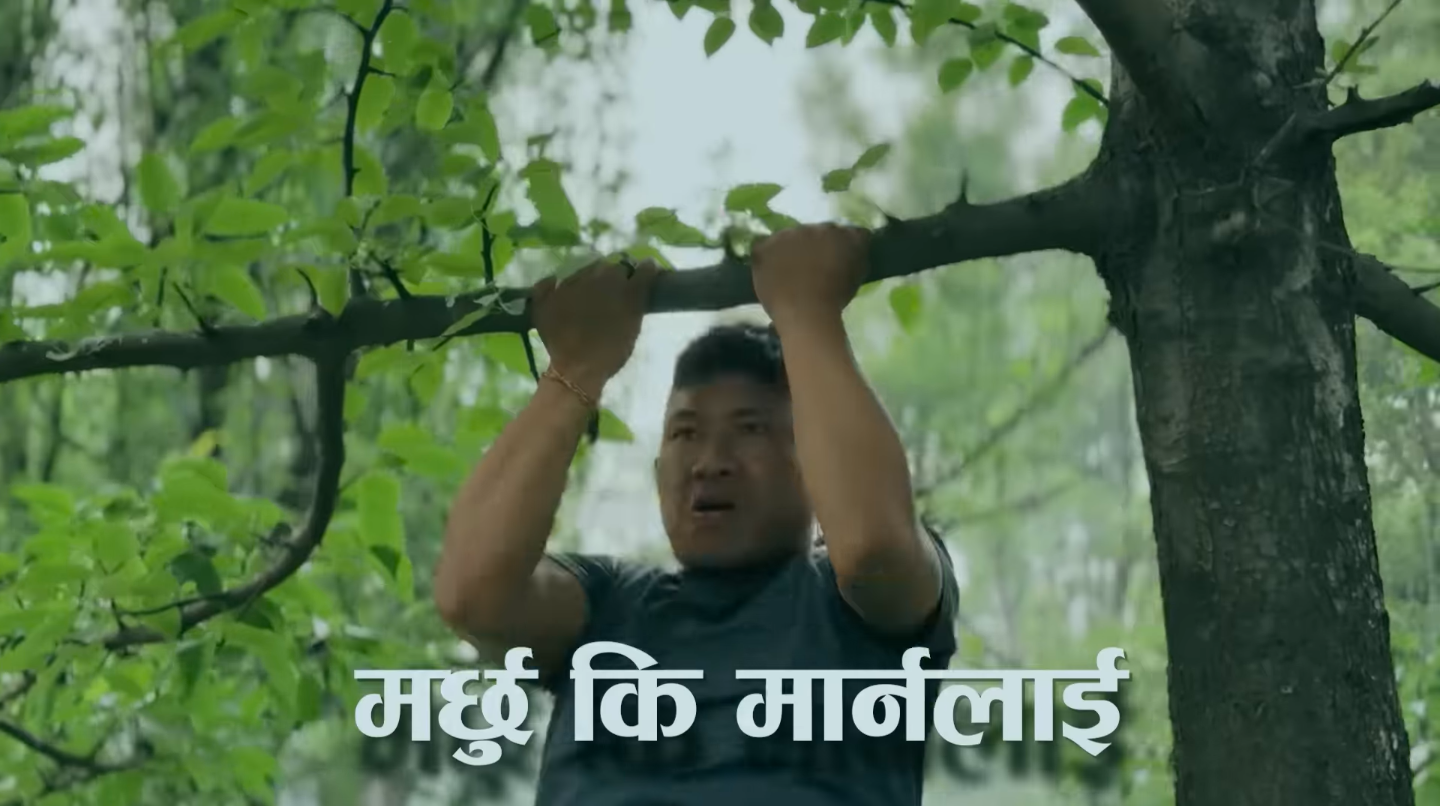
The first thing to notice about Ranger is that its feeling arrives before its message. With the first line: “उमेर नि १८ भो, रेडी छु म लड्नलाई, सेनामा जाने हो कि, मर्छु कि मार्नलाई।” The video wants the Army to feel young, physical, disciplined, dangerous, and most of all current. Aura intact.
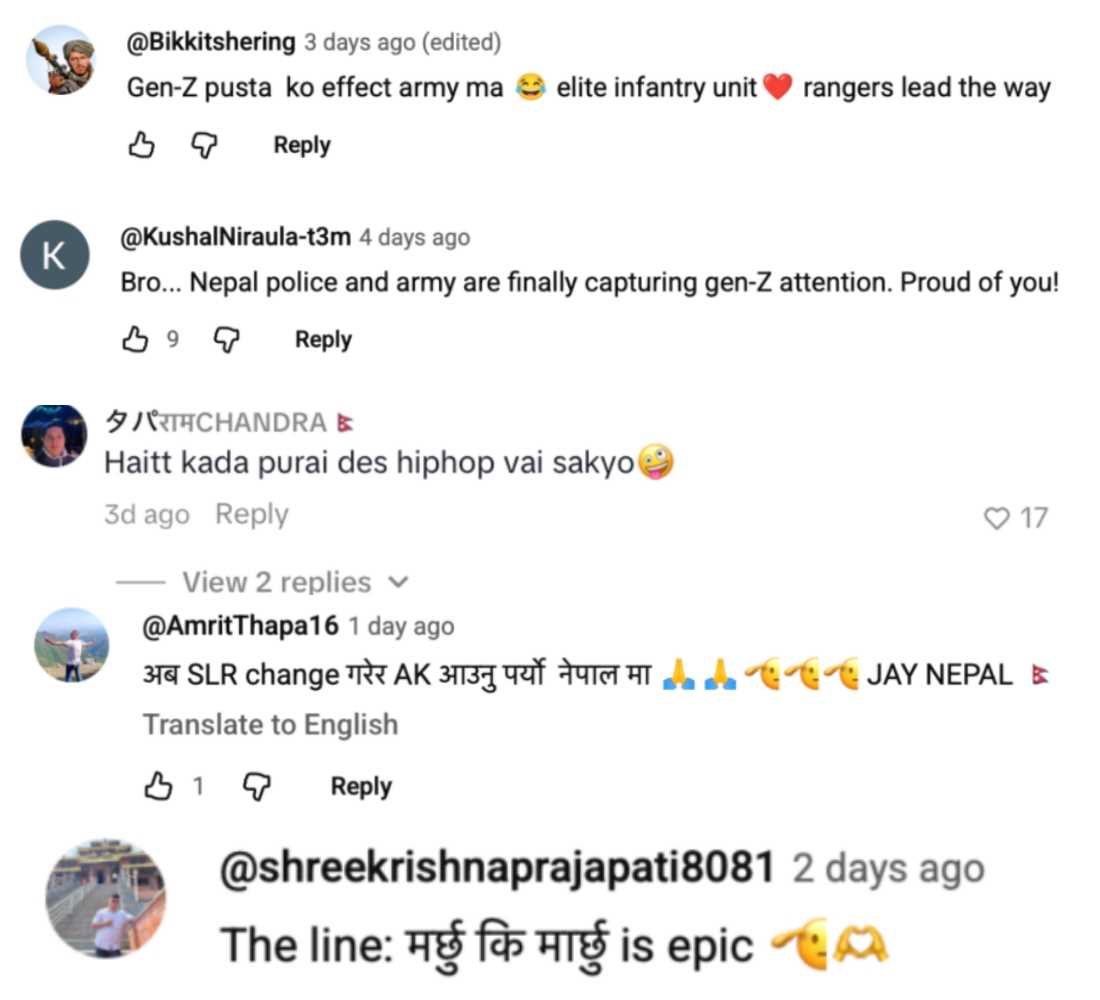
One TikTok commenter caught the mood neatly: ‘Haitt kada, purai des hiphop vai sakyo.’ The joke works because the format still feels slightly absurd. Aura is what older theorists would call social capital: the accumulated recognition that makes people, symbols and institutions feel legitimate before they explain themselves.
In older Nepal, institutions built this through uniforms, office buildings, ceremonies, family names, medals, newspapers, and proximity to the state.
For young people who grew up online, aura is built differently. It comes from being current, unbothered, visually fluent, and slightly above explanation. An ‘IDGAF attitude feels like authenticity because it suggests that a person or institution does not need to beg for approval. This also helps explain the appeal of Balen walking out of Parliament and posting a photo with the caption ‘Say cheese’.
Nepali Army’s decision to make a rap video belongs to the same world of perception. It is trying to build aura with current vibes: rap flow, hard edits, combat imagery, physical confidence, and the feeling that discipline can still look cool on a phone screen. And these vibes are what can get young Nepalis to enlist at a time when recruitment into the Army is falling as young men migrate.
This comment shows the communications strategy in plain language: ‘Nepal police and army are finally capturing Gen-Z attention.' The video gets the institution discussed in the grammar of the feed.
Seen from a young person’s phone, Ranger arrives inside a crowded feed of possible lives. An 18-year-old watching this video is probably not comparing military communications strategy. He is lying on a bed after dinner. The phone is open. The thumb is moving. Within a few minutes, the feed has already shown him several versions of adulthood.
A cousin in Australia posing in a puffer jacket. A friend in Dubai filming the skyline after work. A student in Japan showing a clean room, a rice cooker, and a part-time job. A Gulf worker on a construction site, sweaty and tired, but still earning more than he could at home. Each one carries the same message: if you leave the country, you become someone.
Then Ranger appears. The video gives a different answer to the same private status anxiety. The body can be trained and the cool uniform can make you visible. Army brotherhood can replace the loneliness of migration and discipline can give shape to a life that otherwise feels suspended between family pressure, exam results, visa forms and weak local job prospects.
GAMING GRAMMAR
This is why the rap video has to look cool. A normal recruitment notice cannot compete with the abroad feed. A notice for recruitment announcement has no chance against a cousin in Sydney or a friend in Qatar posting pictures of skyscrapers and the car they are driving. Ranger understands that the Army has to compete at the level of desire, not information.
For a young Nepali person surrounded by exit routes, this vibe definitely has resonant emotional pull. All the video needs to establish the initial feeling: this life has aura too.
For a long time, the Nepali Army’s public image has been built through parades, disaster rescue, peacekeeping, state ceremonies and recruitment notices. These carry authority, but they do not travel easily through youth culture. They rarely become jokes, edits, reactions or group-chat material.
The video understands the first rule of short-form attention: show the body before explaining the idea. That is how a ‘vibe’ or an ‘aura’ is constructed. This matters because the recruit is not being sold comfort. He is being sold a harder kind of dignity — that difficulty can be meaningful. It does help that our rapper prime minister is also defence minister in charge of the army, and as home minister of the police.
The video does that through repetition. The song also leans into simple, sticky repetition. ‘Ranger’ and ‘danger’ are paired again and again, making the identity of the unit sound like a threat and a rhyme at the same time.
Then comes the gaming grammar. Around the 1:32 mark, the video shifts into a POV-style shot. The viewer is no longer watching soldiers from a distance. For a second, the camera feels playable. Anyone raised on PUBG, Free Fire, combat edits, kill-cam clips, and squad gameplay will recognise the visual language immediately.
Here, the young potential recruit enters the game, or reality. Or is there even a difference anymore? That shot is small, but it does a lot of work. It makes the Army feel closer to a game world young people already understand. Weapons, terrain, movement, command, survival, team identity. These are already familiar pleasures on a phone screen.
The comments easily slip into gaming weapon talk. One viewer wrote, 'अब SLR change गरेर AK आउनु पर्यो नेपालमा. Jay Nepal’. It reads like an insider joke, but it shows how naturally the video’s combat aesthetic meets gaming and gun culture online.
The Army does not try to sound soft or friendly. Yet it still makes obedience look spectacular. The editing helps. The cuts are quick enough to feel current, but the images still return to order: bodies lined up, bodies moving together, bodies under command. Even the chaos is organised.
Mud, weapons, shouting, and movement all point back to one promise — if your life feels scattered, this institution can give it a shape. For the young viewer, that may be the real hook. Ranger works because it does not sound like a government notice.
The rap video changes the route. It gives the Army a cultural surface that can be shared without feeling like official propaganda. Someone can laugh at it, admire it, mock it, repost it, or say, ‘Nepali Army le ni garda rahechha esto’. All of those reactions still keep the Army inside the feed.
One line seems to have landed with viewers: ‘उमेर नि १८ भो, रेडी छु म लड्नलाई, सेनामा जाने हो कि, मर्छु कि मार्नलाई।’ A YouTube commenter singled out ‘मर्छु कि मार्छु’ as ‘epic’. The line turns death and killing into a memorable hook.
Military power feels different when it becomes cool content, especially paired with the already existing shooter game universe that young men are already familiar with. A muddy training montage can turn obedience into self-improvement. The viewer is invited to admire the body, the unit, the weapon, the stare, the ability to endure pain without complaint.
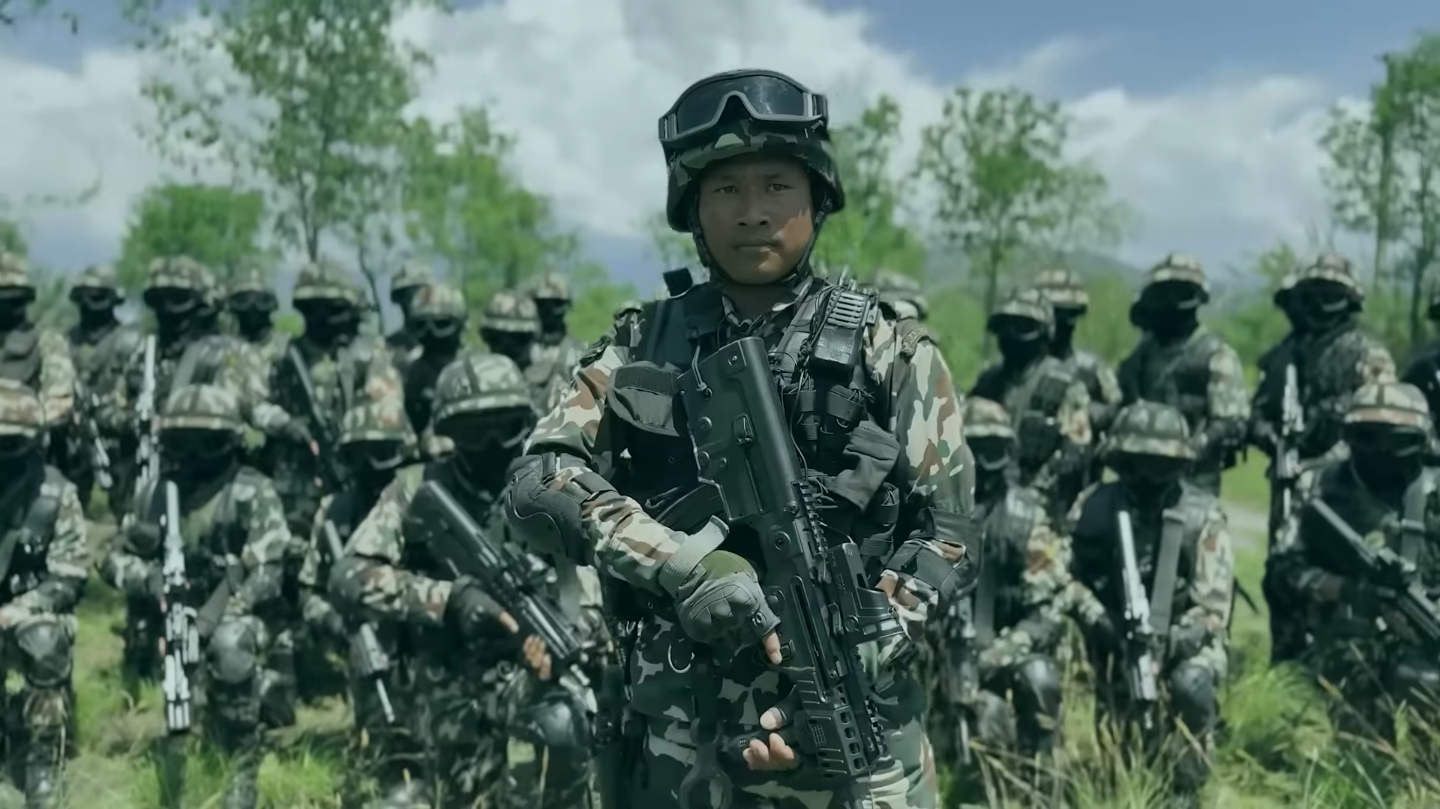
That is exactly what a recruitment video is supposed to do. Still, the cultural form matters. Rap gives the Army borrowed youth legitimacy. Gaming language gives it familiar combat pleasure. Patriotism gives it emotional cover. The result is highly watchable, and that is why it needs to be read carefully.
Coolness can soften scrutiny. Once an institution has aura, people judge it first by feeling: was it cringe, was it fire, did it look current? Accountability enters later, if it enters at all. This is why Balen’s auramaxxing works so well. A walkout from Parliament becomes a flex before it becomes a question about conduct.
Ranger is more than a funny institutional rap experiment. It shows that the Nepali Army understands a basic rule of the current internet: before young people believe an institution, they have to feel that it has a place in their world. The Army is trying to earn that place through rap, spectacle and physical intensity.
For an 18-year-old the message is simple: your contributions can help the country, your body can matter. Your confusion can be turned into discipline. Your invisibility can be replaced by uniform. That is a powerful promise. It is also a promise made by an institution built on hierarchy and command.