Mt Everest Base Camp (EBC) will have a record number of international expeditions this year, turning it into a global village. But with this comes the problem of waste disposal on the glacier.
Some 500 climbers are attempting to scale Everest, Lhotse and Nuptse this season, and there will be four times as many support staff and high altitude guides living, eating, resting and going to the toilet in a tent-city stretching 1km along the Khumbu Glacier.
Before the climbers reach base camp, supplies — food, climbing gear, oxygen cylinders, ropes and more will already have been transported from Kathmandu by helicopter. Porters, chauri and jopke carry additional supplies.
But when they return from the mountain, whatever they used during the climb will likely be left behind, adding to the 140 tonnes of garbage that is estimated to have accumulated on Mt Everest in the seven decades since it was first climbed in 1953.
The Tourism Industry Service Delivery Directives 2013 stipulates that tourism operators and climbers return with the equipment they used during their expedition, including oxygen cylinders, regulators, tents, plastic, as well as faeces.
Read also: Chopper vs Chauri below Everest, Bhadra Sharma
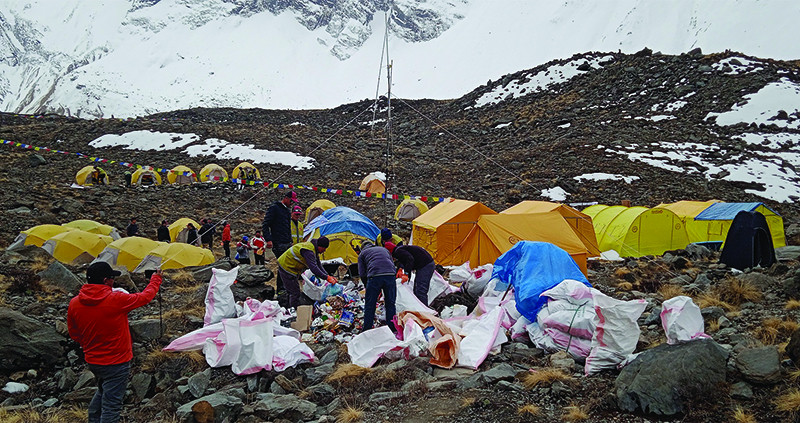
Each climber is also required to bring down 8kg of waste at the end of expeditions. If climbers fail to follow the rules, expeditions stand to lose a $4,000 deposit made before the expedition.
However, the legal systems in place have been ineffective due to negligible monitoring at base camp. Most expedition liaison officers have no knowledge or understanding of mountaineering and many do not even stay at base camp.
The liaison officers are paid by expeditions themselves and could not be bothered about checking if the expeditions evacuated their waste.
Which is why the Nepal Army had to step in with its 'Safa Himal Abhiyan' to clean up Everest four years ago, deploying 10% of its soldiers assigned to guard the Sagarmatha National Park to clean up the mountain.
The army gets funding from the government, non-governmental organisations as well as the private sector, and has been mobilising Sherpas and high altitude guides in mountain cleaning efforts.
Read also: Mt Everest City, Monika Deupala
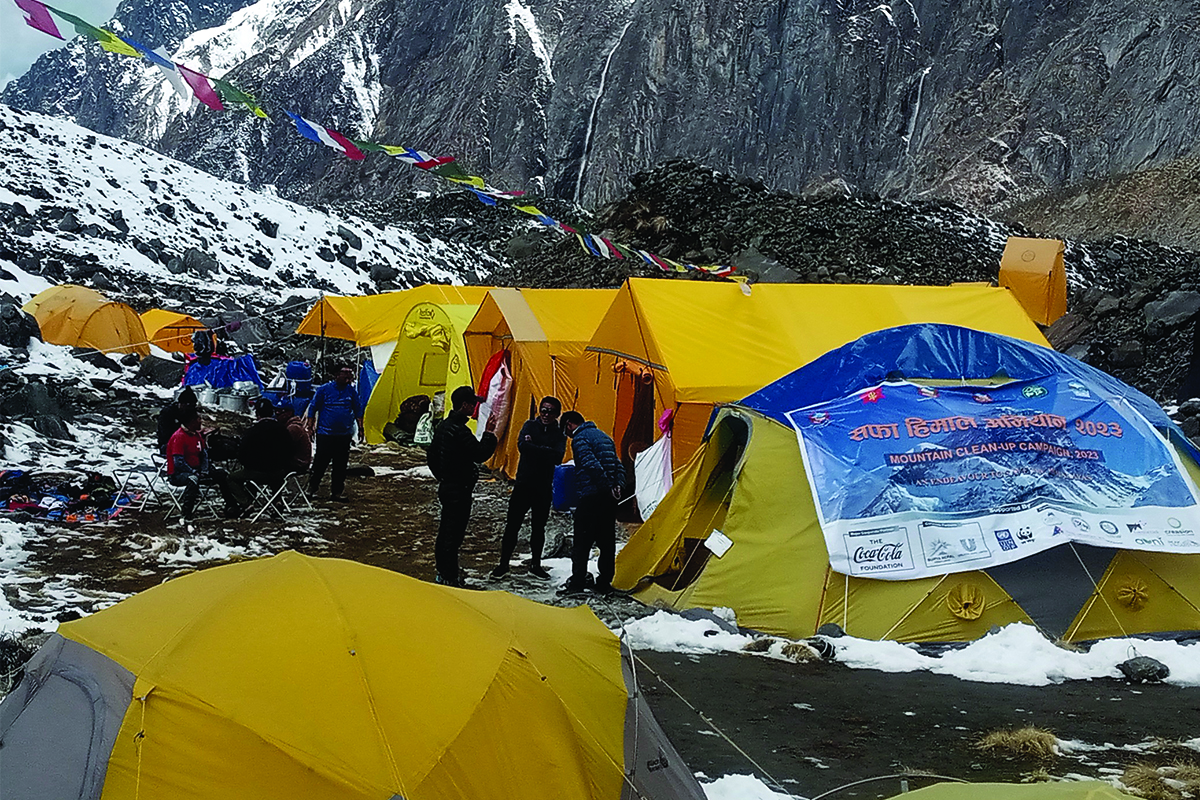
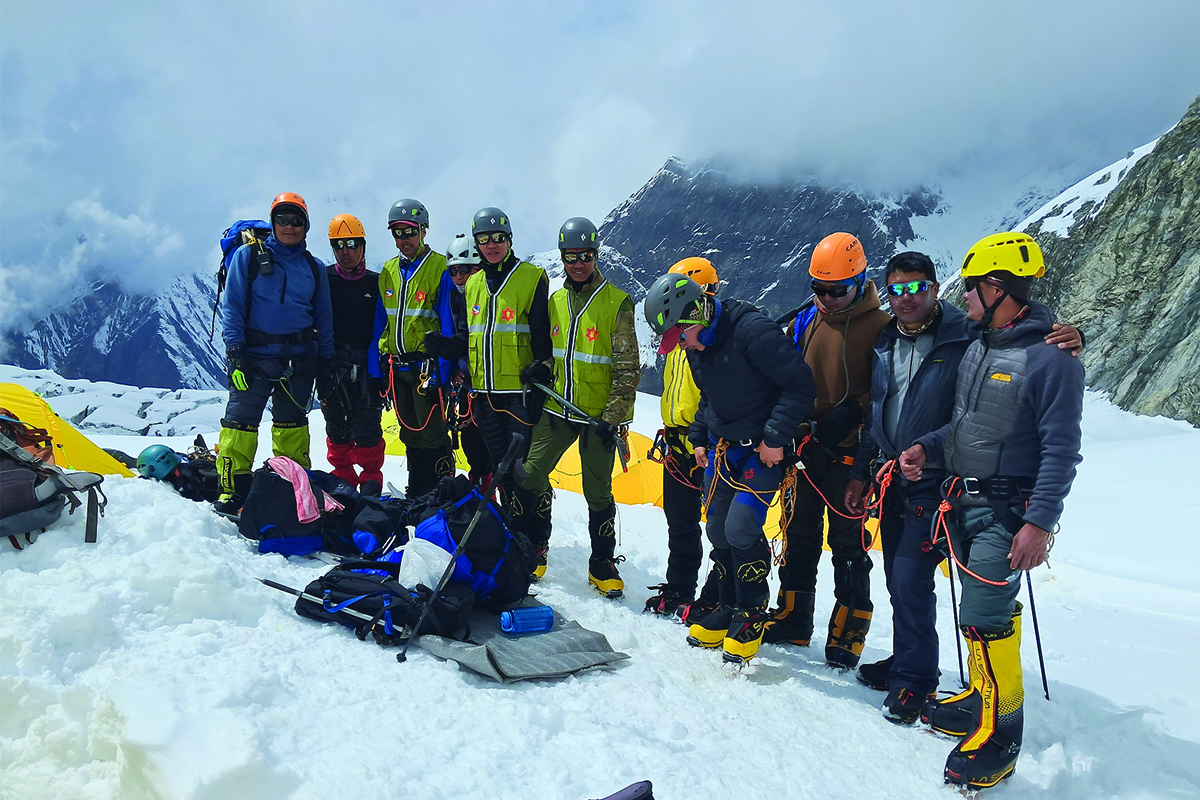
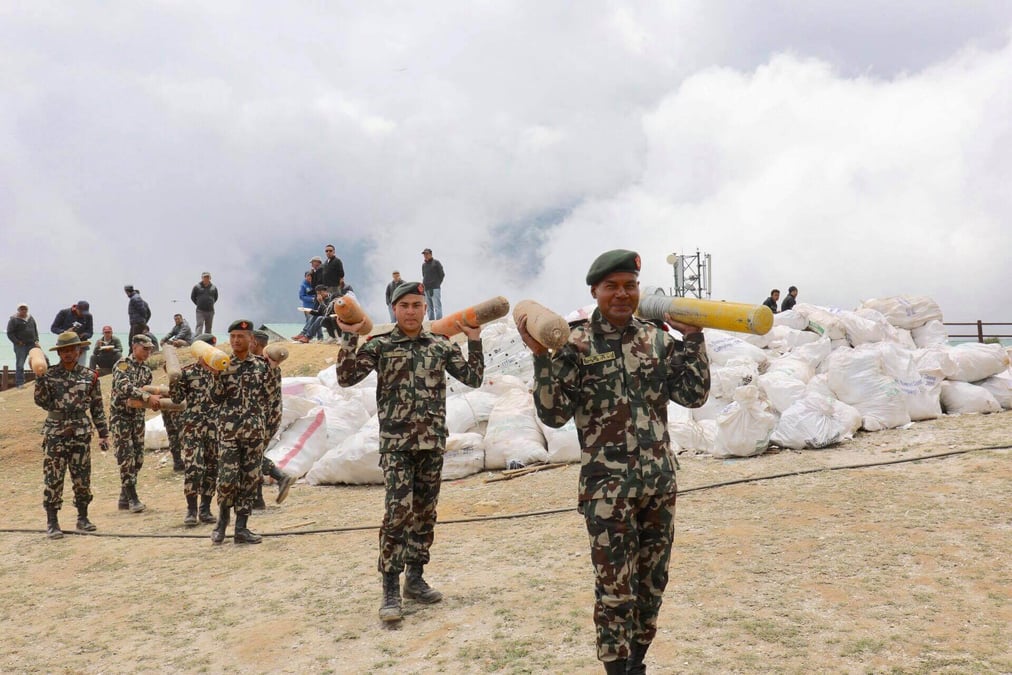
Soldiers go through a month-long garbage collection training in the high Himalaya. Once the trash is collected, responsibility for the biodegradable waste is assigned to local communities, while non-biodegradable rubbish is flown to Kathmandu by helicopter.
The military has collected 76 tonnes of garbage from Mt Everest, Lhotse, Pumori, Ama Dablam, Makalu, Dhaulagiri, Manaslu and Kanchenjunga. This year, the target is to bring down another 35 tonnes.
The Army is also conducting awareness to reduce the impact of climate change on Mt Everest and surrounding peaks that are part of the World Heritage Site. But there are questions as to whether the military’s involvement is enough to clean up the Himalaya.