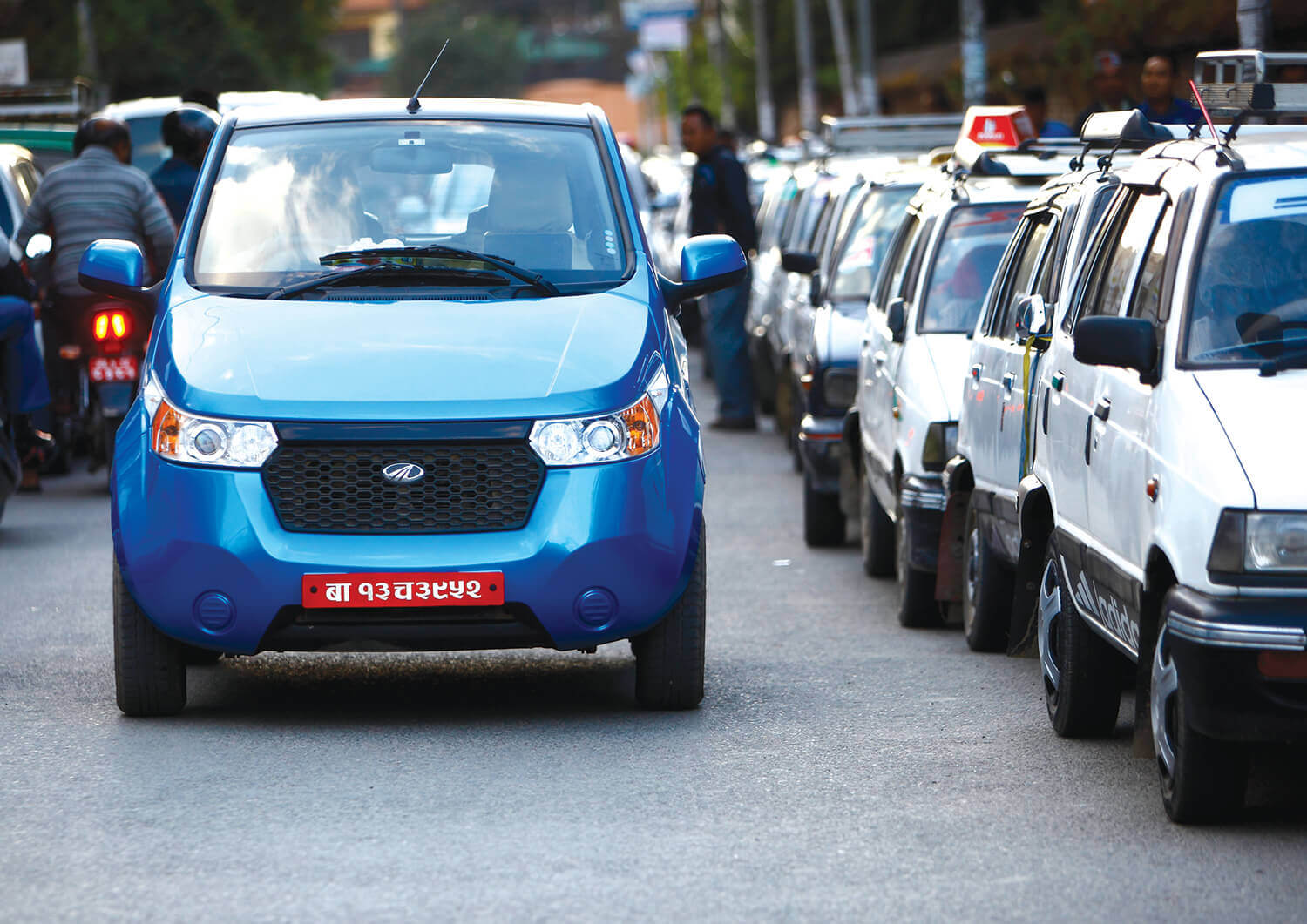
There has been a spurt in imports of electric vehicles in the past six months since the government restored tax rebates, but there has not been a similar increase in the much more important battery-operated public transport sector
Nepal imported 1,113 electric cars, jeeps and vans between last July and December, 2021 – nearly five times more than the same period last fiscal year when 249 such 4-wheelers were imported.
“Imports of electric vehicles increased as a direct result of the government’s revenue policy to discourage fossil fuel cars,” says Nawaraj Poudel of the Nepal Energy Vehicle Association (NEVA). However, there is a 50% cash margin threshold for diesel and petrol cars, but there is no such limit for electric vehicles, which has kept the prices of battery cars high.
Still, since the excise and customs duties on electric vehicles were reduced, they were competitive compared to petroleum-based vehicles which have much higher taxes.
From last July to December 2021, Rs3.24 billion worth of electric four-wheelers were imported, up from only Rs105.1 million during the same period last fiscal year.
However, besides the high dealer margins on electric cars making them expensive, there is also a shortage of battery vehicles because of global supply chain disruptions. This means many customers are on six month waiting lists to buy their electric vehicles.
“It is not possible to buy electric vehicles off the shelf right now,” says Dhruva Bahadur Thapa of NADA (Nepal Automobile Dealers Association) "The shortage of chips has slowed vehicle production. And this has also affected India and Nepal.”
Read also: Nepal's electric future is here, Sonia Awale
Although consumers of private vehicles have been able to reap the benefits of the government's changes in tax policy, the same has not been true for public transport.
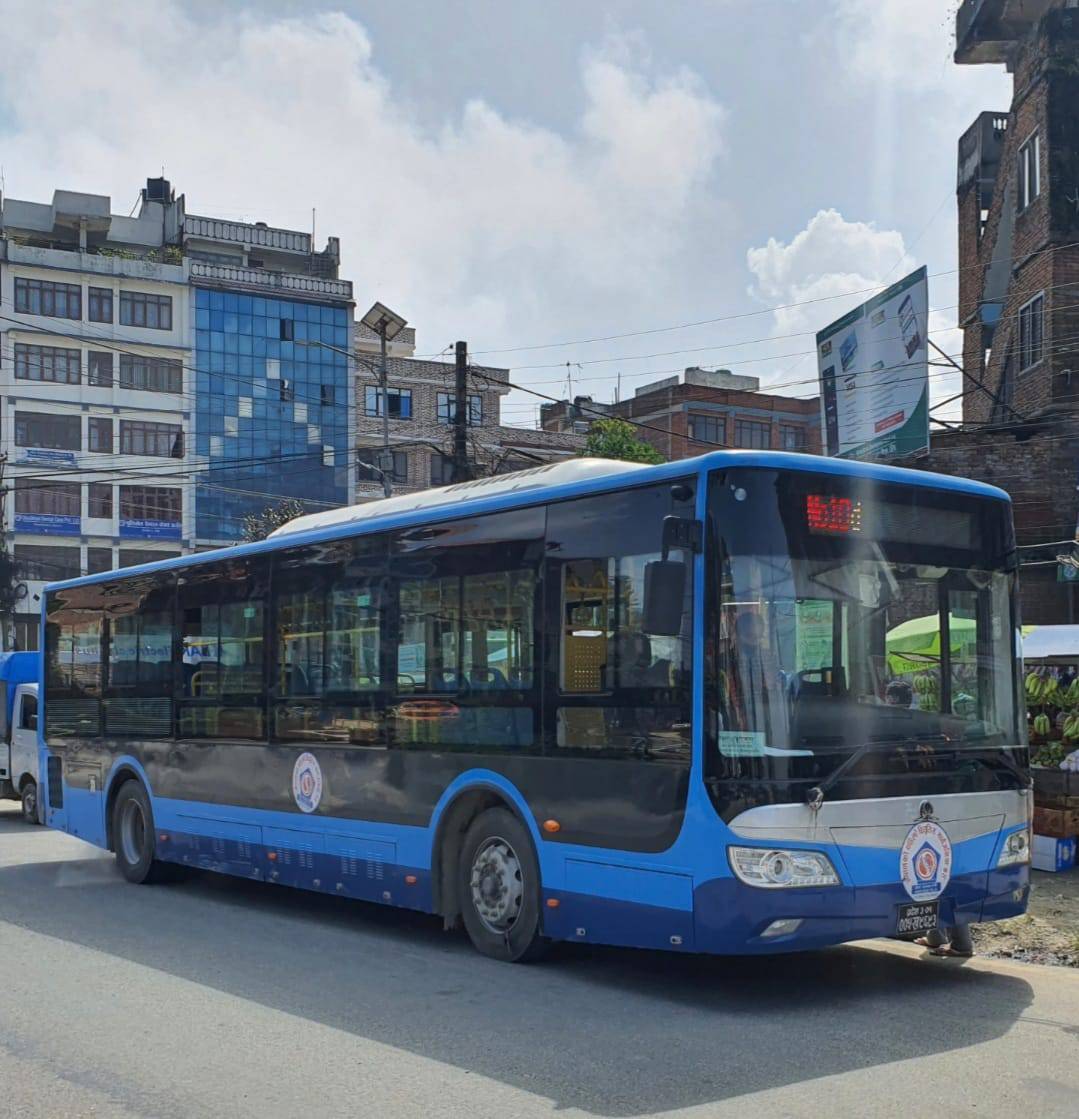
Sundar Yatayat ordered 20 Chinese electric buses, but they have been stuck at the Birganj customs checkpoint for the last three weeks because of a dispute over how much they should be taxed.
“The government has fixed only 1% customs on public electric vehicles, but they said we have to pay 13% VAT and 5% tax, so we are negotiating,” says Bhesh Bahadur Thapa of Sundar Yatayat. “Apart from the taxes, the number plate charge and other fees drive up the cost of electric buses which are already more expensive than diesel buses.”
A diesel bus of the same size costs up to Rs4.5 million but the tax for an electric bus alone is as much, putting the price tag of Sundar’s Chinese buses at nearly Rs20 million each.
“If the government scraps the road tax for electric buses, the cost will come down by Rs1.3 million,” says Thapa. “We will sell the buses to India if the government does not review its policy.”
Read also: An electric shock to Nepal's energy future, Ramesh Kumar
Nepal levies high taxes on petroleum vehicles but has been providing special rebates for the import of electric vehicles. Before fiscal year 2020/2021, electric vehicles had an excise duty of 10% and customs duty was completely waived.
But the then Finance Minister Yubaraj Khatiwada, increased the excise duty 80% from zero according to the capacity of the vehicles in the budget of 2020/2021.
He also increased the customs duty from 10% to 40%. This brought the import of electric vehicles to almost zero. Khatiwada had argued that such a tax policy was introduced to increase revenue and curb the drain on foreign exchange in importing luxury electric SUVs.
His tax policy was widely criticised as being contrary to the policy of the government, which was to shift towards renewable. However, Khatiwada stuck to his guns.
It was Khatiwada’s successor Bishnu Poudel who once more slashed the excise duty on electric vehicles and reduced the customs duty by one-fourth. However, electric vehicles would still have to pay customs duty, depending on their battery capacity.
Electric vehicles up to 100kW have to pay 10% customs duty, 15% customs duty has been levied on electric vehicles of 100 to 200 kilowatts and 40% on electric vehicles of 200 to 300 kilowatts.
The main reason electric buses have not been able to compete with their petroleum counterparts is that there is hardly any difference in the taxes they pay. Although the excise duty, customs and other charges on petroleum private vehicles is more than 240%, private electric vehicles pay ten times less. This has encouraged consumers to buy private electric vehicles.