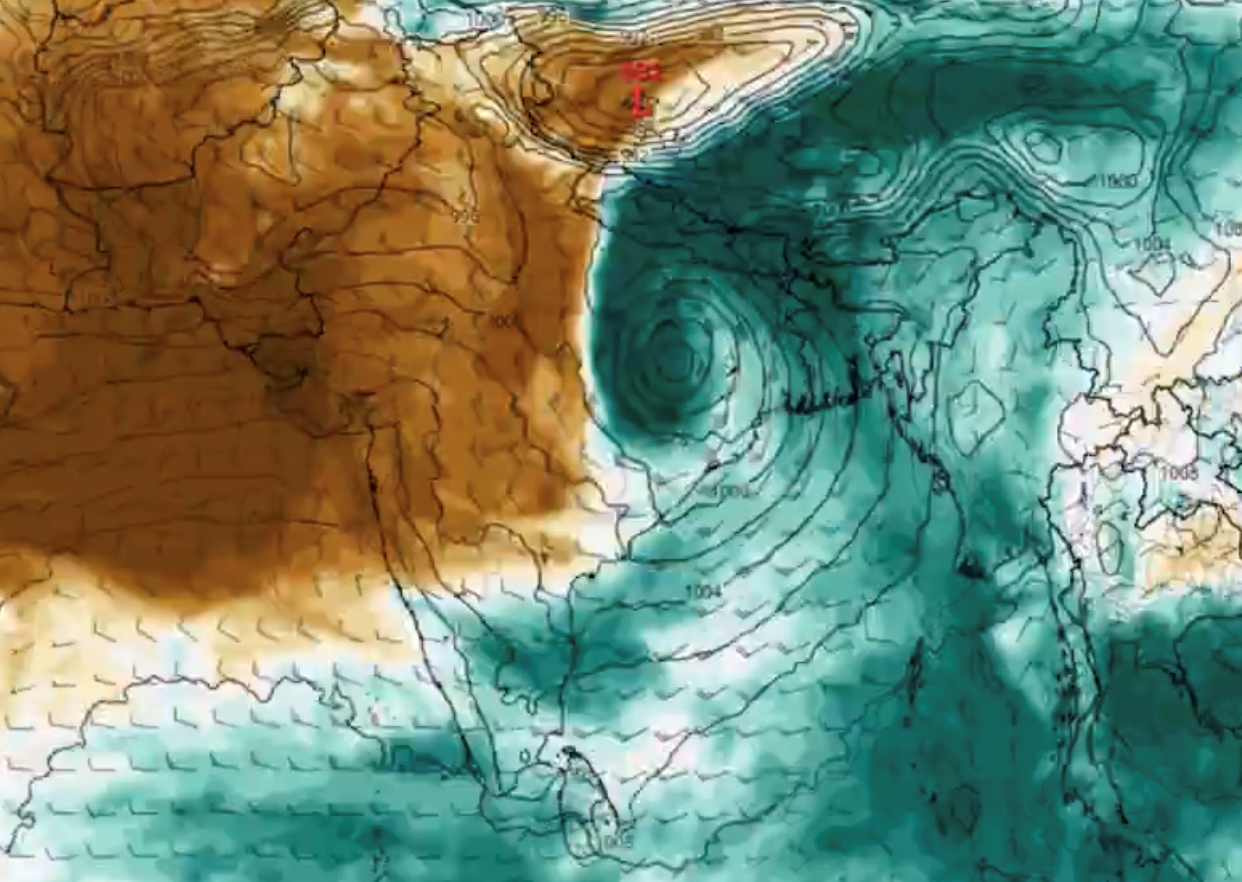
A depression over the Bay of Bengal set to hit the Odisha coast may intensify into a cyclone, veer north and threaten heavy rain in the Bhote Kosi-Trisuli valley that was ravaged by an ice-rock avalanche flood last month.
Even though the weather system is still a depression, it has already been given the name Arnab in case it develops into a cyclone. Most weather models predict heavy late-monsoon showers over northern India and Nepal.
“The westerlies are very strong this year, and this may block the system coming from the Bay of Bengal north towards Nepal, causing heavy rainfall,” says Archana Shrestha of the Department of Hydrology and Meteorology, which is working on a more detailed forecast with special focus on Rasuwa and Nuwakot as well as for mountaineering expeditions.
“Even moderate rain could destabilise already fragile slopes and also push new sediment from last month’s flood,” she adds. “We are analysing the data and may have to alert rescue operations to be stopped when we expect periods of heaviest rain.”
In addition, there are about 1,000 mountaineers from dozens of expeditions on Mt Manaslu (8,163m) in central Nepal this autumn season. Of them, 461 are foreigners, and there have already been four fatalities.
Two of those deaths on Sunday of a German national and his Nepali high altitude guide occurred during an avalanche near Camp III, and most climbers have decided not to exploit the present weather window to push for the summit. They have gone back down to Base Camp to wait out the weather and also avoid objective danger from avalanches.
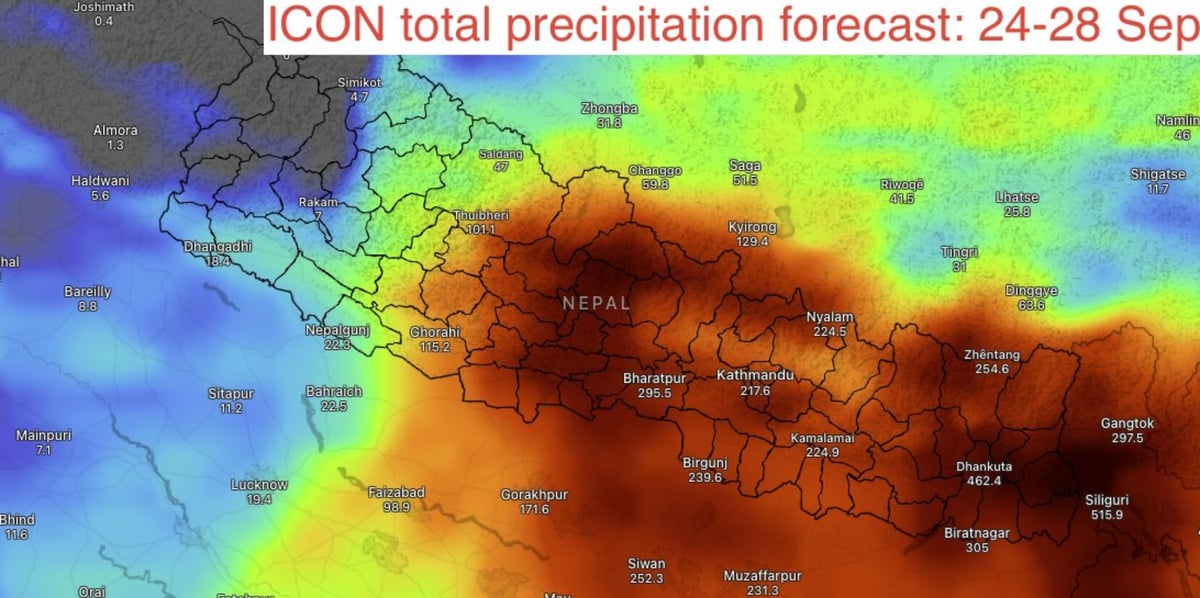
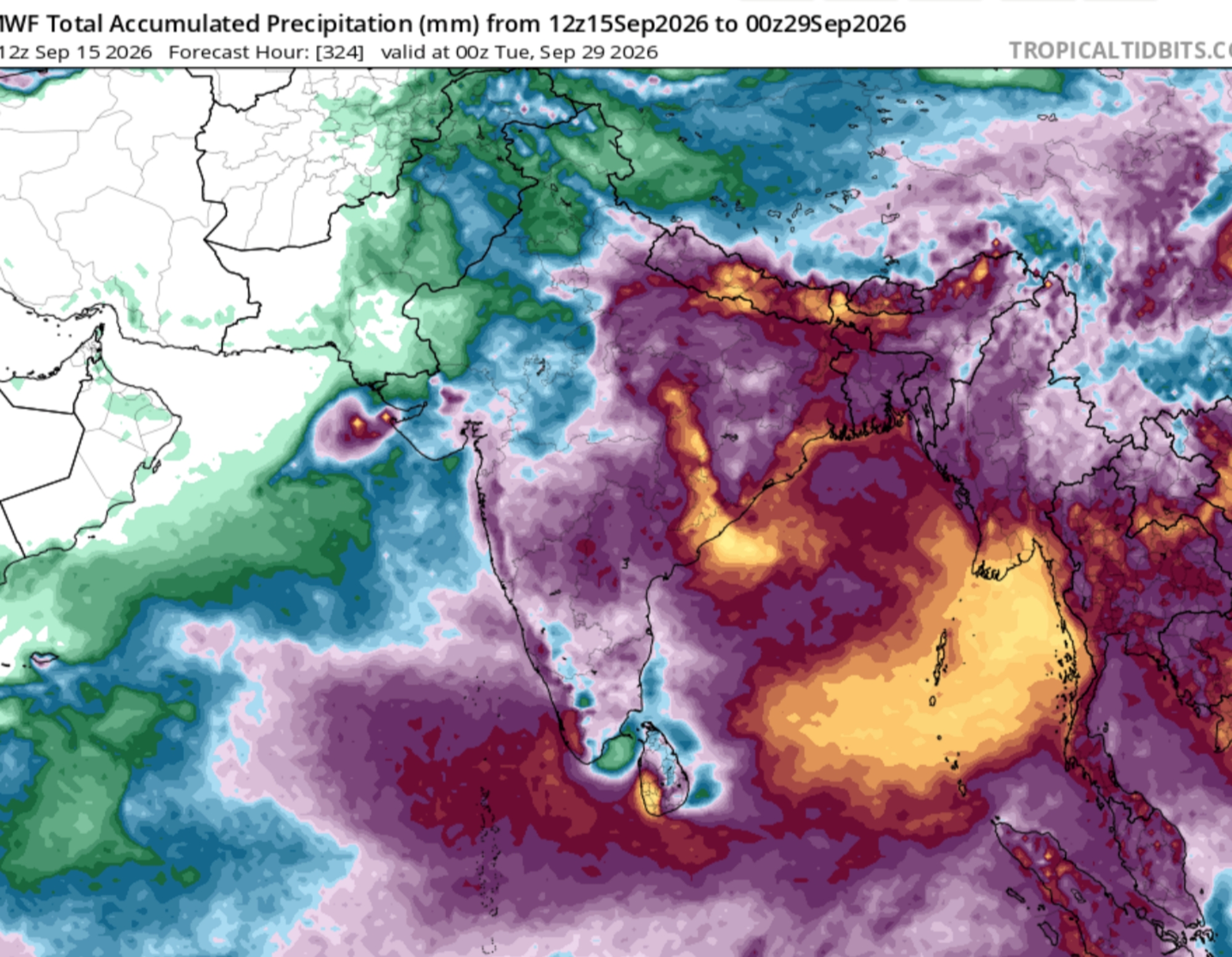
Various weather models forecast between 400mm-600mm of rainfall in four days from 23-27 September over various parts of Nepal. For comparison, the annual rainfall in western Nepal, which is expected to get a brunt of the precipitation, is about 500mm.
The system is so big that it will cover the whole of Nepal and will also affect the Bhote Kosi-Trisuli basin where there is a vast amount of sediment brought down by the flood on 26 August as well as a previous one in July last year.
Binod Pokharel of the Central Department of Hydrology and Meteorology at Tribhuvan University has been tracking the Bay of Bengal depression, and says it is still difficult to predict which way the main force of the system will go and how much rainfall it will bring.
“The weather models differ in intensity and location of the heaviest rain, but one thing is sure, it will cover the whole of Nepal starting Thursday with thunder storms and heavy rainfall in some parts,” says Pokharel.
The mountain and glacier collapse on the north face of Mt Langtang Lirung 26 August brought down an estimated 500 million tons of ice and rock down the Bhote Kosi-Trisuli system, destroying everything in its path to 100km downstream. So far, only 1,451 bodies have been retrieved, with more than 6,100 missing.
The flood also deposited an enormous amount of sand, clay, gravel, and boulders along the valley. Flood and cloudbursts could sweep away the loose material downriver once more.
Last year, a similar cyclone in late September from the Bay of Bengal fizzled out by the time it reached Nepal, and most are hoping the same will happen this year.
But Archana Shrestha cautions: “We have seen in the past that cyclones we thought would be destructive in Nepal have not been as bad, while depressions and weak weather systems have spread out and brought widespread destruction along Nepal’s rivers.”
The approaching weather system reminds meteorologists of the depression that brought 600mm of rain over a 24 hour period in an area directly south of Kathmandu Valley. The resulting flood on 28 September 2024 killed 100 people and destroyed ready-to-harvest crops and riverside settlements.
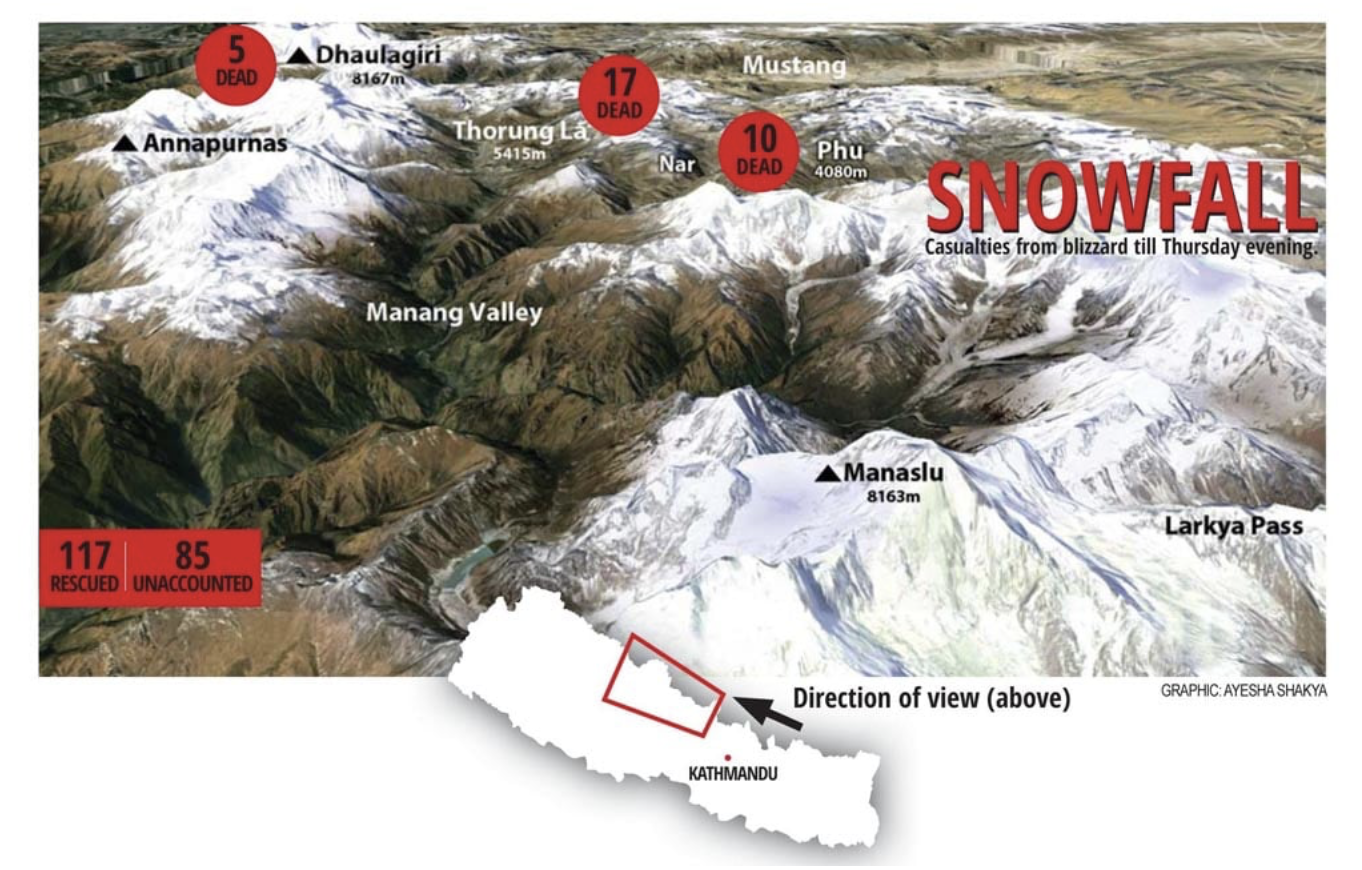
Another system in 2014 caused massive blizzards in the Annapurna region, avalanches killed 39 people, some of them trekkers who were stranded on the trails (map, below). Lack of early warning was blamed for the high death toll.
Post-monsoon weather systems and typhoons from the Bay of Bengal have been particularly disastrous for Nepal because it coincides with the autumn climbing and trekking season. In October 2005, 18 Nepali and French climbers were killed in an avalanche on Kang Guru in Manang.
Earlier in November 1995, 13 Japanese trekkers and 11 Nepali guides were killed as they slept in their tented camp when an unseasonal blizzard on the Gokyo trail buried them.
The Super El Niño effect has disrupted weather systems around the world, and an intensified westerly system means that if Arnab indeed becomes a cyclone, it will be the first this season. The Atlantic hurricane season has not had a single storm system yet.
The ice-rock avalanche is said to have been triggered by climate breakdown that destablised the rockface on Langtang, according to scientists with the World Weather Attribution consortium. Scientists also blame extreme post-monsoon storms like the one forecast on climate warming.
UPDATE
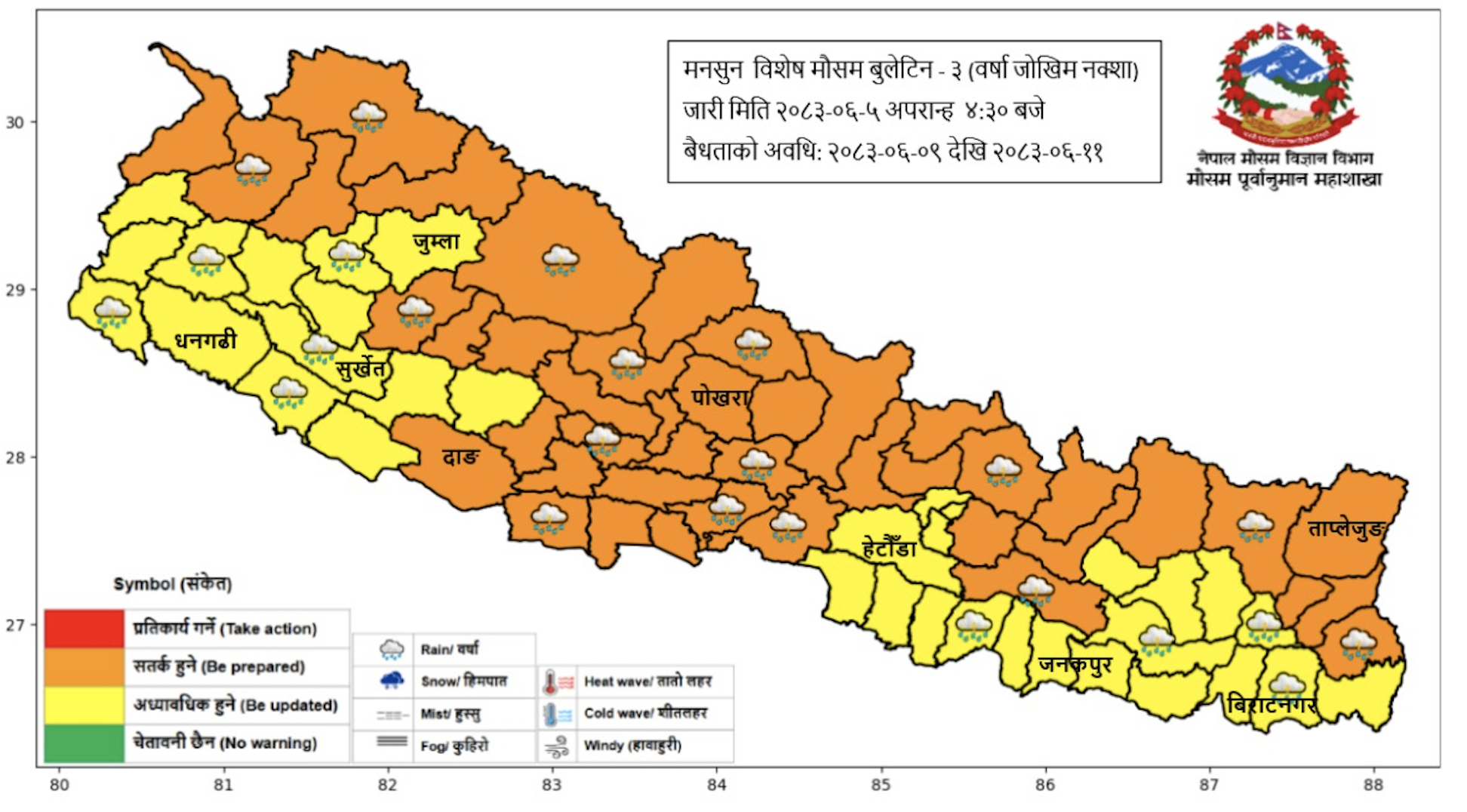
According to the Department of Hydrology and Meteorology, few places of Gandaki and Lumbini provinces are likely to experience heavy to very heavy rainfall accompanied by thunder, lightning, and gusty winds from Friday 25 September to Sunday 27 September with extreme heavy rainfall possible in one or two places. Additionally, heavy to very heavy rainfall accompanied by thunder, lightning, and gusty winds is expected in a few places of Madhes, Kohi, Bagmati, and Sudurpashchim Provinces. Light to moderate rainfall with thunder and lightning is likely in most parts of the country.
A low pressure area that has developed in the Northern Andaman Sea and adjacent regions has strengthened into a deep depression over the central region of the Bay of Bengal, moving west-northwestward. Under its impact, light to moderate rainfall is expected in some places of Kosi, Bagmati, and Gandaki Provinces starting from Wednesday.
As such, there are heightened risks of soil erosion, flooding, landslides, and debris flow. Urban areas and Tarai may face inundation. Water levels in both large and small rivers and streams may rise.