
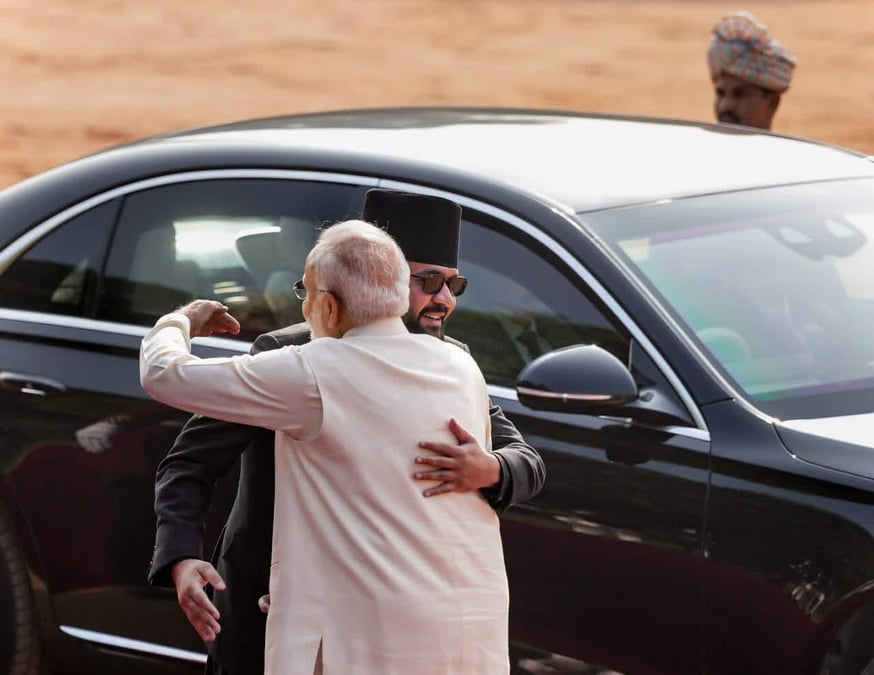
Nepal PM’s India visit heavy on symbolism

Indian leadership got a chance to size up Balendra Shah in his 24 hour 25 minute visit

Sonia AwaleNews

Photos: BALEN / FACEBOOK

Nine months after his party was elected with a hefty majority, Nepal’s Prime Minister Balendra Shah paid a 24-hour visit to New Delhi where he had a private one-on-one with Indian PM Narendra Modi.

Despite their 40 year age difference, the two leaders seem to have hit it off, and Modi offered fulsome praise to Nepal’s transition since the September Storm last year.

In a joint press meet, Modi said that in their conversation he came away convinced that Balendra Shah is a man of “clear vision and commitment to his country”. India was going to be a willing partner to take bilateral relations to “new heights … for Nepal’s stability and prosperity”.

“We are not just neighbours, we are related, and partners in progress,” he added.

For his part, as soon as he landed back in Kathmandu, PM Shah posted a thank-you message to Modi with photographs of their meeting.

For many months after the enigmatic Balendra Shah assumed office, the international community could not quite figure him out. He had refused to meet US, Indian and Chinese envoys, and said he was not going to travel abroad for a year.

But this meeting between the two prime ministers will help reformat previously-rocky relations between India and Nepal. While mayor of Kathmandu, Shah annoyed India by posting a map of Greater Nepal in his office, and also made some abusive social media posts about India, China and the US. But all that seems now to be water under the bridge.

New Delhi seems to have concluded that it has to deal with Shah, no matter his past erratic behaviour. And Shah has sought to use Nepal’s soft power diplomacy to show Modi that he can be trusted. 

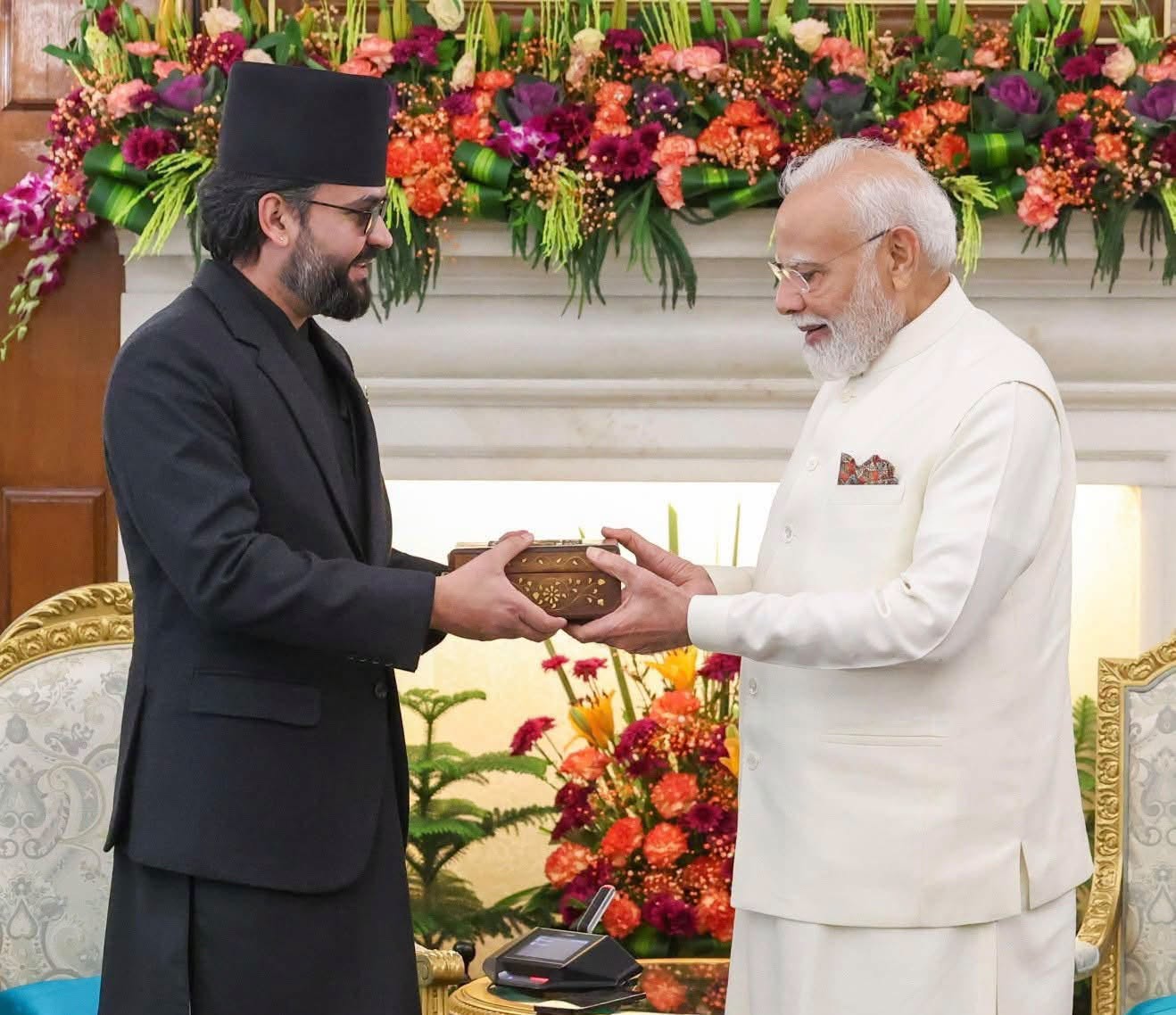
Which is why the visit was not without its religious symbolism: the inauguration of a train service between Ayodhya in India (the birthplace of Lord Ram) and Janakpur in Nepal (the birthplace of his consort, Sita). Shah invoked Pashupatinath in his press meet address, and presented Modi with sacred rudraksha beads and a shaligram (pictured below).
ENERGY

Among the more tangible outcomes was India’s agreement to grant Nepal a $1.6 billion line of credit, survey the Raxual-Kathmandu railway line, launch the 669MW Lower Arun hydroelectric project, and set up border checkpoints for containers and extend petroleum pipelines.

In the joint press statement in Hyderabad House, Shah thanked the Indian government for its timely assistance during natural disasters, spoke of “further strengthening and modernising the centuries-old historical relationship” between the two nations, and addressed the challenges brought on by the climate crisis. 

“Our Himalaya is the source of clean water that sustains millions across this region,” Shah told a room full of Indian and Nepali delegates. “The pristine rivers that flow from the Himalayas to the Ganga remind us of our future and destiny, underscoring the imperative to address the challenges of climate change through collective action.”  
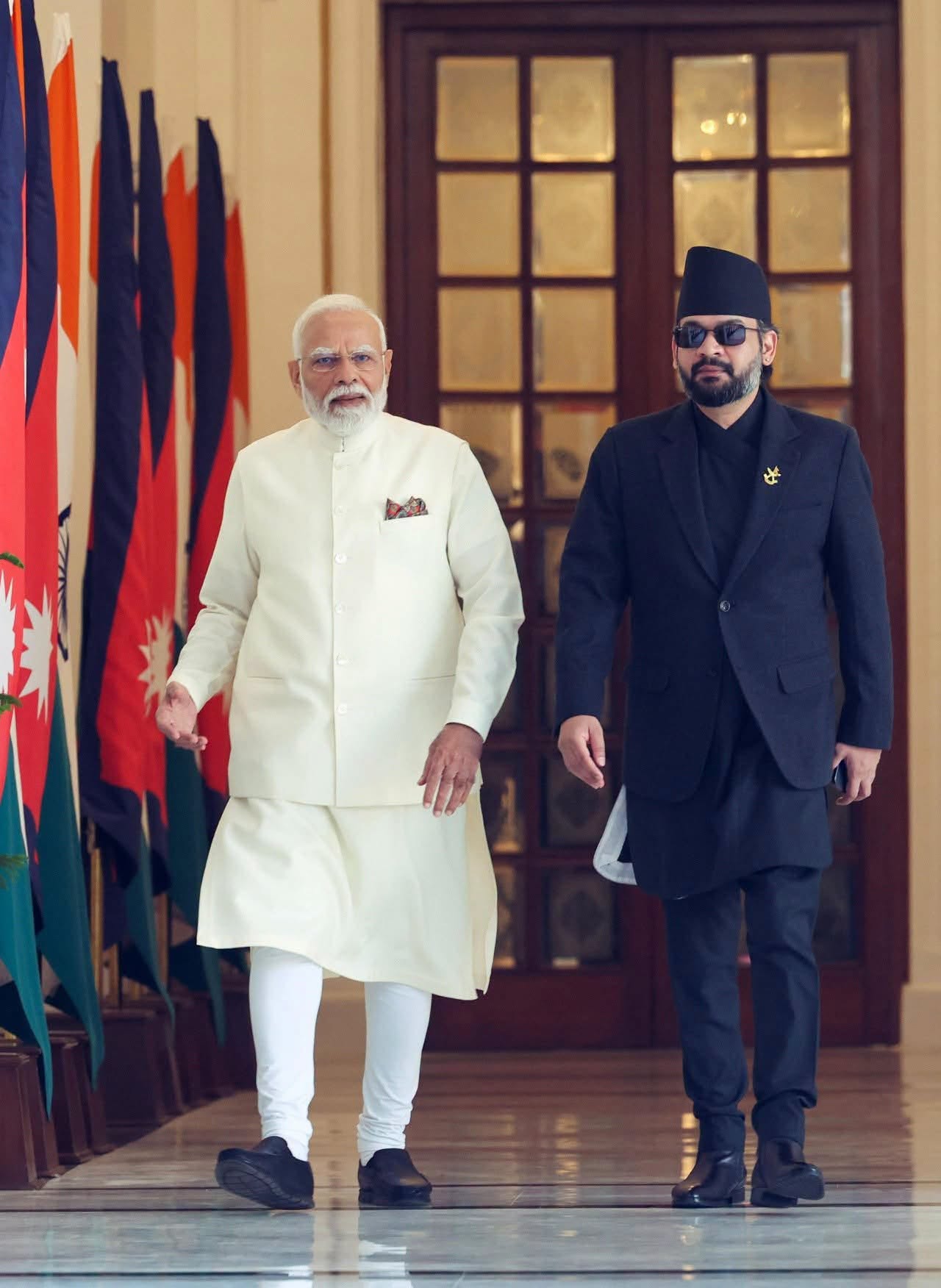
Of the $1.6 billion development cooperation package, $377 million is for post-disaster reconstruction grant while $1.24 billion is concessional line of credit for energy and long-term development projects. Nepal’s first large hydroelectric plant on the Trisuli was built with Indian assistance in 1967, and an Indian state-owned company is building a cascade of hydropower projects in the Arun Basin.
“Nepal’s rivers have high potential for clean energy while India’s big energy market can turn this potential into a strong foundation for Nepal’s economic development,” noted Modi, referring to the Arun III and Lower Arun projects.

AIR ROUTES

Nepal had asked for several new inbound air routes, but only one of them was agreed upon. The B345 outbound route from Kathmandu westwards towards Lucknow will now be two-way. However, it is not clear whether planes flying in can start descending over Indian territory.

Much more important for Nepal would have been two-way access on the L626 Mahendranagar-Kathmandu entry point which could cut as much as 30 minutes off international flights to Kathmandu and Pokhara from the west. Indian carriers would also benefit with shorter flight times from Delhi to the Northeast.

The reason L626 was set aside for now could be that Nepal was reluctant to grant landing and taking off overflights from Bagdogra airport along the narrow and strategic Chicken Neck region of India between Nepal and Bangladesh.

The Indian side also had no response on Nepal's request for direct flights between Pokhara and Indian cities.

Jhapa Greenfield Oil Storage Terminal and Banbasa Integrated Check Post were similarly greenlit. India also announced plans to build an offshore IIT campus in Nepal alongside a startup incubator and innovation hub, the Chitwan Agro-Industrial Park and a dedicated satellite communication network.   

The two leaders also inaugurated three recently completed cross-border projects: Sarayu-Kamala Express Rail Service, a weekly passenger train connecting Ayodhya with Janakpur; the Dharchula-Darchula motorable bridge that connects Uttarakhand with western Nepal, and the Motihari-Amlekhganj Pipeline phase II. 

Projects fast-tracked for implementation include the Inaruwa-New Purnima and Dodhara-Bareili high-capacity transmission lines, the East-West Railway following the completion of the field location survey for the Raxaul-Kathmandu Rail and multipurpose water projects: Pancheshwar, Saptakosi and Sun Kosi.  

The Motihari-Amlekhganj Pipeline and the railway agreements, however, were signed by previous Nepal governments.

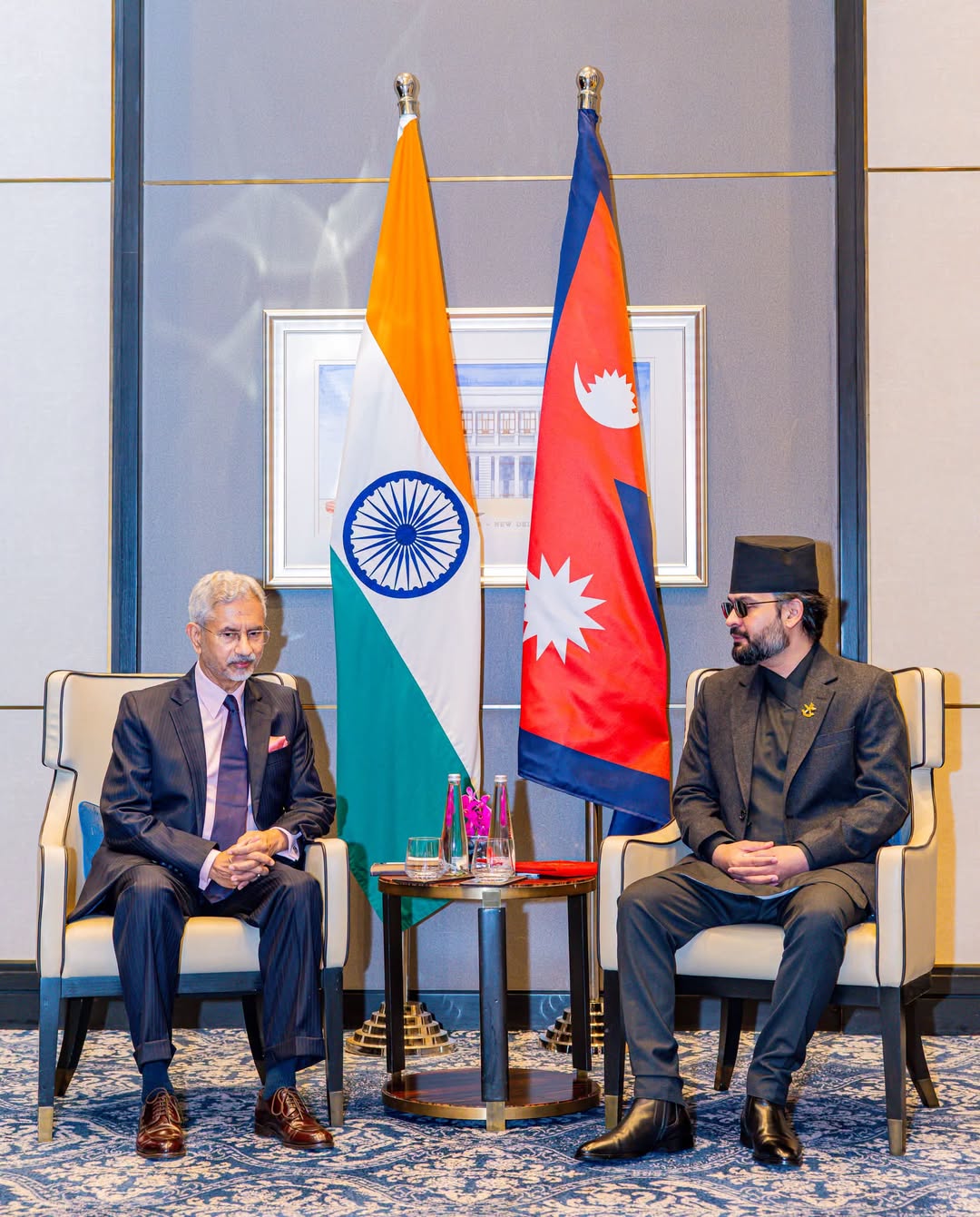
During his visit to India, Shah also paid a courtesy call on Indian President Droupadi and held separate meetings with External Affairs Minister S Jaishankar and Minister of State for Commerce and Industry Jitin Prasada who also received him at the airport.  

FOLDED PANTS

However, Jaishankar’s folded trouser hems (pictured above) sparked viral speculation in Nepal’s cybersphere, with some claiming it was a diplomatic snub. The claims were later debunked, as Jaishankar had worn the same turn-up cuff trouser in previous meetings with visiting European ministers. There were also comments about a breach of protocol on Shah's part for his signature shade and boots.  

The Nepal PM’s visit was given prime time coverage in Indian media and was well received, with Indian commentators willing to let bygones be bygones. In Nepal, too,  Shah won praise for flying commercial, making his visit short and business-like, and having his corporate and press delegation pay their own way. 

For the domestic gallery, such measures widely shared on social media have reinforced Balendra Shah as a prime minister who deliberately tries to make a departure from his predecessors.